Briercrest (00:01.7)
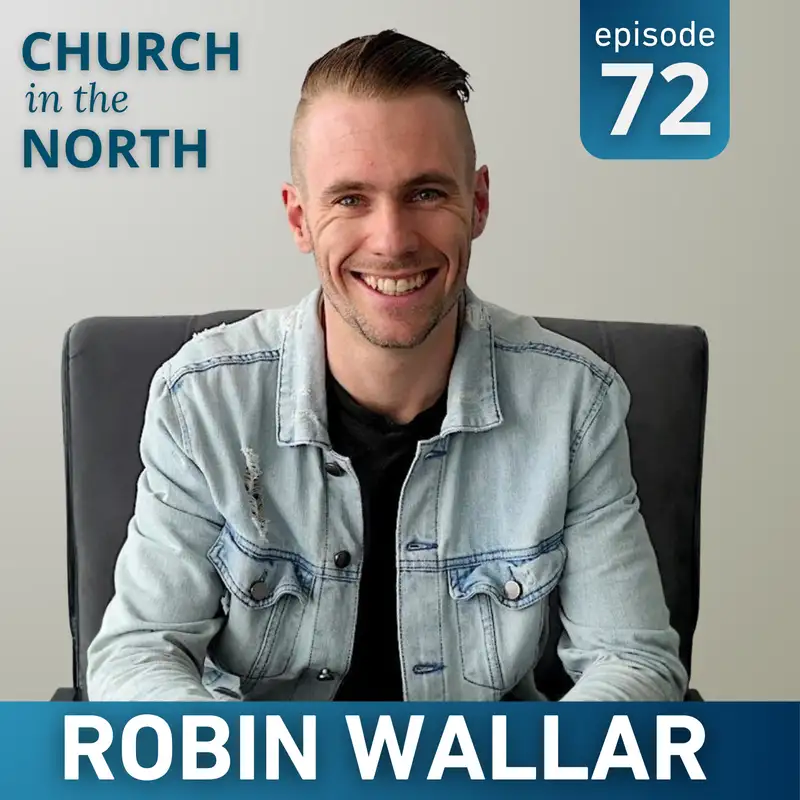
Well, hey, we're excited to have back on the Church in the North podcast, Robin Waller. He's the lead pastor of Lyft Church. Robin, welcome to the podcast.
Robin Wallar (00:11.288)
Great to be here. Thanks for having me on.
Briercrest (00:13.616)
We had a really lengthy conversation before, just hearing about your backstory and learning and discovering how you came into the leadership of Lift Church and some of the transitions you guys went to. So I want to encourage our listeners, go back to that other podcast. It's in the first season of Church in the North. It's an amazing story and it's worthwhile hearing that backstory. But I thought today we just start with you. Why don't you just give us a bit of a bird's eye view of Lift Church?
How would you describe Lyft Church today?
Robin Wallar (00:45.87)
So, Church is a university campus church planting movement and we're made up of about 56 house churches or simple churches. We'll get to what that is, I think, maybe a little later in our conversation. And those are spread out over, as of today, nine different cities and nine different university campuses throughout Southern Ontario, kind of along the Great Lakes.
Briercrest (01:12.366)
Okay, where was the first campus? Remind me.
Robin Wallar (01:15.44)
We started at McMaster University in Hamilton.
Briercrest (01:18.576)
Okay, and it's since multiplied then. So one of the things your website says is that you are multiplying discipleship movement. And that's really at the heart of what you guys do. Can you talk to our listeners, what is a multiplying discipleship movement?
Robin Wallar (01:21.102)
Mm-hmm.
Robin Wallar (01:26.926)
Mm-hmm.
Robin Wallar (01:36.526)
What I would love to say in a word is a church, because I would hope that all churches are ultimately multiplying discipleship movements, but you probably want a little more meat than that. And so what we're getting at is this idea that each person is in our church, like every person is invited to disciple people who in turn disciple people.
Briercrest (01:40.752)
Yes.
Robin Wallar (02:05.129)
What that really practically means is that our primary growth strategy, like how do we reach people, is through evangelism that leads to disciples, that leads to those disciples going back out and doing evangelism to make disciples. And so it's really this reproducing evangelism and disciple-making way of thinking about what the church is. And so we tend to really think about how do we have lots and lots and lots of small
reproducing disciple communities of disciples. And the beautiful part is that it's not centered on one person, but rather the gifts and the invitation of every member of the church family to become a disciple who makes disciples. And as they do that, they're invited to do that in new places, in the places they already are, and it sort of reproduces that way.
Briercrest (03:01.092)
Yeah, well, and if you roll back the calendar a number of years, you guys, as a movement, as a church movement, you kind of reached a bit of a, maybe not a crisis moment, but an aha moment, where you said, OK, we have to change and shift the way we think and the way we conceptualize church. And I think at the heart of it was this idea that every disciple is a reproducing disciple. And if that's true, then how do we organize ourselves towards this?
Robin Wallar (03:16.365)
Mm-hmm.
Robin Wallar (03:24.151)
Mm-hmm.
Briercrest (03:28.848)
Right. So you guys have undergone quite a bit of a change on this. So I'd love to dive a little bit deeper into this idea of a disciple making strategy. Like, how does that work? I mean, because different churches can do it in different ways. Some churches, the only discipleship they do is a Sunday morning sermon. Right. Other churches, they have like small groups or they have classes. There's different frameworks that have been used. Talk to us about your framework. What does that look like?
Robin Wallar (03:55.022)
think maybe the key distinction in a movement of thinking versus sort of discipleship as it's often expressed is that. Is that for us the discipleship process is really the beginning of someone's journey and then it grows out from there so we go out with talk to strangers we invite them to to discover who Jesus is as they come to discover Jesus. They're empowered to go back out and do the same thing and.
That's quite distinct from, think, how sometimes discipleship can function in church life, which is sort of more of a, you you come to the large format event and then what's called discipleship is really an assimilation strategy. Here's how you integrate into the community that is this church. so it's discipleship often becomes the end of the process. Like, hey, like, you're here. Here's how you get connected. And then you join a small group.
Those small groups often don't have an explicit mandate to reproduce themselves. It's like an endpoint. It's like build community, build relationships where in our thinking the objective is that everyone is out there making new disciples. So the small group or the what we call our simple church is constantly reproducing through the work of disciple making and evangelism.
And that comes a lot down to like how we think about, okay, well, what is discipleship? How do we define it? But I think at the core, it's where it sits in the process. Oftentimes discipleship sits as an assimilation strategy versus for us, it's actually how we reach people who have never heard the gospel. It's our primary growth strategy. And incidentally, many people who connect with our church would never start in the large format gathering. They actually start in the house church.
That will be their first encounter will probably be through some sort of one-on-one evangelism, but then subsequent to that usually into the house church and then eventually into, wow, this thing's a lot bigger and there's a ton of people here.
Briercrest (06:04.932)
Yeah, so maybe that's worthwhile just describing your framework. So you have a simple church, you have the house church, which is kind of your small group, discipleship core group. Break that down for us a little bit more.
Robin Wallar (06:22.784)
Sorry, you unfortunately glitched out on the audio there. I think you were trying to get me to define a simple church.
Briercrest (06:30.18)
Yeah, well describe us the key components of your movement. I mean, you have the simple church. Is that distinct from a house church?
Robin Wallar (06:40.97)
Yeah, so I think it'd be kind of helpful to be like, OK, what do we mean with this idea of a simple church? So a simple church is sort of kind of like it sits sort of halfway between a small group and a house church. And in the sense that all of our simple churches are part of the wider church, so they're not fully independent, they're part of this much larger thing.
which is organized into cities, call them regions or campuses. And then those are then connected into this larger church family. And it's all one big church family with a high degree of relational connectedness between both individual simple churches and between the campuses. But each simple church has really a number of things that they're doing. They're all engaged in evangelism.
So the simple church is out there doing evangelism and we have a whole sort of strategy for how we empower and equip that. All of them are doing like intentional discipleship and they do that in a couple different ways. Part of it is the weekly coming together to eat a meal and study scripture, but there's a lot that that doesn't encompass all of discipleship. That's like just one part of it. There's the one on one meeting to do.
more intensive study, there's the life-on-life relationships, the living in community. So many of our simple churches are interacting with each other, you know, three, four, five times a week. And so there's a high degree of cohesion relationally. And then all of them would gather together with all the other simple churches that are part of their city on a weekly basis to sit under preaching and worship together. We see a lot of value in
the bringing together of a wide body of believers, especially people that are different than us, to worship and hear scripture taught. And so I say it's sort of halfway between a traditional small group, which is largely, gather once a week, probably doesn't have an evangelism mandate, may not have a reproduction mandate. And it's sort of kind of like an event that occurs.
Robin Wallar (09:02.636)
And a house church, which can exist a little bit autonomously, maybe doesn't interact with other groups. We're kind of trying to borrow the best of both. And so it's kind of its own ecosystem.
Briercrest (09:17.498)
Yeah. So when they get together, say you bring three or four simple churches together for a larger gathering, are they going to another church and just participating together as participants? Or is that something you guys, that's part of your movement and that you generate? And you say, OK, we're going to create a of a hub of four five simple churches who gather for worship together.
Robin Wallar (09:38.071)
So we call it gathering. So all of the simple churches in a city gather together every Sunday. And it looks a lot like just like a traditional church gathering. There's worship, there's preaching, there's usually a meal. We usually do those on a university campus. And it looks a lot like what people would call church. And that's like a weekly rhythm.
Briercrest (09:40.313)
Okay.
Robin Wallar (10:05.526)
But we see it as the gathering, not of people. It's actually the gathering of the simple churches. And so we see that as part of a simple church. To be part of a simple church is to commit to gathering with all the others. And that's really important because the simple churches reproduce. If they don't gather, then you end up with this fracturing relationally. People you were once close with you don't see. But by bringing everyone together on a weekly basis, you know,
there's still cohesion relationally, even as simple churches multiply.
Briercrest (10:41.508)
Yeah, and I think the reluctance of some people to be part of a multiplying movement like this is they're like, but we just make these deep friendships and suddenly we got to break up and go and be part of another group and make relationships all over again. And I think that having that gathering component really helps. And also then leadership training is like, well, no, you're going to meet with those leaders again and be with them and you'll get to see each other as part of the gathering. But there's always a death that has to occur.
in order for life to happen, right? But that is the challenge.
Robin Wallar (11:11.308)
Mm hmm. Mm hmm. We talk about it as there being two forces at play in the church. You have a force for togetherness. And that's like, hey, we love being together, the forming of relationship. And then there's a force that we call the force for sentness, which is, you know, to go out and reach new people and go to new places. And I think a healthy church needs both of those in roughly equal balance. We need
Briercrest (11:21.616)
Mm-hmm.
Robin Wallar (11:40.52)
And different personalities have a different predisposition. We have some people that are like, I don't want to go new places and do crazy things for Jesus. And then we have others that are like, I just want to sit here and form these deep relationships. And it's not either or, we need both. And I think that that's sort of one of the inherent tensions and beauties of church life is that we need to cultivate a heart for both deep relationships and a love for the lost that are not in the building or in the room.
Briercrest (12:06.894)
Yeah, yeah, the church is both gathered and scattered, right? And both of those things are necessary. I'm curious. I have a question about curriculum because this is a challenge. So I'm teaching a course right now in evangelism, discipleship, and I help people, our students to look at different multiplying movements that are happening in the world. So like T4T and, you know, the Tampa movement and different things.
Robin Wallar (12:10.635)
That's right, yeah. Yeah.
Robin Wallar (12:17.321)
Mm-hmm.
Briercrest (12:34.656)
And one of the challenges is always like, well, what do we do about curriculum for multiplying disciples? Right? And so T4T has its curriculum and it's static, but it's, you know, it's from a homogenous people group culture where that's where it's much more effective. And then other movements have like a beginner, but then they just use scripture. What do you guys use for your simple churches?
Robin Wallar (12:57.483)
So I think that I would say there's three parallel strategies and all of them are used. So our core strategy is what we call daily devotion. So across our whole church, everybody studies the same passages of scripture every day in our devotions. And the way we set it up is that we go through the New Testament every two years, the complete New Testament every two years, and the complete Old Testament every four years. So for a university student, that is part of what we're doing.
Briercrest (13:02.65)
Mm-hmm.
Robin Wallar (13:27.177)
That means over the course of their undergrad degree, they will have studied all of the Old Testament once and all of the New Testament twice. Most of our simple churches will use that day's Daily Devo passage or one of the passages from Daily Devo's in their scripture study time called Huddle when they gather that week. And we also preach from it. So all of our preaching comes out of our Devo's.
So right now we're reading through Acts. So this week I'll be preaching from Acts on Sunday. So that's our, I would say our primary strategy is like a pretty immersive and integrative experience of studying scripture, but it's done in community. And so rather than it being, I'm going to go do my Devo's on my own and you know, I'll study whatever, which is good. That's a lot better than nothing. We see a lot of value coming from when it's done together.
the second thing is we have a resource we developed called Living Scent and it's a two part, book. actually since we last talked, we've totally overhauled it from scratch. did a massive amount of work on it. was released a number of years ago. We got some feedback and really redeveloped it. And it's designed to take someone from no knowledge of Jesus to, a pretty well-formed, well-rounded, gospel fluency.
by end of the first book. And the second book is to take them from having never reproduced a disciple to consistently reproducing disciples by the end of the second book. And everyone in our church goes through those two books at some point in their first couple years. And so what that does is that level sets. So everyone's got common language, a common theological reference point. It's pretty big tent, we, you you wouldn't
be able to pin us to the wall too much on, you know, are you this tradition or that tradition? It's just sort of like we're Jesus followers. Yeah, broadly evangelical. Yeah, exactly. And we include a bunch of introductory apologetics in it. So really somebody who's never studied the Bible before would be able to open it up and work from there. But we find that even for people that have come in with a fairly high degree of biblical exposure, they're still
Briercrest (15:30.81)
Broadly evangelical in the best sense of the word. Yeah.
Robin Wallar (15:53.344)
really appreciate and find it really valuable. And it's done usually one-on-one so that people get practice discipling. It's really a tool to just teach people, here's how you ask questions about things of faith. So it's one part so that they're discipled, but it's also a tool to help people begin the discipleship process with someone without stalling out. Because what we were finding was people would often be like, I get it that I'm supposed to make disciples, but
Briercrest (15:59.217)
Okay, that was my next question.
Robin Wallar (16:22.505)
Okay, but what do want me to do? Like, help me take a next step here really practically. And so we've seen a ton of fruit, like a ton of salvation, people's confidence in discipleship go up as they use it, because it gives them a bit of a grid. They're going like, well, what theology should I teach? You know, what parts of scripture should we focus on? What questions do I ask? And we find that this is a really helpful way of giving them kind of a starting point.
The and then the third, the third pillar that I was referencing is what we call our apprenticeship and then our subsequent leadership development process, which is when somebody wants to become a simple church leader, they sort of submit to an apprenticeship or formally enter into this training program. And it's got two parts, one with one on one mentoring and coaching and discipleship from their simple church leader. And another part
where they're cohorted together into a course, an online training course with all the other apprentices across our church. So it's really cool because they get to build relationships across cities and meet all the other apprentices. And then that same kind of process replicates at different stages of someone's leadership journey. That takes about four years to complete all of them.
Briercrest (17:46.448)
So it sounds like your evangelism discipleship strategy would be much more highly relational versus attractional.
Robin Wallar (17:56.061)
100%. I would say it's 100 % relational. In that we see discipleship as being an inherently relational process. And so it's as much about the information as it is about the trust that's built between disciple and discipler.
Briercrest (18:17.904)
And so the people who are becoming in proximity to your movement or entering into your movement, they're not walking in a door on a Sunday, right? But rather they're coming on the arm of somebody who's been developing relationship with them and speaking to them of Jesus. so they've already come ready with somebody who can disciple them.
Robin Wallar (18:39.912)
Yes, 100%. Especially at the smaller campuses. Once our campuses get large, they can have sort of their own gravitational pull because they're big enough. But from a strategy standpoint, the strategy is let's integrate from the small, for sure.
Briercrest (18:46.01)
Mm-hmm.
Briercrest (18:49.476)
Right. Yeah.
Briercrest (18:59.684)
what do you do in the larger campuses where you have that front door entry into the movement and you know somebody from the lobby just says please disciple me.
Robin Wallar (19:09.182)
We make it basically really obvious that their next step is to get integrated into a simple church. We do things that would like rattle some people. Like, for example, when we do communion in a large format gathering, we huddle up into the simple churches in the gathering. So you might have a couple hundred people in the room.
and they all gather into their simple churches and it becomes really obvious who's not in a simple church. But then it's really beautiful because all of our leaders are trained not to exclude, but to immediately go like, hey, come with me. And now all of a sudden they're connected into a simple church. Like you would, if you showed up at a gathering, you'd be invited into a simple church probably in your first 30 to 60 seconds. It's like,
Briercrest (19:39.792)
Hmm.
Briercrest (20:01.082)
Amazing. That's fantastic.
Robin Wallar (20:02.886)
It's like incredibly ingrained into our culture, no matter how large it gets. So there's always people that manage to not get into a simple church. You can't force people, but we make it pretty uncomfortable if they're not.
Briercrest (20:16.836)
Yeah, yeah, I talk to my students about giving people the gift of the open circle because our tendency is to herd up and turn our heads inwards and turn our backs outwards and make a circle. And people who are outsiders can't get into the circle. So always step back from the circle and leave a gap. And if you see somebody, welcome them into the gap. Right. So give them the gift of the open circle, because that's I think that's a centered set way of thinking about about discipleship and community.
Robin Wallar (20:25.158)
Sorry.
Mm-hmm.
Robin Wallar (20:35.412)
Mm-hmm. Mm-hmm.
Robin Wallar (20:42.78)
It's so beautiful to see, we'll often have people that are kind of sitting on the edges and then we will do these things like, hey, huddle up and pray with three people around you. And all of a sudden a group of say 300, which is very intimidating to enter into socially, becomes a group of four, becomes a group of eight for someone to, and that's much more comfortable for people to connect to. So it's quite beautiful to see it play out.
Briercrest (21:07.408)
Hmm. Hmm. So would students who are part of the movement there, part of Lift Church, would that be their home church or would some of them kind of cross-pollinate with other churches that they're part of?
Robin Wallar (21:24.274)
It's something of a challenge for us to navigate. We have this strong theology of covenanting with a local church family. I think it's really important that people are committed to and integrated into one church family. And you can't be in two boats at the same time. so generally what happens is as people integrate into our church, they will eventually decide, hey, this is my primary church. And they will.
become a member of our church and kind of commit to the to this is home. Not everybody does that. There's a significant portion that that sort of would sort of live in the in between usually because they have a home church in a different city. However, if someone is, let's say part of another church in the same city, we would ask them to make a choice of.
investing in either their home church or ours. And we really don't care which one it is. We just really cherish and value what it means to be part of a church and would kind of invite them to discern, okay, where is God calling me to be rooted? And I would say most times they end up back at their home church, which is actually we think of a huge blessing. Usually they get connected to us because they discover that, oh, there's this rich community and this rich discipleship happening here. like, that's great.
Take what you learned, go back home and bring it there. But what we're hoping happens is that we're discipling university students to this really foundational principle of commit and love your church family, commit to and love your church family, which I hope they will do for the rest of their lives. Wherever God places them, they will find a church and just sink their teeth into it.
even though it is guaranteed to be flawed and imperfect.
Briercrest (23:20.868)
Right? Well, I mean, even just practically in a student's life. mean, students are so busy with school and if they're commuting, that's a lot of time commuting and to try and live in two churches, two spaces at once. It's just your dance card just gets too full. Like you just don't have the time. You'll be failing out of school.
Robin Wallar (23:36.54)
Yeah, it serves no one. Yeah, yeah. What it burns them out, it hurts their home church, it hurts their friendships. So it's not easy. I'll be honest, these are hard conversations to have with students because they're kind of like, what's the problem with going to lots of church? Well, we're not talking about morally wrong here. But I think that it's there's a better vision for your life than, you know, participating in lot of Christian activity. Like, and I think it's better to ask, like, what's
Where's God calling me to be invested and how can I have the biggest kingdom impact?
Briercrest (24:10.512)
Yeah, yeah, for sure. Well, I mean, the last time we talked, it was in 2023. And you guys just put out this last year, your 2025 vision statement. I had a chance to read that. I'm like, man, there's been a lot going on since last time we had you on the podcast. So why don't you just maybe share with us how has Lyft grown and evolved, say, in the last two, three years?
Robin Wallar (24:37.789)
Yeah, a lot. It was funny as you were kind enough to give me this question beforehand. And so was reflecting on what's happened over the last three years. And it's pretty amazing. So we've planted four new churches in four new cities in the last two years, and including some that are much further afield. And so we're learning how to be a church family at much greater geographic distance. So now we would be from London to Ottawa. So that's about
Almost 10 hours, nine hours.
Briercrest (25:08.974)
Let me pause this just for a second. When you say you planted four new churches, do you mean four new simple churches or four new gathering locations like central hub churches?
Robin Wallar (25:20.337)
Yeah, so this is where the line between house church and it all gets really blurry. When we when we when I say plant a new church, what I mean is we started one simple church in a new city. And they will do they will do all the things that we do, so they'll gather the huddle, they'll evangelize, they'll multiply disciples. It will be quite small for the first year. But by year two and three, it will become four or five simple churches.
Briercrest (25:32.09)
Right. Breaking Earth.
Robin Wallar (25:49.038)
dozens of people and will look more like maybe a church plant or something. No, but it's the whole idea is to figure out how can we do lots and lots of these small starting points and give them lots of time. And so that's why we've been able to do four new cities, which basically will become four new full blown churches. And it takes that was London, downtown Toronto.
Briercrest (26:12.826)
Hmm. And what are the force cities again?
Robin Wallar (26:19.077)
Ottawa and Kingston. yeah. And so that was quite the ride. We've really refined our evangelism methodology over the last three years. And quite to my own surprise, we have really embraced what we might call cold call or one-on-one evangelism with strangers or
Briercrest (26:20.848)
Okay, crazy.
Robin Wallar (26:46.833)
you know, small group evangelism to strangers. So what we realized was that no one was going to come to anything we invited them to. And our social networks, although there might be large, are not big enough to reach all those that are interested. And so we realized the only way we were going to reach people is if we went and talked to them. Like we could poster, we could promo, we could, you know, run events, we could all kinds of things. But
Briercrest (26:48.569)
Okay.
Robin Wallar (27:15.187)
Culturally, think people are so far removed from any affinity towards Christianity, especially on the university campus, that it's like they're not seeing or hearing anything we're doing. So we started to, about three years ago, really prioritize talking to strangers. And it's not, the way it's evolved is it's not primarily gospel sharing. We don't use, four fields or
some of our people do, but you know, the common simple gospel tools in part. Yeah, and those are fine. But I think that in our context, people are so unchurched, post-Christian, like no context that that and in many cases have a different faith context that we've really learned like what we need to do is open up relationship. And so we have
Briercrest (27:49.432)
or spiritual laws.
Robin Wallar (28:11.908)
all these different ways of figuring out like how do we start a conversation with a stranger about spiritual things and invite them into a next step. The next step may be joining a social event and maybe if their primary need is loneliness or some sort of social issue, it might be joining them straight into one of our simple church huddles to study scripture if they're like, I want to study the Bible, which happens all the time. I cannot tell you how many strangers say, I want to study the Bible.
Briercrest (28:39.394)
Interesting.
Robin Wallar (28:39.844)
I've been trying to find someone to tell me how to read the Bible. And we've been doing it long enough and we have enough data, it works. Like talking to strangers about Jesus is pretty much a guaranteed way to make disciples. And I wish, one of the things I would love to see the church in Canada do is embrace a more upfront evangelism strategy because I think the sort of announcing things and bringing people to large events is
is good, but it's never going to get major segments of our population that don't know a Christian. Most of the people we talk to, I'll ask them a question, do you know a Christian? And they would say, no. It's like, well, if I wasn't talking to you, then you would never know Jesus. And so it's to the point now where once a week of every month, everyone in our church does evangelism. And I mean everyone.
Briercrest (29:21.328)
amazing.
Robin Wallar (29:37.614)
And to my surprise, like I did not expect this, Rob, we have 100 % participation. Like everybody does it. And people are scared and fearful, but there's this sense of buy-in. And it's amazing. Like it's really, truly incredible.
Briercrest (29:55.121)
So do they just go and do, let's go do a walkabout around campus and have conversations essentially? Okay.
Robin Wallar (29:59.965)
Yeah, basically, we have a couple different strategies that we've developed. The one I like the most is to go with a clipboard and do a survey. We call it like a spirituality survey. It's basically just something to make, to start a conversation. And it's really amazing. And we're now seeing the fruit, like people, it's about, I would say one in a hundred come to faith and about one in 10
take some sort of next step with us. And so.
Briercrest (30:34.81)
Do you get everybody to have like common t-shirts or common like, so that it seems like they're part of a lift church movement or do they just go out whatever and just have conversations?
Robin Wallar (30:46.418)
They just go out, however.
Briercrest (30:47.864)
Okay, you don't seem like a street gang walking out with clipboards and
Robin Wallar (30:52.624)
And well, we go, we pair up, we go out in small groups. Yeah. So well, usually we'll all meet up at the same time. Or like on a Monday, we'll do like Monday, Tuesday, Wednesday, Thursday, everyone will kind of meet up and then spread out on campus. and it's interesting, we just surveyed our church, we did like a little census. And the number one piece of positive feedback we got from people was how much they've appreciated doing evangelism.
Briercrest (30:55.182)
Yeah, okay. Yeah.
Robin Wallar (31:20.196)
And so maybe an encouragement to leaders and pastors, like people I think are much more open to doing evangelism. They just sometimes need the push and the encouragement to do it and someone to show the way.
Briercrest (31:33.604)
Yeah. And I'm assuming it's not rude. It's not weird. It's not confrontational. It's invitational and more just inviting questions than anything.
Robin Wallar (31:49.585)
We do very little telling. And I think maybe that's where it's a little bit different than some maybe prior evangelism models in the last 40 years, in that we're not saying, hey, this is what we think you should believe. Although we do have strong conviction around the truth of the gospel. I think it's more like, tell me where you're at, and then asking the Holy Spirit to help us discern what would be helpful to this person as their next step towards Jesus.
recognizing it will probably, I mean, in my experience, it takes somewhere between six months and a year for somebody that's spiritually curious to receive the Lordship of Jesus in their life. And so we have this very, I think, relational, invitational kind of heart as opposed to, you let's go save souls. It's like, well, the Holy Spirit saves and our job is to go and see who's open and invite them into a next step.
So.
Briercrest (32:50.554)
So you've got greater clarity on evangelism. You've planted four new churches. Anything else happen in the last little bit?
Robin Wallar (32:56.572)
Mm-hmm.
Robin Wallar (33:00.294)
Yeah, so we've had a pile of kids born into our church. So although we're, you know, heavily oriented around students, we have a whole demographic of non students that help disciple and reach students and. They're all just regular professionals. They live in the neighborhood and are part of our church. And many of them are having babies like lots of babies. And so we went from three years ago, you know.
Briercrest (33:05.25)
Right, yeah.
Robin Wallar (33:29.2)
a handful of kids to now like dozens and dozens and dozens of children. And that's been really, to be honest, really fun. And I think to ask the question, what does it look like to disciple children to be multiplying disciples? And how do we raise them in this missional context to hear that call and to know that Jesus loves them, but also is inviting them to contribute.
into his into his kingdom but it's been it's been quite the ride so
Briercrest (34:03.674)
Wow. Now, just so our listeners are aware, and you told me this before we started recording that a lot of these children are from members of your church who you would call missionaries. So these are those who've been doing the lift church for four years or graduating out, but now they are missionaries. And so they've chosen to stay and to be disciple makers and leaders in your church movement. And these are their kids, essentially, right? So.
Robin Wallar (34:24.945)
Mm-hmm.
Briercrest (34:32.822)
not everybody graduates out and never comes back. A lot of people are staying.
Robin Wallar (34:38.075)
Yeah, I mean, it's this rich relational context when you prioritize relational discipleship. It turns out people don't want those relationships to end. And so they stick around. But it's like stick around in the context of this missional environment. So it's that sentness and togetherness thing. There's this togetherness that happens, but we're still a sent people. So we've had to work out, OK, how do we do that? How do we live as a sent missional people in the context of these deep relationships?
missionaries were really the answer to that. Hey, when you graduate, stay with our church, continue sowing into your relationships, but also continue discipling and evangelizing in this missional priority that we have as a church on campus. And then now as a result of that playing out over the last decade, there's lots of children along the way. We also do a lot of weddings. So, which I don't think that would be a surprise to anyone. There's lots of
Briercrest (35:31.504)
Right, yeah, I imagine.
Robin Wallar (35:35.912)
You know, campus church is a great place to meet someone. That's where I met my spouse. But those kids are now part of it. And the beautiful thing is when, I'll be honest, about 10 years ago, when my first born was born, I can remember people sitting down with me and saying, Robin, you know, I know you're all excited about the campus, but kids will be the end of that and you're going to shift focus. And my wife and I just said, like, no, like God has called us to this and he's
Briercrest (35:38.33)
Yep. Yep.
Robin Wallar (36:04.743)
called us to this mission and he's blessed us with children and the blessing of children doesn't undo the call of God. And we've just gritted our teeth and it's been hard at times for sure. Like it's a non-traditional church context to raise kids. But the long-term fruit that we're now seeing is tremendous. Our kids love participating in events. Like my daughter goes and she's probably one of the best evangelists in the church. She goes on campus and talks to us.
Briercrest (36:32.752)
Okay, the kids are involved in evangelism. Yeah.
Robin Wallar (36:34.361)
Yeah, yeah. And it's like, you know, like young moms, like maybe they don't go out on the evenings for evangelism, but they'll go on campus with their with their with their infants. And it turns out a baby is a great evangelism magnet. People love babies. And and so it's like, rather than looking at kids as this barrier to mission, it turns out that they're actually a huge blessing.
Briercrest (36:48.159)
Absolutely.
Robin Wallar (36:59.739)
to the mission, also the mission blesses them because they're raised in a context of deep relationship and lots of support. It is sometimes hard, like our gatherings run late and the kids run wild and they eat lots of trashy food and it is different, but it is really beautiful.
Briercrest (37:13.498)
Yeah, yeah.
Briercrest (37:19.288)
Are missionaries convocational or are they just volunteer or are they fully paid, funded? How does that work?
Robin Wallar (37:25.669)
Yeah, so in our context, all of our missionaries have full time careers in some whatever profession. we have a lot of medical professionals, so nurses, x-ray techs, doctors, that sort of thing. But firefighters, engineers, speech language, pathologists, physiotherapists, like you name it. It's really out of the university training all these professionals while they go get careers and then they stick in. yeah, yeah.
Briercrest (37:30.67)
Okay, yeah.
Briercrest (37:52.56)
and they give back, that's amazing. Wow.
Robin Wallar (37:55.399)
And some careers have some real benefits, like the medical world is great because you can actually, you you can drop hours pretty easily and work, say, like a .8 or a .6 role instead of a full-time role. And a lot of them will give additional time to disciple making or whatever it is. quite cool how it's all worked out.
Briercrest (38:15.834)
Wow. I'm a little bit curious, I mean, because not everybody stays and becomes a missionary and they move on or they go to different part of the country or they decide once they're done college, they're going to go back to maybe the church that's in their area where they live or whatnot. how many, do you have any idea what reintegration is like for students who go through such an immersive discipleship experience that is so focused on making disciples and evangelism and whatnot?
What's it like for them to go back? Because not every church is doing that, right? So what's it like for them to go back to or to participate in other churches?
Robin Wallar (38:53.978)
think that there's different categories of people in our context. So those that are really invested in what we're doing and become, say, student leaders or really carry the mantle, but decide not to stay with us long term for whatever reason, they tend to integrate really well into another church. Because we're so non-attractional,
in the sense that there's like nothing flashy to our church. I think they really do develop a love for Jesus' body. And although, and every church has lots of room for sowing in, maybe they have a different discipleship methodology, maybe they haven't really thought that deeply about discipleship, but they'll still create space for people to contribute. And I think they, you know, what we've observed is the people that we've had a chance to disciple well will generally reintegrate really well into their
into another home church. The biggest challenge and the part that's really weighs heavy on my heart is those that don't integrate deeply into our context, like maybe those that don't buy in as deeply, it's harder to know what happens to them. And my concern is that they don't integrate in anywhere. so in other words, I don't think we like ruin church for people. think I hope we sow in a deep love for the church. But if we're unable to spur or if
People don't discover a love for the church with us. We don't often see that then subsequently happening in a different church elsewhere. And so that to me is the burden is to say, how do we help people love Jesus Church, regardless of what it looks like? so, yeah, I hope that that kind of gets to the heart of it.
Briercrest (40:42.938)
Yeah, no, no, that's great. mean, and I would just say, I mean, the burden isn't always with you, you know, you want it to be. But as pastors, you know that the seed falls on different types of soil and only God makes it grow at the end of the day. Right. And we pray it takes root and it produces a crop a hundredfold. But yeah, I can understand that, you you see as a youth pastor for so many years, you know, you see youth come and go, some stay with the church and some don't. You just like.
Robin Wallar (40:54.694)
Yeah.
Robin Wallar (41:01.819)
Yeah.
Briercrest (41:12.706)
Why? They were so deeply connected in our student ministry. yeah. So let's shift gears a little bit. Tell us about your new book. Well, it's new-ish. It's been a year here now. I think. Has it been a year? But you've written a book. Everyone sent. I've read it. Love it. Why don't you talk to us a little bit about the book? Because I think this is a book that...
Robin Wallar (41:16.378)
Mm-hmm.
Robin Wallar (41:30.182)
Mm-hmm.
Briercrest (41:39.002)
could be more accessible to our listeners. It's not just written for the people in Lift Church, but it's got a broader audience in mind. What's the genesis of the book? How did it come about?
Robin Wallar (41:49.543)
So about eight years ago, we went through a pretty significant shift in the culture of our church and what we were trying to do and really wrestling through like, how do you plant lots and lots of churches? That's a pretty simple question, but it really resulted in some deep soul searching and some pretty major shifts. And in the years that followed, a real wrestle to help our people understand like what it looks like to make disciples and to engage in evangelism and to think.
from a everyone contributes to the mission kind of mentality. Like what if every disciple was a multiplying disciple? So I wrote a book as a result of that called Everyone Sent to Multiply Everything, a longer title. And it was basically like me putting pen to paper fighting for this crazy idea that we can make disciples who make disciples. And it was a pretty intense book.
The way it came out, came out of a lot of fighting and contending for ideas. So the tone of the book was really intense. was like fighting for the ground of this idea. about two years ago, two and a half years ago, the Lord really helped my wife and I see that we didn't need to fight as hard anymore, that our church had caught it.
and believed in it and our people were with us. And I remember one of our missionaries in training putting up his hand and saying, Robin, you know, I really like your writing in this book you wrote. The ideas are great, but why does it need to be so intense? Like you're of scaring me, bro. And I was like, wow. So we went back and. Said, how could we tell the story? How could we communicate?
in a much more winsome, hope-filled way, how could we maybe expand on it? So the result of that was we cut major sections out of the original book. We basically rewrote that original book as a resource that was, I think, much more winsome, open, generous, but still clear in terms of here's what it would look like to call
Robin Wallar (44:16.549)
churches to a place where every disciple will multiply disciples and share that with the broader church body. And the result of that was everyone sent. So it really became this book on one part was laying the theology of what does it look like to make, what does it mean to make disciples? Why is that a good idea? What does that look like movementally?
Okay, great. Having framed that theologically, how do we actually do it? Like, how do we actually implement this in a church context? Like, what's the strategy? Without being prescriptive to say it needs to look like this, but here are the key questions, the key considerations. And so it's sort of one part of theological explanation on disciple making. What is it? Why does it matter? And then it's a strategy implementation, of like, here's what this would look like in practice.
Briercrest (44:53.146)
Yeah, yeah.
Briercrest (45:16.496)
Yeah, and I love that about it. It's a marrying together of theses and practices. And it's not just something that's idealistic. Obviously, this is something you guys are doing, right? And you're seeing God use it. So I appreciate that. And I think our listeners, if you go on read on their website about the book, Robin's a reluctant writer.
Robin Wallar (45:40.709)
You
Briercrest (45:40.784)
A reluctant prophet, a reluctant writer. It's not like you're trying to, buy my book. I but it's a great resource. So I want to expose our listeners to it. Who do you think should read it and why should they read it?
Robin Wallar (45:46.853)
Yeah.
Robin Wallar (45:58.054)
There's two main audiences. The first is, I think, pastors who are trying to figure out a different way to think about church. think, you know, anyone that ends up in pastoral ministry probably does it because they love Jesus. I hope they do it because they love Jesus and they want to make disciples. But the system and the engine of church can sometimes start to drive. It's sort of the tail wagging the dog. And I think it would be a
Briercrest (46:14.928)
Mm-hmm.
Robin Wallar (46:27.735)
it can help, I think, leaders sort of step out of their context for a moment and think like, OK, let's go back to some first principles around what we're really called to do. I think every pastor has asked, I ended up in pastoral ministry? Or am I just an event director? And I think this would help people discover, there really is a different way. And then the other audience that we've seen really appreciate and be blessed by it is
Briercrest (46:43.461)
Right.
Robin Wallar (46:57.315)
church leaders just of any any stripes. So whether it's like the discipleship, not the senior leader, but say like a discipleship pastor or a worship pastor, but also just like volunteer leaders in the church to say, Hey, like I'm trying to think about what we're doing. And one of the beautiful things about the church is that most churches run on the very generous investments of a lot of people. It's the gifts of the body. And I think sometimes they wonder like, is there a better way? Is there a different way?
And I've had many, many church leaders reach out and say, thanks for writing and helping us see that maybe we could think differently about what we're I should add that although the book everyone sent has been a really cool blessing, the subsequent writing I've been doing has really been where we're seeing some really cool fruit. So we started to take a lot of those ideas and said, let's package them even simpler.
Briercrest (47:56.026)
Right. Yeah.
Robin Wallar (47:56.75)
And so we're writing every week on a platform called Living Sent, just trying to get out like, hey, like you can make disciples. And so that's like a weekly blog platform now and same audience, same kind of goals, just really digestible.
Briercrest (48:11.396)
What's the URL for that?
Robin Wallar (48:13.643)
It's a Livingcent.ca and we publish every Monday morning, release an article on disciple making, living in community, how to think about church from a relational, disciple making, and evangelism first standpoint. So.
Briercrest (48:29.946)
Yeah. Well, we'll make sure that we get that in the show notes so that listeners can click onto that as well, as well as to the book, as well as to just, lift church. Hey, one final talking point. I'd love to get your feedback on this because you are boots on the ground working with, older Gen Z younger millennials.
Robin Wallar (48:36.698)
Mm-hmm.
Briercrest (48:58.724)
There's this a lot of conversation lately about the religious resurgence in Gen Z. I mean, we were talking about the quiet revival that's happening in the UK and has it come across the water to the US or to Canada. And there's a lot of demographic information flying. CBC and CTV both did a little bit of a piece on it. What's your reflections on this? Are you seeing any of effects of this religious resurgence in your work?
Robin Wallar (49:27.767)
It's been an interesting question for us to wrestle with. I think the answer I would give is, I don't know yet. And I think, you know, there's the stories of what's happening in the Southern US where there's like full on revival, like thousands and thousands of people come into faith, similar kind of stories coming out of the UK. To my knowledge, we're not seeing that scale in Canada.
And so our team and many others have been praying, saying, Lord, like we want more. We're not satisfied with this. That said, we're the biggest we've ever been. I think most churches I know that are interacting with young people are also seeing like significant uptick. So there's definitely an openness. I think when we do evangelism,
there's for sure an openness. Like we're almost never rejected from having spiritual conversations. Gen Z is very open. On a personal level, my house is filled with Gen Zers multiple nights a week, eager to learn about Jesus. I think the challenge that we're facing is that I think there's not enough missional efforts to activate the mission.
the mission field potential. There's not enough laborers to actually activate it. And so I think if the church in Canada was to really sink its teeth into say, let's go reach non-Christians, I think we would see a significant uptick. So I'll share like an interesting stat. So the percentage of say Muslims has doubled in the last 20 years from 2 % to almost 5%.
of the population. Similarly, the percentage of Sikhs and Hindus has also doubled from about 1 % each to about 2.5 % each, also 5%. And so in our context, that's like a doubling in the Muslims, Hindus and Sikhs proportionally, but that's overrepresented in the university context. so demographically as Canada, we've become much more pluralistic over the last 20 years.
Briercrest (51:42.341)
Right.
Robin Wallar (51:49.113)
like significantly so, religiously, but that is who's reaching those? Where are we seeing the religious resurgence to go reach Muslims, to go reach Hindus, to go reach Sikhs, to go reach those that are of other faiths? In the Southern US, a lot of the fruit that's coming in those revivals is sort of Christian, like nominal Christian context. There's a lot of Christian background. And so the reason why I'm not like banging the drum to say, we're seeing revival is that
I think although we are seeing growth and there's definitely an uptick and definitely a spiritual openness, we really need to be thinking about how do we reach into these demographics that the church historically has not had significant influence, Hindus, Muslims, Sikhs, and so forth. So maybe it's a hope that's an encouraging, but also a sobering invitation.
Briercrest (52:41.786)
Yeah, yeah, so certainly with a certain sector of the population, those who maybe have a Christian memory or a Christian background, who are, you know, the nuns and duns maybe are coming back. But that percentage of the population is continually shrinking every year. Yeah.
Robin Wallar (52:51.938)
Yeah, yeah, yeah.
Robin Wallar (52:59.02)
Exactly. Exactly. And that said, my generation, I'm like a quintessential, quintessential millennial, older millennial. And, know, my generation was pretty, like, we rejected Christianity, there wasn't an interest in it, there wasn't an openness to it. You know, if you were to do cold call evangelism to my generation, when I was a 21 year old, it would have been like, you know, get out of my face. That's not what we're seeing anymore.
Gen Z is happy to talk about spiritual things. And I think, I mean, the data shows that the storytelling is showing that we're experiencing that firsthand. But I think if we're going to see revival, we need, we just got to get out there and talk to them.
Briercrest (53:45.306)
What effect did Charlie Kirk's death have on campuses that you're working with?
Robin Wallar (53:51.192)
That's a great question. we.
Ultimately, it had no effect, I would say. We could have gone down the road, I think, and I some colleagues that did, of really leveraging it as a flashpoint opportunity. We chose not to, not to comment on it, just to let it play out. We felt like we could have maybe created some momentum around it, but we felt like the
the long-term precedent of engaging in what was potentially a confusing political situation that would resonate in a polarizing way with our students, ultimately in the long run would hurt us. And so in the short term, I think there was some opportunity there, but in the long term, we felt like it wasn't worth it to wade into that fray. And that said, we have observed that
Generally speaking, students are more open to conservative ideas as a whole on campus than they were, say, four or five years ago. And that there's been a positive shift where I think young people are more open to differing perspectives on things like politics and things like sexuality and not immediately rejecting a Christian worldview.
as hateful. think generally people are like, wow, this is actually. So although we haven't directly really done anything with it or seen a lot of opportunity there in the long run, we are seeing that I think it did soften the ground a little bit and made people a little bit more open to hearing what Christians might have to say without writing us off as bigots from day one.
Briercrest (55:42.928)
Yeah, what about the Wesley Huff phenomenon that impact anything? Yeah, he's such a good cat
Robin Wallar (55:46.426)
I love Wes. Yeah, Wes, Wes is awesome. He you know, he before he was, you know, world famous and amazing, he would collaborate with us on events and stuff. And for sure. And that's been such a huge blessing for us when we when we go on on campus. Everybody knows Wes Huff or knows of Wes Huff or knows the story, especially especially men like
Briercrest (56:14.714)
Mm-hmm. Yeah.
Robin Wallar (56:15.383)
Dudes are watching the Joe Rogan podcast for sure. And I would say as a whole, we are reaching men more than we ever have. That is for sure true. don't know if you didn't comment on this, but men are, I think definitely more engaged and open. demographically, we have the highest percentage of men we've ever had. And almost all of our leaders right now that are, I think like chomping at the bit are men, which we've never seen before.
Briercrest (56:45.594)
Yeah, yeah, no, that is and there is statistical data Angus Reid demonstrates there's statistical data that that's true in terms of Gen Z in terms of the religious resurgence, if you call it that, and south of the border as well, that there's more men returning to church than women.
Robin Wallar (56:46.427)
Robin Wallar (56:52.843)
Mm-hmm. Mm-hmm. Mm-hmm.
Robin Wallar (57:02.231)
Yeah, which is for us really hopeful. That's really good news. And we're excited about that. But the whole Wes Huff thing has been fantastic. I'm just thrilled that a Canadian of such character has been able to be blessed with such an enormous platform. yeah, regularly pray for Wes, because that's a tough mantle that he now has to carry.
Briercrest (57:29.668)
Yeah, that's right. Lord protect him and keep him. Yeah. So when are going to plant some campuses churches out West here? I mean, the time zone is always a challenge, isn't it?
Robin Wallar (57:33.825)
Mm-hmm. Yeah.
Robin Wallar (57:40.068)
Yeah, so it's so funny. People always ask us in our own church, like, why are we planting at, you know, whatever campus? And I always say, whenever you go, you know, we have strategic planning and, you know, I'm a bit of a, I love thinking about strategy and planning long term. But I think that the process of planting a church, especially going to a new city with a
you know, alone to do something new, it has to come from the Holy Spirit first. If we push too hard on it, what happens is people will end up doing it out of loyalty. And loyalty is good. I appreciate loyalty, but it doesn't sustain for the long term. And ultimately, I think if people are going to walk in faithfulness to the things of God, it's got to come from a place of, heard the call of God to do this thing.
And because it's tough, like, it's really hard to go to a new city, even if you have two or three friends, like it's lonely, it takes a long time, there's a lot of rejection. And so the answer is as soon as God calls someone. And we're praying that that happens in the next two years or so. We have some leaders that really want to go, we're just saying, all right, just slow down one step at a time.
Briercrest (59:05.262)
Now you don't just send an individual, usually it's a team of people. Is that right?
Robin Wallar (59:10.593)
Yeah, we try to send somewhere between like two and six or sorry, four and six. People would be, I think, ideal enough to basically get a guy's simple church and a girl's simple church from day one off the ground. That's kind of ideal. It doesn't need to be bigger than that. We've done three, a team of three before, and that's worked out really well. It's just the smaller it is, the longer it takes to get traction.
Briercrest (59:39.93)
maybe we should send some people from the West to go to university there in the East for a year at an immersive experience.
Robin Wallar (59:51.565)
That's a great idea. It's a great idea. We'd be happy to have them. We don't get too many Albertans in Ontario, but they're welcome. We do welcome Albertans and we'd love to, yeah, so.
Briercrest (01:00:05.082)
Well, mean, here at Briar Crest, we've got students from all provinces, I mean, even Ontario, all the Prairie provinces and BC as well. So, I mean, you could get people from so many places that who would do it. Interesting idea. Let us pray about it. All right. Hey, we need to wrap up our time together. So as we close, I wonder, Robin, could you just share a word of encouragement for our listeners?
Robin Wallar (01:00:19.491)
Interesting idea. Yeah, for sure.
Robin Wallar (01:00:34.915)
I think the word of encouragement I would give is just from Matthew 16, 18. Jesus said that he's building his church and the gates of hell will not prevail against it. that when he said he's building his church, he didn't mean building something boring and stuck, but something rich and beautiful and alive. I always want to encourage people that the church of Jesus is the best, most beautiful thing.
we can be a part of and so our lives into. And if anyone's discouraged or feeling like, don't know why I'm doing what I'm doing in church life, like God has appointed you, he's called you, and his church is worth investing in. And I pray that this conversation has maybe helped to enlarge some people's imagination.
Briercrest (01:01:27.706)
Amen. Amen. Robin Waller, thank you for joining us on Church in the North.
Robin Wallar (01:01:32.909)
Pleasure. Yeah, for sure.
Briercrest (01:01:34.138)
Talk soon.