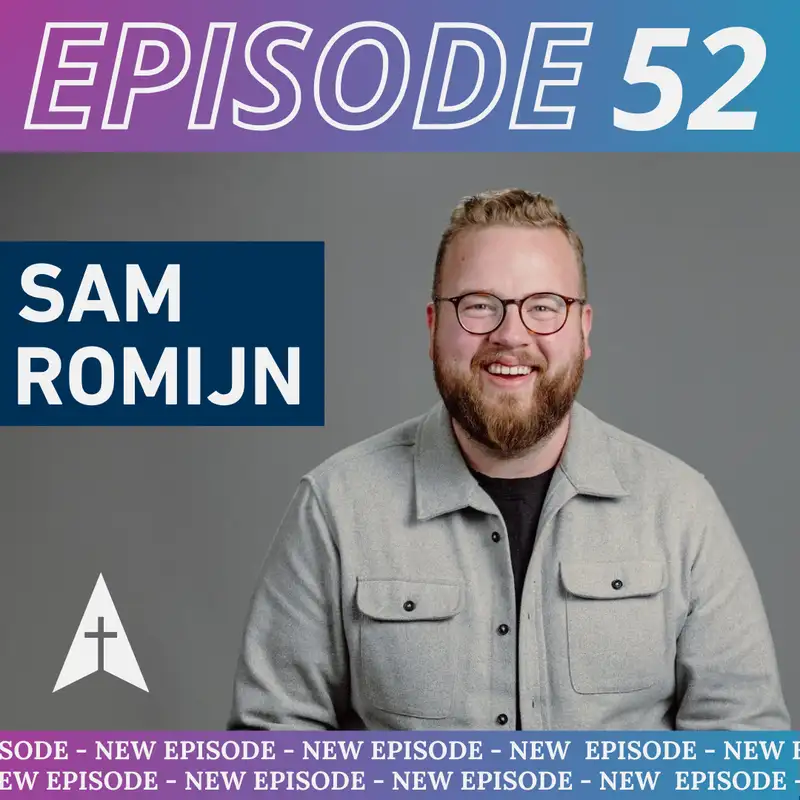
Rob Chartrand (00:01.15)
All right, we're so excited to have Sam Romine, lead pastor of Quiltam Alliance Church here on Church in the North. Sam, welcome.
Sam Romijn (00:07.716)
Hey Rob, so good to be with you. Thanks for having me on.
Rob Chartrand (00:11.029)
I want to dive into your story in a minute, but before we do that, tell us about your church. What does it mean, I see this on your website, to be a church that's always pursuing Jesus' presence?
Sam Romijn (00:21.594)
Hmm, yeah. So CA Church or Coquitlam Alliance Church is a church that's been in our community for almost 50 years. It was planted in 1975. We're coming up on a big celebration 50 year moment. And it's a church, a really beautiful congregation and a church that has had a rich legacy and history in this community. It was started by two other, we're an Alliance Church, two other Alliance Churches kind of in the Lower Mainland in the BC area.
Rob Chartrand (00:31.7)
Mm, wow.
Sam Romijn (00:51.6)
Vancouver area, and they had this vision that God really wanted to do something in the Tri-Cities, which is where we find ourselves. And so they came together and a small group of people, but with a huge vision and started that back in 1975. And over the course of this last 50 years has really made some just a beautiful imprint on this community and then through our global partnerships around the world. And so I'm standing on the shoulders of some giants and
and it's an honor to continue the legacy. so in regards to pursuing Jesus' presence, so we've built our church around three kind of core pillars. And so that is we want to be a people who are pursuing Jesus' presence, are being formed in Jesus' image, and then are joining in Jesus' mission. And so when we talk about Jesus' presence, the big thing is we believe we are in relationship with a person, not just a set of ideas or a way of...
of life, but we are in relationship with a God that wants to know us and to be known by us. And so there's a deep emphasis in worship and prayer. We're unashamedly a charismatic church. believe in the gifts of the Holy Spirit for today and that God wants to speak to us through scripture, but also through prophecy and also through community and all these different ways that he's been working and moving through his church all throughout the centuries.
And so a big emphasis on that and then formation. And so a lot of our thoughts around formation have been shaped by John Mark Homer and Dallas Willard. And we have an amazing senior associate pastor, David Wood, who's really shaped our church's imagination around what it means to follow Jesus and the Christian mind. And so we think formation is mainly formed by the formation of our minds of truth and what we believe, the stories we believe.
by practices or rhythms, spiritual disciplines, so things like Sabbath and prayer and scripture reading, and then by friendships, by community and who we surround ourselves with. And then mission is a massive part of our church as well. Joining in Jesus Mission is this idea of we want to partner with Him in both gospel proclamations, so sharing the good news of the gospel with anyone who will listen. And so hospitality is a big part of that in our context. It's just inviting people to the table.
Sam Romijn (03:15.29)
things like Alpha, here locally we do, and it's a big part of the ethos of our church. And then gospel demonstration as well, so caring for the poor and the marginalized and advocating for justice. And so that's a snapshot of who we are.
Rob Chartrand (03:29.408)
Yeah, yeah, so good. Well, we're gonna go deep on each of those pillars when we talk about like the implications of what does that look like for you guys. let me talk about your journey into ministry. When did you first have the idea that you would actually be in ministry?
Sam Romijn (03:45.454)
Yeah. Well, when I was a little kid, like two years old, I had this weird infatuation with pastoral ministry. My mom tells me these stories of those little megaphone that you like shout into and it echoes, you know, those things, those toys. And I would come out into the living room and I would say, repent, repent for the kingdom of God is coming. then she would say, you know, call me out, mom. And she'd call me out again, like introducing Pastor Samuel. And I would come out with my megaphone.
And so for whatever reason, as a little kid, I had this desire. And my family was always very involved in church. And my dad was an elder at some of our churches as a kid. so I loved Jesus as long as I can remember. But then fast forward to kind of middle school and high school, it's just the hard knocks of life. My parents got divorced. There were some really horrible things that happened in leadership in our local church that really left me disenfranchised.
And so coming into high school, was like all these different pieces that I had been holding on to. My youth pastor left the church. All these different pieces that I had were stable, all collapsed. My family went from like a very conservative Christian family, I was homeschooled, to I went to school, my parents stopped going to church after they got divorced, and just kind of like a whole rejigging of my world. And...
And so there was a season there where it wasn't like I had abandoned my faith, but I just like, where are you God in the midst of all of this? And a lot of questions and confusion around the goodness of God. anyways, music that ended up keeping me in the church that a new youth pastor came to our church and he reached out and said, hey, we're starting a youth band. heard you play music. And so I said, yeah, I played piano as a kid. I don't know how to play in a worship setting. He's like, well, no one else plays keyboard. Come on over.
Rob Chartrand (05:09.824)
Yeah, yeah.
Sam Romijn (05:33.008)
And so, and then we all gathered together for that first practice. And he's like, who here sings? I'm like, well, I used to sing at seniors homes with my brother and sister as a kid. He's like, well, no one else sings. So you're the worship leader. So I started leading worship before I was even sure I still believed, which was just an interesting part of the journey and how God moved in me. And then there was a really significant moment at a youth conference in Kitchener Waterloo where
Yeah, I was there and all day I had had this sense of, hey, I think maybe I'm called into church ministry. And I just kept coming up all throughout the day at this youth conference. And then in the evening session, one of the guys got up on stage and said, hey, I really sense that God's been calling someone today into ministry. And if you feel this stirring in your heart, now for all I know, there could have been hundreds of kids who felt that same sense. But I really felt like, I think that's me, I think God's.
God's calling me into this. So I started looking into Bible colleges and ended up coming. I was born and raised in Ontario, but ended up coming across to BC to go to a little Bible college in Surrey. And that's really where this journey began. was never this kind of clear voice from heaven saying, are called to be a pastor. I've never had that moment, but there's these stirrings. There was that moment as a kid and I came to Bible college.
still thought that probably my career was gonna be in music of some form, whether it was being a worship pastor or touring and being in bands. I was really involved in writing music and always played in bands. But then one thing led to an ex, I became a worship pastor at our local church. And then, my wife and I, once we got married, ended up helping to plant a church. And so at a really young age, I think I was 24 or 25.
He was serving on the board of this little church and helping to plant it and overseeing creativity in the arts and started to preach and then, yeah, one thing led to the next and we ended up at CA and so we could unpack some of that journey if you want to. But it's just been these little steps of obedience, this sense of, okay, God, I think you're leading me into this piece. And so stepping out and doing that and then into the next.
Rob Chartrand (07:39.934)
Okay, okay.
Rob Chartrand (07:49.226)
So you didn't have a map and you just kind of followed the map. It didn't work though.
Sam Romijn (07:52.652)
It didn't. And some people, seems like that's the case. And I feel jealous sometimes that there's this level of clarity, like I am called to be this or, but for me, it's been little steps of obedience that have led to this place.
Rob Chartrand (08:05.044)
Yeah, you know what's funny is of all the guests that I've had on Church in the North so far, and that's like 50 guests now, nobody has the same roadmap. Like it's all different. It's amazing that it's like there's some general areas like, you know, there's a point where they end up with theological education, et cetera, et cetera. But the journey, when they start, how they start, how they got into it all that, it's just all over the map. It's crazy. So it's good to hear your story that is not atypical because nothing seems to be atypical.
Sam Romijn (08:33.678)
Yeah, true. Wow.
Rob Chartrand (08:35.07)
Yeah, well you spent some time, you worked with Pacific Life Bible College as well. So tell me about that and how you ended up there.
Sam Romijn (08:40.464)
That's right. Well, so that's the little school that I went to in Surrey. so in my third, going into my third year, I had some money that I had saved up and that my grandmother had put aside for me to go to college and university. And so I had money for third year, but I really actually wanted to use it to make a record instead with the band I was part of. Exactly. And so I had this idea because the school was quite small and there was, I could just see holes in the way that they were doing promotion and marketing. I was like, you if we just built a
Rob Chartrand (08:59.882)
Priorities.
Sam Romijn (09:10.352)
our website and did these few things. I think we could really grow the school. This is back, I guess, in 2009. so I proposed to the president that I kind of build out this marketing plan and this enrollment strategy and this growth kind of, and that in exchange, they pay for my the rest of my schooling and for my living expenses. And, and they agreed to it, which was kind of shocking to me. They took a risk. Yeah, I think I was 19 or 20 at the time.
Rob Chartrand (09:26.186)
That's awesome.
Rob Chartrand (09:35.944)
Love it. Entrepreneurial.
Sam Romijn (09:40.858)
big risk for them. So huge kudos on that. But I started that journey. And so my intention was just to fulfill what I committed to them. So they'd pay for the rest of my schooling and then I'd go on to whatever God was asking me to do there. But I ended up staying on for almost 10 years. so alongside the church ministry stuff that I shared about, I was working at the college as well through that whole season. And I had an amazing opportunity to pour into young leaders.
because it was a smaller school, like kind of 200-ish, and it really focused on ministry development. It's not a liberal arts university, it's a Bible college. And so I had an opportunity to do lots of different things from, you know, overseeing chapels to overseeing student life. And we built up some amazing student leadership teams. And so I think some of my fondest memories of that season is just inviting young leaders into our home and into our life.
and pouring into them and investing and listening to them. And some of them have actually come and joined us now at CA as part of staff over there. And so, well, I didn't know it at the time it turned into like a really massive gift on this side of the transition as well.
Rob Chartrand (10:56.222)
Yeah. Well, and it sounds like a real passion was stirred in you as well. It's carried into your new church for the development of young leaders. Is the website still up, the one you designed, or have they replaced it since then?
Sam Romijn (11:05.141)
Absolutely.
they've long replaced it. There's little threads, little logos and things, but they've brought it now into the future.
Rob Chartrand (11:12.293)
you
Rob Chartrand (11:16.528)
And if we dig deep into Spotify, will we find a deep cut of one of your worship songs or music songs somewhere?
Sam Romijn (11:24.973)
You can. The artist's name is Ark and Ocean of the latest project, which is latest being 10 years ago. But it was so much fun. yeah, so you can.
Rob Chartrand (11:30.898)
Okay.
Rob Chartrand (11:36.0)
Check it out. Yeah, okay. So arc and ocean Okay. Yeah, how appropriate to have oceans in a worship band name.
Sam Romijn (11:40.984)
Yeah, that's right.
Sam Romijn (11:46.369)
And I think Oceans, the song, had probably just come out. I haven't made that connection, but it was probably in my consciousness.
Rob Chartrand (11:49.44)
That's awesome. So let's talk then about how you came to Coquitlam and how that, you know, how that eventually evolved into becoming the lead pastor. Tell us that story. It's quite a story.
Sam Romijn (12:07.746)
Yeah, so as I said, so we were, we had just helped to plant a church. We were kind of three years into that journey and I was working full-time at the Bible college developing leaders and a lot of what we just talked about and really loving what we were doing but my wife and I were really sensing that maybe God was inviting us to give more of our life and our time to building a local church and so we were discerning that with our, with the lead pastor of our church plant.
We were also, that church was part of a movement called ARC, which I think you've had some guys from ARC on the podcast. And so naturally, because we were part of that movement, our thought was it's probably church planting. And so we just started to think about that and pray about that and what it could look like. And then one of my friends was the executive pastor here at Kukwetl Malliance, Chris Thronis. he had announced on social media that he was going to take on a lead pastor role in Kamloops.
Rob Chartrand (12:37.46)
Yeah, yeah, totally.
Sam Romijn (13:02.928)
And I just said to my wife, man, I would love to do that. I would love to be the exec pastor. I had known Mark, who was the lead pastor, a little bit, but lots of our friends who'd come through PLBC were serving at Cookwood Alliance and had always admired the church from a distance. But we kind of laughed about it because I was 27 and it was a large church with 30 plus staff at the time. And I was like, he would never hire me to do this. I felt like enough stirring that I sent him a message. And I just said,
Hey, Mark, I'm not sure you remember me. And I don't know what you're doing to fill Chris's role, this kind of exec pastor role. But if you're doing interviews, I'd love to apply. And he messaged me back really quickly and said, hey, based on what the Lord's been sharing with me, I'd love to meet with you. And I was like, that's kind of weird. But we ended up meeting shortly after that and went for coffee. And what he shared with me is that as Chris was transitioning out of the role,
he as he was praying, he kept seeing my face in his prayers. Like he kept coming up and we had met at a wedding. We had met at a conference in Vancouver, but didn't know each other, but my name, my face kept coming up. And he says that he said to the Lord, hey, if you want him to come, you need to tell him, I'm not going to reach out. You need to have him reach out to me. And apparently the next day after this conversation he had had with the Lord, I reached out to him with that email saying I'd love to apply. And so he's like, you know,
It's not saying you have the job, but it's definitely gotten my attention. And so that was just a neat kind of start to our journey, Mark and I. And one of the things that we, my wife, Jorley and I were craving is for a couple who were seasoned in ministry much further along in the journey to pour into us and invest in us, to mentor us in preparation for whatever was next. And so as we sat with them in the interview process and just kind of heard their heart for the local church and for mission and
Rob Chartrand (14:29.248)
Yeah.
Sam Romijn (14:59.094)
and got to observe up close who they were as leaders. like, you know, this would be an amazing place to serve. And what we really felt like our assignment was in coming to CA was to help them finish well. They kind of articulated that they had 10 years left and we felt really clearly, we said this to them in those early, early days, like our assignment is to help you finish well. When you retire, then we'll reassess what we're doing. But our commitment is to you both, we want to be your armor bearers and help.
in this last leg of the race. And man, it was such a gift. Mark and Becky. So that was 2018. And they were just my absolute heroes. They're such faithful servants of God and have built such a beautiful, thriving church here. So it's a privilege to serve under their leadership.
Rob Chartrand (15:33.344)
So what year was that? Yeah, okay.
Rob Chartrand (15:49.92)
So obviously something changed in that 10 year vision. Tell us about that.
Sam Romijn (15:55.919)
Right. yeah, guess we're only what six years in now, six and a half. Yeah, so the pandemic hit what two years after I'd been there. And by the end of that year, Mark and Diane had us we had a dinner together and they just shared that they were they were looking towards retirement, beginning to think about it. And and they asked if if they could
Rob Chartrand (16:02.228)
Yeah, yeah.
Rob Chartrand (16:08.042)
Mm-hmm.
Sam Romijn (16:25.552)
they sensed maybe we were called to be the next leaders. And so they said, can we put your name forward to the elders? And we kind of talked about brief timeline, probably 2025, 2026, at this point is where it kind of landed. And so we felt like, and we spent a few days praying about it, but really felt like, hey, that's a long way away. We're definitely down to start the conversations, but we're holding it so open-handedly. Like God can do a lot in long time.
in that timeframe. And so if that's a yes, but feel free to put this forward to the elders. And so they did and the elders were so affirming. But I think it was really like, I mean, I was again, I was really young and I think it was, they were affirming, but it was also like, yeah, there's lots of time. We'll see how you grow over these next few years and what becomes of all of this. then the following year in 2021, Mark just had some health challenges that started to come up.
And so they went on sabbatical for a period of time. And then coming back that fall, they just shared, hey, I think the timeline might be faster than we thought. And we probably have one more year of ministry. And so then we began to have conversations. So in that time, it's like, we had said, let's do a five-year kind of pass off, or at least be thinking about that. But it sounds like it's a lot more. So you're still open to this conversation. And so at that point, we engaged the elders again.
And man, maybe that's an important note is that the church has unbelievable elders. And that's something that my predecessor Mark did so amazingly. He has built a team that was so unified around the mission and the vision. And it was such a massive support through that transition, continued to to me today. But anyway, so went to the elders and they decided really wisely, I think, to engage an external firm.
Rob Chartrand (17:54.143)
Hmm.
Sam Romijn (18:17.168)
And so they brought in a company called Slingshot who assessed me, but also weighed me up against the top 20 guys in their system. So they're a church, a system or a church, whatever. They help fill spots in rosters all across campus. Yeah, yeah, exactly. Exactly. So they had, they weighed me up against 20 guys. I did all these assessments and I had to apply to them. And then they presented to the elders. Here's how we think Sam would.
Rob Chartrand (18:32.852)
Yeah, yeah, yeah. They're a headhunting group for lack of better term. For churches, yeah.
Sam Romijn (18:45.914)
would look against the guys that we would recommend to you. Presented that to the elders, they took further time to pray. I mean, one of the gifts, I guess, in the applicant being me is that they had watched me for the last, it wasn't a surprise. They knew what they were gonna get if I were to be in the role. But they took time and worked through it and presented it to the congregation. And then in August of 2022, officially said, hey, we feel like God's calling you to this role, would you accept?
Rob Chartrand (18:59.85)
Yeah. Yeah.
Sam Romijn (19:15.49)
And then in November of exactly two years ago, stepped into the role of lead pastor. And so that's the journey that we've been on. And now two years into the role.
Rob Chartrand (19:21.13)
Wow. Yeah, yeah.
Wow. Did they tell you? Like, did they rank you according to the other guys? Like the other 20? Like an NBA pick or something like that?
Sam Romijn (19:30.0)
I don't know the specifics of it, but either the elders looked at it, I'm guessing they looked at it and weighed all the options and their decisions.
Rob Chartrand (19:43.936)
Yeah, yeah, yeah, yeah, that's so cool. Well, let's dive into a little bit more about the kind of the structure and the ministries of your church. You guys are multi-site, right?
Sam Romijn (19:56.814)
That's right. Yeah. So we have three campuses and as well as an evening service, which is kind of like a pseudo campus. And they're all fairly close in proximity, actually very close comparatively to other churches. And so they're all in what's called the Tri-Cities, which is Coquitlam, Port Coquitlam and Port Moody, these three cities that are touching, they're very close to one another. And so two of our locations currently are in Coquitlam, which is the bigger of the three cities. And then one is in Port Moody. Both are
Rob Chartrand (20:03.028)
Mm-hmm.
Sam Romijn (20:25.488)
on a Sunday morning, both are within a 10 minute drive from one another. Yeah.
Rob Chartrand (20:29.14)
they are that close. Yeah. Yeah. So why did you choose to go to be okay? Like, typically, a lot of church plants are like, are you going to be like, I mean, sorry, multi site, you gotta be like 2025 minutes away from each other to make it viable. You what's what's with your philosophy? How you how you guys? Okay, with that.
Sam Romijn (20:43.276)
Eh.
Sam Romijn (20:47.3)
Well, the first campus was planted before I got there in Port Coquitlam actually, and it has moved to a venue that's on the Coquitlam border. So that was planted kind of in the early days, almost 10 years ago when our first facility was just filling up and they couldn't do enough kind of services or at least at convenient times to sustain the growth. And so they started a video campus and...
And it turned into, so we started with video and we can talk about that and philosophy of how we're preaching. And then that one was going and it was going pretty strong. We had a great leader then come in, his name's Brad, he's still leading that campus and has really been leading and pastoring that community over the last, I don't know, maybe probably eight years or so. And then the next campus we planted in the middle of a pandemic, which was wild.
There's a guy on our team, was our youth pastor, Cam Daly. And he had this burning passion, like born and raised in Port Moody, and had this burning passion to reach Port Moody. And while these communities are very close to one another, there is also distinct cultural differences. And we really wanted to be kind of a parish model church. Like our main campus is quite large and people do come in from other communities. But as we plant, we're trying to plant in densely populated neighborhoods where
where we can really reach that community. And so in Port Moody, we're like razor focused on that kind of, you know, few kilometers in Port Moody. And then the other campus being in downtown Quickwoodland, all the initiatives we do are around that community and seeing people from those apartment buildings engage. And again, some outliers, but our main emphasis is on those communities. And so I think, so we're still working on our strategy. It's not zip tight on campuses, but our current plan.
Rob Chartrand (22:25.408)
Okay, yep.
Sam Romijn (22:37.984)
is to plant campuses within the Tri-Cities and maybe surrounding communities. And then anything we do outside of that, that region being church plants. So we want to do more multiplication than just the Tri-Cities, but anything beyond that would become kind of self-sustaining churches. And we haven't engaged too much of that locally just yet.
Rob Chartrand (22:56.734)
Okay. So, you know, there's this tension in multi-site versus multi-church and the tensions usually it's a continuum between autonomy and centralized control, right? And how much do you allow the local congregation to contextualize the gospel for their region versus, you know, how do you make it or making it cookie cutter? you know, it's like a franchise sort of thing. Is that...
Sam Romijn (23:07.716)
Yeah.
Sam Romijn (23:19.908)
Thank you.
Rob Chartrand (23:22.272)
It sounds like that's weighing into your philosophy with these other external local campuses.
Sam Romijn (23:27.32)
Yeah, and when we were just two campuses, the second campus, the smaller one, was running a lot more kind of just like a ministry. And so there was lot, at that point, even a lot more freedom of what they were doing. They were often running different sermon series and very contextualized.
Rob Chartrand (23:42.77)
Okay. It's more multi-church, yeah.
Sam Romijn (23:46.044)
almost had their own vision statements, some of those sorts of things. And so as we prepared to plant the third campus, we spent a lot of time just kind of unifying, okay, what's our structure? What's our strategy going to be with this? And it's ever evolving, but started putting in place some framework for where the freedoms were, like what was the sandbox for a campus pastor? What were the things we wanted to be unified in? So if you came into any of our campuses, they are, it's more of a mosaic than it is like carbon copies. There are some things that are very unified. So
There's things that we've outlined that to be a campus of our church, you're engaging in these things. And there's certain ways of doing ministry and kind of culture that is very unified across them. But we do give a lot of space. I mean, we have really competent campus pastors, both guys who are leading and then even the guy who's leading the evening service are great leaders in their own right. Like they could be leading churches on their own. And yet they've chosen to be part of this family.
Rob Chartrand (24:20.981)
Mm-hmm.
Sam Romijn (24:44.24)
And so that's a tension as a lead pastor that I'm always working in is how much space to give for a new initiative or for something that's maybe off or different than the way that I would do it. But it's still beautiful and gospel centric and probably could really impact people. And so there's a push and a pull. And I think it works so well because those guys have such high character and team players. And we don't do it perfectly, but we have a ton of fun together.
and dreaming. And sometimes things are working. Like yesterday, we were having conversation around giving and how do we grow our church's vision for generosity. And Brad, who's at town center, has the best stats around giving engagement and per capita. And so he's helping us think through, how do we do communication around giving better? And how do we... And so I think that sense of team...
where obviously you need to have a leader. And so I do bring leadership to the team. And there's certain moments where I need to say like, no, we're going to go in this direction. I think there is really a shared sense of leadership around the campuses and then even senior leadership of our church.
Rob Chartrand (25:51.744)
So what are the shared ministries and shared services that are on all three campuses?
Sam Romijn (25:57.444)
Yeah, so we've built out a framework that includes like every campus needs to run alpha. It's core who we are, hospitality and evangelism. And so everyone has to do that. Kids ministry runs centrally. And so campus pastors do have input into what's happening. But our family ministries team runs that we own because of proximity, we've decided at this point anyways, to only do youth ministry centrally.
campus pastors, they can run something on a Sunday morning for middle schoolers and that has connections with the central team. But we can't start additional youth things throughout.
Rob Chartrand (26:35.198)
Yeah, so typically they made it your larger site for youth ministry.
Sam Romijn (26:37.604)
That's right. That's right. And because it's seven minutes drive, it really works well at the moment. And so, so things like that. Worship is also centralized, where our central worship pastor brings leadership to the kinds of songs we're singing and the kind of standard of excellence that we're trying to do across our church and the kind of culture of the team. And then there's still space for contextualizing the service and the flow and from that bigger framework, how that could look.
Rob Chartrand (26:40.798)
Yeah.
Sam Romijn (27:07.278)
at a certain level. Live worship at each site, live preaching at every site. Yeah.
Rob Chartrand (27:07.434)
But live worship at each site. You're not video piping in the worship. Yeah. Okay. Okay. So what do you do with your teaching series? Do you share that?
Sam Romijn (27:18.256)
Yeah, so we've synced up. we all throughout the year, we are doing the same preaching series everywhere. And we have an awesome preaching team. And so the way we've worked it, because every campus pastor has many responsibilities outside of preaching. And we want to have a sustainable approach to preaching for the long haul. so everybody, so I even preach 50 % of the time, or sometimes less, maybe 40, 50%. And every campus pastor does about the same, does about 40, 50 % of preaching.
And then we share the, so if I'm preaching on a Sunday, I'll usually preach four times that day. So I'll preach at our primary, our larger campus, and then I'll preach at one or two of the other spots as well. And the other guys will also do that. know, Brad or, we're leaving the other sites, we'll, from time to
Rob Chartrand (28:07.552)
Okay. Okay, so your campus pastors are part of your teaching team. Do they have to be a campus pastor?
Sam Romijn (28:12.164)
Yep, for sure.
No, and in our current model, the two guys who are leading campuses are great preachers. That's not a stipulation. It's just the hand we've been dealt at this time. And then there's other guys on the team as well, the preaching team. second to me, the next primary preacher at our church, David Wood, carries a big portion and has been at our church for 22 years, is helping to lead that team with me and build into it.
Rob Chartrand (28:21.214)
Yeah, yeah, that's great. Yeah.
Sam Romijn (28:43.93)
our worship pastors are great preachers. So there's lots of great preachers. And then we have a lot of young guys who've come up through our apprenticeship who we're trying to strategically give spots throughout the year so that they can grow and develop into it. So we probably have like 10 or 12 preachers on our roster who are preaching at different frequencies throughout the year.
Rob Chartrand (29:02.592)
Okay, very cool. Wow, we could linger on that. There's so many questions. I could geek out on this, but I'm not sure if our listeners really want me to. let's talk about some of the other ministries your church is doing. I mean, you guys have something you're doing with food insecurity as well as with high schools. So let's linger on these for a bit.
Sam Romijn (29:12.133)
Ha
Sam Romijn (29:22.062)
Sure, yeah. Yeah, so during the pandemic, think everywhere food was a huge issue, food insecurity, and especially in our city. Kikulam is a hotspot for refugees and for immigrants, and especially from Iran, there's a lot of people in our community. And so we saw that huge need and we were in a building project as the pandemic was happening. And so we decided to commit a big portion of the basement of the newer space.
Rob Chartrand (29:28.405)
Mm-hmm.
Sam Romijn (29:51.664)
to building out a food pantry. And so it's a really neat ministry. So we started the whole initiative by giving out hampers to families that were in need through the pandemic and they would request and whatever else. But as we've built this out in this new space, it's really like a high-end grocery store. And there's different grocers that donate. People in our church who run grocery stores, we do purchase some food and there's donations from other organizations.
But it's a cool system where they come in with shopping carts and every family is assigned a certain amount for the month and they have a reloadable card that they get and everything's out. And so they come in, it's a real shopping experience. Like we wanted to do something that was very dignifying and that they could come and build relationships with our team, choose the foods like fresh produce and milk. And, you know, instead of just doing craft dinner or like handouts of canned foods.
to do something where it was healthy and even culturally specific. So we have a ton of Persian foods because a lot of the families in our neighborhood who are in need of food are from that part of the world.
Rob Chartrand (30:58.932)
You guys have camel's milk?
Sam Romijn (31:00.91)
You know what? I'm not sure.
Rob Chartrand (31:02.6)
Okay, yeah. I have some friends in Edmonton working with Somalian refugees and camel's milk apparently is a huge thing that they would love to get. Yeah. So I've never had it. No. Yeah. I'd be afraid to milk a camel like this. They're terrifying beasts. Yeah. Yeah. Apparently you can.
Sam Romijn (31:05.998)
I've never had camel's hooves. Have you had camel's hooves?
Sam Romijn (31:13.2)
Wow, that's awesome.
I didn't even know you could milk a camel. There you go. So that's serving, it's about a thousand people in our local community come through that to 250 families. And so really cool ministry opportunity where we're able to meet their practical needs. And then oftentimes we're seeing it leading into deeper friendships. And we have a prayer team that's available all throughout the time that the pantry is open.
who will pray with people and we've seen some come on our weekend services and so we've had a big influx of people who speak other languages at our services and so we've been working through that with translations and everything else. But a really, really cool ministry through that. We also have a dressing room, which is essentially a consignment store where people can come in and, very same thing, but with clothing.
can come and if they're going to an interview but don't have nice clothing or as their kids go back to school or all these different times in a person's life or refugees, thinking of refugees, many of them come with just the clothing on their backs. And so they come and be fully outfitted. So that's, I've had very little to do with the day-to-day operations of these initiatives. There's some incredible leaders and team and volunteers who have poured their life into these projects.
But it's so cool to see Jesus move through this and be reconciling people to himself through these ministries.
Rob Chartrand (32:44.426)
Yeah, yeah.
Yeah, you know, and I love the approach that you're taking that gives them more autonomy and dignity and also then interpersonal care. Like that's not just here, pick up a basket and go, but there's, you know, it allows them to be engaged in it.
Sam Romijn (32:59.887)
Thanks.
Sam Romijn (33:03.608)
And many of these families are coming over a series of months and some over years if necessary. And so the relationships that are formed is quite amazing. And so some have led to Jesus, absolutely, and others aren't quite there yet, but they're seeing these Christians extend welcome and warmth and the friendship of God. so believing that God's using those seeds.
Rob Chartrand (33:26.592)
So what are you guys doing or even partnering with other agencies to help people move from, you know, just pure dependence, but towards more independence and having more autonomy and, you know, being able to provide for themselves.
Sam Romijn (33:38.383)
Yeah.
You know what, you've put your finger on one of the big things we're working on right now. And so we just had some big meetings over this last month about how do we do that exact thing. And so we're certainly not the experts on that piece, but there are some great partners in our community that we're engaging with and trying not to reinvent the wheel and do everything ourselves. There's some people in our community that are doing these things way better than we are. And so we're trying to be a hub of resources and an ally to those ministries, but that is exactly where we're at right now.
Rob Chartrand (33:59.561)
Yeah, exactly.
Sam Romijn (34:09.972)
a few years into this where we're like, how do we help them to gain the adequate language skills in order to get a proper job and to build some of these habits into their life that are necessary to sustain life in Canada?
Rob Chartrand (34:25.354)
Yeah, yeah, and typically that that's what it is. There's no agency that has all the answers, but it's when they all work together that it's most effective. And if the church can build rapport and relationship with local agencies, I mean, it's an interesting dance, you know, in some ways, but I mean, it just elevates the work that you're doing, first of all, because you have others who can help, but also, I mean,
you suddenly have a relationship with agencies and not just with the people you're trying to serve. And that's so powerful.
Sam Romijn (34:58.49)
Totally, and one of the ways we've seen that in real time is once throughout the year in the colder months, we open up our space to those who don't have homes. And so we work with an agency in the city and so different churches do it different months. We take a portion of that and other churches and other organizations do as well. But the organization itself is not Christian. They have reflected on the experience working with our church and seeing the volunteers and the love and the care and like,
you know, part of the commitment is to do breakfast, but they're like, you know, most people just do, you know, they put out some cereal or these sorts of things, but there's these, you know, dozens of volunteers making pancakes and breakfast and actually sitting at the tables and hanging out with the guests. There's a marked difference that they see in the way that we do these humanitarian initiatives. And so that's been a really cool on-ramp, not just with the people, the guests, and that's been beautiful, but also with the staff of these organizations.
who are maybe starting to see that there's more than just caring for the needs, that there's a bigger picture to some of this.
Rob Chartrand (36:04.635)
So good. So good. Let's talk about high schoolers. You guys have a unique opportunity to work with high schoolers.
Sam Romijn (36:11.952)
Yeah, totally. So our church is kitty corner to a big high school in our community. And for years, parents have used our parking lot as a place to drop their kids off because they kind of avoid the hustle and bustle of the school and turning in all that kind of stuff. so about a year and a half ago, our youth team just began to, as they were praying about how to grow,
Rob Chartrand (36:28.917)
Mm-hmm.
Sam Romijn (36:39.034)
the youth ministry and to see more kids come to faith. They're just seeing all these kids in our parking lot and like, is there an opportunity here that we're missing? And so what they started to do, and this is about 16 months ago now, is they just set up a tent and started handing out hot chocolate and cookies to all the kids who were walking past. And so we're talking, I don't know, hundreds of kids walking past our church. And it was kind of weird and quirky at first. Like they're like, why are you guys doing this? And kind of some kids wouldn't. Yeah, exactly. Wouldn't take it. What's the...
Rob Chartrand (37:04.948)
Random acts of kindness. Yeah.
Sam Romijn (37:08.9)
What's the strings attached? But they just kept doing it Tuesdays and Thursdays every week for six months, eight months outside. And they found that kids started to hang out longer. And so as they built relationships and then they started setting up a basketball hoop outside and our youth pastors would be out playing basketball and the guys would grab a cookie and then come play basketball for a bit. And then they started doing, this just started to evolve over time. They started to, started building out in our foyer's like.
space to do homework. And on exam season last year, they did a puppy day where they got a whole bunch of puppies from some local breeders and brought them in. And in exam season, when it's stressful, they're like, just come sit in this pen of puppies and hang out with them. And there's video game sections in our foyer on Tuesdays and Thursdays. And so now we have a lot of the days, like 150 to 200 high school students, most who aren't Christian.
Rob Chartrand (37:53.024)
you
Rob Chartrand (38:04.479)
Wow.
Sam Romijn (38:05.366)
just coming and hanging out and building relationships with our youth pastors. And some of them have made big decisions to follow Jesus. And so actually just this last Sunday, one of the guys who we had a baptism service, one of the guys who got baptized, got baptized, or sorry, came to faith because of this initiative with hot chocolate and cookies and started a relationship there. then...
know, began the journey of talking to our team and exploring faith, and now is actually leading a Christian club in his high school. And so this is a journey that's happened over the last nine months of pursuing Jesus. And so we're seeing how these really simple acts of hospitality and kind of counter-cultural, right? That's why I think coming by it's like, why are you giving us free cookies and hot chocolate?
Rob Chartrand (38:39.402)
Wow, okay.
Sam Romijn (38:56.118)
these really simple, simple acts, like anybody could do it. We're seeing God really breathe on it. And we've seen many kids come out to youth, many kids begin journeys of faith, or even just on that day come in, like they know that we're Christians. And so going through something, asking, you know, youth leaders for prayer, like, would you just pray for me? And so we believe God's planting lots of seeds in people. It's spurred on like a really evangelistic outreach.
to our youth ministry and also to the students who are part of our church. And so this fall, four different students in four different high schools have started Christian clubs running Alpha in their similar things. Yeah, yeah, yeah, yeah. So some of the new youth Alpha, but some of them have started some of the other youth stuff that they've put out. so that's just so exciting as a pastor to see, because our church, like I said, has had this legacy of mission being so
Rob Chartrand (39:33.312)
Okay, I was gonna ask you if you're using the new youth alpha
Sam Romijn (39:52.848)
kind of forefront in our hearts and to see that catching in the next generation is so cool.
Rob Chartrand (39:58.954)
Hmm. So, I want to talk about preaching. you've been at this for a couple of years. what's it like? mean, preaching is like, it's a new skill set. Like if you haven't preached that many Sundays and then suddenly you're thrown in, what's that been like for you to have so many Sundays now that you're preaching?
Sam Romijn (40:13.102)
Yeah.
Sam Romijn (40:18.96)
Yeah, yeah, yeah. So that's a great question. It as I came into this role and was interviewing for it, was feeling initially I was feeling kind of frustrated with God of like, you've called me to this role of lead pastor and typically pastors, I mean, at least in models, I had seen a preaching 4050 times a year. And so you've called me to this. And yet the last 10 years, it's this part, which is so core to the lead pastor role has been such a small part of my
previous roles, right? I've been doing leadership development, I've been doing, you know, executive leadership of our church and strategy and all these sorts of pieces. And so at first, there was this real tension of like, why didn't you, like, why was I a young adults pastor preaching, you know, 50 times a year to groups or these sorts of things. But I've found it to be this this journey over this last couple years in preaching, but then even on a larger scale, that God has used this role and
to shape me and my understanding of how he's wired me and realizing that he's called me here to this church with the experiences he's equipped me with for a purpose. And he didn't make a mistake on the preparation phase. he didn't call me knowing who I was, wishing I was someone else. And so when it comes to preaching, that was probably one of the areas that I felt least equipped because I only preached maybe 50 times.
Rob Chartrand (41:34.484)
Right, yeah.
Rob Chartrand (41:43.84)
Hmm. Yeah.
Sam Romijn (41:47.342)
you know, maybe a little more than that, but not much more coming into this role and then to take on the lead pastor role at really significant church in our community. It was both an insecurity, a place that I felt the least equipped. And so I think for me, it was coming in with a lot of humility or trying to humbly not pretend I'm something that I'm not and also inviting voices from our team who were better, like coming into the role, I was not the best preacher on our team.
There were guys who were so much, had so much more experience and maybe even gifting in that area. And so inviting them into the conversation and saying, Hey man, would you help me to grow? And I want you to give me real honest feedback. Like I know I'm, you your boss in the org chart, but I want you to speak into this area where you've grown so far beyond where I'm currently at. And so a big one is our senior associate pastor who's been at our church for a long, time is to say, Hey, after I've preached, I want you to rip it apart.
and tell me what never to do again. And I also listened to a lot of preaching in that first few years and just started to dissect the flow of different preachers that I like. Why did they start like this and end like this and all these different pieces as I was building out sermons. And so a lot of building on the fly, I had to put a lot more time in than like what may have taken someone eight to 10 hours to prepare for a sermon might have taken me 20, 25 in that first year.
And those weren't of my 40 hours. In most cases, that was like 4.30 a.m. to 9 a.m., know, grinding it out early so that I could still do the rest of like realizing, hey, I got to put more time in than other people because I'm still in the early phases of crafting it. And God's been really gracious to me through that process, inviting in other voices of learning, of trying to seek and hear his voice for his church.
And now just even realizing who he's uniquely called me to be. So sermons that I think I really thrive in and that is important for me to preach in the role I'm in is surrounding vision and culture. And so there's certain messages that I'm like, no, I need to preach these ones. There's other ones where there's other guys whose skill set and gifting and experience is better. Like we're to do a Roman series coming up over this next year. And I'll probably do, I don't know, 30 % of that series because there's some heavy hitters.
Sam Romijn (44:08.6)
And so I see my role as the lead pastor, as a conductor of our staff, of our church, of the giftings. And so as I've been able to kind of grow in the security of who God's called me to be, then I'm okay and excited to say, hey, no, listen, this person is so much stronger in this area and this person is amazing over here. And so my job is to pull those things out like a conductor does in an orchestra and say,
Rob Chartrand (44:35.562)
Yeah. Yeah.
Sam Romijn (44:36.816)
Dude, you're amazing over here. You do more of that. And so I think freeing myself from like, this is how a lead pastor, his job looks. And this is what traditionally he does to just saying, God, I'm looking at who you've made me the DNA, the experiences, and I'm going to be faithful to, I'm to try to be faithful to do what you're asking me to do and to pull out the best in others. So I don't know, that's a long answer.
Rob Chartrand (45:02.346)
That's great. you're gonna that means you're gonna take Romans one and two and ten and eleven and leave. Yeah, take the hard ones and then
Sam Romijn (45:06.838)
That's it. That's it. Absolutely not.
Rob Chartrand (45:13.6)
with all the cultural hotspots there. And I love the ones, Israel and original sin and.
Sam Romijn (45:15.216)
Exactly. That's where I've been so gifted by the team that was assembled, some who've been here for a long time, who've been such a support. And so I guess my recommendation to people who are stepping into a role as a young leader, like I was just barely over 30 stepping into this role, is if those people don't exist on your team, find those people.
Rob Chartrand (45:41.856)
Mm-hmm.
Sam Romijn (45:42.548)
and try to be as secure as you can in who you are and also who you aren't so that you can fill the spots around you with people who really can thrive and grow in those.
Rob Chartrand (45:53.952)
Yeah, I love that. love that. Another big part of your church's culture, and this is kind of what I want to linger on for quite a while here, is leadership development. Let's talk about that. You guys have an apprenticeship program, kind of a multi-layered one, as a matter of fact. There's a lot going on there. So share with our listeners, what are you guys doing to... Give us the why. Let's start with the why and then move to the what.
Sam Romijn (46:04.366)
Hey.
Sam Romijn (46:22.618)
Yeah, that's great. So leadership development has been part of the core of our church from beyond, like before the apprenticeship even started, which is only, I think, maybe six or seven years old. But the why is we see the need within our own church for leaders, as well as in the church at large. We see the space, like how important it is for the church to have high quality leaders who have great character and who have great theological
understanding and who are great pastors on the ground. so having worked in the Bible college, I kind of saw what was happening in the classroom and the formation of the mind that was happening. And things that we were working on at that time was, how do we then partner well with local churches to make sure that that ministry, the ministry side is being fleshed out and grown and developed as well. And so the why is
exactly what Jesus said where the harvest is plentiful, but the laborers are few. And so that has stirred us to do leadership development. And so we do have a program, but we try to think about leadership development even beyond that. And so we have even as young as middle schoolers, we have junior leaders that help with, so middle schoolers who are helping with kids ministry. And so they're being developed as leaders in that kind of middle school age teaching.
Rob Chartrand (47:23.783)
Right, yeah.
Sam Romijn (47:45.946)
children's ministry and helping with that and growing in their gifts and identifying giftings and callings in that age. And same thing in high school, there's a leadership team of students who are working with our youth pastors and we're trying to as much as possible have those be Gen Zs, leading Gen Zs and Gen Alphas, same thing. And so the pastor's equipping and developing and calling out the gifts. And then our apprenticeship is, yeah, so we have primarily
just out of high school or young adults that are part of the program. And some of them are Bible college students. Over the years, many of them have come up through our local church, but we do have people come from other, you know, Bible colleges or whatever to be part of it. And we try to hit those big things. So character formation, theological formation, and pastoral competencies. And so like, what do you actually need to know as you're working and living in the ecosystem of a church?
And so students come on, we pay them 10 hours a week as pastoral apprentices. And then they do about three or four hours of classes on top of that through our church. And that whole experience equates to, I think, nine or 10 credits at a few Bible colleges that they can either transfer into or get those credits. But what we're trying to do is expose them to
all the ins and outs of our church and how we do it. And so we treat them like staff for that entire year. They get keys to the building. They come to all the staff meetings. They come to staff retreat. They have a ministry mentor that they're working alongside. And what we consistently tell our ministry leaders and kind of the ethos of it is not that these are just kind of grunt labor people who can come in and, you
Rob Chartrand (49:35.562)
Get your dry cleaning.
Sam Romijn (49:36.376)
your tasks that you don't want to do, they're exactly clean your car, all that kind of stuff. But saying that your role as their ministry leader is to advocate for opportunities for them. And so you're looking for opportunities within your ministry. But as you're seeing gifts emerge, cross contaminate and find spots for them to grow in other ministries and areas in our church, so that by the end of the year, we try to use that year as a time for them to discern vocation and calling.
And so some, as they enter in, already have this sense that ministry is what God's calling them to. Some are taking it to discern that and to say, like, I'm going to expose myself for a year to these different experiences, going on a mission strip and serving in the context of a local church, mentored by pastors and leaders and spiritual direction components to really see, like, God, is this what you have for me? And we've seen it to be, it's turned out to be a real pipeline for our own staff team. So of our current
Rob Chartrand (50:17.312)
Mm-hmm.
Sam Romijn (50:32.112)
roster like our current staff team there's I think last I counted there was 13 of our staff who've come up through the leadership development program and and now we're serving in different levels of the organization some as far as you know directors of multiple departments and stuff over time have grown into that and and then some are going on to other churches like even in our local community this fall someone who came through our apprenticeship went on to be a youth pastor at a local church here in our city
And another one who came up in the worship area is now the worship pastor at a sister church in the community as well. And so we're seeing, again, it'd be a blessing and a great gift to our congregation, but then also to others in our hope and our prayers that that would continue, that we would send leaders out to continue to make a difference in the world.
Rob Chartrand (51:21.248)
So let me ask some rapid fire questions. The theological portion that they're taking, is that in partnership with another school? Do you have a credit transfer agreement or is that through a specific college?
Sam Romijn (51:35.532)
So they're doing Wednesday, Wednesday classes one to three, and it's one of those three categories every week. And so they are doing theological stuff with us. But many of the students as well are doing credits at another Bible college locally or online. And so it would be a mixture of that. But we are doing on some of the core stuff, we're doing it in-house.
Rob Chartrand (51:58.304)
Okay, so you have your own in-house teaching then? Yeah. And how do they get credit for that then? does they get credit for the other stuff?
Sam Romijn (52:00.686)
Yeah, yeah, yeah.
Sam Romijn (52:06.768)
The way that the agreements are worked out and I don't know the complete ins and outs because there's other people on our team who've worked it out. But is for the entire package, they get three or four classes. So I think 10 credits, nine credits towards a degree. And so they'd be Bible theology credit, there'd be leadership credit.
Rob Chartrand (52:11.072)
Okay, yeah.
Rob Chartrand (52:19.85)
Okay.
Rob Chartrand (52:24.22)
Okay, so that must be a specific college then so it wouldn't be a credit transfer agreement.
Sam Romijn (52:28.336)
Right now it's through Ambrose and Pacific Life that we have agreements Exactly and we do building that with other schools as well. That's where the current ones are at
Rob Chartrand (52:31.452)
Okay. So you have a group of MOUs then with them. That's great. Yeah. Yeah, I liked I want to drill down on the details a bit because I know there are a number of our listeners, a number of churches that are thinking through this, how they could set up a local theological ministry hub and figure that out, you know, so how do you navigate like 10 hours a week? I mean, they they have to obviously be convocational or else they're living with their parents in the area. Like and you're in like
Sam Romijn (52:46.789)
Yeah.
Sam Romijn (52:50.864)
Hmm.
Rob Chartrand (53:01.79)
mean, you're in lower mainland. Like, it's not cheap to live there. So how do students navigate that?
Sam Romijn (53:01.936)
pretty
Sam Romijn (53:06.98)
Yeah, so the few that have come from out of town have been able to stay with families from our church. So that's been a massive gift. It's that freezing from the price of rent and all that kind of stuff, and in some cases, food as well. So that's awesome. A lot locally either do live with their families or live in communal housing. That's a big thing in the Tri-Cities at large to live with a few other roommates or are working another job on the side. so...
Rob Chartrand (53:12.884)
Hmm. Wow. Wow. Yep.
Sam Romijn (53:33.2)
The hours are flexible. So we have one day a week where apprentices and the rest of our staff have to be in like we're doing meetings and culture and all that stuff those days and then they're working around with depending on the ministry that they're in they're working the rest of those hours around that and so many of them will be working an additional 20 hours a week somewhere else and Doing that kind of thing and then some sometimes we do also depending on need like at certain times
Rob Chartrand (53:40.052)
Yeah. Yeah.
Rob Chartrand (53:52.288)
Yeah.
Sam Romijn (53:58.384)
a staff role will open up right as a very capable apprentice is starting. And so sometimes we'll combine that. And so there's a few apprentices right now that are doing 20 hours, 25 hours, because they're also taking on a portion of another role. But we try to be careful with that because we do want them to be in this posture of learning and being equipped and not just thrown into something. But that does happen from time to time and that's a pretty cool thing as well.
Rob Chartrand (54:26.644)
Yeah. So let me get philosophical with you for a moment. Like, an 18-year-old, 19-year-old is, you know, just finished high school and would you get it, first of all, would you ever get anyone that young jumping into the apprenticeship program? Okay, yeah. So the challenge with that, if they're still living with their parents, is they're still walking through, as an emerging adult, identity formation and differentiation, right? And so differentiation,
Sam Romijn (54:40.943)
We have had a few, yeah.
Rob Chartrand (54:54.89)
typically happens when they can move away from their family of origin and develop their own identity as a person. that's kind of the part what adulting is all about, is that identity formation piece. So if they're still living with their parents, right, and they're taking classes and working in the church and environment, it presents challenges for that. And I'm just trying to think through how we do this across the country, if that's our model, in such a way that it
allows them to differentiate. Because to be a pastor, you really have to be an adult. Like you have to do, you can do ministry, but to really step into that role, there's a point where you have to, you know, kind of create that independent scene there. So I don't know, what are your thoughts on that? Have you guys been thinking about that?
Sam Romijn (55:25.38)
Mm-hmm.
Sam Romijn (55:40.336)
Yeah, we have and it seems to be happening later and later that differentiation as well, maybe somewhat due to, you know, having to live because of costs, having to live at home longer or just a delayed adolescence or just relational differences. And so in some ways, you know, depending on the student, but coming in, especially that young, you are playing like a parenting role in helping with life skills too of like, for some, this is their first drop, right?
Rob Chartrand (55:46.965)
Yeah.
Rob Chartrand (55:51.764)
That's right. Yeah, for sure.
Rob Chartrand (56:07.232)
Here's how to use email.
Sam Romijn (56:10.052)
Totally, or expectations around replying to people and all these sorts of things. And so there's definitely challenges. And so I guess what I would say is early on, I was seeing this as like adding to our workforce, like we're at 60 hours or 80 hours. I don't think about it like that anymore. This is pure investment. And sometimes we get really meaningful work out of apprentices, but that's not our main objective.
Rob Chartrand (56:13.95)
Yeah, yeah.
Rob Chartrand (56:23.018)
Yeah, yeah, yeah.
Sam Romijn (56:35.534)
our main objective is helping them to grow. So this is actually like an output. This is an investment into the next generation. And what I'm finding, especially with Gen Z leaders, and I think our team who's working with them is finding is there's some incredible things that are even different from my generation. Like I think Gen Zs are incredibly passionate about, like their work matters a lot to them, like it being good work and the purpose behind it and...
and they're justice driven and all these sorts of pieces. We're also finding that they proximity to a leader matters a lot. And so where me as a millennial would be like, throw me in, know, don't tell me how to just go is not and I would feel like that was empowering. A lot of times with with younger leaders today, what we're finding is that that actually communicates like a leadership abdication rather than it being empowering. They're like, why did you leave me on my own to drown? Whereas I'm like,
Rob Chartrand (57:16.414)
Right. Yeah.
Sam Romijn (57:34.408)
I'll figure this thing out, know, even as I felt those ways. And so you can look at that as a negative or as a really beautiful positive where they love teamwork and collaboration and they're inviting you to mentor them. So where I maybe would be resistant, like shut up, stop telling me what to do. They're saying like, help me, like help me build out the way that I do this. And so when we've been attentive to that and ensure that there was close proximity and we haven't done this every time, but when it has gone well, I've seen
Rob Chartrand (57:58.944)
Mm-hmm.
Sam Romijn (58:03.72)
There's so much in this next generation millennials and Gen Z's that they are sorry Gen Z's and Gen Alphas even that they have to give we just have to think differently. They don't work the same as me. They don't think the same as me. They're coming at the diamond from a different a different angle. And so how do we celebrate the uniqueness of that and and figure out how to how to how to build so. And what do you think? Yeah.
Rob Chartrand (58:28.32)
Yeah, no, that's, no, I think I agree. And it sounds like you guys are being really thoughtful about that. And it's important to draw the distinction between a life stage versus a generational cohort. So the life stages, that 18 to 25 period, which is very developmental. now, I mean, as you've corrected, extended adolescence is moving to the age of 29 in some people, with over-parenting and just the dynamics of them still being in their parents' homes, et cetera.
Sam Romijn (58:39.62)
Thank you.
Rob Chartrand (58:56.414)
But then there's the generational cohort, know, Gen Z or Gen Alpha, who grew up in a different world than you as a millennial or me as a Gen Xer, right? And so you're exactly right. We gotta think through how as leaders we mentor and care for Gen Alpha and equip them, because it's different than millennials and it's different than Gen Z, even Gen Z is like angsty and leave me alone, dude.
Sam Romijn (58:59.312)
Okay.
Sam Romijn (59:21.06)
Yeah, for sure can be exactly. And there's not the same brand loyalty, I think, that maybe millennials or previous generations would have where it's like, you know, I'm committed to this. I'm in this as more of a sense of like, to make sure that what they're doing is aligned with their own calling and what God's asking them to do. And again, I think that's a really positive thing. But it's also just something that I'm aware of as we're building is it's just the thought process is different.
Rob Chartrand (59:49.984)
They grew up in a world of diversity more than any other generation in human history. They have more diversity, especially here in Canada. Like just there's so much diversity and also customization. It's like build your own burger, build your own car, build your own Nike shoes. Yeah, that's right. And so that seems to be normalized. Now, I mean, it's unrealistic in churches sometimes because, know, you don't have millions of Nike dollars to make those decisions. But
Sam Romijn (59:57.23)
Yeah. Yeah.
Sam Romijn (01:00:16.482)
No, that's exactly it.
Rob Chartrand (01:00:17.973)
But that is something you have to consider is that's what they're used to. Make your own playlist, right? Et cetera.
Sam Romijn (01:00:23.374)
Right. Exactly. And how do you navigate that without it being super consumeristic, also celebrating the wins in that of like, okay, so for example, even something like office hours being nine to five, you know, maybe we need to rethink like, okay, what days do we need them in and where can there be flexibility where they can think and dream in different spaces or, you know, like, so we're just making all those pieces as well of how do we pull the best out of.
Rob Chartrand (01:00:30.549)
That's right.
Rob Chartrand (01:00:48.02)
Yeah, absolutely.
Sam Romijn (01:00:53.1)
the next generation and not try to put them in a box. There's certain things that we shouldn't compromise on, expectations for work and for character and for theology and for all these things, of course, we don't want to compromise on those, but on some of the things that are more preference-based or generational, think, allowing those things to break away for the next generation, because they're going to be leading the church in, you know, years.
Rob Chartrand (01:01:16.916)
Yeah, yeah. Yeah, and remote work is a definite trend. Well, and I think older leaders, boomer leaders in particular, I mean, that's, that's, that's pretty normative. Like you're in your chair at this time, you leave your chair at this time. And that allows for accountability, we can walk by and see if you're in your chair and you're working. But now with remote work, and with such diverse schedules and whatnot, I mean, it's, it's a new way of work. And so how do we find a new way of accountability?
Sam Romijn (01:01:44.048)
Absolutely. And on outcomes, maybe rather than our exactly.
Rob Chartrand (01:01:46.632)
That's right, rather than the outputs. Yeah, exactly. So what are you dreaming about for your church in the next few years? What's God stirring?
Sam Romijn (01:01:55.3)
Yeah, well, we want to continue to think about the needs of our community and be meeting those. So we talked about them a little earlier in the conversation, but how do we take some of these initiatives that were brilliant in the early phases around food insecurity and clothing and these sorts of things, and how do we build further on ramps into life here and faith? And so we're actively dreaming.
and praying about that. And there's an amazing team that's working on those things. That's a big piece is like just the needs of our community. We're also dreaming about different neighborhoods here that are growing rapidly and what God might want to do in them. So we're just praying and seeking God around. There's a few specific neighborhoods that are, think, the fastest growing in the lower mainland that are close proximity to our church. So God, what you want to do.
in our neighborhoods to build your kingdom and to reach people who are far from you. And I think around leadership development, we're just beginning to think bigger than just our church and saying like, you know, we haven't, we're not doing anything remarkable. We're doing very simple stuff. We just talked about it. Like life on life, discipleship, you know, creating some space in margin in our staff to pour into.
and to do a few classes and to give opportunities. But how do we share whatever we have with the rest of our denomination, with any churches that are looking to do this and partner with and learn from other churches who are further along in this journey? Like there's some amazing churches who built out multi-year programs or have really released high capacity leaders in the kingdom. And so how do we learn and partner and give away as much as we can?
And so those are some of the pieces that I'm really excited about. then just continuing to like, CA Church is not a sexy church, but it's a beautiful and a healthy church and a church that loves Jesus. And I've stepped into that legacy. And so I want to continue that for the years to come. Building a healthy staff and healthy continuing to build an up healthy elders board that trickles down through our church. People who aren't just be, think the shadow side of our church is
Rob Chartrand (01:03:53.13)
Hmm. Hmm.
Sam Romijn (01:04:10.682)
people would say we're busy church for busy people. And that's often true of churches that are very missional, right? And so I think what we're trying to lean into right now is we want to be a church that, like the Jesuit tradition would say, we want to be contemplative in action. And so how do we, yes, continue to advance and push the ball forward in mission, but also tend to our own souls and ensure that we are deeply, deeply rooted in Jesus and connected to the vine.
Rob Chartrand (01:04:40.618)
Hmm. So how do you do that, Sam, for yourself? How do you protect your own soul? mean, you're pastor now, very large church, you're young. You know, we see so many failings going on, know, south of the border as well here in Canada, you know, and that's deeply concerned. It's not like mega churches have a higher percentage of failings than small churches. It's just that they're more public and more catastrophic when it happens. So
Sam Romijn (01:05:05.752)
Yeah, on a bigger scale.
Rob Chartrand (01:05:10.324)
you know, what does that look like for you?
Sam Romijn (01:05:13.271)
Yeah, great question. I'm still very much working this out, but there's a few anchor practices that I do engage in regularly that I think help. And so one of those is Sabbath. My family has a weekly practice of Sabbath. actually, one of my daughters is in grade one. We keep her home from school one day a week. She goes to a Christian school, so it works out well. But we practice that together as a family where we do stop, cease from work, and spend time in worship.
and together as a family and refueling and doing things that breathe life into us. And so that has paid in dividends. We've been doing that for about 10 years now, my wife and I, regularly taking that day to be with the Lord. There's some daily things that I do. Like I have a stack of things I do in the morning just to quiet my heart. I'm an Enneagram three and someone who's very like driven to think about the next big thing and dream entrepreneurial things. so.
For me, it's been a big discipline to carve out space, to silence my own heart and my thoughts and to be with Jesus. So I have a stack of things that I do regularly in the mornings. And then just trying to be like ruthlessly and like even weirdly accountable. like I have accountability software on all of my devices and those reports go to my wife and to the chair of our elders board.
And so I'm just like, I just don't want to like knowing my own self and my own weaknesses, just trying to be like as, as open and accountable as possible and give people the authority to speak into my life. And so I'm regularly saying to our leaders, like, help me see my blind spots. What am I not seeing in myself that you might be seeing that you, you, know, you need to say to me, but you don't want to. And so trying to make that regularly part of the conversation with my superiors, but also with the team that I'm leading.
is saying like, don't let me be the emperor with no clothes on. When you're seeing things, even if you're like, it's just Sam, if you're seeing things that look unhealthy or I'm leading in ways that are destructive or like, help me, like help me to see it, point those things out. And so I think that kind of both accountability and relationship with people who are close to me has helped tremendously.
Rob Chartrand (01:07:28.98)
Yeah, wow. Thanks for sharing that. I wonder if we could finish our time with you giving a word of encouragement. We've got ministry leaders across the country who are listening in and it'd be great to hear from your heart.
Sam Romijn (01:07:43.012)
Yeah, I'd love to. think what I would say as means of encouragement is it's just that what you're doing matters so much to the kingdom of God. And so much of what you do as a ministry leader is unseen, is uncelebrated. I know leadership can be so lonely, especially the higher you are in kind of the org chart or the structures. so I just want to say what you do matters so much and that while it can seem like no one sees it, just
I guess reminding you that God sees the tears, God sees what you're pouring in day after day, the consistency of what you're doing, the way that you're loving and serving people and sacrificing for the sake of the kingdom. And so thank you for your service. Thank you for what you do. And the kingdom of God is better because of you and people like you. And so well done. Keep going. Don't stop.
Rob Chartrand (01:08:41.758)
man. Good word. Well, Sam, thanks for joining us on Church in the North. Yeah. All right.
Sam Romijn (01:08:47.002)
Dude, such a privilege. Thanks for inviting me.