Rob Chartrand (00:01.296)
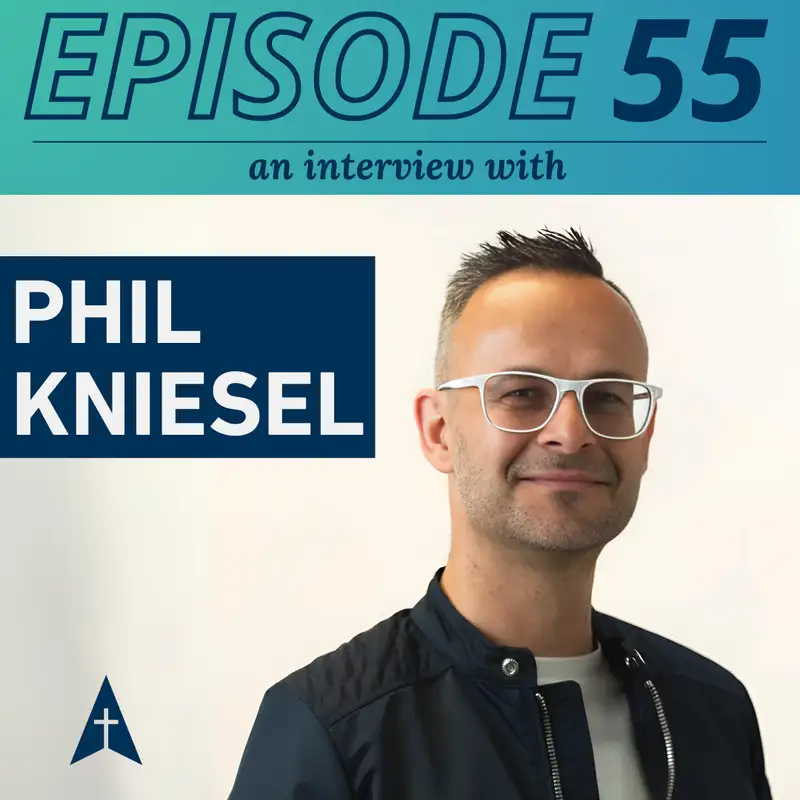
Well, hey, we're so excited to have on church in the Northfield, Knie. So he is the lead pastor of Hope City Church in Edmonton, Alberta. Phil, welcome to the podcast.
Phil Kniesel (00:10.7)
Yeah, Rob, really great to be here. Thanks for having me. Excited to just connect and chat with you today.
Rob Chartrand (00:15.578)
Yeah, well, hey, it's about time we got you on here. Having worked in the same city together for a number of years, yeah. We need Edmonton to represent. We're gonna get into talking about your church and what all that God's doing there, and we'll do a deep dive on a number of things, but let's start with your journey in the ministry. Maybe let's roll back the page and look at maybe calling. When did you first have this idea that maybe God was leading you to become a pastor?
Phil Kniesel (00:20.632)
Right? Yeah.
Phil Kniesel (00:42.348)
I grew up in a pastor's home. And so for me, I really wanted to not be in ministry actually through my teenage life. Not because it was a terrible experience, but I essentially wanted to make some money. And that was kind of the drive of say, hey, maybe I'll try something else. So I actually did my first schooling in business marketing. And then when I was going through that degree where I really felt the Lord.
Rob Chartrand (00:45.788)
All right.
Phil Kniesel (01:10.702)
challenging my heart because I was serving him. I was loving him. I was going to be part of the church but just in a different lane so to speak and really felt that he was saying, hey, I want you to go into ministry and I was kind of fighting it. I never told anyone this. I was just wrestling with it in my own heart and mind and I still remember back in the day when we used to do Sunday night services in our tribe. It was a Sunday night service and my dad had brought in a guest speaker.
And so he spoke, I can't tell you what he spoke on, and he just said, hey, anyone wanna come up for prayer? I'm just making the front open for a time of prayer. And so I went up and I just remember sitting on the front pew in the left-hand side. And I was just having this conversation with God in my head. And this dude walks up to me, this special guest speaker, and says, young man, you need to stop running from God's call in your life. And that was kind of a pivotal moment for me because it was
a word that I needed from the Lord at that time. And so wrestled through that and kind of said, okay, God, you're getting my attention. And then started to take some next steps, finished my degree in marketing, went to Bible college and then landed in ministry. But it was a real God moment for me in that Sunday night in a really small church.
Rob Chartrand (02:24.826)
Okay, so where were you living at the time and where were you going to school?
Phil Kniesel (02:28.14)
Yeah, I was living in Kitchener and I was doing my Conestoga College and the business marketing there.
Rob Chartrand (02:34.234)
Okay. And was he right? Were you running?
Phil Kniesel (02:39.468)
Essentially, yeah, of course, because I was wrestling with this in my heart and my plan was to go work for Burton Snowboards. That was what I really wanted to do. Go down to Colorado and I was a big snowboarder and just wanted to kind of see that scene and see what I could do there. And God turned it 180 degrees and I'm thankful he did.
Rob Chartrand (02:41.02)
Okay.
Rob Chartrand (02:48.671)
my.
Rob Chartrand (03:01.052)
10-year gap you're making money. Snowboarding for Jesus. that's yeah. Okay, so where did that lead you into ministry? Where'd you end up after that?
Phil Kniesel (03:02.966)
Yeah, that's it. Right. You got it, dude.
Phil Kniesel (03:13.624)
So I went to what's considered Masters now and I went there and I, because I was a degree after degree, I did my Bible college in two years and then landed in a small town called Petroleum, Ontario. I started out there and it was interesting because I had an opportunity to be full-time at a church or part-time underneath a guy who was considered kind of like the youth pastor guru in Western Ontario in our tribe. And I thought, you know what?
for 7,000 bucks a year, I'm gonna go work underneath that guy because I wanted to learn. I wanted to be shaped and formed. And I just said, well, essentially I felt God was leading me there too. And so it was an interesting dynamic because for three years I pastored there and worked part-time at a farm building grain elevators. And Rob, I think you know me enough, I'm not a farm kid, dude. And so that was both stretching, challenging and.
massively character building in my life. And so thankful that, you know, looking back, God gave me that opportunity.
Rob Chartrand (04:13.254)
Wow.
Rob Chartrand (04:18.138)
Yeah, so convocational but a paid apprenticeship. Yeah. Yeah. And you were what? How old about that? About 25 around then or? OK. OK. So so you stayed in it for three years, but then where where'd you go after that?
Phil Kniesel (04:21.358)
Essentially, yeah, yeah.
I was 23. Yeah. Turning 24, yeah.
Phil Kniesel (04:33.838)
From there, went down to Winnipeg. My wife's from Winnipeg. I married a Winnipeg girl. And so we moved back. It was her home church. We were there for five and a half years. And great season of ministry there. It was a church of about 500. So you're kind of an everything pastor, even though my title was youth and young adults. I did everything, right? And then after five and a half years, I landed here at Hope City, which was called Millwood's assembly before, and been here for almost 20, which is nuts.
Rob Chartrand (05:03.132)
Wow, wow. you started there, did the project already exist? Okay. Okay, okay.
Phil Kniesel (05:07.106)
Yeah, that was my job. I came up here for the project. The project was three years old. And they're the guy who started the project left after two in a bit. So they had like no leadership for almost a year. So yeah.
Rob Chartrand (05:21.606)
Wow, okay. Okay, well, let's talk about that. I do think it's interesting though, you were able to work in a very, very small church and then a mid-sized church and then of course, Millwoods is a very large church. What is the project for our listeners who aren't aware of it? How would you describe it?
Phil Kniesel (05:38.702)
Sure. Project was back in the day, our tagline was an experiment in organized religion. And so it was something that was targeted for the thinking non-Christian young adult. Essentially, it's evolved into a place where young adults from multiple walks of life and also churches gather and come. And it's still running today. So when you think about it, it's been going for about 24 years now.
and we have seen God do some incredible things. It's the age demographic of 18 to 30 years old. And even this fall, we have just seen under the team's leadership there, God do massive things like we're seeing tons of young adults coming to Jesus, getting saved, getting baptized. We bumped over a thousand young adults a couple of weeks ago here and we're just, we're grateful because there's a move of God's spirit. It's a fresh hunger in their lives. It's a fresh desire just to say.
Rob Chartrand (06:21.98)
Hmm. Hmm.
Phil Kniesel (06:33.334)
I need purpose, I need meaning, and I see what God's doing in this place, and he's just drawing people in. So it is a place, a space, and a platform for young adults to grow in their faith. And let's be honest, for young adults to find Christian spouses, because everyone wants that. And that's not a bad thing. We embrace that. And then just also a great place to bring your friends who don't know Jesus. And so my oldest daughter, she's 20, loves it, goes there. She has seen
Rob Chartrand (06:48.462)
Yes.
Phil Kniesel (07:03.092)
literally Jesus saved in the last four months two of her friends who didn't grow up in a Christian home, didn't you know have any Christ-like influence. One individual was a Muslim and just seeing the work of the Lord in that. for a dad getting your daughter to see some of her friends coming to Jesus because of a ministry, I mean it's it's exponentially joyful. Like I'm just like because those are the things that solidify faith.
Rob Chartrand (07:28.422)
Yeah.
Phil Kniesel (07:30.924)
your kids, right? When they see the power of the gospel at work in someone else's life.
Rob Chartrand (07:34.236)
Mm-hmm. Yeah, I mean, both of my daughters had gone there for a season. One was longer than the other. You know, just where they were at life and moving away from the city, that changed all that. But for them, it was great for them to bring their non-church friends to participate and give them an opportunity to experience community on a deeper level and experience Christ as well. So, super helpful for them.
Phil Kniesel (07:40.238)
Okay.
Phil Kniesel (07:58.35)
Great. Awesome to hear that. Yeah.
Rob Chartrand (08:00.984)
Has it changed then in its maybe ministry philosophy since the early days? Like in the early days, was it more of a kind of a seeker sensitive, more primarily geared towards those far from the faith and now it's more kind of
Phil Kniesel (08:17.41)
Yeah, you know, I would say in the early days when you talk 20 plus years ago, seeker sensitive was a thing even churches did, right? And that's just not where society is at now, because what society wants is truth. They want to tell me if I'm living wrong. They want it up front in their face. And so we are hardcore biblicists across the board, whether it's evening for the project, whether it's what we do in our morning services. And I think that's
Rob Chartrand (08:18.342)
That was your focus.
Rob Chartrand (08:25.264)
Yeah, for sure. Yeah.
Phil Kniesel (08:45.198)
probably a shift in culture more than anything. And the church needs to adapt to that because if we're still trying to do seeker sensitive services in 2024, I think you're kind of missing the mark there because people, they expect to come to church and hear something that's going to be like, okay. You know, so I think part of that has changed because of culture's demand for truth has changed. And so.
Rob Chartrand (09:10.46)
Hmm, yeah.
Phil Kniesel (09:12.076)
I think churches need to always remember, our job, I say it simply like this, my job is to make the Bible make sense to people today who never read the Bible. But not shy away from truth, not shy away from things that could be, let's say, uncomfortable to talk about. Yeah.
Rob Chartrand (09:30.362)
Yeah, yeah. Yeah, I mean, I think they do want you to shoot straight and talk straight and say what it is. And I think the secret sensitive model, it was more effective in, well, I mean, book, Strobel's book, Inside the Mind of Unchurched Harry and Mary. Well, we're in a post-Christendom reality now. There's so many, so fewer people culturally who have a Christian memory. So.
Phil Kniesel (09:50.52)
Great.
Exactly right.
Phil Kniesel (09:58.233)
That's right. Yeah. Yeah, you got it, man. That's exactly it. It's funny, my wife's a teacher, and so she's in primary grades, and kids have no clue or concept, even now in this Christmas season, we're filming this in December, of just who Jesus was, that he came, that that's part of the Christmas narrative. You know, it's not even shared with them. Yeah.
Rob Chartrand (09:58.982)
We have to adapt our paradigm.
Rob Chartrand (10:23.044)
Yeah, it's amazing. So you didn't stay in this role forever. How long ago did you transition into the lead pastor role? Nine years. Okay. Okay. Well, let's talk about that for a bit. First of all, I mean, why the change? And then let's talk about what made for a successful transition.
Phil Kniesel (10:31.084)
Nine years, just over now. Yeah.
Phil Kniesel (10:41.88)
Sure. Why the change? What do mean by that Rob?
Rob Chartrand (10:44.252)
Why did they bump you up into the lead pastor role? Was there a plan for that? A succession plan? A vacancy? Et cetera?
Phil Kniesel (10:47.726)
Sure. Okay.
Yeah. I followed a leader who was here for 37 years. So, you know, when you follow and it was a good tenure, people loved him. Church loved him. He did some incredible things. I served under him for a decade as well. I was on a staff team. so that exceptional leader and a good friend. And so that helped.
when five years before we transitioned, he came to me and said, you know, I think I'm going to be retiring at this age. He didn't retire from ministry. He just meant from the church. And he said, I want you to consider, because I see these giftings in you. I think you could be the next leader of our church. I want you to pray over this. And I did. you know, at the end of the day, my wife and I both felt, OK, this is an open door that God's provided for us. So let's walk through it. I think one of the things that made
succession, because succession in any church, Edice, succession in a large church, many times goes not so great. And both of us would say, both meaning my predecessor and myself, that you had to play a strong balance of give and take in the interim season before he left and before I came in. And so,
just being able to let go on his part and me to be able to grab on, but then also say, no, there's, there's leniency here to just say, you keep doing this, you keep doing that. I'm okay with that. We'll figure this out once it transitions because we really, and I truly mean this, we just wanted what's best for the church. We didn't want what's best for ourselves. And so that's a unique position that an individual has to be in to make succession work and succession works.
Phil Kniesel (12:44.386)
really on three platforms in my opinion. It works on the congregation side. So I mean the congregation has to desire and want whoever the new leader is going to be to be the new leader. And then the other two, and I'll go back to that in a second, but the other two are obviously the incoming pastor and the outgoing pastor. And so how those three all intersect really make a good or bad succession. Kind of a
interesting slash funny story with the congregational side. I remember my predecessor saying to me, because in our tradition here, in our denomination, we still vote on the senior pastor. The membership baits votes on the senior pastor. It's the only staff position we do that with. And so he said to me, if you get an 80, 83 % vote killer, it's good. Be happy with that. I said, okay. said to him, I'm hoping for 87. That's kind of the number I have.
I remember going to my wife and she's like, Phil, we're not taking the job if it's not 93. And I was like, whoa, really? She was pretty adamant about that. And I remember going, OK, Lord, like this is in your hands. I mean, she needs to know as much as I need to know that this is the lane, the calling that God has for us, because as much as she isn't on staff here, it's still part of her calling and what she leans into.
Rob Chartrand (13:50.022)
Ha ha ha ha ha.
Phil Kniesel (14:07.162)
And I just remember the vote on that day when we were waiting for the results. The board member walked into my office and said, well, you got a 99.7. And so that was confirmation, right? And that just catapulted, okay, we're moving into succession. We're taking the leadership and it's been healthy and good. And so just grateful for that.
Rob Chartrand (14:16.806)
Wow, okay. Yeah.
Rob Chartrand (14:29.478)
Hmm. Yeah. Are you still worried about that 0.3 % today? Yeah, it's the kid who always gets 100 gets their first 99 and they're just killing themselves for, yeah. Yeah. Yeah. So, did they, did they do multiple candidates when it was time for him to, to move on or did they start the process with you kind of an heir apparent a few years prior to that?
Phil Kniesel (14:33.358)
Well, I kicked him out, so we're okay. Right?
Phil Kniesel (14:42.882)
Totally, right?
Phil Kniesel (14:56.002)
Yeah, there was not consideration of anyone else. And it was like, hey, we believe Phil's our guy. We see that in him. And I had a board interview, but they've known me. It was more like hanging with buddies around the table, essentially. But they had to obviously do that for the sake of, hey, here some questions we want to ask you. How do you lead through this? We've seen this. We've seen that. How would you do it from a lead chair?
Rob Chartrand (15:00.047)
Okay.
Rob Chartrand (15:08.806)
Yeah. Yeah.
Phil Kniesel (15:24.536)
That was helpful. That was good, Rob. And one of the one of the things that was kind of peculiar in the first eight months was my predecessor still stayed on staff. And so he shifted from his role into an associate role. And I shifted from associate into lead role. And he was still at the table with all the meetings and things like that. And I just remember
Rob Chartrand (15:37.87)
Okay.
Phil Kniesel (15:52.162)
And he was very gracious about this. About three to four weeks in, I just said, I'm going to need you not to come to these meetings. I need to set the pace because everyone's still looking to you. Like imagine same staff team. One week, I'm just a peer. And then the very next week, I'm leading them all and the old leader still in the room. So you're right. That's exactly it. And he was very gracious of that. He understood it. And so there was no ego.
Rob Chartrand (16:11.962)
Yeah, musical chairs, but he's still there.
Phil Kniesel (16:19.146)
on his part, there was no ego on my part, essentially. It was just saying, what's best for the team? How do we make this work for the church? And then, you know, we were actually just saying, God opened a door for my predecessor and now he works at a provincial and national level with our denomination. And it's been cool to see how God has opened that door for him over eight years ago.
Rob Chartrand (16:20.305)
Hmm
Rob Chartrand (16:41.306)
Yeah, yeah. So was there a time like going back, like way back in your time at the church there when you were still at the project where there was like a kind of a preliminary conversation, like maybe, maybe the day you got hired or maybe a few two years in, like how far along did this go back? Okay.
Phil Kniesel (16:59.938)
Well, there wasn't at all. And truthfully, bro, I didn't have aspirations that early on in my life to be a lead actor. Really, the plan for my wife and I, because we moved from Winnipeg, her family's all in Winnipeg, mine's all in southern Ontario. The plan was, hey, let's move to Edmonton for a season. Let's do this project thing and then we'll probably land in Ontario or Winnipeg at some other point.
Rob Chartrand (17:07.728)
Mm-hmm. Okay.
Rob Chartrand (17:24.998)
Okay.
Phil Kniesel (17:26.072)
plan wasn't to necessarily lock in and become lead. And I think, you know what, when you talk about that, that's a calling and it's a mantle of leadership and God needed to, he needed to build that in my life. He needed to, you know, prep that for the season that was ahead. Because if you would have told me right at the beginning, I probably would have been like, dude, there's no way, that's not what I'm doing. That's not what I wanna do. So it was a season of, okay, the Holy Spirit needs to,
change me in order to think and say okay this is part of my calling this is a next and a challenge I want to embrace and so it the conversation happened initially about five years out and it was just pray through it like I said earlier you know just consider this and do you want to see where this goes.
Rob Chartrand (18:14.236)
So you've already identified one early challenge that you had with your, you know, the former lead in the room and that makes sense. mean, that would take a lot of courage to try and lead in that environment. But any other challenges you faced early on in the transition?
Phil Kniesel (18:31.384)
Well, are you talking leadership wise, church wise? Yeah, you know, one of the things I did in the first six months was I brought macro changes because we were moving into the vision of launching multi site. And so we still had we had three Sunday morning services and one of them was called our traditional slash contemporary. And I'm like, if we're going to multi site, we can't be doing this separate service style.
Rob Chartrand (18:34.236)
As a leader, yeah, as the leader, yeah.
Rob Chartrand (18:47.023)
Okay.
Phil Kniesel (18:59.854)
Right? We need to be all the same. And so I remember shutting that down, which had a 65 person choir that that was their life. They loved that all that stuff. And then having to walk through the changes of that and the why of that. And the reason it worked actually, Rob, is because we did have a macro why. It doesn't mean it didn't hurt people's feelings or, you know, it wasn't hard on people, but they understood the why. And the why was we're launching campuses. We don't have enough.
Rob Chartrand (19:11.356)
Yeah.
Phil Kniesel (19:29.994)
know, staff capacity to run all these different styles plus a campus offsite and that. So people were understanding that. But I still remember the Tuesday night when I went into the choir said, OK, you guys are done as of this date. man, people were weeping, all that kind of stuff. That's that's a hard leadership challenge. You have to lead through it because I knew this is what we needed to do as a church. And then literally like two months later, I changed the the name of the church as well. And so when you're talking about all in your first year of leadership doing macro changes like that.
Rob Chartrand (19:44.668)
Hmm.
Phil Kniesel (19:59.758)
That was a lot.
Rob Chartrand (20:00.976)
Yeah, yeah. Well, and for many of them, that was their community, right? Is to go to choir and see Joe at the other side and sing alongside of Karen, et cetera. I mean, I can imagine that was a challenge, but yeah, yeah, yeah.
Phil Kniesel (20:05.016)
Exactly.
Phil Kniesel (20:11.522)
That's exactly it. was their small group every week, right? So, yeah. And so that was a difficult thing. I would say it this way, I wouldn't recommend it someone coming new into leadership to do it that quickly. had 10 years of change in my pocket of trusted leadership saying, hey, no, he's legit. We love this guy. He's for our church.
That's why I think it went smoother than it would have if I just would have landed there and tried to do that in my first year. Yeah. Totally.
Rob Chartrand (20:44.326)
Yeah, for sure. Chips in the bowl. You had lots of them. Yeah. So one of the things I admire about Hope City, know, speaking of you changing the name, and we've had a chance, my wife and I, to visit Hope City since all of the changes were made a couple of times, because we had some friends in the church there and we're visiting the city and we decided to pop in. But anyway, one of things I admire about you guys is your intentionality about growing young. So...
You seem to evergreen quite well. In other words, you're continually reinventing yourself because you're focused on a younger audience. Not at the neglect of other audiences, but you're focused on skewing young. So give us a bit of your, maybe your philosophy or strategy behind that.
Phil Kniesel (21:31.896)
Yeah. Sure. You know, that was essentially even part of the DNA when this church was planted back in 1976. There was two core things that they were going to be about when they started, and that was being a church for people who aren't here yet and keeping our kids. They use the skewing young language as keeping our kids. And so when you start a church with that
DNA that thinking that drive it has always just permeated everything we've done and so what that does from day one Rob is it makes change not scary or the enemy it makes it necessary and so when you understand that change is necessary because we're constantly evolving in the right term of Just saying how do we become the church that skews young keeps our kids reaches generations far from us?
or younger than us who are far from God rather. And that just became part and parcel of what we do. And so over the years, what we've done is then we've put money where our mouth is. So you, you know, you staff next gen ministry. We have massive amount of staff right now. When you talk about age 25 to zero, that's the majority of our staff team. Why? Because we want to pour into next gen. And so
it becomes, okay, this we're going to put massive dollars towards this. We're going to hire people who are in that same demographic to reach that demographic. And so I'm 51. I'm the old guy on our staff, literally. And we feel that. And that's okay. That's my role. You got it. And, and that's, you know, you embrace that, but you hire people, you get staff around that are obviously in
Rob Chartrand (23:13.54)
Every morning when you wake up, you feel it.
Phil Kniesel (23:26.69)
the world of those that you're trying to reach and understand them much better. I can't be a good youth pastor these days. I don't get their world. But there's people that you hire that are going to be incredible because they understand and have a passion and just relate and all that. So all that to say, it's just been part of our church from day one. And so when I teach our DNA class, our church life class to any newcomers who come, I say this was part of us from day one.
But this is part of us now. And the ticket to seeing this is you've got to be OK with change around here. Because we'll constantly change for the sake of reaching the next gen. Yeah.
Rob Chartrand (24:04.944)
Yeah, yeah. And I think it's probably important to clarify that for our listeners that what you, and I'm trying to read your mail here. What you have in mind is not compromising for the sake of the gospel, but contextualizing for the sake of the gospel, which is very different, right? So becoming all things to all men so that by all means you might possibly save some, right? And so speaking the language and the culture of those you're trying to reach without in any way watering down the message.
Phil Kniesel (24:21.255)
Yeah, that's great.
Dude, it's worst folk.
Phil Kniesel (24:33.038)
Yeah, exactly. And I would say, you know, sometimes you get pegged because of growth or because you're a larger church that you must be gospel light. You guys must be a little bit just like, you know, Jesus loves you and that's it and end it there type of deal. And I would say we're the exact opposite. We try to hit very hard truths from scripture. We're not afraid to shy away from them. Kind of goes back to our conversation that we had.
Rob Chartrand (24:50.108)
Mm-hmm.
Phil Kniesel (25:01.09)
at beginning here, just that's what people are hungry for. They want meat, they want truth. They want to come into church and go, huh, never heard that before. Okay, that makes sense. Or I don't agree with you, but thanks for being honest. Right? And so my encouragement to anyone who's saying, you know, hey, why are you guys seeing growth like the way you are? What is God doing? My encouragement is preach the Bible, man. I can't tell you how many times people come in from
mainline churches or other churches and say, we don't hear the Bible preached in our context anymore. And so even just to go, like, what else you got, man? Take those scriptures, take the word of God and make them come alive. And I think people are hungry for that.
Rob Chartrand (25:45.648)
Yeah, yeah, I mean, and I think one of the common criticisms of mega churches is that, you know, their gospel light, the just about numbers, just about growth, you know, that church growth and you're pandering to kind of a consumptive itch that congregants might have. And so you shy away from the hard topics and, you know, your messages can become like moralistic and therapeutic. And so, right, you just five steps to a better life with Jesus on the side, you know.
Phil Kniesel (26:13.07)
Totally. Yeah. Yeah, exactly. Yeah, and we know, I mean, really, that's not really what the gospel is. That's not really helpful for people in most circumstances. Yeah. Yeah, exactly.
Rob Chartrand (26:24.058)
Yeah, yeah, Jesus did this to come and die. He's the King of Kings and Lord of Lords, the resurrected Lord of all who's coming back.
Phil Kniesel (26:30.264)
Exactly. We just did a series on that, like number of weeks ago, where we talked about what does it mean to follow Jesus, Luke 9.23. Deny yourself, take up your cross and follow me. okay, that's not sexy. That's what it means to actually come and say, Jesus, I want to follow you.
Rob Chartrand (26:51.174)
So when you preach that, do people grab their coats and run for the door?
Phil Kniesel (26:54.144)
Not at all. No. People are all in. People are saying, okay, I get it. I understand this. Again, because I think we gotta make Christianity, it is challenging to follow Jesus. And so tell people the truth. Tell people this is hard and it's not all frosting around the edges and you're gonna have just icing on your cake all the time because Jesus is that for you. It's hard. And in the midst of hard, Jesus is present. You know, even this past Sunday where
Rob Chartrand (26:59.302)
Hmm.
Phil Kniesel (27:23.926)
second week into Advent, I'm talking about, I talked about his peace. peace, peace doesn't mean life is perfect. It doesn't even mean your external situation is solved. It just means internally, the peace that passes understanding is present. And so, yeah, I think all of that, I would say, Rob, I mean, most of our listeners here today are probably saying, that's what I do. I want to make the Bible come alive. I want scripture to be relevant and
interesting and also true to what it says. So I would just encourage them keep doing that you know keep finding that the truth of the scriptures and relating them to our culture today.
Rob Chartrand (28:04.614)
Yeah, good word. So I want to jump back to your philosophy, your evergreening philosophy of growing young. What's the transition like? What's your transition strategy or how does that help the transition strategy from those in the project into your main congregation? Because the other thing is, I mean, you have people at the project who are from other churches who come and participate in it as well. But I'm sure that your growing young strategy has helped with that transition.
Phil Kniesel (28:24.696)
Right. Yeah.
Phil Kniesel (28:30.69)
Yeah, and you know what? There isn't, there used to be in the past a massive gap between church experience at the project and Sunday morning. And so when you bridge it, because our Sunday morning would just be a little bit different than the project, but we sing many of the same songs of worship, same communication style in that. And so the bridge is a lot less hard for someone going, okay, I'm either married or I'm reaching a stage of life where I feel like I'm the
Rob Chartrand (28:39.162)
Okay, yeah.
Phil Kniesel (28:59.982)
old to come here. We have them coming in the morning and we intentionally like if they're involved in ministry we pair them up with the same ministry in the morning and say hey we'd love to get you serving here we'd love to get you in this lane help us out on Sunday mornings this way or Thursday nights we do Thursday night services too and there's always that our morning communicators also speak once two three times a year at the project so it's
showing the face as well as I bring the project main communicator to preach in our mornings as well.
Rob Chartrand (29:35.13)
Okay, yeah, there you go. There's a seamless link right there. Yeah.
Phil Kniesel (29:38.348)
Right. And so it's just, okay, I know that person. and they're preaching in the morning now too. That's cool. You know, so that, yeah, that's how we do it.
Rob Chartrand (29:48.476)
Okay, so your church has grown significantly in the last number of years there. By God's grace, it's just been great to see. I'll get you to tell me about what that's looked like, but also talk to us about what has contributed to that. You've already alluded to the biblical preaching. What's going on?
Phil Kniesel (30:08.59)
You know, I would say the underlying, and I fully believe this bro, like when I took lead nine years ago, our church prayed but rarely prayed corporately. So we didn't have like corporate prayer meetings scheduled or anything like that. And I just felt the Lord say, you got to start creating a culture of prayer for this church. And so we started once every two months. So this isn't even like crazy.
once every two months on a Saturday night, what we call engage worship and prayer nights. And all it was, was come together to essentially, it's the Jeremiah 29, pray for the peace and prosperity of the city, because if it prospers, you too will prosper. It was kind of that whole idea of we want to pray for Edmonton and greater Edmonton. want to pray for, you know, God's peace and rule and reign over our city. And then we would pray specifically for souls to be saved. And we would do that.
every two months when we gathered. Now, we would bring other prayer focuses in, whether it's next gen, twice a year we actually pray over our next gen ministries, you know, whether it's just prayer for needs or coming forward anointing people with oil, that type of deal, and praying for healing, sickness, whatever. We would do that, but every time we gathered, we would still remember the peace and prosperity of our city and souls to be saved. And so part of that for me was to put it in the DNA.
of our praying people that we want to be a church that reaches greater Edmonton. We want to be a church that is known that we are for our city, not against our city. And we want to believe that God can reach people far from him, but we know we can't do it on our own. We need the Holy Spirit to do it. So we've been doing that for nine years. Now, when I launched it, we had about 130 people in the room. And I remember saying to my wife, my vision, my dream is to have a thousand people join us for prayer on a Saturday night.
Bro, can I tell you, like super jacked, November was the first time we ever hit that, just like weeks ago. And it was just one of those moments where you're like, the room was electric because the Holy Spirit was moving and people were just praying. didn't get that many people in one place praying. And we were praying for our Christmas Eve services. We were praying for our city. And you're just like, like as a leader, you kind of just kind of sit back and go, God, you are so good.
Rob Chartrand (32:10.416)
Okay.
Rob Chartrand (32:32.348)
Hmm. Hmm.
Phil Kniesel (32:34.368)
And so I would say that is a massive driver for what we've seen and experienced significantly in these last four years. Yeah. So.
Rob Chartrand (32:43.824)
Yeah, that's great. Yeah. So the other thing that I think we can say about mega churches is that is commonly even said is is there they're just very traction, very focused, very insular, you know, get the numbers in the building. But you guys have a pretty significant focus on local and global mission. I was actually I knew it was there. But, you know, when you and I talked about before, I was surprised how much of it is there. So
Phil Kniesel (33:05.602)
Yeah.
Phil Kniesel (33:13.08)
Right.
Rob Chartrand (33:13.328)
Talk to us, can you share with us how generosity is such an important value for your church?
Phil Kniesel (33:19.406)
sure. I years ago stole a phrase from Craig Rochelle. He always says he wants to be a irrationally generous church and I just love the way those two words came together and so that is something I brought into our church as well to say we want to be irrationally generous because I believe it mirrors the heart of God. You know, God gave his son but God does so much more and so that was a driver for all of all
that we do, whether you're in kids ministry, youth, young adults, adults, whatever you do, we got to figure out who we're going to be as a church beyond us. And so we partner, literally, have worldwide, we're on every continent. So we have people that we partner with worldwide in global missions on every continent except Antarctica. But we're everywhere else.
and we partner with a whole mass of local ministries as well to the tune that we give away to those organizations and to those individuals over a million dollars a year. And it's just something we want to stretch ourselves on. It's something we want to continue to push ourselves in our growth as we have grown, thankfully, and God blessing us, our budget grows with growth. The same percentage that we grow budget wise is the same percentage we grow in generosity.
And then that's the schedule of generosity. Above and beyond that, we have what's called our Hope Fund, where we reach out to organizations every year and say, tell us a dream, tell us something that you don't have money to do, but you would love to do this in the context of where you're serving. And we get three or four organizations to give us their dream. We put it in our Hope Fund. And that's a side project for us that, man, it's so great to see our church step up and people step up. We just lean into it. mean,
this month we're buying a car for a global worker that's going down to Guatemala. That was a dream of hers. You know, awesome. We get to do that. A year ago, one of our local ministries right in town needed a 15 passenger van and they came to us and said, Hey, it was $80,000. They came to us and said, do you mind? Would you guys ante up 25 grand for us? And I was like, yeah, I'm sure he can do that. But, but let me see. We ended up buying it for them. We just said, okay, here's our gift to you. We believe and like,
Rob Chartrand (35:37.148)
Wow.
Phil Kniesel (35:42.2)
You know what that does? And I say this all the time, we're large. So we can do way more together than any one of us can do individually. And so let's use our scope, our mass to just say, we're here to influence, we're here to bless, we're here to support. So that's a big driver for us. We have over 40 ministries beyond Hope City on our missions roster that we support and lean into financially and we do that monthly.
Rob Chartrand (36:01.392)
Mm-hmm.
Phil Kniesel (36:12.278)
So yeah, it's passive.
Rob Chartrand (36:12.678)
Okay, wow. So let me put on my executive pastor hat here, because I'm curious about the way that you say you do your finance. Do you have a separate missions fund outside of your general fund that people designate to? Or do you just take a percentage of your general fund and you're saying we're going to tie the percentage of this or a percent and portion and make that our missions fund?
Phil Kniesel (36:33.304)
Yeah, it's the latter. We used to have a separate missions fund and it wasn't working well. When people give, they give to your church, they trust your church for the most part. And so what we did was, hey, you give to general and this is what we're going to do. And we ante it up. So here's our missions budget out of the general. And we just do it that way.
Rob Chartrand (36:35.118)
Okay. Yeah.
Rob Chartrand (36:54.427)
Do you make a, you know, to your congregations say like a promise like this percentage every year we're going to give away or do you just have a goal, a number goal instead?
Phil Kniesel (37:05.71)
It's a number goal more than anything. we want to, obviously every year we're adding to our roster as well. And so as we grow, we're like, hey, let's take on another global worker. Let's take on another ministry. And that's cool to be able to do. My goal is always to out give the last year. So whatever that looks like. And so I think last year, yeah.
Rob Chartrand (37:08.496)
Yeah, okay, yeah.
Rob Chartrand (37:16.124)
Mm-hmm, yeah.
Rob Chartrand (37:29.254)
Hmm. Yeah.
Phil Kniesel (37:33.998)
I don't love throwing numbers around, but last year was pretty decent and now I'm like, okay guys, now let's see what we can do in the coming. Yeah.
Rob Chartrand (37:41.104)
Yeah, yeah. Yeah, I mean, there's just so many different ways to do it. mean, by having a number goal, then if your general is down, that number goal doesn't change. So you're still so it could be a higher percentage. You know what I mean? Like it? Yeah. Yeah. Yeah.
Phil Kniesel (37:50.592)
right. Yeah. Totally. And that's the you're right. We have commitments. So on our on our roster, we have we promise all these global workers and local workers that we support. Here's a here's how much you can count on for us or from us. So there there would be a number there that sits there for sure. Yeah.
Rob Chartrand (38:10.298)
Yeah. Yeah.
Rob Chartrand (38:15.792)
Well, for all the systems guys who are listening in, I hope you appreciated that little bit of, for those of you who don't really care about the numbers or how it's done, we beg forgiveness, but I'm always curious about that. Yeah.
Phil Kniesel (38:20.061)
There we go.
Yeah.
I'll say this side comment there Rob. One of the things that we did for all our supporters was as cost of living goes up here, we always increase their cost of living and equivalent in support as well. And the one thing they told us is no one ever does this for us. No church ever does this. And I thought, hey, if you're listening and you got power in your church to do this, do that for them because it costs the living goes up for us, right? And
Rob Chartrand (38:52.732)
Hmm.
Phil Kniesel (38:56.834)
So it was just something that I thought, that's unique that it's unique.
Rob Chartrand (39:02.076)
Yeah, well, and in some parts of the world, the cost of might be much greater. Inflation might even be worse than here. Yeah. So talk to us about multi-site. Why are you doing multi-site? What was its genesis and what's the reason for continuing to grow in this way?
Phil Kniesel (39:06.562)
Right. Exactly.
Phil Kniesel (39:14.35)
Right.
Phil Kniesel (39:20.558)
sure. Ultimately, I mean, we're praying for our city, right? We're praying for God to move and work in our city and the driver was can we reach more people in our city being located at different sites or locations, areas around our city. So, our first campus, what we actually did was we did a mapping and we looked at, okay, this is where all the people in our church are coming from. It was also to help alleviate space at at the Millwood's campus because we were growing so much and we're running out of space.
Rob Chartrand (39:24.474)
Mm-hmm.
Phil Kniesel (39:50.508)
which is where we're at again. our first one we mapped and we looked and there's a neighborhood here called To Williger and we had literally hundreds of people who lived right around there. You know, you do those red dots all around you're like, man, okay. So we just started praying into that area and believing for it. And I remember at the time there's a high school in To Williger called Lillian Osborne. They were just being built and they were building a performing arts theater onto that high school.
Rob Chartrand (40:04.124)
Yeah.
Phil Kniesel (40:20.75)
And I'm like, man, that'd be killer. Like, it's better than a movie theater, all that kind of stuff. Let's see if we can get it. So I went to them in the construction process and said, hey, we're a church. We'd love to rent it. They're like, there's no way you guys are going to get it. We don't want that. This is a theater. It's for the community. Blah, blah, blah. I was like, OK, I ask. No biggie. They keep going. We keep looking for something. And I'm like, man, there's nothing out there in that community other than like a school, a gym, right? And so
We're just looking, we're looking at warehouses. They're not good enough, big enough or situated in an area that we would even want to be. So just praying about it. I'm like, I'm to go back to them at the school and see if we can get... Well, actually the theater was managed by another group and the principal was on that board, but they had a CEO of the theater because they wanted to make it not just a school, but a community theater.
Rob Chartrand (41:01.468)
Did you talk to the principal?
Rob Chartrand (41:07.068)
Okay, yeah.
Rob Chartrand (41:16.422)
Hmm. Okay.
Phil Kniesel (41:17.612)
And so they were broader than that. had different, they had like government officials on the board, like MLAs and things like that. And so I went back to them and I said, listen, I know you said no, but we could be one of your first clients. We'd love to be in there. We'll treat it with respect. They said no. So I was like, okay, I tried. And we kept looking, Rob, we kept looking, kept praying. And about three months, now.
Rob Chartrand (41:35.484)
You
Phil Kniesel (41:43.298)
The whole time we're prepping, we're working with Portable Church, we're getting all this stuff in and we're like, we don't even have a location guys. Like, and we're just believing the Lord, trusting him. And one day I was praying again and I'm just like, all right, three's the charm. I'm going back there. And I called the CEO, her name was Sue and I just said, Sue, can I, can I just come and talk to you one more time? She's like, sure. So I go in, do another pitch and they said yes.
And we were just like, we just got a brand new theatre built for us. You know, and that was cool. It was a lesson of persistence, lesson of even just trusting God. And so we launched it and it went well. We launched and we were in there for three years and we just relaunched that campus this past year where we bought a old Anglican church, the only other church. There's two churches in Toilager.
Rob Chartrand (42:18.012)
That's awesome. Hmm. Yeah.
Phil Kniesel (42:42.068)
It's about 78,000 people that live in that neighborhood. There's a great church. It's a community Christian church in there and the Anglican church, but the Anglican church closed down. And so we were able to buy that building. It was a complete mess of a building, like black mold, everything. They had no money. We had to gut it, put it down to its studs, everything, but it's on four acres of land. And we put 8 million bucks into it, reopened it. And in a year we've gone from
Rob Chartrand (42:48.529)
Yeah.
Phil Kniesel (43:10.702)
one service upon launch to triple services there on a Sunday morning. We have over 800 people that attend there now and you're just like, this is incredible. Like imagine if we wouldn't have done this. So that's just story of one of our campuses. Cost a lot of money. Yeah, we did. We did. Yeah.
Rob Chartrand (43:25.392)
Did you have to add on to the building or was it like, okay, yeah, needed some, some meeting space.
Phil Kniesel (43:32.066)
Yeah, and even a lobby, it had zero lobby. Like you literally walked in and there was the auditorium, right? And so, you know, we just had to add on a little bit, but that's the story of one of our campuses. And I say, yeah, we did it because we wanted to reach more people in our city. And we've seen the faithfulness of God in that. There's no question. So.
Rob Chartrand (43:37.402)
Right, yeah.
Rob Chartrand (43:50.416)
Yeah. Yeah. Do you do team teaching or video venue? How do you, how do you manage your Sunday mornings?
Phil Kniesel (43:56.684)
Yeah. So I have a team of teachers here. It's not all me. This year I'm preaching 30 times. So definitely I'm not the main guy who has to be preaching all the time. And can I just tell you, it's totally freeing. Like it's so great just to have great communicators alongside of you and building up younger and seeing the gift in them and saying, you use them, you know. So we have a team teaching at the main campus, but all our campuses are video.
Rob Chartrand (44:03.516)
Hmm. Yeah.
Rob Chartrand (44:09.904)
I bet, yeah.
Phil Kniesel (44:26.168)
teaching. And the primary goal of that is I free up the campus pastor to say, I want you to build this and grow this and pastor the people. I don't want you to spend two days a week writing a sermon because someone else on our team is going to do that. So it's actually resource allocation. Right. And so it just that's our model for now. I hold it pretty loosely. If one day we're like, you know what, we've got to change this up. Great. Let's change it up. Yeah.
Rob Chartrand (44:53.05)
Yeah, yeah. Yeah, I mean, there's lots of different ways to do that. But it's true. Like your local church pastor wears about three or four primary hats, teaching, shepherding, administration and leading. And if you can take away one of those hats, you give them the ability to specialize in the other areas and really care for the congregation. So, yeah. What have you been reading lately? Talk to us about that. How are you learning?
Phil Kniesel (45:05.56)
Exactly.
Phil Kniesel (45:10.275)
Right.
That's been the goal. Yeah.
Phil Kniesel (45:19.384)
Yeah.
Rob Chartrand (45:21.53)
what's stirring your soul or challenging your thinking.
Phil Kniesel (45:24.194)
Yeah, great question. mean, you all leaders are learners, right? So you always want to keep pushing yourself, growing yourself. I have a slew of podcasts I listen to. But reading specifically our staff right now, I don't know if you've ever heard of Frank DiMazio. He he's kind of connected with that Theos group down in the States, but he wrote a book becoming a game changer leader or yeah, becoming game changer leader. So our staff's going through that book.
So I still love reading on leadership for sure. There's, I just bought a book by R.C. Sproul. And I mean, old school dude, right? And I love sometimes just challenging myself because he's deep theology. It's called hard sayings and understanding hard things in scripture. So I'm working through that. I have a book, Daryl Johnson. He's more of a Canadian theologian. I'm sure you've heard of him, Rob.
Rob Chartrand (46:03.388)
Okay.
Yeah, totally.
Rob Chartrand (46:21.595)
Yeah, yeah.
Phil Kniesel (46:22.274)
written a few books. I bought his latest one. I'm going through it of that you may live. It's on the Ten Commandments and this. Yeah, me too. I haven't read like I'm just starting it because I read his one on Revelation, which I thought was really great. And then I picked up a second one of his the story that makes sense of our stories. And so I haven't gone through that one yet either. But that you may live is the one I'm going into. And and I would say outside of that, I mean,
Rob Chartrand (46:30.812)
Yeah, I heard good things about that one.
Phil Kniesel (46:51.362)
Honestly, I do a lot of Bible reading. That's part of a chapter a day for sure, and I just want the word in me. And so I would choose if I had to read scripture over a book any day. Right.
Rob Chartrand (47:04.122)
Yeah, well, and you're sermon prepping all the time too. So you're constantly immersed in the word and you want to separate that out from your devotional life as we've learned. Yeah.
Phil Kniesel (47:11.636)
You do. Yeah. Yeah, that's great. And you know what? I can do that. I've learned that rhythm. I have my devotional life. There's a book on my end table written by the guy who does, shoot, he's the pastor of where Rich Wilkerson used to be, the cross and the switchblade in New York there, Square Church. And why can't I think of his name? Anyway, he wrote this book.
Rob Chartrand (47:33.635)
okay.
Rob Chartrand (47:39.302)
So not Nicky Gumbel.
Phil Kniesel (47:40.942)
So that's a holy Trinity Brompton in London.
Rob Chartrand (47:44.666)
No, not Nicky. Sorry. Nicky Cruz was the CrossFit Switchblade guy.
Phil Kniesel (47:47.406)
Yeah, yeah, it was that whole scene. Tindalina, that's who it is. Tindalina, he wrote this. He wrote this devotional book called 260 Journey. And I go through it quite consistently. And what he does is every chapter in the New Testament has a thought written on it, because there's 260 chapters in the New Testament.
Rob Chartrand (47:51.649)
okay yeah yeah yeah yeah yeah sorry sorry nicky gumbel i know who you are
Phil Kniesel (48:17.55)
I recommend it. I recommend it for young pastors and for leaders because I think it's got some good content.
Rob Chartrand (48:24.54)
Hmm, okay. When I heard True 60 Journey, I thought it's somebody who falls short of 360 degrees leadership. I only made it to 260, I just...
Phil Kniesel (48:31.65)
Yeah, that's all I'm doing, Yeah.
Rob Chartrand (48:38.716)
So Phil, we've got a lot of mega church pastors in the news that have taken pretty big falls, just the Southern Baptist, like six or seven in the last number of months. So what are you doing for accountability and protection, like for yourself, for your soul? How do you work towards a long obedience in the same direction for yourself?
Phil Kniesel (48:52.44)
Dude, right?
Phil Kniesel (49:06.318)
Mm hmm. Yeah, well, I'll go back to maybe I'll say a few things there. number one, personal devotional life is paramount. I've studied a bit of the fall of pastors and the first thing to go every single time is their personal devotional life. Every single time and so I'm like, okay, if I have a connection with the lord, if I'm seeking him, if I'm reading his word, if I'm praying personally, not just corporately.
Rob Chartrand (49:22.502)
Wow. Yeah.
Phil Kniesel (49:33.014)
Like the worst thing is, the first time you read your Bible that week is when you're reading in the sermon, or the first time you pray is when you're in front of people. That's a problem. And so, just keeping that heartbeat, that lifeline, so, so critical, so important. I would say secondly, know that you're not that big of a deal. And that helps. You know, like God builds his church. He can do it with or without me.
Rob Chartrand (49:54.556)
You
Phil Kniesel (50:00.754)
And sure, it's a large church, but I'm not that big of a deal. And if you can really get that, it's also very freeing. You don't have to feel like you always have to prove yourself or do anything like that. But I think it's just the right attitude of who we are before God in the context that He's placed us. Yeah. Yeah, exactly. Sometimes worse. Exactly it, dude. And then I would say you need
Rob Chartrand (50:17.712)
Which is humility, right? Your stuff stinks like everybody else. Sometimes worse.
Phil Kniesel (50:29.802)
outside of your spouse, you need that individual in your life, at least one who you are open and honest with, pray with, they can call you out, they can do anything with you in the sense of, I don't like your attitude. Are you asking the hard questions? You know, that type of deal. I have someone like that in my life. He's another lead pastor of another church, a fairly large church. There are about two and a half, three thousand people. So we get our worlds.
It's not someone who doesn't understand all the complexities and maybe pressures that I would face uniquely in this context. And I would say we text daily. We cheer each other on to the point of like, you know, every Sunday morning, just prayed over you, may the Holy Spirit bless you, use you, be bold, go kill it, that type of stuff, right? Or a quick phone call, hey dude, I'm struggling today, okay, let me pray over you.
Rob Chartrand (51:08.608)
wow.
Phil Kniesel (51:24.192)
and we just have built this relationship. I've known him. He's a pastor in the city. I've known him for 20 years. And I'll say this, Rob, you choose to be vulnerable. And when you choose to be vulnerable, God honors that. And there's just a healthiness in that because accountability only works if you're willing to actually go that step of vulnerability.
Rob Chartrand (51:45.722)
Right. Yeah. mean, you can have all those systems in place and still dodge the bullet. Like you can still be self deceptive or deceptive to the people you're accountable to. Yeah.
Phil Kniesel (51:50.784)
Mm-hmm. That's exactly it. And so it's admitting when you have bad attitudes, admitting when you sin, admitting when, you know, I've had thoughts that I shouldn't have, because there's power in confession, right? You break it in your life. And so just understanding that and having that safe place for someone that says, okay, thanks for sharing that. Because a lot of times accountability groups are going,
Yeah, I screwed up too, so let's just kind of say, you know, no, it's not like that. It is literally, bro, you know better. I'm pray God's blessing, God's strength, God's wisdom. Like it's that type of level of leadership and accountability, so.
Rob Chartrand (52:34.502)
So how did you get connected with this other leader? mean, not everybody has that gift. How did you guys find your way towards it? Okay.
Phil Kniesel (52:39.99)
Intentionality, intentionality, dude. Like he was a young adult pastor in the city. When I was a young adult pastor in the city, he's kind of grown up and done. He's now lead pastoring that church. So it's just constantly, okay, I see our journeys together. We, know, obviously there's chemistry. You got to be able to have fun with the individual and connect. And that, matters. And then just, we, I mean, we go snowboarding together a lot in the winter and it's kind of like we leave at 5 a.m. We're back at 10 at night. We just.
do day trips and bomb and we're involved in a lot because he's in my tribe we're involved in a lot of things together on leadership boards and things like that and so I mean just the intentionality yeah it's important I I didn't know it to the extent of now that meaning I didn't have this all the time through my ministry years of 28 29 years of ministry
Rob Chartrand (53:21.532)
Yeah, yeah, it's good, that's good.
Phil Kniesel (53:37.262)
I'd say the last seven have been very intentional and it's been life-giving. And then I'm also part, or the other thing, I'm also part of a, for lack of anything, mega church lead pastors network out of the states where we meet and we're on a group and it's under the, guys under the,
Rob Chartrand (53:43.152)
Yeah, yeah, it's good.
Phil Kniesel (54:04.78)
mentorship of Larry Osborne from North Coast Church. Yeah, so he's written a lot. He's been my personal coach and mentor for the last seven years. So yeah, so him and I, obviously we have a great relationship. I've brought him into our team numerous times to speak and that, but just having that network. I mean, I sit with guys who have churches that are 25,000 and yeah, like it's beyond my world.
Rob Chartrand (54:07.994)
Love Larry. Yeah. Okay.
Rob Chartrand (54:13.994)
really? Okay.
Phil Kniesel (54:31.35)
right? And so just being able to be in a room with high level thinkers, high level leaders, and I would say guys that are very humble. And I love that.
Rob Chartrand (54:43.28)
Yeah. Has anyone in that group had a failure and it shocked you all or surprised you all? Okay. Praise God. Okay. Yeah. Yeah. Yeah. But maybe those who are, you know, living in secrecy don't want to be part of that group because you'll be exposed. I mean, who knows? Yeah.
Phil Kniesel (54:50.434)
Not yet. I've been in this group for seven years, so yeah.
Phil Kniesel (55:01.624)
Right, right. Yeah, you know, and I think for the most part, all it is is we talk shop a lot because it's good to do that. But then we talk about our lives and our marriages. And that's the one thing about a guy like Larry Osborne. I mean, he's 71 and he sits down and he just talks real about how he land, you know, how his family is all serving Jesus, kids and grandkids, how his wife and him are still madly in love. Like those are the kind of things you want to hear from a guy.
Rob Chartrand (55:10.352)
Yeah. Yeah.
Phil Kniesel (55:31.566)
who led a church of 15,000 people. And so it's been cool to have that, I would say outlet and essentially group of guys. I mean, I had a guy text me this past Sunday, Phil, just prayed over you. I hope your Sunday's amazing. He's in Indianapolis, you know, like just cross the North America. It's kind of neat to have that. Yeah.
Rob Chartrand (55:53.156)
Yeah, that's great. Yeah. Well, I wonder if we could finish, Phil. This has been so great, so rich. But I wonder if you could give a word of encouragement to our ministry leaders who are listening in from across the country, wherever they find themselves, whatever state they find themselves in.
Phil Kniesel (56:01.166)
Thanks, Rob.
Phil Kniesel (56:07.949)
Yeah.
Phil Kniesel (56:12.674)
Yeah, I would say number one, be yourself. Don't try to lead like anyone else. God has gifted you for who you are and for your personality and for your gift set. Own it. I went through a season where I didn't think that was what God wanted from me. And when I learned that God made me me and really to just embrace it and just not trying to be someone else, huge. Changed everything.
And so I just want to encourage, I know with a lot of younger leaders, you're watching people on social media, you're watching some other pastors, you're like, man, I got to model my life after them in some degree or try and be a teacher like them or try and lead like them. I just say, yeah, have aspirations, have leaders that you look up to, but be yourself, own that. And the second thing I'd say, Rob, and this is just so baseline, but it's so critical because it's been my lifeline is make sure you love Jesus passionately.
And I don't care how you do that in your life, just figure it out. My passion for Jesus is the number one thing that drives me. And I would say this as well, always keep a soft heart to the things of the Lord. I'm an easy crier, man. And I've asked the Lord to never lose that. So I hurt with people when they hurt. I cry, I just had a couple of my office two nights ago, and they're dealing some things with their kids and hard things. And I'm just weeping with them.
And I never want to lose that. Keep my hearts off because that just actually puts you in a posture of just being able to relate and being able to be dependent upon God because that's what we are. So I don't know, those are just some things I would throw your way.
Rob Chartrand (57:57.98)
That's great. So good. So good. Thank you for sharing that. And thanks Phil for being on the Church in the North podcast. Been a great conversation.
Phil Kniesel (58:01.72)
Yeah.
Phil Kniesel (58:06.018)
Yeah. Thank you for having me, Rob. Appreciate all that you do. All right, dude. Yeah.
Rob Chartrand (58:08.944)
and we'll have to get you back here again. All right, bless you.
Phil Kniesel (58:14.04)
Take care.