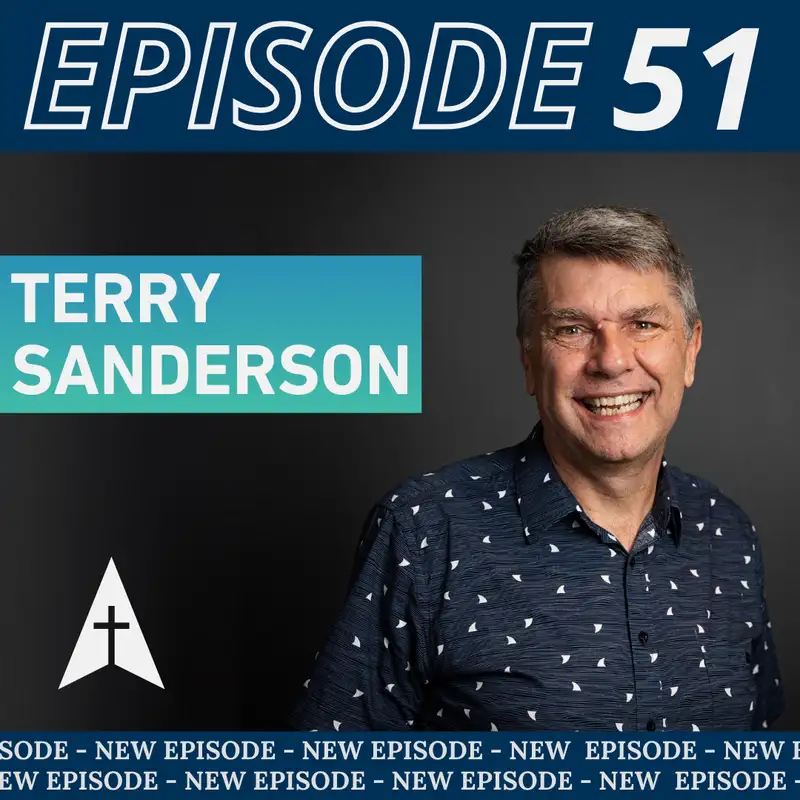
Rob Chartrand (00:02.21)
Well, hey, we are so excited to have on Church in the North, Terry Sanderson. He is the lead pastor of Bayview Glenn Church in Thornhill, Ontario. Terry, welcome to Church in the North.
Terry (00:11.467)
Yeah. Well, thank you, Rob. I appreciate and honor that you invited me to come and join other illustrious leaders that have been part of your podcast.
Rob Chartrand (00:21.336)
So you have been the lead pastor at Bayview for just over two years, so post pandemic. Before we get into Bayview, why don't you tell us where were you serving just prior to that?
Terry (00:27.201)
right.
Terry (00:34.137)
Just prior to that, I was in the suburbs of St. Louis, a place called Calvary Church in the northwest part of St. Louis. It was an e-free church. So I was there for 13 years. And then that was a multi-campus church. That was a good learning experience for me. We had three campuses. And obviously navigating through the pandemic was a whole other challenge.
And then prior to that, I was in London, Ontario at North Park Community Church and I was there for 20 years. So I've had lots of longevity at a couple of different places.
Rob Chartrand (01:08.184)
Wow.
Rob Chartrand (01:13.132)
Yeah, those are two good runs and you thought maybe you might even stay in St. Louis for life.
Terry (01:14.945)
Yeah. That was kind of the plan. really, we were beginning just very early conversations with some of the board about succession planning and what was next and kind of working through how we were going to approach that, what kind of a general timeline was. And then God said, no, no, no, no, you're not winding down. I have a brand new, brand new assignment. So.
I kept reading, because I'm in my 60s, I kept reading that the 60s, your 60s are your most impactful decade. And I've really, I've found that I just feel these last couple of years from an impact point of view has been much more impactful than all the great years I've had before.
Rob Chartrand (02:06.284)
Wow. Okay, so we're going to jump into your transition from from St. Louis to Bayview in a moment, but I want to back up the bus just a little bit and talk about your early journey in ministry. Did you did you always think that you would be in ministry?
Terry (02:11.97)
Yeah.
Terry (02:16.703)
Hmm. You know, it's the craziest thing I think I feel a little like Samuel is that I, since the time I was five years old, wanted to be in ministry. And that's all I really could think of. And I don't know why. Like the only thing I could think of, which is kind of crazy, is I hated church. Like I really.
I went, you know, it was the other year where kids went to church and then we went Sunday school after. And I thought, OK, if if I have to go to church to to avoid health, that's what I was thinking. had to go to church to avoid hell. Then I want to be the one running this show and not sitting there and being boring. So, you know, God really got a hold of my life as a young teenager and, you know, gave my life to Christ. And that gave even more meaning.
But looked at a couple of different career options in high school, but really it's just a solid path to ministry.
Rob Chartrand (03:21.884)
So was ministry in your family at all? there any family members that were pastors?
Terry (03:24.979)
No, not really. My I grew up on a farm, so farming was in my background. I knew that's what I did not want to do. My dad would do a bit of lay preaching here or there. He might fill in a couple of times, but not not that often. But there was no real strong ministry. It was just and it was, you know, really, even as a young kid before God really got a hold of my life, there was just this draw to.
to do that and it's inexplicable. just, have to say it's a calling of some sort that this is what God had for me.
Rob Chartrand (03:58.542)
Hmm.
Rob Chartrand (04:02.83)
Were there any mentors in your life or maybe like a youth pastor or a camp counselor who said, you know what, I think you could do this thing.
Terry (04:10.269)
I grew up in a very small church, maybe 30, 35 people, not really a youth group. There was a Sunday school group. Then when I became a teenager, we had an evangelical pastor come to our, it was a United Church, come to the United Church. And we saw revival. I mean, that was what was amazing. We really saw revival firsthand in this empty dying church.
Rob Chartrand (04:32.27)
Hmm.
Terry (04:38.071)
kind of thriving and people coming and looking at building and expanding, which was unheard of at that time. So certainly he, when he came, really helped mentor and develop and grow. And for a number of years we would meet Saturday morning. He let me do some visitation. I go with him to different hospital visits and other things.
So he would let me do ministry. He really was very good at kind of teaching me, letting me observe, minister with him, and then setting me free to do that. So I really appreciate that.
Rob Chartrand (05:18.533)
Wow. Okay. So did you jump from high school right into like say a theological training school or what did you do for schooling?
Terry (05:25.357)
I went to University of Western Ontario. So I did a four year undergrad. in history, was really good, you know, gives me a lot. really love history and it informs my preaching to a lot. But and then I did four years at Dallas Seminary. So I, you know, did kind of the eight year kind of track. And then my first
Rob Chartrand (05:43.714)
Okay.
Terry (05:53.805)
First years of ministry were a small church out in California, actually, in the Bay Area, which is everybody's dream, beautiful, crazy expensive, and was a very difficult experience. In fact, after all that, I thought, I missed it. This is not what God's called me to. And wed really had just a very difficult time. It was me.
Rob Chartrand (06:11.938)
Hmm. Hmm.
Terry (06:22.847)
I think the pastor who was there, I was an associate, I was his first associate. He wasn't sure what to do. I was new, I didn't know what to do. And I really thought that I'd missed it and was going to actually go into banking. I had a job lined up actually in Washington, DC area, a job in a bank that someone had invited me to come and take. But I had one...
one interview at North Park Church in London. And I'm like, I'm gonna go do the interview. If that doesn't work out, I'll move to DC. And that interview at North Park changed everything. And it was 20 great years of ministry there. Just a fantastic life-giving experience. So.
Rob Chartrand (07:10.168)
Hmm.
Rob Chartrand (07:14.476)
Yeah. So a couple of questions about what you just said. While you're at Western, were you involved in ministry at the time or were you thinking, I'm going to do history and then jump into seminary like you knew all along while you're doing your undergrad?
Terry (07:26.294)
Yeah.
Yeah, yeah. that was it was during that time at Western that I I would Saturdays meet early morning with the pastor. And then he had a list of things that for me to do that day or people to visit or minister that accomplished. was helping develop services. I would help lead services on the weekend. So, yeah, I I was actually, you know, a part time intern employee at the church during that time.
Rob Chartrand (07:56.494)
Okay, so.
Terry (07:56.939)
And that was a positive experience. That was a very positive experience.
Rob Chartrand (08:00.546)
Yeah, okay. yeah, because that's four years is a long time to maybe not be doing, say, theological studies or, you know, practical ministry training or whatnot. So something I'm thinking had to have kept you in it in the game for those four years, especially when you're so young.
Terry (08:09.195)
Yeah.
Terry (08:16.181)
Well, I mean, I'm a little bit, I go by the rules and I wanted to go to Dallas Seminary and Dallas's recommendation is that you have a general arts undergrad. They felt that that was what best prepared you. I'm like, okay, that's what best prepares. I'm gonna do that. So I got it.
Rob Chartrand (08:30.402)
Okay.
Rob Chartrand (08:36.46)
Wow. So when you're in that time, you're early in the ministry and you're having this struggle, what encouraged you along the way? Was there somebody to help you through that? Anything that, you know, because it's easy for a lot of young people. The resiliency study says that like in the first five years, so many people, over 50 % drop out of ministry, but you obviously stayed with it. What helped you stay with it?
Terry (09:03.307)
Yeah, there was a few good friends that I had there. There were two or three couples in that church who were like, hey, Terry, we believe in you. We support you. We see what God can do in you. And they just really kept encouraging and pouring in and would be there like they would say, don't get discouraged.
You know, they were safe people. could talk about the challenges I faced and they could help give me really good perspective. you know, it didn't coddle me in that sense, like, everybody else is bad. But said, hey, here's what you can do. And but they really saw what God can accomplish in my life. And, you know, very much like Barnabas and Paul, you know how Barnabas encouraged Paul, saw what Paul could do.
and just really help push them along. And that's what I felt that they did. So yeah, we certainly need those people in our life and grateful for them.
Rob Chartrand (10:04.066)
Hmm. So you went from North Park to St. Louis and then obviously up now to Bayview Glen, but you got married along the way in there. Tell us about that.
Terry (10:14.631)
yeah. Well, I don't think you're supposed to do now what I did. I was leading a college and career group and in North Park. So I started doing that. was one of the first things I did when I arrived and a couple years, well, about a year or so in, I was on the university campus and I saw this young woman actually walking across the campus and I'm like, I need to meet her.
And because I had seen her, it was kind of crazy. I'd seen her at, it was a campus crusade booth at the time, was a crew booth. And I'm like, I need to meet her. But then I got caught in a conversation and didn't. Lo and behold, about six months later, she shows up at church with a roommate. I'm trying still, I'm like, how can I navigate conversations? My first conversations with her, they were,
terrible. was foot in my mouth all the time. I'm mumbling, bumbling over my words. But then through a series of events, we ended up at the same event together. Then I asked her out and I knew immediately, I was, you know, in my 30s at the time, I was kind of getting older, but I was really love at first sight. I knew that was the person I was going to marry.
And two years later, she had to finish school, but we got married. Yeah. Have three children.
Rob Chartrand (11:39.203)
Wow.
Rob Chartrand (11:43.81)
And did you feel the same or did she like you had to wear her down?
Terry (11:48.781)
no, no. funny enough, what I didn't know at the time is that one of her roommates had wanted to introduce her to me, before that. And their roommate really thought I would be a great match for her. She had just come out of a relationship, wasn't in a place where she really wanted to start dating again. So, so we, we knew pretty early on that.
This was kind of it. Yeah.
Rob Chartrand (12:20.138)
Okay, yeah. And you've got family as well. You've got children.
Terry (12:24.683)
We have three daughters, 22, 20, and 17. Our oldest, had, we have a long story. We were, a little challenge getting pregnant, pregnant with twins. My wife delivered them four months premature. So very, very tiny. They were just a pound each. And our son didn't survive. And our daughter has cerebral palsy, but is very.
Rob Chartrand (12:30.99)
Hmm.
Rob Chartrand (12:41.678)
Mm.
Rob Chartrand (12:46.595)
Wow.
Terry (12:52.951)
very bright, but trapped in a body that just does not cooperate with her. Yeah.
Rob Chartrand (12:56.93)
Hmm. Hmm. Wow. So that's, mean, that's a significant part of your your ministry journey and story as well then.
Terry (13:04.747)
It's a really big part, you know, as it said, you know, before God uses people, can break them and, you know, use, you know, wears, wears down the pride and arrogance. And it was early, you know, in my forties, it was in a season where the church was crazy growing. I was working on a book project with a publisher, you know, lots of great things happen and God's like, no, I'm just going to strip all that.
away and I'm not, you're going to be your own worst enemy, Terry. And he just reminded me, I constantly need him and humbled by him. Yeah. So learn, learn lots, learn lots.
Rob Chartrand (13:38.701)
Hmm.
Rob Chartrand (13:47.256)
Yeah. But what a gift at the other end of it.
Terry (13:50.763)
You know what, it really, I think, saved.
Terry (13:56.461)
saved me and my life. I look at the whole, I'm going to say megachurch world and success of larger church pastors. And I think I could have become like that. I could believe other people's press. And I think God said, your world is not
Rob Chartrand (14:19.256)
Yeah.
Terry (14:25.537)
this world of success, your world is a world of faithfulness to your family and to the church that I'm calling you to.
Rob Chartrand (14:33.154)
Hmm. Hmm. Wow.
Well thank you for sharing that. Let's talk a little bit about Bayview Glenn. So there is so much going on at Bayview Glenn just in these last couple of years. It's been a season of growth, of change. But one of the contributing factors in your growth has been alpha. And it's a big part of your story these past couple of years. Why don't we start there? What's God been up to through alpha?
Terry (14:46.718)
Yeah.
Terry (15:04.045)
Yeah, Bayview, like many churches in Kent, had had Alpha for 20 plus years in various times and ways. So during the pandemic, you know, they did online Alpha, worked with that. When I arrived a little over two years ago, they were just finishing up an Alpha. was a combined in the spring of 22 in person and
online, about 20 or 25 people, I think, who enjoyed, but a really faithful team. Like the team of people were absolutely committed. And so when I arrived that fall, we were talking about, I came in the summer, what would we do? And I'm like, I really think we should do alpha again. And the team was like, well, I don't know. We didn't plan on doing it. We were going to wait. And I'm like, no, we should do it.
So I said, this time, let's pray for 50 people. we're starting, you know, the church just, we're really coming out of the pandemic and starting, and they thought that was crazy, but we ended up with 75. So we had 75 people and God just really continued to work and do a good thing in our midst. We took a year off just to kind of regroup again and for
Rob Chartrand (16:14.606)
Wow, okay.
Terry (16:31.373)
this past January, a year ago, we were beginning to pray, let's do alpha again. And we thought, okay, we had 75, let's do 150. We're gonna pray for 150. I kind of believe you get what you pray for and you get what you prepare for. So, yeah, I mean, you have to be wise, but if you prepare, if you set out seats for 30 people, you're probably gonna get 27. You set out 50 seats, you'll get 45.
So I said, let's have 150. Well, all of a sudden 300 people signed up for Alpha. And so this threw everything in kind of a different tailspin because we had a hundred plus serve team members, volunteers. Now we have to prepare food. Cause that was one of the things I really do a very nice meal, prepare food for 400 people every week. But everybody dug in and did it.
Rob Chartrand (17:07.757)
Wow.
Terry (17:29.729)
And it was amazing where food would come from. We would get donations from grocery stores, other places. We also have a very thriving ESL ministry. have, through the year, about 600 people who are part of ESL. So because of some of the leaders of the ESL who were inviting them to Alpha, this is what was happening, that we would have our ESL people who would come.
they would become part of Alpha, but they would use even serving at Alpha as English training and preparation. So a couple of the ESL leaders would say, hey, come, we're gonna chop vegetables. And they would use it to talk about different knives and different ways of slicing, cooking vegetables, what's the English name? And so they are ESL friends really.
Rob Chartrand (18:08.142)
Hmm.
Terry (18:24.781)
bought in. And so not only were they the recipients of the Alpha Ministry, but they were also participators in getting ready. We have a food distribution program that we do in a partnership with Scott Mission here in Toronto. And so a number of those people, we invited them to Alpha and come and about 25, I think of those people signed up and came to Alpha. So it was a really
Rob Chartrand (18:31.982)
Hmm.
Terry (18:55.137)
unbelievable, God moment, thrilling experience. See our gym just absolutely packed with people. And again, it's through the volunteers that we have, but we also, because of our ESL, offered Alpha in English, Spanish, Farsi, Cantonese, and Mandarin. So they would all come, meet together, everybody would eat and enjoy together, and then they would move to different rooms.
Rob Chartrand (19:14.71)
Wow.
Terry (19:23.069)
and different table groups in their languages.
Rob Chartrand (19:26.516)
Okay, wow. So you're really taking advantage of your building there because you need all these different spaces for the different language groups.
Terry (19:29.825)
Great.
Yeah, it was full. is no, no empty space on Alpha. And then we tried, which we're going to do again. They tried a family Alpha. So they would have parents and kind of older kids due to pre-teens kind of mostly come and they would do the youth Alpha, but discuss those topics as a family together. And we had parents who came to Christ, parents who were baptized through that.
Rob Chartrand (19:37.165)
Yeah.
Rob Chartrand (19:44.515)
Hmm.
Terry (20:02.401)
families who really for the first time learned how to have spiritual conversations. You know, people who wanted to like, how do I really talk to my kids about spiritual things? So it really opened up an avenue to be able to disciple parents, but also reach parents as well.
Rob Chartrand (20:20.876)
Hmm. So all told, what was the what was the fruit of that in terms of people making life changing choices or baptisms?
Terry (20:28.693)
Yeah. So that's a great question. And we're terrible number keepers. So we did not. No. Out of that, about 50 people made commitments. And during this past year, in 12 months, we baptized 100 adults. Yeah.
Rob Chartrand (20:36.936)
And you know, I'm not, I'm just curious really more than anything, you know, because getting to pass there's.
Rob Chartrand (20:45.27)
Okay, yeah, wow, yeah.
Rob Chartrand (20:53.356)
Wow. Okay. Yeah. Thanks be to God. Yeah, I was gonna say getting pastors together to talk about numbers is never always a good thing. But I'm just trying to frame what God's doing. Baby blend there. Yeah.
Terry (20:57.036)
Yeah.
Terry (21:02.797)
I get it. It half like 150 of those 300 when they signed up said they had no Christian or church background. So we know that, you know, because often there are people come down for who are newer, who are exploring. Maybe you've had Christian background trying to work through some things. But 150 of those said we have no
Rob Chartrand (21:17.838)
Hmm.
Terry (21:32.269)
Christian background at all. So that was also an amazing opportunity to that. Here are people eager to know about spiritual life, which I find here in Toronto. I've never experienced anything like it. There is a spiritual openness and hunger that I have not seen in decades of ministry.
Rob Chartrand (21:37.208)
Yeah. Yeah.
Rob Chartrand (21:55.288)
Hmm. Wow. So so you're located, obviously, in a very ethnically diverse part of the country, the GTA. So how is that reflected in demographic of your church?
Terry (22:03.244)
Right.
Terry (22:09.611)
Yeah, I was Bayview years ago really made a decision that they wanted to be a reflection of the community around. So they did some work, you know, with board and staff and trying to be ethnically diverse. So and previous to that, it was in this area of Toronto, what it was a very, you know, white upper class, you know, middle upper class congregation, as you know.
so now we are, it's always about 25, 30 % Caucasian. I would say about another 30%, Chinese and another 30%, everything else from Southeast Asian, African, Caribbean, South America, Eastern European. We have probably about a hundred, Iranians who are
part of our congregation now. So it is the most beautiful experience on a Sunday. The world is gathering and, you know, in Revelation where you see every nation, tribe and tongue, we get to experience that before we get to experience it in heaven. It's beautiful.
Rob Chartrand (23:15.01)
Hmm. Yeah.
Rob Chartrand (23:29.379)
Wow. So different churches will approach the intercultural conversation differently with, you know, different models and frameworks. And, and it's, you know, many places, it's just experimental. It's just like, what's, what's actually going to work is we try and contextualize the gospel to the nations. What does that look like for your church for baby Glenn? How are you becoming more intercultural? What are the maybe some of the intentional steps you guys have taken and
Terry (23:35.778)
Yeah.
Rob Chartrand (23:56.622)
you know, what's his look boots on the ground practically look like
Terry (24:00.651)
Yeah, that's that's a great question. And it all feels experimental, at the time. So, you know, I would say, you know, our board and our staff are, are diverse, ethnically diverse. And so, you know, we want that to be visible on a, on a weekend and a Sunday, that, that people see in our worship team and other things and in the serve team members, a lot of diversity.
Rob Chartrand (24:14.935)
Hmm.
Rob Chartrand (24:29.678)
Yeah.
Terry (24:30.237)
we have made the decision, and this is just our decision. This is current, that we want everyone together as best as we can, that we don't want to divide, the congregation into different churches, so to speak. So we've made a commitment that our services will be in English. We do have scripture reading at different languages. Well, if somebody else pray in a different language, we will.
you know, when it's the lunar new year, we have special food and snacks. And, I try to say happy new year in Cantonese, which is always fun. but, we have our ESL, most of our people want to learn English and do that. So our services are in English. We don't have live translation yet. although
Now with technology and phones, a lot of people can kind of get the gist through apps on their phone. But we do want people to feel comfortable. And just as we have like a seniors group or you have a youth group or a college group, we have started developing language-based fellowships where once a month or so those language groups can come together in their language and be able to encourage one another.
Rob Chartrand (25:53.294)
Hmm.
Terry (25:57.677)
Since we don't have live translation, we also have some sort of team members who will gather different languages together after a service and do a sermon discussion in that language to make sure people don't miss something or that they, if they have a question, they can understand it. So.
They get the transcript of my message ahead of time. They're prepared. They're able to answer questions and have a language discussion. Currently, Mandarin and Farsi, we have that. So we want people to make sure they don't miss anything, but we want people to be together. We have chosen, I know lots of places, their English service, and then there's the Cantonese service and the Mandarin and the...
Rob Chartrand (26:34.466)
Okay.
Terry (26:51.095)
Farsi and the Spanish, we want to worship altogether, but we want to help support people in their language and culture groups.
Rob Chartrand (27:01.696)
Okay, wow. Well, and that takes some work and preparation on your part. I mean, I know some churches that do the language translation, I think it's Willingdon, like that the preacher is has to be a manuscript preacher and that manuscript has to be done by like Wednesday or something like that, in order for it to be translated and available, right? But so you must be a manuscript preacher. Yes. No, you're not. Okay.
Terry (27:21.483)
Well, no, I'm not. So actually, when I was in, when I was at North Park, we had live translation in Mandarin and Cantonese, and they were fantastic people who could, you know, translate live, kind of just the UN kind of like they're just, I'm speaking and they were able to translate on the fly.
Rob Chartrand (27:36.066)
Okay.
Rob Chartrand (27:51.352)
So would there be like a delay delay in the joke then like you would say a joke and then some people would laugh and then you get a delay like 10 seconds later because the translation.
Terry (27:51.545)
Terry (27:55.117)
I
Well, this is the challenge in preaching is trying to figure out what translates across all cultures and what is humorous and what is funny, because it's not always funny and what TV shows, what movies, what cultural references, what the majority of people learn. So it gets really challenging in that way because you don't want to leave people behind.
Rob Chartrand (28:06.988)
Yeah, idioms, right?
Rob Chartrand (28:19.084)
Mm-hmm.
Terry (28:29.157)
or use too technical of terms that people don't wouldn't in their learning of English just wouldn't be aware of or understand. But people were very good. I do have a transcript. I manuscript the message out, but I don't read the message word for word. The message follows the flow of thought.
So they know the message, they know the main points, I stick with those. They would know the illustrations that are there, but I don't do it.
Rob Chartrand (29:04.684)
Yeah, yeah. Okay. Wow. So lots of challenges, but what a a what a fun opportunity to be involved in.
Terry (29:13.631)
It really, yeah, it really is. And then I, you know, we have a lot of diversity, not just ethnically, but age, you know, we had a life group launch, we launched new groups at different seasons. And so we had 150 people who were part of kind of not in a group and wanting to get in a group over a few weeks. And over 50 % of those were under 40.
Rob Chartrand (29:23.406)
Hmm.
Terry (29:43.333)
And so that was really exciting to see, you know, young and old, particularly as I'm old. So that diversity. And then also, you know, because I'm a parent of a child in a wheelchair, you know, just the whole ability, diversity or diversity of ability is really important to us as well. And so how do we...
Rob Chartrand (29:44.491)
wow.
Rob Chartrand (30:04.611)
Yeah.
Terry (30:07.869)
navigate situation, how do we provide space for people with unique abilities to be able to serve as well. So, you know, there are services where you see a row of people in a wheelchair down front and they're worshipping and lifting their hands. And that's pretty, pretty cool as well.
Rob Chartrand (30:25.868)
Yeah, yeah, it's beautiful. Was the facility when you got there, did you find that it was fairly accessible for wheelchairs?
Terry (30:35.359)
It's fairly accessible. And there's an elevator so you can move wherever you want. There are cutouts. There's probably not enough. This is funny. We have handicap bathrooms. So we think, we're great. We've got it. Well, then a couple of them said, but there's no automatic.
Rob Chartrand (30:42.616)
Right.
Terry (30:59.649)
door handle on those bathrooms. I can't use it. You may have the bathroom, but I can't use it because I'm not able to, you know, in a wheelchair, open the door manually and walk in. So there are things that we have to upgrade and make changes to. Yeah.
Rob Chartrand (31:13.634)
Yeah. And typically some bathrooms are good for say a manual wheelchair, but not a motorized wheelchair. Like they're just not big enough. Yeah. And that is a challenge. yeah. Yeah. Yeah. Okay. Well, yeah. So, I mean, it sounds like you guys have a real hard for meeting practical needs as well. And you've already touched on this a little bit, but you're,
Terry (31:19.967)
Right, Yeah. Yeah, we have a couple that are good. They are good, but yeah, now they just can't get in them.
Terry (31:37.165)
Right.
Rob Chartrand (31:38.946)
Talk to me a little bit about your food distribution. What's the genesis behind that and what does that look
Terry (31:45.569)
so through, you know, it's, ministry is often through relationships, you know, the relationships, people, you know, kind of what creates it. So a relationship with a few people at, the Scott mission and the Scott mission in those conversation was looking at how they can expand their ministry beyond kind of downtown Toronto, which is where they were. So they were exploring.
kind of a hub and spoke model where they would have a food hub and then be able to distribute to other areas of Toronto. So when I was coming, we got excited about this. We have a building on the property we thought would be a great use to use as a food distribution hub and try to do that. As we grew, we realized it wasn't.
So we just developed this partnership and you know, as you shared that particularly food insecurity, that whole issue is such a big thing here in the GTA. So people got excited and I mean, lots of volunteers who come. So we set it up a little bit like a store in a sense that people come, we've got tables, coffee, we have hosts, don't want it to be transactional only. We really want it to be relational. So we have.
Rob Chartrand (32:43.661)
Hmm.
Rob Chartrand (32:51.181)
Mm-hmm.
Rob Chartrand (33:12.392)
Right.
Terry (33:13.613)
you know, hosts who come, meet with the people, pray with them, talk to them about their life, build relationships, and celebrate sometimes when it's their last time. I mean, it's fascinating to hear stories of, you know, hey, pastor, this person, it's their last time here. They've got a job or they do it. They don't need us anymore. And, you know, lots of celebration for those types of experiences.
Rob Chartrand (33:27.726)
Hmm.
Terry (33:41.599)
And so people come and really want to be able to to help do that. There's also a team of people who make meals every Sunday for a couple of the public housing complexes here in the GTA and then Christmas, Easter, Thanksgiving, do a big turkey meal or something else, check it for them and provide food. So giving they make
meals and we freeze them and then take them on Sunday to people who live with the most food insecurity in those buildings. Yeah.
Rob Chartrand (34:20.694)
Okay. And do some of those folks have trouble with mobility issues as well?
Terry (34:27.433)
Some would have, yes, trouble with mobility or transportation access. Yes, that's right.
Rob Chartrand (34:33.026)
Yeah, yeah. Wow. And I mean, the some of the folks who are part of the food distribution also made their way into alpha, right. And so that's a I mean, that the work in and of itself has merit and value, but it's also beautiful to hear that lives are being transformed further by the gospel.
Terry (34:44.513)
Right, right.
Terry (34:55.958)
And that's why we really like the partnership with the Scott Mission because we felt that kind of gospel synergy, you know, that it's not just transactional, it's not needing a need. You know, it's not that, you have to come in here and sermon before you get food either, but it really is very relational and yeah, come and experience.
Rob Chartrand (35:03.811)
Mm-hmm.
Rob Chartrand (35:18.658)
Hmm. Yeah. So obviously you're in a season of growth. I'll maybe get you to explain what that season of growth looks like for you. What's happening in the church? Like in terms of just the sheer growth on say even weekends?
Terry (35:28.939)
You
Terry (35:35.949)
Yeah. well, we use the expression, we're trying to build the airplane as we're flying. So that feel it very much feels like we just think we going to build it. So when I came, we were at about 400, 450. So two, a little over two years in, in person. So that's in person. a little over two years later, we just, last weekend was about, we,
Rob Chartrand (35:43.214)
you
Rob Chartrand (35:53.934)
Hmm.
Terry (36:03.917)
crossed over 1600 on the weekend. almost, you know, triple quadruple in 30 months. So.
Rob Chartrand (36:07.094)
Wow, that's crazy.
Rob Chartrand (36:14.402)
Yeah, and that's not just transfer growth.
Terry (36:17.707)
That's not, no, obviously, like I said, that was a hundred baptisms in 12 months and we've had more baptisms since, since this. So that's not transfer growth. You know, lots of seekers still two weeks ago, three weeks ago, we had a couple people who walked in the building and they were Hindu and they said, we're very disillusioned with Hinduism. want to check out what Christianity.
Rob Chartrand (36:27.223)
Hmm.
Terry (36:47.421)
is and they've been here for three or four weeks in a row. So lots of people who are seeking people inviting their friends. So this has been a unique challenge of just staffing for growth. know, like we was meeting with our executive pastor on Monday and we're like, we had, we had added some staff this year to try to.
We thought, we've got room. This will staff us to 1,500 people. And it's like, well, now we're even beyond that. So trying to figure out what's the best staffing. know, budgets don't, budgets always lag according to numbers and populations. you know, trying to navigate growth. When I came, we had one service, we went to two. And then, you know, three weeks ago, we went to three services on a Sunday morning. So that's a lot of
strain not just on the building and facility but on people and volunteers. So trying to navigate what's the most compassionate way of working with our staff and make sure they don't burn out. you know, but also people and you know people want to when God's moving you want to be part and take advantage you don't want to stop that. So
you know, that's always part of my job, but thinking ahead, you know, leading ahead. we've got a team of people that are meeting about really what's next. What's the, what do we do? Should this growth continue? And, know, is that a campus or what happens? We're really kind of limited with our facility here. We're in an amazing location, very central in the GTA.
Rob Chartrand (38:27.105)
Mm-hmm.
Terry (38:38.217)
a great location, it's a gift, but how do we steward that and manage that? How many services can we do? Should we plan to campus? What's God calling us to do? So these are great. I've had these problems before, particularly in North Park, growing at that rapid rate, you're trying to navigate all the different changes, how to...
Rob Chartrand (38:49.656)
Right. Right.
Terry (39:04.471)
how it best to do ministry. Just when you think you've figured something out, the growth kind of overtakes it and you've got to rethink it again. But I'll take these problems over. I've had the worry, you're trying to create momentum and trying to get growth up. That's much harder.
Rob Chartrand (39:25.068)
Yeah, the boat anchor around the feet and trying to just tread above water. And you're in a situation where, mean, you're, you, you can staff and structure for the church as it is now, but you also have to anticipate for where it's going. And that's a sticky wicket because you don't exactly know, but if you don't, you can stifle growth because by the time growth catches up with your structure, the structure can be like a wine skin that just inhibits it from growing.
Terry (39:27.391)
Right, right. Yeah, yeah.
Terry (39:51.489)
Right. Yeah. that was like, that was the realization this week. It's like, okay. We're already there. We thought we had a year or two and it's like, we're already there. And yeah, what, what is next and how do we, if we do a campus, how we would anticipate staff and get staff ready is very different for a campus than if we were trying to grow more here. So it really is.
Leaning in and listening to God. What do you have for us? And what's your next step for us? And how do we, how do we do that? And yeah, we're all in some ways just trying to learn together again and try to see what is best and, lots of grace with people. like, if that's not as, doesn't work, we'll regroup and try something else.
Rob Chartrand (40:42.222)
Hmm.
Well, in a couple of weeks, you and I are going to be seeing each other, attending the Pipeline Symposium in Muskoka Woods. This gathering of academic denominational church leaders from across Canada to just talk about the present and future clergy shortage. So that'll be nice, being in Muskoka in that time of year. So yeah, that's right. It'll be a little bit warmer there, I hope. The lake effect will help be helpful.
Terry (40:49.516)
Yeah.
Terry (41:03.565)
Yeah, welcome to our part of the country. You get to come back. Yeah.
Terry (41:12.821)
Yeah. And this is what I say. I mean, even we were having this meeting, we had a group of leaders who were praying last week just about what's next. And, you know, the constant theme, even amongst them, more than systems, it's always leaders. How do we develop leaders? And so I'm really excited because the whole heartbeat of Bayview is developing leaders and what can we do?
Rob Chartrand (41:31.372)
Yes, that's right.
Terry (41:42.337)
to do that and we've really, we've put in place kind of even in our volunteer ministry of leadership development opportunities for people. We have a residency program for people who wanna explore ministry. We're looking as we have been and we're talking more at the, we're looking at opportunities with some schools and higher institutions of higher learning. How can we partner together and really prepare leaders
well for the church. So as you said in the first few years, they don't burn out or get frustrated. How can we best prepare? So we're having some great conversations about that and seeing some young leaders really grow and take shape.
Rob Chartrand (42:30.168)
So, you know, I've been in conversation with a number of church leaders like yourself who are thinking of doing these, kind like these theological hubs, a discipleship school or a ministry training school within their own context. And really it's the larger churches that have the capacity to do that. They've got the space or they might be able to staff somebody or a part-time staff somebody or whatnot. What do you need from theological institutions? Like, so...
Terry (42:39.159)
Yeah.
Rob Chartrand (42:55.862)
What I hear from a lot of pastors is, we don't need the practical ministry training side of things. We can do that. We can get people into a leadership pathway or whatnot and give them practical hands-on experience. Some of them will say, though, what we do need is, say, biblical theological training. Like, that's a part that would be really helpful. But for you guys, what is it that you're looking for in partnership from the schools?
Terry (43:17.741)
Yeah, and that's exactly, I think, what it is. I've been having some great conversations with some different places, and that's what, like, there are things we can do, and I think we can actually do better on the ground in learning with some oversight. But I would say, you know, the richer biblical foundations and theological thinking and the ability to answer
deeper theological questions. We probably don't have the capacity to do that in a way that really helps give people what they need in the moment or at the time. So I think that's where the seminaries and Bible colleges can really help. And that would be my fear in the future of developing leaders that
Rob Chartrand (43:50.787)
Hey.
Terry (44:14.667)
that we develop skilled tacticians, but not deep theological thinkers and and biblicists who can really help people. I think in the past, that's what, you know, when I went to one of the best seminars, I'm going to say one of the best seminars there is Dallas Seminary, a great seminar. It really taught me how to preach, how to think biblically, gave me overviews scripture, but it gave me very few tactics.
Rob Chartrand (44:21.326)
Yeah.
Terry (44:44.605)
for really how to minister or shepherd care for people. So I had to learn that on the fly. So I keep thinking there's gotta be a way to merge those two together. And as I said, I would fear moving the other way. It's like, well, we know how to recruit volunteers, do ministry, build budget. We can do that, but it's like, how do we minister deeply to people at the same time?
Rob Chartrand (44:46.742)
Right. Yes. Yeah. Yeah.
Rob Chartrand (44:57.166)
Yeah, to marry those together.
Rob Chartrand (45:11.059)
Now, what about the character formation or the spiritual formation side of that? Is that a shared responsibility? Is something in the local church? mean, it's you might, you know, remember being off at school and seminary, you're in this dedicated environment, almost this greenhouse where formation can take place. people in your local church are commuting an hour to get to where you are. And they've got these crazy busy lives.
So how do do character formation or spiritual formation in that framework?
Terry (45:42.433)
Well, is, I mean, are you talking in general or are you talking for leader development or in?
Rob Chartrand (45:49.531)
Yeah, like I think more in like, if we're the idea is if we just set up these these theological hubs, these these in local churches, how do you navigate that?
Terry (46:01.533)
I, well, I argue that we can actually do that better than a seminary can, because I think you could make the same argument as people at seminary. And I think when we look at spiritual formation, we see that only as us vertically with God, which it certainly is. But our formation as people is also horizontal in how God uses people.
Rob Chartrand (46:07.883)
Hmm.
Terry (46:30.241)
And, you know, how does God work through my first when I'm frustrated with someone, how was my spiritually for when I'm anger at someone, how can my spiritual form when I'm impatient, how am I spiritually form in the midst of disagreeing with other people? So I think within more of a ministry format, I think, you know, I think there could be a partnership and some guidance from the institutions. But but I actually think in real time, this is a
better training ground for that kind of formation experience.
Rob Chartrand (47:05.356)
Yeah. And you're in your being formed right in the midst of the culture that's pressing in on you. Yeah.
Terry (47:11.359)
Right, right, yeah. It's different being formed in a dorm room where you don't have much to do. You're just, am I gonna do my homework today or not? Versus, yeah, this is real life. These are real people. I'm leading these people. God, how are you gonna work in my life at this point? Yeah.
Rob Chartrand (47:29.154)
Yeah, I think my biggest concern is that churches want to find a solution that's faster and quicker, but and or easier, right? But spirituality growth in Christ is not always faster, quicker or easier. Like there's a time frame, a deeper rootedness. And like you said, I mean, we want to jump right to tactics. We want to train people in the silver bullets, right?
Terry (47:46.431)
No.
Rob Chartrand (47:56.63)
My concern is where we might raise up a set of leaders who know all of the silver bullets and all the shortcuts, but they don't understand the biblical framework that undergirds all of those things or don't understand scripture very deeply and very well. And so there's almost a shallowness to the leadership. So instead of doing the deep work of exegesis and understanding the text, they might...
go to preaching.com and borrow outlines from another pastor and just replicate that, right? it's, there's a certain vacuousness to that, that I think is dangerous for the longevity of the church, right? So how do we do that? I mean, you took eight years in your preparation, right? But you were doing ministry all along. you know, how do we strike that balance within new frameworks and new models?
Terry (48:27.501)
Right, right.
Terry (48:41.953)
Right, right.
Terry (48:51.585)
Well, this is the interesting discussion we're getting into our discussion we're going to have in a couple of weeks. even a couple of us here, here last week, were talking, OK, we need to be clearer on the kind of leaders we want to form or create. are we? Do we even have a common understanding, as you said, what the leadership is? Is it tacticians? Is it deep feet thinker? Is it servant leaders? Is it transformation?
Rob Chartrand (48:57.006)
Hi. Time in the pub.
Rob Chartrand (49:06.926)
Hmm.
Terry (49:20.493)
kind of leaders that we want. I think it's not a quick fix. In my mind, when I'm having these conversations, we're trying to think what is a place we could start and develop something new or different. But it's not like, this is an eight month kind of you're in and you're out and now you're a leader. This is a long term. mean, we're
we're having some fascinating discussions of just in the spiritual formation part of how do we listen to God as a large group of people? How do we do that? You know, it's one thing to, you know, be in your office or in your room and really listen to God, but what's it mean in a community to listen and discern together? And how do we do that? That's a, and I would say that's a muscle I hadn't really.
Rob Chartrand (49:58.434)
Hmm.
Terry (50:15.233)
developed too well, and that's probably to my shame, until we came here. Yeah, yeah, that we're all grown. I mean, I think that's it. Yeah, and that's once we think we've stopped our spiritual formation and we've got it, that's probably the end. We've got nothing to give. But how are we learning and growing together and developing? What kind of leaders are we developing? What does the church need?
Rob Chartrand (50:18.646)
as a good, enlightenment thinker. Yeah.
Terry (50:45.161)
And what is our part in doing that? And this is, different people are doing different models and there are some, like you said, who don't think the seminaries or Bible colleges need to be involved. That's not me. I do think it is a partnership. Yeah.
Rob Chartrand (51:01.634)
Yeah, yeah, absolutely. And you know, I often quote NT Wright, whereas he wants to keep his life firmly planted in the academy and firmly planted in the church. And I think there is a cooperative aspect. I'm hoping that that will really rise out of this pipeline symposium is just a deeper cooperation and kind of a creative imagination that we can.
Terry (51:12.044)
Yeah.
Rob Chartrand (51:28.312)
flex and use that muscle so that we can think about the future together.
Terry (51:33.165)
Yeah, and that's what I think there's a, you know, as I always say, there's a third way. There's a different way that's not exclusive of those. But yeah, how do we merge that? What can we do? How does the church need to change to accommodate that to be more of a leader development place? What's what do we need to change? What's the pain points for us? And what about those for the the academic institutions? What do they need to do?
Rob Chartrand (51:58.69)
Yeah, absolutely. Yeah. So I'm excited about that conversation. And I'm hoping to interview a number of the people who are there and just hear from them and just like, what are you learning? What are you what are you doing? differently? What do think we need to be doing?
Terry (52:02.658)
Yeah.
Terry (52:13.611)
Yeah, and I'm honored to be a part. I'm not sure how I got there because I'm not from the institution. I'm just a pastor trying to figure things out. age becomes a big motivator. It's like, my time's short. I've got to have as many leaders behind as I can. I can't leave that ministry without making sure there's a good flow of leaders behind. So I'm just more passionate about it as time goes on.
Rob Chartrand (52:18.285)
Ha ha ha.
Right.
Rob Chartrand (52:43.638)
Yeah, it's great. Well, hey, our time is almost done here. I wonder if we can end today with you just giving a final word of encouragement to our ministry leaders who might be listening in.
Terry (52:55.723)
You know, I just want to say as someone who's got almost 40 years of, you know, full-time ministry experience to press on and keep on that God is faithful. He who started a good work and he who started work in ministry, he will complete it. Don't let the inner voices or don't let the enemy really distract you from that.
As a new and young leader, mean, you know, God's word says, don't despise the day of small things. And that, that verse has really stuck with me that, that sometimes we live in this culture that elevates the large and the big and the growing, we have pastoral superstars and we have our, our, our own press that tells who you should be like and what success.
Rob Chartrand (53:31.384)
Hmm.
Terry (53:52.695)
God looks for faithfulness. So don't despise the day of small things, because small things God can use. That's the catalyst. God uses those small things to kind of add growth. And so be there. I just thirdly, just be faithful. just faithfulness is what God is really looking for.
Rob Chartrand (53:57.004)
Hmm.
Terry (54:14.857)
It's, I think, the marker. It's not just success. It's not talent ability. It's just, are we faithful? And when we're faithful in little, watch what God does in giving us much to do. So those are, those are my encouragement and just press on. I, Jesus came to build the church and I, I'm so privileged that I get to be part of what Jesus is building every day and passionate about, about that, what he's passionate about.
Rob Chartrand (54:44.33)
Amen. Amen. Terry Sanderson, thank you for joining us on Church in the North.
Terry (54:50.347)
Thank you, bro. I appreciate it. It's been fun. Good. Okay. Take care. Thank you so much.
Rob Chartrand (54:52.994)
Yeah, we'll see you in a couple of weeks.