Rob Chartrand (00:01.963)
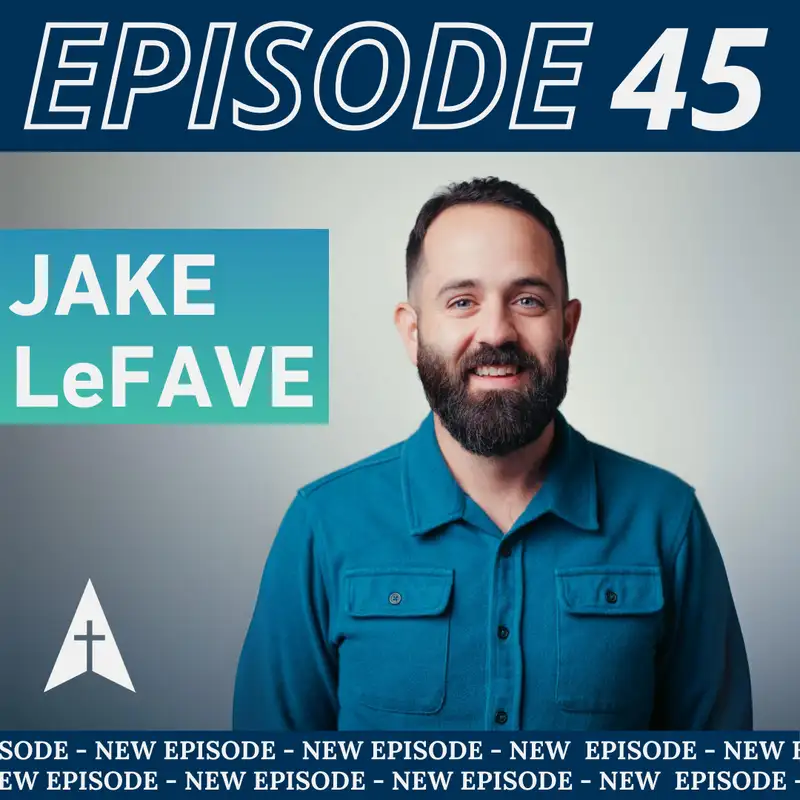
Well, hey, we are so excited to have on Church in the North, Jake Lefebvre. He is the lead pastor of Christ City in East Vancouver. Jake, welcome to the Church in the North.
Jake (00:13.154)
Yeah, excited to be here. Thanks for having me, Rob.
Rob Chartrand (00:15.639)
Thanks for getting up really early. It's early your time because apparently you're going to go watch some sporting event south of the border, that right?
Jake (00:24.62)
I am, I'm going to see the Seahawks play the Niners this evening. Not even a big football fan, but looking to spend some time with my dad and my brother. And so it's going to be fun. Yeah.
Rob Chartrand (00:32.779)
Yeah, totally, totally cool. That's awesome. We want to talk about you, your story, we want to talk about your church. But let's start with your church. It's part of what's called the Christ City Network. And online, it's called a network of neighborhood churches. What's that all about? What is that?
Jake (00:52.122)
I think I should say out of the gate, what we're doing is not like unique or new. We're not the first people to do this kind of model. Models like ours have existed in the the shoe swap actually, but in the States, you know, sojourn in Kentucky has something similar. So essentially what the model is, is it lives somewhere between a campus church and an individual standalone church. And so what we want to say.
Rob Chartrand (01:18.551)
So like a multi-church model. Yeah. Okay.
Jake (01:20.31)
Exactly. Yeah, absolutely. And so we want to say is being in the city is expensive. It's hard, as I'll share later, like we planned to write before COVID. It's lonely. And so we want to avail ourselves of all the resources of a larger network, a larger group, a larger fellowship. But also we want to be able to make decisions and be nimble enough to minister to the people who are actually right in front of us and to contextualize.
Rob Chartrand (01:25.655)
Yeah.
Jake (01:47.29)
our church to our particular neighborhood. so Vancouver, as you know, or may know, is a city of neighborhoods. And where I pastor in East Vancouver is wildly different than where my brother, Brant, pastors in Kitsilano. And so, you know, not a lot of yoga pants where I pastor, a ton of yoga pants where Brant pastors. And so same with the church in South Vancouver. And so we want to be able to just contextualize to our particular neighborhoods and yet still avail ourselves.
of the wider network. so that's in a nutshell, sort of the model and how it works. Yep.
Rob Chartrand (02:19.563)
Yeah, and so how many would be in your network? How many churches?
Jake (02:23.118)
Yeah, so we just planted our fourth neighborhood church last September. And that was a bit of a stretch for us. was in Surrey. And so, you know, in the Lion King where it's like, like that shadow land where you don't go for us, that's always been Surrey. This sort of far away shadow that you don't go to Surrey. And yet one of the guys who joined our team really felt the call to Surrey. And so there's four of us, Kitsilano, South Vancouver, me and East Vancouver, and then yeah, in Surrey just recently.
Rob Chartrand (02:50.743)
Okay, so tell me about the East Van Church then and your planting journey with them.
Jake (02:57.602)
Yeah, so I guess it starts all the way back. I joined the staff of Christ City about coming up on 10 years ago. came on, the church had been planted in 2013 under a guy named Brett Landry. Came on and was just excited to learn from a church planner. I was coming from a large established church and it was doing some fantastic stuff, but wanted to kind of get a bit more of a, know, Steve Jobs building something out in the garage.
sort of experience and you know, that was what the Lord was calling us into and so started doing kids ministry sort of doing youth ministry kind of Passed my way through those things Great great learning time but always thought the goal in the heart for me and I think my wife was to plan a church and so in 2019 we were sent out to plant Christchurch East Vancouver, which is in the Hastings sunrise neighborhood, which if you're looking at Vancouver is
top right corner of the city. It's this really strange mix of long time residents, also mixed into with some gentrification, also mixed in with some of the socioeconomic issues that have plagued the city for a number of years now. And so we planted in 2019. And then as you know, the following, what was that, spring.
Rob Chartrand (04:10.731)
Hmm. Hmm.
Rob Chartrand (04:19.147)
Thank
Jake (04:21.786)
So I planted Rob with a real heart for like incarnational ministry of being in person. I'm analog, not digital. That's my heart. I'm a bit of a Luddite, a bit of an old man to my core. And suddenly we were forced online, you know, that early 2020. And so we really spent, I mean, close to two years sort of navigating that world. And only recently now, obviously, have we kind of come more into our own as a church. And so while we're five years old,
As a neighborhood church, I would say in actual growth years, we're about three years old. have this kind two-year purgatory sort of window where we're just trying to hold on and figure out what is this thing? Obviously in that season, we had planted with a bunch of young families. so young families in Vancouver either do one of two things. They stay because they have some sort of...
familial money or they have some sort of high-powered jobs and so they can buy in the neighborhood or they move to Surrey. And so during that time, like many people across Canada, we saw a bunch of people move out of the city to the surrounding sort of cities and neighborhoods around in the lower mainland. And so our church really changed over that time. And so I'm not sure if all church planners will admit this, but we planted the church with a particular demographic in mind.
We planned to the church thinking that we were going to reach other young families like our young family. I have a wife and four boys thinking, okay, that's who we're going to reach in this neighborhood. And over the course of COVID, the demographic of the church began to change fairly dramatically. And we found ourselves pastoring and serving a church that was very different than the initial church that we had launched in September, 2019. And so that's a bit of the details of it, but kind of the broad brushstrokes of the journey. 2019.
COVID. And then we sent out a bunch of people in addition to those who left to plant Crisidae suri. And so it really has been not a revolving door, but certainly not a static experience by any stretch of the imagination. Yeah.
Rob Chartrand (06:29.675)
Yeah. Yeah, a lot of churn. mean, so those couple of years where you during COVID where you're like, I'm really rethinking whether or not I'm going to keep doing this.
Jake (06:40.654)
yeah, yeah, mean, I've talked to a number of guys in that season, were part of also a church planning network, were part of a broader denomination of churches. And I don't know a single guy in that season, maybe one or two odd ducks who are like, I'm flourishing right now. I'm just killing it. And again, because my giftings are largely centered around people and being with people and.
pastoring in a classical sense. Here I was trying to figure out how to navigate this thing. And in addition, Rob, I should probably say, you know, I planted, we planted when I was, I was 30 years old. And, and so, I mean, just my own immaturity and my own, you know, sinful tendencies. I had some of the rough edges sort of smoothed over the years, but there were still a number of rough edges that became very, very apparent.
both in my philosophy of ministry, but just also ultimately in my own heart. And so I thought often about quitting in that time. And I would credit, obviously Jesus for his kindness, but also our model for being this community of brothers who are all suffering together for really caring me and my family and our church through that time. It's just been...
a tremendous experience of God's grace through his church towards us. so, yeah, it was a hard season without a doubt.
Rob Chartrand (08:14.293)
Yeah. So you were planting kind of at the back end of a, after a decade of, I would call over commodification of church planting. In other words, like there were church conferences and books and networks and everything that was going on. Right. And, and, and I know it because I was in the middle of it, like, but you know, drinking the Kool-Aid is like, we're going to plant a church. We're going to do it different. We're going to build this plot, you know, this ministry and we're going to take on the world. Right. And,
Jake (08:23.94)
Hmm. Hmm.
Rob Chartrand (08:43.679)
And in some ways, if you're not careful, it's a subtle form of adultery beneath your heart, in the inside of your heart, you know what I mean? your, and your church becomes your mistress in some ways, right? So did you wrestle with that on and off as you're planting?
Jake (08:49.199)
Yes.
Jake (09:00.084)
did I have idols, Rob? Yes, I I have all the idols. Yeah. I mean, like you said, you know, 2010 that season, you know, obviously you have evenness and proximity to us. have Mars Hill and so the prevalence of Mark Driscoll and the influence he had not just on the Seattle area, but on this whole sort of Pacific Northwest. You have sort of church planning as being sort of the answer.
to reaching people with the gospel. Now I believe in planting churches. To this day, I'm excited about it. I love it. I want to give my life for it. But it certainly was, like you said, of like ramp to 11. And so I was reflecting on actually that this morning, like that experience in that time of leading up to church planting. And it was a time where church planting was talked about a lot and how do we plant churches? How do we build teams?
Rob Chartrand (09:33.323)
Yeah, me too.
Jake (09:52.73)
Everybody's reading Tim Keller and what he's doing. Everybody's thinking we're going to have the next Redeemer, right? That's going to be us. That's going to be our experience. And what I upon reflection have kind of noted is that there was very little talk about after you plant the church, like how do you pastor the church? How do you actually care for the church? How do you feed the church? And so I know church planting draws like a certain type of
who is very obviously excited about what they're doing, but entrepreneurial in nature. And I love those giftings I want to see those fanned into flame. But I do think for those of us who are also geared towards just shepherding the flock of God among us, that it was a bit of a cold awakening, so to speak, to have planted this church, to have had all these expectations of what it would be, and then realize that pastoring is largely
day to day, walking with people, seeing people progress and then regress, preaching the word and them not hearing it and then preaching the word and them not hearing it and then your wife saying something and them hearing it because she's obviously said it in a way that's infinitely more profound than you could say it or whatever the case is. And so it has been, I would say, I think detox would be too strong of a word.
But there has been, I think the last five years, all of these hopes and expectations and the hype even of that decade sort of worked out in me until now I can finally say, I think this is what the Lord has called us to do and called us to be and called me to be in the season. so, yeah.
Rob Chartrand (11:34.453)
Yeah, there's nothing like a good pandemic to rip idols out of your hands. I mean, that's it.
So, yeah, absolutely. Yeah, near the end, we were, mean, our church plant was 10 years old by then, right? So it was much different. We'd gone through enough other stuff to kind of wrestle those idols to the ground. I mean, that's a lifelong process, sanctification. It's a lifelong process of surrender. Why don't you tell us about...
Jake (11:41.422)
You didn't experience that Rob, did you? No, surely not you. Yeah.
Rob Chartrand (12:08.065)
how you got into church planting. Did you ever think you would plant a church? Didn't you go to Bible college or something like that?
Jake (12:14.19)
Yeah, so that's one of the reasons I'm so excited to be talking to you, Rob, is because I am a Briar Crest alum. So, I mean, again, to go back a little bit, grew up in a family. My mom loved the Lord. My dad came to faith later in life. I had a sister who I think has always been a Christian. Like, theologically, it doesn't work for me, but just like in her life, I think she's always loved the Lord. My brother came to love the Lord later in life. Same with my younger brother as well. So, family of four, love the Lord.
I had sort of walked away from Jesus and all that in the high school years. Had a youth pastor, had a real significant impact on my life. Really, really, really impactful on my life and so thankful for him. anyways, I became a Christian towards the end of high school. And then I went to do like a one-year Bible college program, Kaleo. You might be familiar with the program out on Vancouver Island. And that was awesome.
Rob Chartrand (13:10.303)
Nice.
Jake (13:13.954)
It was fantastic. You know, you're kayaking and this is school somehow, and you're snowboarding and you're learning about Jesus. It was just, it was really, really formative for me, but I had thought I had done my Christian duty. I thought I'd gone to Bible college. I, you know, I'd kind of chase that down. So I went the following year to University of Ottawa with the thought that I would become a lawyer, maybe do some international human rights stuff.
You know, with the idea that I'll do my good for the kingdom, but also make money and I'll be a respectable person in society. All along, Rob, I should say, even before I was a Christian, I can have this distinct moment in my head where I saw a guy opening the scriptures on a Sunday morning. He was a prophet at a local Bible college. I remember saying to my mom that morning, I'm not even a Christian. I want to do that. Like, I want to do that.
Rob Chartrand (14:05.687)
Hmm.
Jake (14:06.468)
Just how he explored the scriptures and explained them, it just resonated with something in my heart and it stirred something in me anyway. So I had long sort of neglected that. I'd wanted to move past that. I find myself at University of Ottawa. And about halfway through the year, I'm on the floor in my friend's family living room, weeping and crying and knowing that I'm running away from a call of God on my life. And so my sister had gone to Briar Crest
and my brother had gone to Briar Crest. At that time, I thought Briar Crest was the only Bible college in Canada. It's the only Bible college I knew of. So obviously that's where I should go. And so the following fall, I enrolled at Briar Crest, admittedly somewhat uncommittedly, somewhat sort of hesitant. Again, talking about idols, I was proud. I was arrogant. Anybody who was at school with me at the time can attest to all these things.
Rob Chartrand (14:44.677)
Right.
Jake (15:05.78)
And I went home, I remember that Christmas and just having a moment with the Lord where he said something to the effect of like, do you want to do this? And if you want to do this, you should do it. You should really do it. Don't just half do it, but really, really do it. And so it came back that second semester of the first year and just let the Lord sort of work on me as it were. I was attending a local Anglican church and thought that I would become an Anglican minister. was
I was bent on that. Anglican tradition still to this day is just so appealing to me in all of its richness. But I met a girl who was very much not Anglican. And she said, that's great. You can become an Anglican. I'll just go do something else. And suddenly it's wild how my theology just shifted in that moment, Rob. know? Like suddenly, you know, I'm going have some trouble with this baby baptism thing anyways. And I could do something else. And
Anyway, she was the first real kind of like Mennonite I'd ever kind of met. We didn't have Mennonites where I grew up. I guess we did, but I didn't know about them in Ontario. And so yeah, I ended up working at a church that she grew up in, in Burnaby called Willingdon Church, which was a church out there. And it was really under the ministry of John Neufeld at Willingdon Church, where I had sort of this third conversion. So a conversion to Christ.
Rob Chartrand (16:17.833)
church.
Jake (16:27.642)
a conversion, sorry, a second conversion to good, what I would say is was really good, rich theology. I experienced that under John and they're like just basking in the doctrines of grace, hearing just solid preaching week after week, really just transformed my ministry. And so there were no plans to plan to church at that moment. I just wanted to teach and to preach. And I really felt like that was Lord was calling me to do. But then, like you said previously, in the waters of 2010, if you want to do those things,
The way to do that is not through church renewal, not just by going and getting a job, though some guys were doing that, it was by going and planting a church. And so for me, planting a church was really just a means to exercising my gifts of teaching and preaching and stepping into that, that I thought the Lord had for me. And so it wasn't until I came on at Christ City that it kind of crystallized what this could actually look like.
Rob Chartrand (17:21.013)
Hmm. Hmm. So, you know, a lot of people who plant churches want to go and teach and preach, right? Because they're, they're excited to I mean, I get I get to this every Sunday. Were you shocked to find out that that's only like a very small percentage of the gig?
Jake (17:40.75)
Yeah, mean, was terrified to find out that there was a small percentage of the gig. Now, so one of the things that is helpful about our model is that a lot of the administrative tasks that do overwhelm most church planners were being taken care of at a centralized level. And so on one level, it did free me up to go and be the teacher and the preacher that I wanted to be. But like you said, on another level, there were all these leadership dynamics, building teams.
Rob Chartrand (17:44.949)
Ha ha ha.
Jake (18:10.074)
navigating staffing issues that I wasn't at all prepared to do and really was going in blind for. And so, yeah, it was interesting. I remember, you know, before I planted a church thinking I'd spend about 20 hours a week on my sermon, you know, at least right. And then, you know, you're about three or four months into it and you're like on Saturday and you're scrambling like, Lord, is there anything you have for your people today or tomorrow? You know? And so it was a bit of a rude awakening for sure.
Rob Chartrand (18:39.883)
What was your degree?
Jake (18:41.658)
So my degree was actually in humanities. So I had done enough school prior to Briar Crest that I took mostly Bible study and theology, some humanities at Briar Crest, but the easiest path forward was just humanities degree, kind of knowing I would do further theological education anyways.
Rob Chartrand (18:45.015)
Okay, yeah, that's right.
Rob Chartrand (19:00.853)
Yeah, yeah. So tell us about your congregation. Break it down. You were talking already alluding to the fact that there was a change in your demographic. So explain that to us.
Jake (19:09.103)
Yeah.
Yeah, so our church today would largely, not entirely, but largely consist of sort of two demographics, one of them being young families. So we have about 50 kids on Sunday morning. We're a church of about 150 max on a Sunday. So a third of those are children who are full of energy and love the Lord, some of them, and are awesome and they're great. And then of course you have their parents who make up, you know, another
20 to 30 of those 50 kids. And then we have some sort of young singles in the midst there. But then there's a significant group and a growing group of primarily men who are coming from the downtown East side, who are connected to various recovery programs from the downtown East side, but largely through Union Gospel Mission in downtown Vancouver. And so, I mean, the backstory of that is COVID happens.
We send families to Surrey, natural attrition from COVID of families, church is changing. And we have one of the women in our church who works at Union Gospel Mission. She has this vision. She has this picture of a bus pulling up on Sunday morning and men getting out and coming in and being part of our fellowship. I remember her telling me this and thinking, okay, something to kind of think about, pray about.
I appreciate you being sensitive to the Lord, Sister, but not really making much of that. And after COVID, we just found through our relationships with Union Gospel Mission, we had about a dozen to 15 people working there who were part of our members as a church, but on staff there as well. And so the crossover rate was huge and we soon found just a ton of these guys who are coming eager to learn more about the Lord.
Rob Chartrand (20:50.647)
wow. That's a lot.
Jake (21:02.778)
Some who are coming just because that's where the bus was taking them that day and still to the state. That's just where the bus is going. And so I'm going to hop on the bus. But a number of whom who have become, you know, dear friends, brothers in Christ. If you were to come to our church on Sunday, our worship team would be predominantly comprised of these men who are coming from the downtown East side who have fantastic musical gifts, but for some reason or another have found themselves in recovery. And so it really is this.
Rob Chartrand (21:24.215)
Hmm.
Jake (21:29.594)
very jarring but beautiful reality that we're experiencing right now of young families, young professionals, and on the other end, these men who are coming, primarily men, some women, but primarily men who are coming from a recovery background. And it has been, I would say, Rob, the greatest gift the Lord has given to our church. It has been a tremendous blessing. I can say more about that, but that's sort of generally.
Rob Chartrand (21:53.813)
Yeah, yeah. So how long after COVID did that happen? Did the bus start? Because I'm just thinking you're just coming back of COVID, you've got some people that are scattered and gathered and you're trying to rebuild community. And then all of a sudden, you're changing it significantly by adding this large population group. So was there a gap between like when the door started opening again and when that happened?
Jake (22:18.05)
Yeah, I mean, I don't know if you remember COVID or the months after COVID very well. I don't. I don't remember that season. I mean, I think the Lord has, you in His mercy or it's just a traumatic response. I'm not sure yet. But it was shortly after COVID. It was a very sort of jarring sort of shift where people have left and now we're sending a bunch of people out. And at the same time, as those people are going out, these men are coming in.
Rob Chartrand (22:24.949)
Right.
Rob Chartrand (22:46.593)
Hmm.
Jake (22:46.907)
and they're being part of our fellowship. And so it was like in fairly short succession, at least it felt like to me that this was happening.
Rob Chartrand (22:54.549)
Yeah, yeah, that's quite a big shift. But I guess everybody's been shifting for two years. And so, you know, what's one more, right? But what a beautiful shift. So your connection with Union Gospel Mission, I'd love to drill down on that a little bit. So that started through people in your congregation. How do you navigate that relationship with them? How do you guys specifically work? Is it officially working together or do they just drop people off?
Jake (23:04.708)
Mm-hmm.
Jake (23:09.497)
Mm-hmm.
Jake (23:25.006)
Yeah, so the partnership is unofficial. It's not sort of an official partnership. So I think it did start with people in our church who worked at UGM, who would just say to the men and the women that they're working with, there's this great church, you're welcome to come on out. We'd love to have you sort of in that sort of informal level. And then it progressed over time where a number of the coaches in the men's program in particular had come on a Sunday, had come...
to be part of our community. And this is sort of their church they were attending on Sunday. And so as coaches for these men, they're saying, hey, here's where we're going on Sunday. Now the men in the program have to attend a certain amount of meetings each week. And so when I say like some of them sort of like are like be gradually getting on the bus, like, mean, I really do mean that some of them have to attend a certain amount of meetings to check off the box. Yeah. And so I'm fine with that. I'm happy with that. But so it was sort of this informal partnership. And then over time, as we noticed this thing happen,
Rob Chartrand (24:10.539)
They're checking off a box. Yeah.
Jake (24:22.862)
And so that's, want to highlight that the Lord was doing this. The Lord was arranging these pieces and we were just suddenly, we should pay attention to what he's doing here. I should pay attention. It's not the church I think I'm pastoring, but the church that Lord has actually brought to me and to our elders and to our deacons and to our church to pastor. And so only then did we start having kind of more intentional conversations specifically with the men's recovery program at UGM about how can we be good partners.
How can we come alongside each other well? How can the work of the church support what you're doing? How can you reinforce what we are doing? How can we be, yeah, really brothers and sisters and striving in the same direction in all this. And so we've kind of been in that place ever since where it's just give and take. Now, one of the challenges has been because we have men and women who are part of our church who also work at UGM and are in positions of authority over these men.
Rob Chartrand (25:19.776)
Right.
Jake (25:21.178)
in the program is navigating those boundaries and finding out what is appropriate and what's not appropriate. And we haven't done that perfectly. It's kind of like, okay, we're going to step here. That doesn't work. We need to adjust here. You know, if a guy comes on a Sunday and they see somebody there who's in charge of their housing, right, they want to make an appeal towards this person in a particular way. And they just want to worship. That person doesn't want to be approached as work such and such. They want to just be there as
Rob Chartrand (25:24.567)
Mm-hmm.
Jake (25:50.22)
a congruent who loves the church and loves the Lord. And so navigating those things has been one of the challenges that we've been experiencing.
Rob Chartrand (25:58.881)
Was there any sense of like, nimbly from like, you you think of parents and really wanting to shelter or protect their kids or whatnot, and just the concern about exposure or how has that worked in your congregation?
Jake (26:05.774)
Mm-hmm.
Jake (26:13.326)
Yeah, I think because of where we are in East Vancouver, and so we're not too far from Commercial Drive. We're about, you know, maybe a 10 minute drive down Hastings from the heart of the downtown East Side. And again, because of the people in our church, a large contingent who've worked on the downtown East Side, it wasn't like we were out in, you know, some suburban Langley, for example, where this was also, you know, unfamiliar.
There was, I think, and there has been, I think, a real kind of warmth and reception from our congregation to those Lord has brought through the door. Now, again, have we welcomed these men perfectly? The answer is, of course, no. And so I want to encourage and keep on encouraging our church that when these guys come through the door, you don't see them as one sort of homogenous unit, but you see them individually as men and women.
who bear the image of Christ, who bear the image of God and who are deeply loved by the Lord. And so while there hasn't been any sort of, what's going on here, there is, think, pastorally, at least as elders, just a constant gentle pushing and nudging and urging in a particular direction to ensure that we're not seeing these guys as just sort of a group over here, but seeing them individually. And really the goal is integrating them into the normal rhythms.
of the church. That's what we're aiming for, is how do we integrate them into those rhythms.
Rob Chartrand (27:39.276)
Yeah. So I want to pan out the camera just a little bit and talk a little bit about East Van really quickly. mean, you've already alluded to this. I mean, it's kind of a stratified area. there's different regions of East Van. I mean, East Van is kind of notorious for being difficult soil for the gospel. So talk to us about that. What are some of the challenges of contextualizing the gospel in East Van?
Jake (27:44.868)
Mm-hmm.
Jake (28:05.71)
Yeah, it's a great question. So where we are in East Vancouver, the Hastings Sunrise neighborhood is a sort of historic Catholic corner of the city. And so the big Catholic high school, one of the big Catholic high schools in the city, it's just down the street. We're kitty corner from one of the local parishes. Many of my neighbors grow tomatoes in the backyard to make their own pasta sauce. And they're making their own wine in their garage.
And so you have that sort of historic cultural conservatism in the form of Roman Catholic tradition, but you do also have recently immigrated folk. so many of my neighbors, English is not their first language. And so it is this kind of weird intersection. And of course you have on top of all that, primarily driven from commercial drive and that surrounding area is just like the rampant liberalism of our day.
And so one of the things that we did early on that I learned, one of the good things I learned in my church planning prep was to look to those who've been serving in the area for a while. And so there's a church 10 blocks from us, West Coast Christian Fellowship, who just recently celebrated like a hundred years in the neighborhood. A hundred years. Had a revival in the sixties, know, had lost some members, had gone through sort of all the ages and phases of a church.
Rob Chartrand (29:25.377)
Wow. Wow.
Jake (29:34.458)
a church just west of us, Ward Memorial, Pastor Youssef has been laboring there for a number of times in a largely ethnic congregation. And so in farming this soil, as it were, it was really imperative for us early on to look at other farmers and to learn. Like we wouldn't show up if you were a farmer, you wouldn't just show up and say, I'm just going to assume a whole bunch about this land. You would gather sort of as a community and say, what has been historically done in this neighborhood? What have you historically seen?
and how can we farm in line with what the Lord has done and is doing. And so that was really crucial to us was just to get around other men and women who've been in this neighborhood for a long time. There are of nonprofits around here. And so we have felt some of that to be expected, like liberalism, that is just incredibly hostile to the gospel. We have felt that in certain ways.
Rob Chartrand (30:25.719)
Hmm.
Jake (30:29.138)
But largely we have seen, I think, a real receptivity to the gospel. You know, if the cycle of of Christendom to post-Christendom, if that's sort of true that we're in this post-Christendom place right now, there really is this openness to the gospel because it hasn't really been ever received before or ever told before. And so I was talking with a woman yesterday and she's just like, hey, I've heard about this thing called monotheism. Like, what is monotheism about? And of course, in Christendom, like,
Rob Chartrand (30:33.996)
Hmm.
Rob Chartrand (30:56.427)
Ha ha ha ha.
Jake (30:59.168)
Everybody knows what monotheism is, but here's this lovely woman who's been coming to our church for years, and she's like, what is this story of the Bible? And so for me as a Bible teacher, that's so exciting. You just teed it up on a tea bowl. I want to take a swing. Let's talk about monotheism and the God of Abraham fulfilled in Christ. So it has been this interesting soil, as it were, of sort of historic conservative roots.
There's been revival in the sixties and now this post-Christendom world where people are genuinely earnest and honest with the questions they have. Really quickly, you know, my neighbor just behind us, you know, he came to my door, I think maybe a couple years ago and he had heard that I was a pastor. Of course, nobody knows what a pastor is in East Vancouver. Like, is that a priest? Like, what does a pastor do? So it always leads to great conversations. He heard that I was a pastor.
But his father was experiencing real health complications, eventually died. But he showed up at my door and rang my doorbell because he knew that in some way, shape or form, that there was some comfort in the gospel that we proclaimed as a church. And so for us, it's faithful gospel proclamation, it's faithful presence, and it really isn't much more complicated than that. So that's how we've been kind of farming, as it were, the soil of East Van.
Rob Chartrand (32:11.905)
Hmm.
Rob Chartrand (32:26.741)
Yeah, well, so, okay, so your church is MB, Mennonite Brethren. Theologically, though, you're within a sliver of that, you are Reformed, right? So, a complimentarian, very conservative in that sense. And of course, Ysvan, as you've already said, is known for being a bit more ideologically militant, very progressive, right? So, have you ever, have you rubbed up against a grain of culture there in any way, or has that been a challenge for you guys?
Jake (32:30.296)
Mm-hmm. Yep.
Jake (32:55.758)
Yeah, I mean, we've experienced it to some degree where people have left because of our secondary theological distinctives. We do inhabit a weird space of the MB world where we are this reformed, complementarian sort of group of churches. Now, I want to say we hold those things generously and openly in the sense that if you don't hold onto those secondary distinctives, you can absolutely be a part of our church. You can absolutely be a part of our fellowship.
Rob Chartrand (33:18.059)
Yeah. Yeah.
Jake (33:20.004)
But it's interesting, like the most pushback we've got on those distinctives in particular has been from other Christians, has been from Christians who have taken liberty or issue with them. Like the majority of our church, to be honest, are men and women who have no idea who Jesus is and what the gospel is, and they're coming in and they're hearing all these things for the first time. And to them, at least in my experience, it hasn't been the terrible stumbling blocks it has been for other Christians. And so where we're hearing the most sort of pushback or
Rob Chartrand (33:27.095)
Interesting.
Jake (33:49.858)
even attack at times is not from outside the camp, it's from inside the camp. And so that's been really interesting to kind of to navigate and of course trying to do that in a gracious way, both in our denomination, but also as a group of churches in this city. And so we want to hold those things. We believe the Bible teaches those things. We actually think they're beautiful, but we also want to work with other churches who wouldn't hold those distinctives because in the city you don't have, and I'll say this, but I don't mean this. You don't have the luxury of tribalism in the city.
Rob Chartrand (33:54.604)
Yeah.
Jake (34:19.822)
You don't have the luxury of saying us four know more in the city. There are so few followers of Jesus, so few gospel proclaiming churches in this city that you're saying, hey, Apostles Creed, right? Can we sign off on the Apostles Creed? Brother, sister, come on in. You know, let's do this thing. And that's kind of where we're at.
Rob Chartrand (34:36.811)
Yeah, no, that's great. And I think my experience in working overseas in NGOs that are just trying to survive over there, it's the same thing. It's like, you're here, we have this baseline of belief, let's just work together. It doesn't matter. So, okay, let's talk about some of the work you're doing.
Jake (34:54.776)
Yes. Yeah.
Jake (35:00.301)
Can I a pause for a second, Rob? Sorry.
Join us here.
Jake (35:11.674)
Sorry, Rob.
Rob Chartrand (35:12.715)
No problem, we'll edit that out so it's all good.
Jake (35:15.416)
Yeah, my better half, Paul is here. Paul is who really makes this church work. Yeah.
Jake (35:25.486)
second here. Sorry Paul. Hey I'll see you Sunday. Okay. Just briefly. What time are up? I don't know.
Jake (35:41.114)
Sorry, Rob.
Rob Chartrand (35:42.111)
No, worries. I'm going to go for Urban Chapel. All right, I'll lead in. Here we go. So you also support something called Urban Chapel. I'm fascinated by this. So why don't you tell us what that is and what the support look like for you guys.
Jake (35:48.12)
Mm-hmm. Yep.
Jake (35:53.231)
Mm-hmm.
Jake (36:01.518)
Yeah, so Urban Chapel is the brainchild of our urban chaplain, guy named Heath Meikle, who joined our team at Christ City East Vancouver early on in the planting process. Initially, to kind of, hey, I'm here to help out. Heath is supported by a number of churches across Canada. He's also supported, was in part, by our denomination. But as he spent time with us, and so part of our ethos, part of our culture as a church is really to be planting churches.
Rob Chartrand (36:08.918)
Mm-hmm.
Jake (36:30.392)
to be sending people out in costly but Christ-glorifying ways. so Heath was originally just off of Commercial Drive. He thought he'd plant a church off of Commercial Drive, but then felt like a strong call to the downtown East Side and not like the periphery of the downtown East Side, not like Strathcona, but like really, like, you know, he's more or less next door to Union Gospel Mission on the downtown East Side. And so over time, Heath began sort of
Rob Chartrand (36:54.305)
Okay.
Jake (36:57.7)
praying and asking the Lord, what does it look like to serve folk on the downtown East side? Now there will be some for whom the best path forward is to actually get out of the downtown East side, to get out of the chaos of that world and to come and be around young families, like have some stability, be around some greater sense of normalcy for lack of a better word. But there will always be those for whom the downtown East side is their world and they won't leave that world. That's where they get there.
food, that's where they get whatever services they need. That's their community, that's their place. And so he started volunteering with an organization called Jacobs Well, that works on the downtown Eastside. They do some great work just inviting people in, extending the friendship of Jesus to folk. And basically over time, the thought was, how can we have some expression of the church here on the downtown Eastside? Not in Hastings Sunrise.
but really right here in the thick of it all. And so just recently we purchased a building, we raised funds for a purchase of the building and Heath right now is working with the ministry of Jacob's Well, as well as an internal team to figure out what does it look like to be the body of Christ on the downtown East side. And so Lord willing, just as we sent people to Surrey a few years ago, we'll be experiencing another transition as we send a men and women to.
downtown Eastside to serve alongside Heath and the leadership team there. Now, we understand that the church there is gonna look very different than any of our other four neighborhood churches. But we also equally believe that it's not any less the church, that these folk are not any less a part of Jesus's kingdom, any less loved by Christ or honored by Christ. And so how can we do well by them in serving them as a church? And so that's what Urban Chapel is. Part of the Christ City ethos is also, we're gonna build this plane in the minute, like mid flight.
Rob Chartrand (38:34.87)
Hmm.
Jake (38:55.031)
And so, you know, next week something might change about that, Rob. But that generally, as of, you know, October, whatever, that's what Urban Chapel is.
Rob Chartrand (39:04.287)
Yeah, and that's that's just good gospel contextualization and missional accommodation. You're just going to flow with what's happening down there. So you said you bought a building. What is that building? What's the shape of that building? How is that building going to be used?
Jake (39:18.66)
Yeah, so the building is the building that Jacobs Well, the ministry that Heath sort of has been volunteering with, has been meeting in for a number of years. And so the building itself is in relatively good condition. There'll be some renovations being done to it, but it will continue to be sort of this joint partnership between Jacobs Well and Urban Chapel, where Jacobs Well will continue to offer their ministries and what they're doing down there and the fantastic work, continuing that fantastic work.
Rob Chartrand (39:26.827)
Mm-hmm.
Jake (39:48.58)
And then Heath will come in and do some more ministries as well. But I think eventually moving towards a Sunday morning expression or Sunday afternoon expression. And so there will be this sort of give and take relationship, which they're continuing to kind of figure out and navigate even now. Yeah.
Rob Chartrand (40:05.387)
Yeah. Has East Vancouver like the downtown area, has it gotten worse in the last 10 years? Has it changed radically?
Jake (40:13.754)
Yeah, it has, it really has. I mean, you talk to anybody who lives down there or who lived down there and they would talk maybe even 10 years ago about some sort of code of honor on the street. Here's what's permitted, here's what's not permitted. You have guys yelling, kids on the block and so needles are being put away and what have you. But really, and I don't know if I can put a timestamp on it, but really of late.
Rob Chartrand (40:28.608)
Mm-hmm.
Jake (40:43.346)
And that is the result of a number of factors, but it has really not improved over the last few years.
Rob Chartrand (41:19.765)
Yeah. Do they have tent cities or did they have tent cities? Is it you know, kind of unsafe to walk on the streets?
Jake (41:28.452)
Yeah, so there were tent cities and there have been tent cities and there's always just kind of give and take between the city and the tent cities about, you know, them popping up and them being torn down and then popping up and then being torn down. To walk on the streets, in my opinion, again, this is me as a 35 year old male, white male on the downtown East side, you know, for me is not particularly dangerous in my opinion. I wouldn't send my wife.
I'd down there to walk on the streets at night by any stretch of the imagination. I wouldn't walk down there with my kids, you know, at certain times of day. And so there are certain moments where being in particular areas is not safe and, yeah, not conducive to hanging around.
Rob Chartrand (42:14.743)
Yeah. So your family lives in East Van though. Your house is there but not right downtown but you're in the community.
Jake (42:20.694)
No. So we're about a 10 minute drive. I mean, to be in our neighborhood, a ton of young families, again, you know, like normal sort of single family dwelling units. And so it really is like, you know, again, 10 minute drive, but a world away in some respects.
Rob Chartrand (42:35.489)
Yeah, yeah. Well, and I can imagine with your enormous pastoral salary, you have a really big house in East Van that's probably worth several millions of dollars. Is that correct? Am I reading your mail?
Jake (42:46.298)
So I don't own a home worth several millions of dollars. The Lord has provided, and I would just say this, if there's anybody just planting right now, I mean, the financial pressure is so real. mean, planting or not planting, pastoral pressure is just so real financially. And I would just encourage anyone who's listening, the Lord has provided in Maisie and I's life so that we can, we're renting, but we're very, very happily renting.
this space that we can live in and also I can be in a separate office down here on our lower floor. I mean, to have that in this city has been not just the Lord's kindness, but like sign of like His abundant grace and His abundant mercy in our life. And so yeah, the Lord has provided for us.
Rob Chartrand (43:31.029)
Amen. Yeah. Well, the cost of living in Vancouver is just so ridiculously high. I mean, that's, that's not uncommon for a lot of people, is it?
Jake (43:42.362)
No. So again, like even thinking demographically, the young families who have stayed in our neighborhood are those who either by family or by job could buy. And then for the majority of them, they've been pushed to somewhere in the lower mainland. And so most people are in this place of like, do I buy here and then I'm here forever, right? Or like we have to make a decision to go at some point. And so that kind of transience
I think it's more acutely felt in places like Kitsilano, maybe even like Yale town. But that transience is just a part, it's the feature of doing ministry in Vancouver and probably any urban center in Canada these days.
Rob Chartrand (44:13.366)
Mm-hmm.
Rob Chartrand (44:22.635)
Yeah, well, I can imagine a single young 20 something year old who's just finished their degree and has a few student loans and wants to move down to Vancouver to seek their fortune. That's going to be tough, like to be able to afford housing. You usually have to kind of share housing. that like, it's just so expensive.
Jake (44:42.02)
Yeah, yeah. mean, first I would say if you're like a 20 something wanted to come to Vancouver to do ministry, I mean, you should email me. I'd love to chat with you. But you're right. It does. Like there is a counting of cost. I mean, my wife and I, were just in Texas last week and we both said this like in our flesh, we live in Texas. Like in our flesh, like every day, wide open spaces, big parking lots. People were so lovely. Chick-fil-A.
Rob Chartrand (44:49.878)
Hey, there we go.
Jake (45:10.554)
And I'll say there's anything wrong, of course, with living in Texas, but for us, like if you don't feel called here, and we do, like as of again, this day, feel very much the call of the Lord upon us. If you don't feel called here, I mean, you won't last one year, two year. You just won't. It's just easier places to do ministry.
Rob Chartrand (45:29.057)
Yeah. Yeah.
Well, brother, I'm going to bring this to a close, I wondered if as we end, because I know, you you got to get go watch the game, right? mean, we got time. But I wondered, as you think about ministry leaders across the country listening in today, if there's some some words of encouragement or wisdom or hope that you want to share with them. Now's your time.
Jake (45:43.63)
Yeah.
Jake (45:58.564)
Yeah, I've been thinking about this a lot lately, just in relation to Ephesians 2 verse 10. And so thinking and reminding myself that the Lord has given me good works to walk in. And the good works that the Lord has given me to walk in are not the same good works that he's given you to walk in, Rob. Are not the same works he's given the brother or the sister listening to this to walk in, but he's given you a personality, gifts.
talents, resources, from before the foundation of the world. He predestined you to walk in these good works. And so I would say, do whatever it takes to find out who the Lord has made you to be, and then just run and run. And really, pastoral ministry, I mean, we can talk a lot about sort of the different models and philosophies.
But pastoral ministry at its core is being with people in the name of Jesus for the glory of Jesus. And so stay close to Jesus. He loves you. He loves you so, so much. And I think that would be my encouragement to anybody listening at this time. Yeah.
Rob Chartrand (47:08.383)
Amen. Amen. Well, Jake, thanks for joining us on Church in the North.
Jake (47:13.966)
Yeah, thanks for having me, Rob. I really appreciate it.
Rob Chartrand (47:16.213)
All right, we'll talk soon.