Dr. Rob Chartrand (00:01.784)
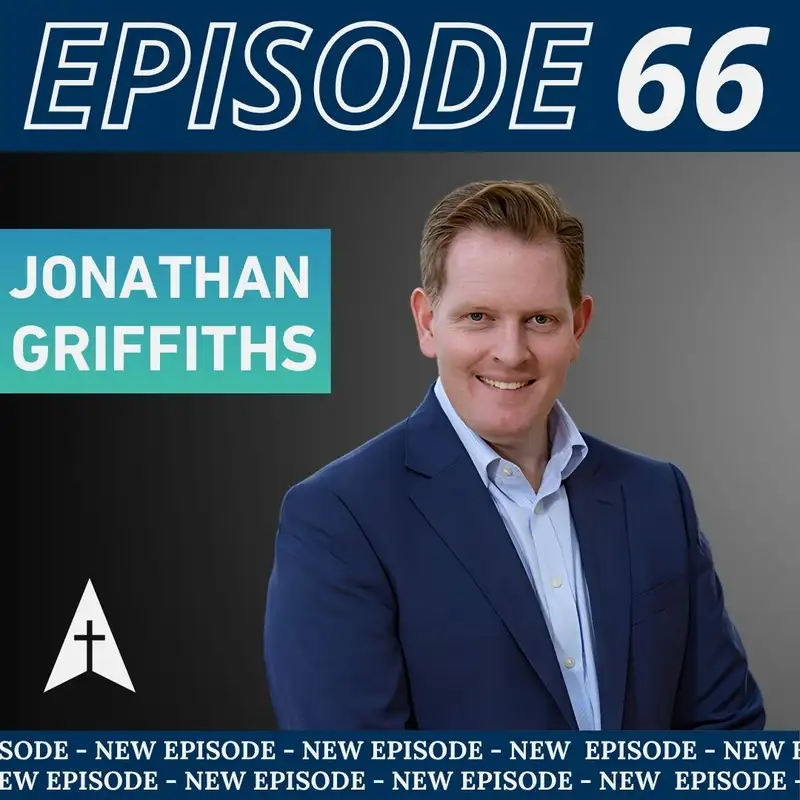
Well, hey, we are excited to have on Church in the North, Jonathan Griffiths. He is the lead pastor of the Met Bible Church in Ottawa. Jonathan, welcome to Church in the North.
Jonathan Griffiths (00:11.504)
Hey, great to be with you again, Rob. Thank you so much.
Dr. Rob Chartrand (00:14.7)
Yeah, and this is not your actual first time on Church in the North. We did a pipeline symposium set of conversations and you jumped in on that and it was great to hear your voice there and your perspective on that. And we're gonna, we'll get into that a little bit later on, but I wanna start today by hearing about your ministry journey. Let me start with this question. Did you always think that you would be a pastor?
Jonathan Griffiths (00:36.678)
No, I don't think so. I come from a family of mostly lawyers in Toronto and I think I assumed I was going to be a lawyer and I occasionally dabbled with the idea of being a stockbroker. So there you go. Those were the things I was interested in when I was a kid probably, but pretty early on I got on a track toward ministry. Late teens, late teens I would say. Yeah.
Dr. Rob Chartrand (00:50.7)
wow.
Dr. Rob Chartrand (01:01.038)
Okay. Okay, would you say that that was like a call to ministry at that time?
Jonathan Griffiths (01:06.588)
Well, I certainly sense something of that. Yeah, I think I would have described it in that way. Few things, different things. I think I noticed that among my contemporaries, there was a lot of drift away from Christianity, away from the gospel, even from those who had among those who had grown up in Christian families. And that kind of concerned me. I was a believer and I saw that and I thought
something needs to be done about this. So I had a burden, I think, for my contemporaries. I think I was inspired by certain things. I remember watching, I mean, I remember watching a documentary about Billy Graham and seeing how the Lord used him and shaped his life. And I found that inspirational, actually. And I remember thinking, you know, what a way to use your life and how the Lord can use particularly a preacher of the word.
My grandfather's a Baptist pastor and I always admired him. He's just turned 104 actually. I just saw him yesterday. Yeah. And he had a very fascinating ministry in the UK and South Africa and here in Canada. And I guess I was intrigued by that and inspired by him a bit. So there were a number of things that spoke into my life at that stage that made me think.
Dr. Rob Chartrand (02:11.449)
wow. Okay.
Jonathan Griffiths (02:30.992)
you know, how better could I use my life than, you know, making the Lord Jesus known and preaching the gospel and encouraging others to follow him. So that I got set on the track with that and had a sense of conviction that that was the right thing for me to be doing by my late teens, I would say.
Dr. Rob Chartrand (02:50.861)
Okay, so where were you living at that time?
Jonathan Griffiths (02:54.332)
So I had grown up in Toronto. mean, my family are from the UK, but I grew up in Toronto and was living there until I was 19. And is there something I can do with the screen, Rob?
Dr. Rob Chartrand (03:10.861)
Sorry, it's my screen. We'll cut this out. I'll make sure that they see this. Yeah, yours is fine. I see that there. There we go. Finally. So let's go back to that question. Where we live. Where were you living at that time?
Jonathan Griffiths (03:17.742)
Is mine okay? Okay.
There we go.
Jonathan Griffiths (03:28.912)
Yeah, so I grew up in Toronto, pretty close downtown Toronto. My family had come from the UK, but I was born there and lived there until I was 19, at which point I then did actually move to the UK. Yeah.
Dr. Rob Chartrand (03:39.338)
wow.
Dr. Rob Chartrand (03:43.319)
So talk to me about your educational journey then. Did you jump into like an undergraduate program in like the arts or in theology or?
Jonathan Griffiths (03:51.044)
I wanted to I I was clear enough that I wanted to be involved in Ministry of some kind now I was also open to academic work by the way I was open to being involved in sort of seminary teaching or something I wasn't quite sure what but some form of Christian ministry and Bible teaching and I wanted to use my undergraduate years to prepare me for that and I noticed that
mainstream secular universities in North America it was harder and harder to do that. The classical theology programs had largely faded away. I didn't want to go to a Christian university for a number of different reasons and I think that was the right choice for me but I noticed that in Britain the mainstream university still had theology departments or divinity faculties and had pretty robust programs where you could do the biblical languages and you could do church history and you can do systematic theology.
and you could do biblical exegesis and things like this. So I applied to the UK, I applied to Oxford and was able to go there for my undergraduate studies to read theology. And I did biblical languages, I did systematic theology and a lot of exegetical work. And that was great. I had a wonderful time actually, and I think a wonderful education. So I'm grateful for that.
Dr. Rob Chartrand (05:13.741)
Now, were you doing church work concurrently with your education at that time?
Jonathan Griffiths (05:18.936)
No, I mean, you know, I was involved in local church. I mean, I was involved as a lay person in the local church. I was at a great church in the center of Oxford that had lots of undergraduate students at that time, and that was inspiring in its own way. And I was involved as a lay person leading Bible studies in this kind of thing. no, I was pretty focused on my studies and those were, I mean, those were all consuming, to be fair.
Dr. Rob Chartrand (05:45.303)
Yeah. Now, did you jump into a graduate program or did you go right from that into your PhD studies?
Jonathan Griffiths (05:51.034)
I did an M.Phil at Cambridge, which is the sort of requisite precursor to the Cambridge PhD. So that was a one year biblical studies. I really had to pin down my languages actually in that year and I hadn't learned much Hebrew. So I had to get my Hebrew good during that year. And so that was, yeah, it was a great year, but I moved over to Cambridge for it.
Dr. Rob Chartrand (05:54.144)
Okay.
Dr. Rob Chartrand (06:02.006)
Okay.
Dr. Rob Chartrand (06:20.365)
Okay, this is, mean, I know our listeners, this might not be interesting to them, but I'm gonna ask you anyway. So did you have to do additional languages like German or for your PhD?
Jonathan Griffiths (06:28.026)
Yeah. Well, they don't teach them to you. For an Oxford or Cambridge PhD, they don't necessarily teach you the languages. They just assume that you will pick them up yourself. So you have to demonstrate that have the biblical languages, but the assumption is that you can deal with French and German on your own. And I mean, I had French to a sufficient degree that I was OK. I had no German. And so a friend taught me German, actually.
Dr. Rob Chartrand (06:39.019)
Right.
Jonathan Griffiths (06:57.076)
and I picked up enough German to engage with German theological texts okay. I don't know that I could do it now, but I did get my German to a level of proficiency that it was okay. So I really found, I mean, I needed Greek and Hebrew, I needed French and German, and I did need some Latin, I suppose. And so I had all those with some degree of facility.
A lot of it's dissipated now, but they were there at the time, I would say.
Dr. Rob Chartrand (07:29.399)
Yeah, well, a number of pastors who've studied their Greek and Hebrew are trying to remember those even today after 30 years of ministry. You're not in it all the time.
Jonathan Griffiths (07:35.702)
it's not easy.
Jonathan Griffiths (07:39.568)
And you're nodding all the time. I mean, I'm just beginning a sermon series in Mark's gospel at the present time. I was this morning, you know, before the phone calls started coming in, I was like, right, I'm going to get into the Greek text of Mark. And of course, the phone calls came in and I didn't get there. So but it's a battle all the time. It's a battle all the time to keep those going. But they are valuable. And it's a worthwhile battle to engage in, I think. Yeah.
Dr. Rob Chartrand (08:02.572)
Yeah. Well, let's talk about the Met. Let's say you're at a pastor's conference and it's in between sessions, it's a coffee break, and someone just walks up to you and says, hey, tell me about your church. What would you say to them?
Jonathan Griffiths (08:19.164)
Well, how long you got? Every church is unique. Every church, you know, there's wonder about it and miracle about it and there are flaws to it. Every church is imperfect. And that's certainly true of the Met. The Lord's really blessed the Met. So the Met's been here in Ottawa for best part of a century. It was 1931, it was founded. So we're coming up to the centenary before too long. And the Lord's blessed it. It's been stable and steady.
Dr. Rob Chartrand (08:21.602)
coffee break.
Jonathan Griffiths (08:48.06)
It was originally located downtown by the parliament buildings and subsequently moved further out to get more space. well, that was in 2008. The church moved out. There is something miraculous about it. It's a larger church. I mean, you have big churches out West, but here in Ontario, you know, we'd be something like 2,500 people, which in our area, demographically doesn't make sense.
Ottawa is not the Bible Belt, you may or may not be aware of that. And Quebec is certainly not. Quebec is the least reached region in the Americas, north, south, central and Caribbean. And we're right on the border of Quebec. mean, we're 20 minutes from Quebec and we have quite a number of Quebecois people who come over and join us and are part of the Met. So it shouldn't be here, I think, demographically, but I think the Lord, you know,
had it within his will that there should be a strong gospel witness in the capital region. And so he's kept the Met here. yeah, we're, I mean, we're not, we're not fancy, you know, we preach the Bible, we try and take care of people, we try and disciple people, we try and reach the lost, we try and be a good neighbor and a good witness in our community. And the Lord has been pleased to bless and prosper that over the years. So that's us really.
Dr. Rob Chartrand (10:11.96)
Hmm. Okay. So how did you end up at the Met? How long have you been there now? How many years?
Jonathan Griffiths (10:18.128)
Well, this is my 10th year.
Dr. Rob Chartrand (10:19.768)
10th year, okay, so how did the Lord work his wondrous works to draw you to the Met and bring you to the Met?
Jonathan Griffiths (10:28.346)
Well, yeah, I was over in the UK. I'd done my studies over there and I'd had a number of years of ministry there, but had been eager to consider the possibility of returning to Canada, sensing there's a real gospel need here, which there still is, of course, as you well know, and sensing that because I'm Canadian and I knew the scene, maybe I could be useful here in a way that others couldn't.
So we'd been contemplating that. We were going to church plant in Toronto, actually, is what we were going to do. So I've been in discussion with a group in Toronto about planting a new church downtown near where I'd grown up, near where I lived. And I kind of figured we would do that. But for whatever reason, that didn't quite come together. I didn't have a full sense of peace about it. My wife, Gemma, we just didn't, it just didn't seem quite right, even though there was an opportunity. And so we waited on that. And through a different series of,
Dr. Rob Chartrand (10:59.352)
Okay.
Jonathan Griffiths (11:24.66)
know, series of various events really. We became aware of the need at the Met. My predecessor had been appointed and not stayed very long. A very, very fine Bible teacher who had been appointed a good man, but it wasn't the right fit and so left very, very quickly, which was unusual for the Met in its history. And so they had an unexpected vacancy.
And I happened to be in Vancouver teaching at Regent College, I think. I was over for variety of things anyway in Vancouver. I was doing a few things. And the search committee at the Met or the elders at the Met learned that I was in the country and was going to be heading back to Britain. And they said, look, would you make a stop on your way back to Britain and preach a Sunday for us? And it happened to be the first Sunday after my predecessor had left. It was the first vacant Sunday they had.
And I preached and that was fine and I enjoyed being there. And then the Met began a search process that lasted for quite a long time. And they wanted an expositor is what they particularly wanted, an expository pulpit. And that's me, that's what I sort of know how to do. And they circled back, not quite a year later, but best part of a year and asked me to return again to preach and to consider a call there.
I was young, so I think on my first visit I was 31 maybe, and I'd never had a senior pastorate. And the Met's a large church, it's a complex ministry, and obviously they'd had a disappointment with a pastor coming and not staying very long. And so it was a bit of a, in that sense, was a bit of a disrupted time for the church. So in many ways it seemed like an unlikely thing, but...
Dr. Rob Chartrand (12:53.43)
wow.
Jonathan Griffiths (13:16.444)
We had a sense of conviction that if the church wanted us to come and if the leadership of the church felt it was right to call me to come, call us to come as a family, that we sensed the Lord must be in that really and we need to be responsive. So we did. And that was 2016. We came over, my wife Gemma's English, had no desire to leave England except sensing that the Lord was in this.
and had three young children and so we came and that was an adventure but leading a large church like this is no small challenge, it's a challenging thing, often a difficult thing really and doing that as a younger pastor, that was a learning curve. I will put it like that, it was a significant learning curve but the Lord's been very gracious with it.
Dr. Rob Chartrand (14:00.792)
Wow.
Dr. Rob Chartrand (14:10.326)
Yeah, I think I was 37 when I became the executive pastor at Beulah. So Beulah is out west and it's, you know, church of about the same size. I mean, and that was a challenge, like to suddenly have these 50 year olds reporting to you and having to make, you know, executive decisions under a lead pastor. I can't imagine if I was five years, six years younger than that and having to be the lead pastor, the challenges of that as well.
Wow, good for you. when you were at Regent, did they fly you across to Ottawa? Was it right at the end of your time teaching there? Or were you there for a little bit and then?
Jonathan Griffiths (14:53.552)
I'm trying to remember now and I'm conflating two different visits in quite short time. One was for Regent, one was for someone else. And it may have been this was the other one now that I think of it. But in any case, I think they signaled this possibility early enough that I was able to arrange my flights and just stop on the way back to London and fly through Ottawa. And that all worked out. That worked out okay. At that point, there was a direct Ottawa Heathrow daily flight.
Dr. Rob Chartrand (14:57.591)
Okay.
Dr. Rob Chartrand (15:09.952)
Okay. Right.
Jonathan Griffiths (15:19.16)
In COVID, we lost that, which was very inconvenient, but they just started that route again. But anyway, so was able to hop on that one, I think, and that was fun.
Dr. Rob Chartrand (15:22.008)
Mm-hmm.
Dr. Rob Chartrand (15:26.764)
Yeah, yeah. So how did they know you? How did they know about you?
Jonathan Griffiths (15:30.448)
Well, the Met is part of a group called the Associated Gospel Churches of Canada, the AGC. And I had grown up in Toronto in a very fine AGC church called Calvary Church, which is down just off the Danforth in Toronto. And so I was a little bit known within the network. And it so happened that the pastor at Calvary Church now, who's still there, had been on the pastoral staff at the Met.
Dr. Rob Chartrand (15:35.34)
Right, yeah.
Jonathan Griffiths (15:59.342)
And so there were linkages and I think it was through that. Yeah, yeah.
Dr. Rob Chartrand (16:02.734)
Okay, yeah. Our president, Dr. Pauwaki, who you would know is also AGC, and so I've become a little bit more familiar. Yeah, great man. Good boss, good man. So your time at the church there, what were some of the earliest challenges? Like you're 31 years old, you just stepped into this role. What were some of the earliest challenges you experienced?
Jonathan Griffiths (16:08.486)
Good man.
Yeah, yeah. Yeah, good, good.
Jonathan Griffiths (16:29.872)
Yeah, well, there are always challenges in ministry, aren't there? And when you're dealing with a large congregation and a large staff team, there will always be things. There just will. And especially when there's been, you know, a slightly more dramatic time in leadership with some changeover and this sort of thing. One of the interesting dynamics that the Met has had to grapple with is that it grew very quickly at one point in time.
So the Met had been very stable, know, 500, 600 people for a long time in its older building downtown. It's always been a steady ministry. But there was a period of time in the early 2000s where it grew dramatically. And especially when it got this new building in 2008, it went from a, I don't know, 500 seat 1930s building downtown to a, you know, to a 80,000 square foot huge building on a campus.
And with that, then it grew more and it was all quite quick. And one of the things you'll be very sensitive to, Rob, is that when churches grow, everything about how a church is run and led needs to change. And when growth happens very, very quickly, there is a catch-up period involved in that for the church. And on reflection, I would say that the church was still growing into its new larger shoes.
Dr. Rob Chartrand (17:40.398)
Sure, absolutely.
Jonathan Griffiths (17:56.248)
in terms of leadership, governance, staffing, culture, the whole bit. And that's not an easy thing, actually. There are growing pains associated with that in every church, not just the Met. But I would say that that was still very much in process when I arrived. And we needed to make sure that governance was working appropriately for the size of church. We need to make sure that staff and structure of staff leadership and accountability and so on.
Dr. Rob Chartrand (18:06.35)
Hmm. Yeah.
Jonathan Griffiths (18:25.488)
was all fit for purpose. And that was a journey. And those changes are a little bit tough because everyone's used to operating in a certain way. And going through that process of growing together and figuring out a kind of leadership structure and culture that would suit the size of the church as it was, and as it continues to grow even now, has been not easy. I mean, it's involved challenge, I think.
Dr. Rob Chartrand (18:53.442)
Yeah. Yeah.
Jonathan Griffiths (18:55.157)
and discernment. Yeah.
Dr. Rob Chartrand (18:57.72)
Well, and the style and the feel of a church of 500 is very different than 2500. And you can almost sense that you know quite a few members of the congregation at 500. Even then it's really difficult, but there's still a sense of it's more of a closer community. So I can imagine, and maybe you can explain if this is true or not, but once you blossom and blow up to a church of 2500,
Jonathan Griffiths (19:10.145)
yes.
Dr. Rob Chartrand (19:22.51)
those original 500 feel almost a sense of loss of something like because it's changed. Everything's changing. Everything's changing. Everything's changing. Would they have experienced that?
Jonathan Griffiths (19:31.964)
Yeah, I mean, I think there is a sense in which anyone who was at a church when it was 500 and it grows to 2500, there will always be inevitably and understandably a sort of harkening back to that of, well, I remember when there was a sense of intimacy and relationship and closeness. And with a large church, you have to experience that and generate that and foster that in different ways.
Dr. Rob Chartrand (19:45.624)
Mm-hmm.
Jonathan Griffiths (19:59.462)
but it won't simply be how it feels on Sunday morning, because it's going to feel different. And even access to staff and feeling like, I know the pastor and we've spent time in one another's homes and so on. You multiply out, it becomes harder and harder. So all of those things involve, I think, a sense of loss for folk, which is quite understandable. But it's part of that process of growth and development and change.
Not an easy process, but if it's happening because the Lord is blessing the work and the reach of the work is expanding, then the growing pains are worth going through.
Dr. Rob Chartrand (20:42.958)
When the church was downtown, was it a drive-in church or like a regional church? Or was there a sense of like the geography, most people who lived around the area kind of went to that church?
Jonathan Griffiths (20:55.31)
No, it's always been regional, which is interesting. you know, back in the 1930s, as I read the history, and there is some history written up of the church, you know, there were people who would drive up from upstate New York to attend the church because its pulpit was well known in the region. And so I think it's been regional right from the start, probably.
And so one of the great challenges was parking. know, Ottawa is not Toronto or Vancouver, but nonetheless, it's still a problem. And one of the reasons at the end of the day, the church had to move was just parking was impossible. And it's interesting even now, you know, as we look at the future and consider growth constraints on our current side, I mean, we've got a big site and we've got lots of parking, but again, parking becomes your great limiter. Ottawa is a city where public transit is
basically very weak, there are pockets where it works well, but it's essentially not good. And so everyone drives and a lot of cars only have one person in them. And that's a challenge, right? It's a challenge.
Dr. Rob Chartrand (22:03.372)
Were the your predecessor, the the the pastor just before you, was he the one who helped move to the new building or was there somebody before him?
Jonathan Griffiths (22:13.466)
No, there were two before him. There was a gentleman by the name of Rick Reed, who's well known in this part of Canada. Rick's a very fine preacher and a gracious man and well appreciated here in his ministry. And it was really under Rick's preaching ministry that the church grew. And if you heard Rick preach, I think you would understand it. The Lord had greatly blessed him and gifted him.
And so it was during his 14 or 15 year ministry, particularly toward the end, that it grew very dramatically and markedly in a way that it had never grown in its history before. But at the same time, I think while there was evidence that there was a growth surge, the church took steps to make more space. You never know what will happen with the growth surge if you don't make space because at some point,
a facility or a staff team or a governance model, certain things just limit how far you can go. But if there is an impetus for growth because the ministry is strong, you you need to match that with some strategic planning that makes growth. And so the church did that. It moved to multiple services and then it moved to an extra service off site, actually at the university campus. The university allowed that, which was really interesting. And so they were running multi-site, multi-services and made lots more room through that.
Dr. Rob Chartrand (23:32.365)
Okay.
Jonathan Griffiths (23:40.144)
while they were then planning for a new facility. And so all of that meant that the church was basically enabled to go from 600 to 2,000 in fairly short order. Yeah.
Jonathan Griffiths (24:02.15)
Have I lost you, Rob?
Dr. Rob Chartrand (24:03.828)
I can hear you. Can you hear me? There we go. We're back. We'll edit that out. That's no problem. Yeah, that's interesting. know, as the old adage goes, often the person who builds the church doesn't get to enjoy it. It's their predecessor after them that often gets to enjoy it because it just is so taxing to build a building and to move a congregation to a new space. It's very difficult. Yeah.
Jonathan Griffiths (24:05.594)
Yeah, I can hear you. Yeah.
Sure, sure.
Jonathan Griffiths (24:29.924)
Yeah, it's very toxic. Yeah, I think that's right. I think that's right.
Dr. Rob Chartrand (24:35.392)
When you were downtown, as opposed to now, what was your external mission looking like? I think more particularly, you know, in major cities, in the inner city, you certainly have a much more street life, much more, say, physical hands and feet needs, but now your proximity, you're much further out. Has that changed at all?
Jonathan Griffiths (25:02.064)
Yeah, I mean, there's always been a concern for needy within the city. And there was a ministry to those who were homeless or underhoused and, you know, with a provision of food and so on. And gospel outreach matched to that, that took place when the church was downtown and it's continued sharing space with other ministries downtown, even as this church has moved its physical location.
There has been that and that's been a beautiful thing. The Met, like many churches of its era, founded in the 30s, 40s, 50s, latched on to global mission in a big way. And the Met has had a sort of marked concern for global mission and a big investment in global mission, all its history really. That's been part of the DNA right from the start.
I would say one of the dynamics we've identified, and the Church has been very aware of this and we've done some study on it over number of years actually, and this was identified before I came, and it was one of things I learned as I arrived, is that the Church's commitment to mission has been stronger overseas than it has been locally, probably. And I would say that's still true. And we're still figuring out how to reach our city.
Dr. Rob Chartrand (26:21.506)
Hmm. Okay.
Jonathan Griffiths (26:29.53)
I think we're better at reaching parts of Asia than we are at reaching parts of Ottawa, frankly. And that concerns us. It's an area where we need to grow. We've talked about it a lot. We've taken certain steps. We've got someone on staff who's dedicated to city outreach and is doing a marvelous job. But it's an area where we need to grow, I think.
Dr. Rob Chartrand (26:54.04)
Yeah. Well, how do you contextualize the gospel in Ottawa? I want to speak more about your preaching, your from the pulpit. When you think of your audience, how do you bridge the gap?
Jonathan Griffiths (27:09.66)
Yeah, Ottawa is an unusual place. So last time I checked and this may have changed, but I don't think so. You know, in terms of post-secondary education, it's the most educated city in the country. Yeah, we've got a lot of think tanks. We've got a lot of government people. We've got a lot of professionals. We will have a community here of folk who are involved in government. And that changes season by season. Obviously, when it was a conservative government, had more. I mean, there were more.
Dr. Rob Chartrand (27:20.994)
Hmm, interesting.
Jonathan Griffiths (27:39.74)
church people involved in that, I think in days gone by. But we would have, you know, a big diplomatic community and over time, quite a number of ambassadors and diplomatic staff in the congregation and this kind of thing. So, but it's a mixed congregation as well. We've got people who do all kinds of work and involved in manual work and lots of farmers and all kinds of things. So it's just mixed.
And I'm conscious in the preaching. I want to speak into our urban context and the world that our people inhabit Monday to Friday. But I don't want to become so specialized to sort of the capital thing that I miss everything else going on in our community and with our people. So I try and make sure that the preaching is thoughtful, that there's a depth to it.
Dr. Rob Chartrand (28:23.566)
Hmm.
Jonathan Griffiths (28:36.902)
We've got thinking people, curious people who have real questions who want to grapple. And I seek to make it as accessible as possible. But I try and make sure that the application is pretty broad because we've got a very international congregation. We've got a certain amount of transiency, a lot of visitors. And so I want to be thinking beyond simply Ottawa in the application as well and have a little bit of
of applicability that goes culturally in a few different directions. So I'm sensitive to the unusual position of the church and to the very much hybrid nature of the community.
Dr. Rob Chartrand (29:20.184)
Yeah, yeah. So would you say you set the bar a little bit higher in terms of thinking about the intellectual capacity of your listeners just in order to make it accessible but an intelligible and yet to reach them where they're at in terms of their education?
Jonathan Griffiths (29:32.549)
Yeah.
Jonathan Griffiths (29:44.284)
Yeah, mean, all it was very unpretentious. So it needs to be unpretentious very definitely. All it was sort of it's it's a pragmatic if there's an intellectualism of any kind here, it's a very pragmatic down to earth intellectualism. But I want to make sure I don't want I want it to be accessible, but I want to make sure that there is substance. People are looking for substance.
Dr. Rob Chartrand (29:51.756)
Right. Yes. Yeah.
Dr. Rob Chartrand (29:59.823)
Hmm.
Jonathan Griffiths (30:09.786)
And we're finding that the seekers, the newcomers who are coming to us from non-church backgrounds are really interested in substance. They're not interested in superficial religious entertainment. They're not all that interested in a good story or a good joke. They want to grapple with the issues and with the text actually. And we noticed that particularly with our young adults. We got tons of young adults at the minute. I know churches across the country are seeing this.
and they are hungry for substance and they are not going to be pacified with platitudes. They want to grapple. And so I'm aware that I need to show substantial grappling with the text in my preaching while keeping it accessible and unpretentious.
Dr. Rob Chartrand (31:00.002)
Yeah, yeah. So I'm trying to draw a parallel maybe to the late Tim Keller's work in Manhattan. mean, similar type of context where he's trying to reach a more intellectual crowd.
Jonathan Griffiths (31:12.538)
Yeah, mean, Tim, probably Tim's up a notch, know, and Tim is Tim. I mean, he was just a genius and I'm not that and not as well read as him. You know, he was so well read and I can't claim to match that. I'm more, I'm probably more simply working through the text than Tim was. He was operating on a whole other level, which I enjoyed and appreciated so much.
Dr. Rob Chartrand (31:17.902)
You
Jonathan Griffiths (31:36.624)
But, and that worked in Manhattan in a marvelous way in his ministry. I think we can be simpler here. I think I can be simpler. And people are very gracious to listen and to work through the text with me. But yes, nonetheless, there is some parallel there. I think that's right.
Dr. Rob Chartrand (31:51.725)
Yeah, yeah. So let's talk about your book, your latest book, Gathered for Good. And I have read it. And let me say I appreciate its accessibility. I mean, if we were to continue in that language, it's very accessible, but yet thoughtful. So tell us about it. Why did you write it?
Jonathan Griffiths (32:14.074)
Yeah. Well, partly the impetus came out of COVID, although I did a lot of the work on it before COVID, interestingly. I'd been thinking about why church matters, why the physical gathering matters, why we do it, why we prioritize it before COVID. And I'd done some teaching around that. And then COVID hit. And of course, especially here in Ontario, we were all consigned to our basements for weeks on end. And we had a time where the gathering of the church was disrupted or it was made very, very difficult.
And that sharpened the question, does it, you know, why does the gathering of the people of God matter? Does it matter? You know, what is the role of physicality and presence? For a while at the end of COVID, everyone was wondering, well, can we just do church online? And is that sufficient? You know, and that question is still around, although people are getting bored of church online now. So it's sort of it's solving itself a little bit, but it did get me asking questions about church.
Dr. Rob Chartrand (33:03.587)
Right.
Jonathan Griffiths (33:15.254)
And those questions are sharpened by the fact, you know, not to adopt a kind of invalidate fully a victim mentality, but there are so many people that walk around who are the walking wounded with respect to church and want to hold on to a faith, but don't want to bother with church. mean, all kinds of stories out there. Some of them are substantial. Some of them are overblown, frankly, but there are a lot of people feeling like that.
Dr. Rob Chartrand (33:28.334)
Mm-hmm.
Jonathan Griffiths (33:44.98)
And again, the question, well, what does it look like to be involved in a healthy church and why should I bother? And so those questions I felt were significant and worth asking, particularly coming out this side of COVID. And I wanted to grapple with them a little bit biblically. I wanted to cast a vision for church involvement that was healthy without feeling weighed down by legalistic sense, sense of burden, but cast vision.
And yeah, that was the hope behind it. And I trust in some senses that's been realized, but that's what I was up to.
Dr. Rob Chartrand (34:21.496)
Hmm, yeah. Yeah, and I mean for readers, listeners, if you want to grab a copy and read it, I mean, it's very biblical. mean, you are, it's almost mostly biblical. It's your treating with the text and what it has to say about all of these different facets of what it means to gather as the people of God, which I appreciate it. It's informed primarily by scripture as people walk through it.
Jonathan Griffiths (34:47.968)
The hope is to engage with the Bible, with the text of the Bible. mean, I'm an exegete, guess. Everything I do, I end up thinking exegetically. It's my training, it's my background, it's what I like to do. But I wanted to give something that could be, produce something that could be used by believers wanting to just refresh their own vision for involvement in the Life of Local Church. I wanted something that elders could read together and think freshly about what we're doing and what we're calling people to.
I wanted something that churches could give out to their whole congregation, say, let's read this together and make a renewed commitment to the life of this church. And it's being used in variety of different ways along those lines. And I'm thankful for the use that it is.
Dr. Rob Chartrand (35:30.38)
Yeah, yeah. I don't know if I told you this, that your other book, Preaching in the New Testament, is that the title of it? Yeah. So I've used that. I use it in my advanced homiletics class. And I also use it in my foundations of church ministry, just because you do such a thorough job of, it's like an advanced language study of preaching and the various
Jonathan Griffiths (35:40.016)
Right, yeah, yeah, yeah.
Dr. Rob Chartrand (36:00.207)
different words that are used for preaching are often translated preaching in the New Testament. And then you come to a number of different conclusions about it. So I mean, I don't assign it as a text. I'm sorry. I could, no royalties on this one. But kudos, kudos nonetheless. do use it to, especially your summary in it. I find that especially helpful for students because we throw around this word preaching, but
Culturally what we see as preaching may be different than biblically what is understood as preaching and particularly its connection to the gospel. anyway, it's a great book. I want to encourage our listeners to consider grabbing a copy of that as well.
Jonathan Griffiths (36:43.452)
Well, that's kind. mean, apart from my PhD itself, you know, that's probably the more the more sort of academic and theological end of anything I've scribbled. Often my scribbling is more at the accessible and devotional end of the spectrum. But that one I was really interested in because I wanted to pin down from scripture what preaching actually is. And is it a thing? I mean, I have certain convictions about preaching. I spent a lot of my time preparing to preach and preaching. It's sort of what I do.
And I wanted to test the assumption that preaching is theologically something distinctive. It was in vogue when I was in Britain before leaving Britain, and I think it's gone out of vogue again, which is a mercy, but it was quite in vogue to describe preaching as the explanation of the passage. So I'd be a visiting preacher in a church.
And the person leading the service would say, well, we're going to sing now. And then once we finish, Jonathan is going to come up and explain the passage to us. And I found myself thinking, no, I'm not. mean, yeah, I mean, I do hope to give some explanation of what the text means, but I certainly hope to go beyond that. But as I felt that instinctively, I wanted to try and grapple with that biblically and exegetically.
Dr. Rob Chartrand (37:47.417)
That's what encyclopedias do.
Jonathan Griffiths (38:05.08)
And so that's what that book was about. And that's why the attempt was made.
Dr. Rob Chartrand (38:10.946)
Yeah, yeah. Well, thank you for it. Let me me paint a scenario for you. A family that you know and you've known for many years approaches you and in conversation you discover that they've been attending church online for two years, three years, and they're explaining how every Sunday they might gather or every other Sunday they just, you know, husband and wife gather in their living room and watch or participate in a worship service.
and they say to you, this is our church. But we really wanna know from you, what do you think about that? And so just to break the context, they will not be offended by what you say. They value what you say. They actually want you to push back on them. But they say, this is our church where we gather. How would you respond to them?
Jonathan Griffiths (39:03.511)
So, I mean, I have some of these conversations with folk who are facing physical limitation, disability, are shut in. And they will say to me, you know, I watch every week the service. I watch with my carer, I watch with a member of family, of my family, you know, and this is my church.
Dr. Rob Chartrand (39:11.118)
Sure. Yeah, absolutely. Absolutely.
Jonathan Griffiths (39:26.772)
Now they will say like the Met is my church and this is how I'm participating. And that's not the ideal way to participate in church, but I will want to say praise the Lord for the technology that means that you who would be otherwise completely cut off are able to have a real sense of participation in the service. And that's a blessing to you because I, know, 10 years ago we couldn't have generated something like this. We could have sent you a cassette tape. We could have sent someone to visit you and read you the sermon. I mean, whatever, but we couldn't have done this.
Dr. Rob Chartrand (39:29.336)
Yeah. Yeah.
Dr. Rob Chartrand (39:55.095)
Right, sure.
Jonathan Griffiths (39:57.494)
And I think that's great and I don't want to denigrate that at all. I think it's a kindness of the Lord. When there are people who... Well, the other thing I'll say is there are some people living in very remote areas who don't have a church, a Bible teaching church within reach. Not many, there are... I mean, around the world there are lots, but I mean in Canada, like there aren't tons of people in that position, but there are some. And when someone says, look, I'm here...
you know, through whatever circumstance, work or whatever, and I'm completely cut off, but I'm accessing this online and it's blessing me and this is how I'm doing church. I'm saying, well, praise the Lord that you're able to do that in that circumstance. So I don't want to be dismissive of that, but when someone who could very well get to physical church chooses not to and says with whoever it is, you know, we're just, going to gather, we're going to watch.
We're not going to be involved in any structures of church. We're going to just be on our own. Church is more than hearing a sermon or singing a song. Church is participation in a community that is a structured community with God ordained leadership and structures that we might call accountability structures, opportunities to serve and to be served. And simply I'm plugging in for a sermon and a song.
on Sunday, even if it's done with some other people, is not church life. So if someone is doing that and says, well, this is what we're doing for church, I then want to ask, well, why are you doing this for church? And, you know, I would then want to say to them, if the reasons that they're doing it are not very good reasons, I would want to say you need to be part of a church which involves you being among the people and serving those who are there and being served by them.
knowing others and being known. And that would always be my encouragement, but I want to know why they're in that circumstance. Very often people are in that circumstance because they've had a bad experience at church and they're actually wanting to isolate themselves from church, which I mean, on some level I don't validate that, but I can understand it. mean, people get terribly hurt and have grievances and griefs and wounds. And so...
Jonathan Griffiths (42:19.056)
people end up in these positions which are not ideal, but I don't want to validate that as the solution, if that makes sense.
Dr. Rob Chartrand (42:25.666)
Yeah, yeah, yeah. So I mean, it's a necessary compromise for situations where, mean, somebody's, like you say, don't have accessibility, don't have mobility, et cetera. It's a good thing. And of course, I'm just thinking of the tremendous number of people who've been reached through online church as well with the gospel and have made faith decisions. I mean, so I don't want to in any way diminish the,
the way that God has used this technology to reach people far from him, all across the planet in significant ways. But ultimately is an online community the best way to gather and is it ultimately what God would want for his people? Would he want us in person embodied flesh on flesh connecting with other believers in Christ?
Jonathan Griffiths (43:01.52)
Yeah, yeah. That's right.
Jonathan Griffiths (43:24.078)
Well, I think the answer is yes. And I think I would even question the language of gathering. mean, this whole, we could do a whole biblical theology of gathering and scattering, right? But God's work in salvation and redemption involves gathering a scattered people to himself in Christ and bringing people into community together and gathering them for worship of him together. And the idea of participating electronically, but not physically, I think is not really gathering.
Dr. Rob Chartrand (43:33.933)
Yes.
Dr. Rob Chartrand (43:42.743)
Hm.
Jonathan Griffiths (43:54.392)
It's a substitute which is very imperfect, but it's not the gathering. And then when you look at what happens in the gathering, I mean, it's really interesting in Hebrews 10, you know, the encouragement is to gather together and not forsake that and to do so in order that you might encourage one another. There's a huge element of mutual ministry that goes on in the gathering. It's not just hearing the preaching and singing the songs, although I think even in the singing we can be encouraging one another.
Dr. Rob Chartrand (44:11.32)
Mm-hmm.
Jonathan Griffiths (44:22.352)
But the element of mutual encouragement is huge, but you can't do that if you're in your basement watching YouTube. You're not part of that. You're not able to participate in
Dr. Rob Chartrand (44:29.837)
Yeah.
Dr. Rob Chartrand (44:33.368)
Yeah, there's a distancing factor with the technology and every advancement of technology distances us further from each other. And so that makes it very, very difficult. Well, even, you know, I think of the verses in St. Ephesians and Colossians, sing to one another with Psalms, hymns and spiritual songs. So there's the one another life that's just not possible through a screen. It's just not the same.
Jonathan Griffiths (44:43.196)
It does.
Jonathan Griffiths (44:50.298)
Right?
Jonathan Griffiths (44:56.856)
Absolutely. Absolutely. Yeah.
Dr. Rob Chartrand (44:59.054)
Yeah. So you and I first met at the pipeline symposium in Ottawa. We've talked about that, which for those of us, those who are listening, and maybe this is your first time listening to Church in the North. So I'll explain that a little bit. As a gathering of Kingdom leaders, we were meeting together, some of us meeting for the first time to try and reimagine what we might do about the clergy shortage in Canada. And of course, this was sparked by Rick Heimstra's article in Faith Today, where he talks about 625 pastors.
kind of napkin math, but 625 pastors a year will need to be generated or developed or grown or whatnot. If we're going to keep up with just what the retiring number of clergy in the country in evangelical churches. So that was the kind of the premise is what, well, we got to do something about this. Let's get together and kind of a put together a bit of a think tank to, to think about what this might look like. So that's what I want to talk about is I want to talk about theological and pastoral training. Cause
Our listeners might not know this, but you are also the chancellor at Heritage College and Seminary. One of the, is that correct? That's specific title? Okay, great. And you do some teaching there as well. So let's talk about theological training and pastoral training. I'd love to pick your brain about this. Some would say that they think that the classical model of theological training is dead or dying. So in other words, seminary based degrees,
Jonathan Griffiths (46:03.942)
True.
Dr. Rob Chartrand (46:25.644)
coming to for either modular or in-person semester-based education is something that just needs a drastic do-over for the development of future pastors. Give me your thoughts on that.
Jonathan Griffiths (46:42.204)
Well, the world has changed quite a lot since, you before COVID and now the world's almost unrecognizable in terms of educational methodology in many ways. And the seminaries need to adapt. I mean, you you know this as well as I do. I'm from your perch, Rob, and we're all grappling with it. It's the expectations for how a seminary education will be accessed have changed a lot.
Dr. Rob Chartrand (47:10.542)
Mm-hmm.
Jonathan Griffiths (47:11.004)
and the willingness for someone in their 30s married with a couple of kids to uproot their whole family life and move across the country to start seminary and to live in a different place for number of years and to bear all the expense of that. All of that has changed and churches are more and more loathe to release people from areas of vital ministry service for an extended period of time to go away to seminary.
And over COVID, we got used to being able to do all kinds of things remotely. And there is an expectation that education, at least seminary education, should be accessible remotely. And that's made life hard for the seminaries who have a traditional model of bricks and mortar residential training. And their seminaries are going bankrupt at an alarming rate and disappearing. And that's a challenge.
At the same time, we need pastors and we need them to be as well trained as they've ever been trained. You know, the need for churches to have pastors who are able to rightly handle the word of truth, that hasn't diminished. You know, we need pastors who are able to provide the kind of leadership that's needed for large and growing churches and all the rest. So the needs are there. The seminaries are having to adapt pretty quickly. And the
Dr. Rob Chartrand (48:32.238)
Mm-hmm.
Jonathan Griffiths (48:33.638)
pipeline discussion that you and I were part of was very, interesting. think everyone recognized that numerically we need a lot more pastors than we're producing, while at the same time the models of education perhaps haven't been serving the pastors all that well. So there's an adaptation that's needed at the seminaries, but I think there's something upstream that needs to happen first, and that is we need...
in the churches to be encouraging young people to contemplate gospel ministry and to contemplate giving their lives to it. And I think that's tough right now for a whole lot of different reasons. I think it's tough because leadership is not in its golden age right now. I don't know what you think about this, but I think for my generation, I guess I'm some kind of millennial or something.
Dr. Rob Chartrand (49:10.03)
Hmm.
Jonathan Griffiths (49:28.246)
and generations older, there was an interest among young people in aspiring to leadership office of some kind.
And I'm finding that younger people today don't want to lead very much. Not everyone. just in generalities. I'm speaking in generalities. think leaders are under a particular kind of scrutiny at the minute that makes, and social media has amplified that. It makes it very unattractive to be the person you put yourself under the spotlight. Cause you know, at some point you're going to get whacked. And, which is just true. And, and I think young people are saying, I'm not interested in that. Why would I, why would I put myself there?
You know, it wasn't that long ago in Canadian society that it was a vaguely respectable thing to be a member of the clergy. It's not, especially now. And I just think it's less attractive and young people are not, you know, I think it's a harder thing. It's a harder thing to encourage young people into vocational ministry.
Dr. Rob Chartrand (50:23.342)
What do mean? Come on.
Jonathan Griffiths (50:37.262)
And so the churches have got to cast a vision for that. And the churches have got to be teaching and saying and developing a culture that says this is a noble task and, and, you know, are this is for our finest young people. You know, these are our outstanding young people should consider ministry if the Lord would call them. And, and I don't think we've been casting that vision. And, and so the candidates who are available,
have been fewer in number. And then the training institutions that are available to teach them are fewer in number because they're going bankrupt and disappearing. And it's not been a good cycle. I see a little bit of change on the horizon just now. I feel like it's changing, but not rapidly. I think it's beginning to change.
Dr. Rob Chartrand (51:23.15)
Hmm. What does that call look like in your context of calling that in, you know, that those that gifting or that calling out of young people?
Jonathan Griffiths (51:33.338)
Yeah, I mean there
you have to create viable routes for young people to follow. So we recognized we needed a really robust internship program that would be paid, where if we tap someone on the shoulder and we say, wonder if the Lord might call you into ministry, because I'm seeing some gifts. And, you know, I'm impressed by the way you're growing as a disciple. And it's fine to say that to someone, but then you say, what next? And you say, well, you know, I have no idea, but I just thought I'd tell you.
I mean, you can do that, but it's much more helpful to say, and I've got a suggestion. And for us, the suggestion is we've got an internship program, which is paid, which involves mentoring, which involves a course of study, which involves ministry experience, which involves a route, functionally a route into ministry. And then, you know, we often will keep people on beyond the internship. We will help them figure out seminary. We will, you we create a route for people. And here at the Met, a number of people have gone down that road and followed a route.
but we had to structurally create something for them that was viable. And that was key for us, and that's been very helpful.
Dr. Rob Chartrand (52:38.616)
Yeah. Yeah.
Dr. Rob Chartrand (52:45.043)
Where do they come from? Do they come from say like an undergraduate program, Bible program, or are they coming just from a different career and they become an intern?
Jonathan Griffiths (52:54.332)
Normally they come in at the end of a secular university degree, an undergraduate degree. That's normally where they're coming. So they're people who are involved in our young adults ministry, maybe from another part of the country, but they're here in Ottawa for study. Might be from here as well, but we get to know them in the young adults ministry and we see some gifting and we say, when you're done, why don't you give us a year and see. And we've had a lot of people go through that now. And that's been marvelous, actually.
Dr. Rob Chartrand (52:58.016)
Okay. Yeah.
Dr. Rob Chartrand (53:22.572)
Yeah. What does AGC require for theological education in order to become ordained or accredited?
Jonathan Griffiths (53:30.694)
There is a, well, I'd have to check requirements. I mean, we try and get people through an MDiv and there's a preference for it, but I don't think there's a requirement of it within the AGC. But we are trying to get people to a master's level education by the time they're, you know, they may be in process with ordination while they're doing their studies, but by the time they're all done and in office, we want them to be done or nearly done.
a master's degree normally.
Dr. Rob Chartrand (54:01.507)
Yeah, in the Alliance, if you're going to have a portable license, you need to have an undergraduate theological degree, at least, if not a graduate one. And then you work through our ordination process, and that usually takes about three years of writing papers and whatnot. So the Master's isn't a requirement, but we encourage it in continuing education for our pastors, for sure.
Jonathan Griffiths (54:26.076)
Yeah, yeah. We've got a pretty robust program that Denomination puts folk through, a discernment program with a panel with readings and essays and theological examination, which we found to be good. You we find working with our association in the process of discerning and ordaining has been a healthy and fruitful process time and time again. And I think we've got three going through it right now at the Met, and we're delighted by that. So, yeah.
Dr. Rob Chartrand (54:39.214)
Hmm.
Dr. Rob Chartrand (54:55.106)
Yeah. So I want to turn to some of your other interests. I mean, you've got your hand in a lot of pots here. Talk to us about encounter the truth. What is that and how did you get started with that?
Jonathan Griffiths (55:10.8)
Yeah, so that's a media ministry, a Bible teaching media ministry that got going in the middle of COVID. I was probably because of my academic background, I've been a scribbler and I've written a fair fair bit. And our church elders here were really encouraging me to continue writing. And I was struggling to do that because I was busy. But in COVID, the world stopped briefly and I had a bit more time. And so I was able to pursue what my elders have been nudging me to do. And that was, you know, how to
Dr. Rob Chartrand (55:16.972)
Hmm.
Jonathan Griffiths (55:41.094)
how to move forward in my writing ministry. And I reached out to a media leader who's a friend in the US and UK really, involved in both those spheres and just said, look, what guidance would you give me for my writing ministry in Pastoret, busy Pastoret, how to keep it moving? And this friend said, you know, I think you need to consider radio, which was not the answer I was anticipating.
Dr. Rob Chartrand (55:48.28)
Mm-hmm.
Jonathan Griffiths (56:09.52)
But he said, you know, I think there is a need right now for new Bible teachers, particularly in radio, and I think your teaching would work, and I think it would complement your writing ministry very well to do that. So that suggestion went to our elders, and we had one elder in particular who's had a role in a federal government agency, actually, but was a thought leader in his field, I would say that.
and had a significant media presence. And he said, you know, in my world, what we do with thought leaders and content producers is we always think of five uses for every good piece of content. And he said, you know, we're interested in your writing, we appreciate the pulpit ministry, but if there was a use for the recordings of the preaching that went beyond the church, that would be an efficiency and we, you know, we should explore that.
So anyway, we pursued these conversations and spoke with media, particularly Christian radio experts in Canada and the US. And what we got back in terms of advice was this. There are 2000 Christian radio outlets in North America, approximately, who want Bible teaching content. There's a small handful of people who produce content for radio, Bible teaching content. And
the average age of those teachers is moving up and up and up all the time. Mid-80s was at that time, it was the mid-80s was the average. And we were advised, look, if anyone in your age bracket who has a teaching ministry with good quality teaching, clarity would actually enter this realm, there would be a huge demand and appreciation for it.
And so our elders said, that sounds like a great ministry opportunity. We think the teaching would work, but if we're going to do it, we want to do it to the highest quality so that it can be used on radio across North America. And so in the summer of 2020, we said, all right, well, we'll just, we'll, we'll, do a once weekly program of 25 minutes edited from the sermons. had folk at Moody who had worked with Moody, put it all together for us, who knew what they were doing.
Jonathan Griffiths (58:27.484)
And so we started a weekend program in Ottawa and Vancouver, as I remember it. And pretty quickly the question came back, could we make it a daily program, which we did within six months. And that was summer of 2020. And, you know, we're on about 400 outlets daily now across North America. And that's just mushroomed in a way we couldn't have anticipated. We're across the Moody network. We're the first program of the day nationally on Moody.
And the Lord's the Lord's done that and so we have found that there is indeed a demand for Bible teaching of this kind and the Lord really blessed it I mean people think I'm sitting in the studio every day recording this I'm not it's it's the sermons that are edited I I do a lead-in for the program but record those you know in batches actually so my my time involvement in the in this is quite limited actually and I don't have I don't have a lot of time
available for it. So it sounds like I'm doing more than I am, but the Lord is using it. And then we, you know, we hear from people how he's using it. And, you know, you discover that people actually listen to the radio. So we did a listener event in Toronto for the first time a few weeks ago. We were on at 8.30 a.m. in Toronto on the main station, Christian station there, WDCX. And that's really prime time. That's their, I think it's their most listened to slot of the day, probably.
And, but you know, who is Does anyone listen? Who knows? And we did a listener event in Toronto and lo and behold, lots of people came and we heard from them, you know, how they appreciated it. I was in Halifax last week and we did our first ever listener event in Halifax and I thought, no one's going to come. We're across the Maritimes on a very good network down there. And lo and behold, people were driving in from all over who listened to the program daily, you know? So, so we find there is a reach and people are telling us that the program helps them.
and we're very, grateful for that.
Dr. Rob Chartrand (01:00:24.622)
So five days a week, I mean, you're only producing one sermon a week. So how does that translate from what do you do for the five days? Do you cut up a sermon or do you have different?
Jonathan Griffiths (01:00:34.3)
Yeah. So one sermon produces two messages with there's some intro and outro and other things. So one sermon is two messages. We've gone through the archive of everything I've done in the last 10 years that's usable for radio and produced all of it. No, no. So we went through the archives, but then on a certain rotation, you can rotate things through.
Dr. Rob Chartrand (01:00:49.29)
Okay, okay. So it's not just your new generation gets put out. You've got some older archives, okay?
Dr. Rob Chartrand (01:01:00.354)
Mm-hmm.
Jonathan Griffiths (01:01:01.956)
You know, we've got a few years now worth of program material. I don't know how many, but we've got a fair bit. not, I mean, very few people are listening every single day and get every single thing. And if they haven't heard it for a few years, they're pretty forgiving about hearing it again. So we're cycling through new material and old as we go.
Dr. Rob Chartrand (01:01:21.112)
Yeah. So I'm just trying to think of translating a sermon to radio. So I did hear you preach at the pipeline symposium. Are you manuscript preacher? Yeah. Okay. So that helps because every word counts, right? So if you are more extemporaneous or conversational preacher, pacing the stage and whatnot, it's a lot harder to get that into radio.
Jonathan Griffiths (01:01:33.594)
Yeah, fully. Yeah. It helps. Yes. Yes.
Jonathan Griffiths (01:01:45.542)
harder.
Dr. Rob Chartrand (01:01:49.183)
You almost have to redo it afterwards and make it very succinct. And it also then now your manuscript, do you find that that allows you to play with the language a lot more? know, turn a phrase, similes, metaphors, know, different, yeah, different things that you can do with the language.
Jonathan Griffiths (01:02:04.08)
Yes.
Jonathan Griffiths (01:02:12.806)
Yeah, that's right. I find manuscripting helps me to be more precise with language. That's one of the ways I, one of the reasons I do it. I did it before I a radio, but as I look back, I think it's part of the reason that it's worked with radio. And I would say a number of preachers who are on radio do manuscript, is my observation. There would be relatively few people who are totally free of a manuscript who do radio, because you do need precision with language.
Dr. Rob Chartrand (01:02:18.188)
Mm-hmm.
Dr. Rob Chartrand (01:02:30.734)
Okay, yeah.
Jonathan Griffiths (01:02:41.786)
You need to not be wasting words. mean, they can, the engineers can edit out a certain amount, but if you're always editing out extemporaneous blips and non sequiturs, it doesn't, it's not sustainable. So I like manuscripting. There are constraints attached to it for sure. There are downsides to it. And I could, I could speak extemporaneously. It would be different. And I don't,
I don't think it would work for radio if I did that, but I think I could do it, but I'm pretty happy manuscripting, so yeah.
Dr. Rob Chartrand (01:03:17.39)
So where are the other mediums that it goes out to? Do you actually go out to FI? Like do you go out to podcast with it as well or YouTube or anything like that?
Jonathan Griffiths (01:03:23.514)
Yeah, so we yeah, we do. mean, obviously the church in our multiple services. It then goes YouTube. Then goes encounter the truth. And then in kind of the truth goes radio and I have 1415 podcast platforms. And then a certain number of my series are turned into books. So not all of them, not all of them are suitable and I'd be flooding the
Dr. Rob Chartrand (01:03:33.838)
Mm-hmm.
Jonathan Griffiths (01:03:50.118)
publishing market if I put everything out there, but some of my series then go into book form as well.
Dr. Rob Chartrand (01:03:55.971)
Yeah, you are putting your exegesis to work man. That's right. yeah, no, that's that's brilliant. That's brilliant. You also were involved in teaching and preaching training. So so tell us about Timothy Trust. What's your work look like with that and what is Timothy Trust? Not everybody knows.
Jonathan Griffiths (01:04:01.744)
None of it's wasted.
Jonathan Griffiths (01:04:17.104)
Yeah, yeah, of course. Yeah, it's a small ministry. In Britain, I worked with an organization called the Proclamation Trust, which gave rise in a way to the Charles Simeon Trust in North America, if you're familiar with that. The Proclamation Trust was founded in the late 80s out of a desire to renew the British pulpit, particularly the expository pulpit in Britain.
Dr. Rob Chartrand (01:04:25.528)
Mm-hmm.
Jonathan Griffiths (01:04:44.668)
off the back of a season when the pulpit, think many felt was weak and the seminaries had not been teaching exegetical expository preaching. so PT was founded to try and bring about a renewal and in significant measure it has, I would say. And they did a number of things. They ran a training course called the Cornhill Training Course to help people move from text to message. It's a good course. They ran a, they had a
a preaching conference called the Evangelical Ministry Assembly, which is still going. I spoke at it in June, actually. But that really was the flagship and I trust it still will be, but flagship preaching conference in the UK where they brought over, you know, Keller and Piper and and and names in the US who were good exegetes, good expositors and and showcase good preaching. And then they ran.
residential workshops for pastors a few times a year and through all those means tried to build a culture around expository preaching. Anyway, I was involved with them in London working with them and then when I came to Canada, I got a phone call one day from a gentleman who's a family friend, Christian benefactor, very fine man who has a foundation and he had been chair of the board of a large church in Ontario that had been a real preaching centre and
and has been very well known for that. He called me up and he just said, I'd never spoken to him in my life, but he called me and he said, you know, my wife and I have a burden for the Canadian pulpit to see it renewed and to see expository ministry strengthened nationally. We're familiar with the work you did in London with the Proclamation Trust, we're familiar with the Met, and we wonder if you would...
vision a new institution for Canada to promote biblical expository preaching, we would like to stand behind it financially. That was out of the blue. Little did he know that when I came to the Met, had said to the elders, I think it would be really good to establish something here to do the kind of work that the Proclamation Trust had been doing in London. I think it's needed. I think the Met could be a home for that. And they were enthusiastic. But no one had any plan for it.
Jonathan Griffiths (01:07:02.414)
And this was 18 months after I landed, maybe two years suddenly out of the blue. And so I thought, well, if the Lord's providing, you know, an endowment for this, you know, we should pursue it. And so we did. And we began doing some residential workshops for pastors, which we do three times a year, one in PEI, I'm just back from PEI, one in Ontario, and then one out in Whistler on the West Coast, where we bring in a really good expositor.
and workshop a group of pastors for a couple of days and try and just bring their preaching on another step as expositors. We have big national conference, Timothy Trust National Conference, where we have good people come and model expository preaching in May each year. We've got Phil Ryken and Tom Schreiner, I think, joining us this year in May. And then we run a course.
October through May each year, text to message for whoever wants to take it online and in person. And we normally have between 15 and 30 a year who take that course. you know, missionaries home on furlough, church elders, aspiring pastors, some who are, we have some who are in post as preaching pastors who want to grow and take the course. And that's been really fruitful. So we do that. I don't run that.
I mean, I'm involved in the leadership of the ministry, but we have a director of ministry who runs that very, very well. And I dip in and do certain things, but not late today. Yeah.
Dr. Rob Chartrand (01:08:40.43)
Okay. What are the denominations that access it?
Jonathan Griffiths (01:08:46.096)
Well, AGC, Fellowship Baptist, ACNA, Anglican Church in North America, PCA involvement, Presbyterian Church in America. Don't know how many Alliance people we would have right now. Yeah, I'm trying to think who else just at the minute has been involved, but it's been a pretty good variety, actually. And we've had people who join online from coast to coast, actually.
Newfoundland to British Columbia and then we've had overseas people and a good little group of Rwandans actually latched onto it and joined us online a couple of years ago and that was fantastic. So there's variety within that which is fun.
Dr. Rob Chartrand (01:09:23.192)
Hmm. Hmm.
Dr. Rob Chartrand (01:09:31.714)
Yeah, well, there's definitely a need for it. I had to for a couple of years mark sermons of candidates for ordination in our denomination. And you can tell right away whether or not somebody has been trained or not in preaching, just looking at the manuscript itself, the structure, you know, and there was a
Yeah, a real shortage. I would say maybe about 80 % were untrained and 20 % were trained. And here they're submitting their sermons for ordination and just making all sorts of classic mistakes. It's akin to basketball. I don't know if you play basketball, but I played basketball for many, years. I was well-coached. I had great coaches. So I played on a team, played in leagues, et cetera.
And if you play basketball with a street baller, you can tell right away that they haven't been trained. Like they've got all these fancy moves and all these sorts of things, but you can just tell right away, just the way they move, there's something missing, right? Cause they didn't have that coaching. And I think it's the same for, for preaching. I would love to, you know, we'll put it in the show notes and make it available to people who are maybe considering it. Is it for credit?
Jonathan Griffiths (01:10:51.078)
Yeah, great. Timothy, trust us. Yeah. Well, it's the transfer credit at Tyndale and at Heritage right now toward the MDiv. And the cost of the course is almost nothing. So it's a great way to get started if you're thinking about an MDiv. Yeah.
Dr. Rob Chartrand (01:11:00.747)
Okay.
Dr. Rob Chartrand (01:11:06.818)
Wow, yeah, brilliant, brilliant. So, you know, people talk about expository preaching. How would you define it? Because some are maybe like if you had a pericope, what you do with it, some are going line by line, precept by precept, and that's the only way to do exposition of preaching. Others are, you know, finding the meaning of the text and working out from there. How do you define expository preaching?
Jonathan Griffiths (01:11:31.888)
Well, yeah, it's not an easy one. I have a very simple definition I like. Dick Lucas, founded the Proclamation Trust in Britain, who Tim Keller actually credits Dick with teaching him how to do expository preaching. That's another story there. anyway, Dick defines expository preaching, or at least he did once in my hearing, as preaching that takes the text seriously.
Dr. Rob Chartrand (01:11:34.67)
You
Jonathan Griffiths (01:12:01.264)
And I like that. So I don't think expository preaching means line by line, word by word. And I certainly don't think it means reading out a commentary or reading out exegetical notes. I certainly don't think it means simply explaining the exegesis of the text. I think there is a real difference between a preacher who grapples with the text and one who doesn't.
And an expositor is someone who's sitting under the authority of the text, who is grappling with it seriously to bring out the treasure that is in the text and to show people what is there. And you can sniff the difference between someone who's doing that and someone who is not. And to me, the person who's doing that is an expositor. I tend to recommend consecutive exposition that is working through a book. You can expound a passage and not be working through passage by passage, week by week.
but I think you're more disciplined when you are. So I commend consecutive exposition, but I really think it is someone who's trying to draw out the meaning of the text and to proclaim and to teach what is really there. I like to keep it almost as simple as that. Yeah.
Dr. Rob Chartrand (01:13:13.314)
Yeah. So you like working throughout an entire book.
Jonathan Griffiths (01:13:17.884)
Or at least a good chunk of a book. I mean, I've just started a series in Mark's Gospel, or I am just starting, and I didn't want to promise the whole book, but I set it out as Mark chapters one through eight, and then I'll see how I feel. I think people grow tired as well. I think a good series, is it eight weeks, is it 12 weeks? But it's probably not 72 weeks, in my view.
Dr. Rob Chartrand (01:13:19.586)
Right, yeah.
Dr. Rob Chartrand (01:13:40.11)
Who was it who preached through Romans? took him four or five years. I think, yeah. MacArthur, think, yeah. was it Lloyd? Yeah, okay, Lloyd-Jones. You're right, yeah.
Jonathan Griffiths (01:13:45.486)
Lloyd Jones, or MacArthur.
MacArthur spent some time on it and Lloyd-Jones, know, with Ephesians and Romans did that, you know, almost verse by verse. And that takes some time, but not all of us. There's certain people who can get away with that because they're brilliant. I'm just not that brilliant. So I keep my series short.
Dr. Rob Chartrand (01:14:03.756)
Yeah, yeah. think, like I seem to think you can do a topical expositional sermon. you have a pericope, it's expositional, but it's part of a topical series. Or there's a moment in history where you just have to talk about something and you have to just pick the text and let it, you know, and preach from that. You have to do the, you have to hurry up on the contextual background because you're not in a series, but I mean, it is possible, I think, to do it.
Jonathan Griffiths (01:14:32.826)
Yes, I would agree. I would agree. No, absolutely. And I think my own view on what we do here is, having a diet of working through books is great because it disciplines the preacher not to go for hobby horses. Because if we're going all over the place, we're choosing what I want to do. Whereas if I mean, I can just book the Bible, but I then have kind of got to deal with the things that are there, whether I want to or not. And so I think that's a good discipline. But
Dr. Rob Chartrand (01:14:45.879)
Hmm.
Jonathan Griffiths (01:15:01.164)
absolutely I'll do a topical thing or even a topical series, you know, but I'll want to still demonstrate that I'm dealing seriously with the text.
Dr. Rob Chartrand (01:15:11.534)
What's the most challenging book you've to preach through so far?
Jonathan Griffiths (01:15:18.618)
Well, this sounds pathetic. I think it's Hebrews. I say it's pathetic. Hebrews is a very hard book, but I've done my PhD on it, so I should have found it easy. But I didn't. I found it hard. And I think Hebrews is a really hard book. It's a wonderful, it's wonderful. I mean, I love it. But that's very challenging preaching. Yeah, Hebrews.
Dr. Rob Chartrand (01:15:26.894)
you
Dr. Rob Chartrand (01:15:40.344)
what makes it challenging.
Jonathan Griffiths (01:15:43.558)
You're in a symbolic and theological world which is unfamiliar to us. And you've got it. And the way in which the writer is engaging exegetically with the Old Testament is tough. And the biblical theological moves that the writer is making from then to now in light of Christ are big moves. So you learn some biblical theology following those moves. But it's very easy to misunderstand and misinterpret Hebrews.
I think a lot of people do actually.
Dr. Rob Chartrand (01:16:16.43)
Well, I don't want to take any more of your time, Jonathan. This has been so rich. I wondered if you could finish us off by giving us a final word of encouragement to our ministry leaders across Canada.
Jonathan Griffiths (01:16:34.0)
Well, yeah, I mean, I'd love to. mean, I think I would just say, you know, don't grow weary in well-doing. You know, at the proper time, there's going to be fruit from that. ministry is hard. I just think it's not easy. It's hard work laboring over the text. It's intellectually hard work. It's spiritually demanding work. Leading the people of God in whatever context he's called you to lead.
It involves challenge. It involves working through conflict often. It involves discouragement. It involves spiritual battle, I think. know, the evil one does not want to see people in Canada, one for Christ and disciple toward maturity. He just doesn't want to see it. And I think I come across so many ministry leaders who are embattled and discouraged. And I just want to say, you know, the work is worthwhile.
You know, the cause is very great. Don't grow weary in well-doing, but entrust yourself to the Lord and wait to see what he will do in and through your ministry as you seek to be faithful to him. And keep going. That's my encouragement. I give it to myself and I give it to others as well, because I think we need to hear that all the time.
Dr. Rob Chartrand (01:17:51.342)
Amen. Good word, brother. Thank you for joining us on the podcast and look forward to speaking further in the future.
Jonathan Griffiths (01:18:01.136)
Great to see you, Rob. Thank you for all you're doing and thanks for the time together.
Dr. Rob Chartrand (01:18:04.557)
Awesome.