If you're leading someone that's passionate about ministry, to lead well and also just love them, disciple them, like, be there for them.
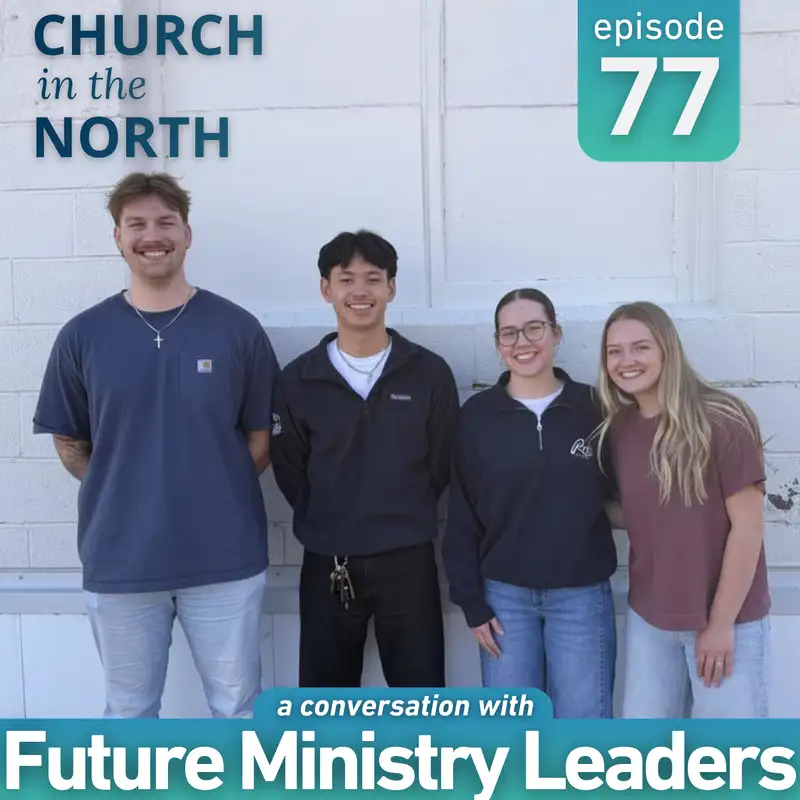
Rob:Welcome to Church in the North, a podcast by ministry leaders and for ministry leaders. I'm your host, Chartrand. And this week on the show, we have four guests in the studio. We have Katie. We have Edo.
Rob:We have Paige and Dawson, and we're gonna be talking about their future ministry aspirations and other related topics. Guys, welcome to the studio.
Ehdoh:Thank you. Thank you.
Rob:Alright. Hey. Wait. Before we step in, and dive into today's show, let me remind you that if you like what you hear on our podcast, please leave us a review, share your comments, or hit that subscribe button for more great content from North Of The 49th Parallel. And if you have suggestions or questions, you can email us at anyone know?
Rob:Podcast@ChurchintheNorth.ca. Yes. That's it. Gold stars all around. Hey, guys.
Rob:Welcome to the studio. It's so good to have all of you in, in house today. And for the listeners who don't know, I mean, these these guys are dear to my heart, and, I've been with them for a number of years here at Briarcrest, and they're in the Christian ministry program. So, guys, why don't we go around the circle, and why don't we have you introduce yourselves to our listeners? And can you share your name, where you're from, and what your program concentration is here at Briarcrest?
Paige:Hello, everybody. My name is Paige Bjorkan. I'm from West Kelowna, BC, and my program concentration is worship arts.
Kaytee:Yeah. My name is Katie. I am in the pastoral concentration, and I'm from Cranbrook, BC.
Dawson:My name is Dawson Dokey. I am in the pastoral concentration as well. And I'm originally from Regina and just recently moved to Moshaw.
Ehdoh:Nice. My name is Eddo. I'm from Saskatoon, Saskatchewan, and I am, in Christian ministry with a focus in youth ministry.
Rob:Alright. Well, each of you is in the program because you are considering a future in vocational ministry. So top of the top of mind question for you guys is why are you considering a future in ministry? I mean, you could do anything. You could be a rock star.
Rob:You could be a lawyer. You could be a professional pickleball player. So why are you thinking about ministry? Why don't we start with you, Dawson?
Dawson:Yeah. Sure. I can go. I think for myself, I've just felt a real change of heart and just transformation through my life with my relationship with Christ. And for me personally, I want to share that gift with others.
Dawson:What I've experienced through Jesus, how he's changed my life, redeemed me from things, just overall transform me. I want to spend as much time as possible sharing that with other people. And so, initially, ministry kinda just seemed like the number one go to thing for me to do that. And so that that's kinda at the heart of it is I really love people. I love relationships.
Dawson:I really love one on one discipleship. I've been really impacted by people that have poured into me in that way. And so I just wanna use the gifts and abilities God's given me with the with enjoying relationships, with enjoying loving on people, and hopefully do that within a ministry context.
Rob:Amazing. Alright. How about you, Paige?
Paige:I initially wasn't considering going into vocational ministry in grade 12. I thought I would go to a secular university and pursue science. So very different than ministry. But I think in my grade 12 year, the Lord slowly but surely started changing my heart posture. I started desiring a Christian community.
Paige:I went to a public school in high school. I just craved that Christian community that a Bible college could offer. So I I think I initially felt called to a Bible college. And also, grew up in the church. I grew up consistently serving.
Paige:My dad's a pastor. So I've been involved in the local church for most of my life. And so in grade 12, the Lord, like I said, was stirring in my heart a little bit. I also, along with the Christian community, desired to be involved in something or to have a a vocation that was had meaning. So science, though I think it does have meaning, I just wanted something more significant, had more impact.
Paige:So I found Briarcrest. I came here, and slowly the Lord has yeah, shown me a desire for ministry. And I guess, like, the three reasons why I'm considering a future in ministry. I have a love for the local church. I love people like what Dawson was saying.
Paige:And again, I have a desire to do something important with my career and, of course, the Lord's guidance in it all.
Rob:Amen. Okay. Katie, how about you?
Kaytee:Yeah. Honestly, a lot of similarities to to Paige's story there. Not the science portion. I'm not quite that smart. But, yeah, I was definitely considering, education or psychology.
Kaytee:And, yeah, initially felt called to a bible college first, which really didn't make sense considering the career aspirations I had. But, yeah, I think to draw back even more my experiences growing up, my dad was a pastor as well. And yeah, I watched my parents sacrifice a lot for the local church and for ministry. My dad was an engineer and we actually moved out to Carronport and lived here for the year. My dad did his master's here and then we moved back and my dad served in the local church.
Kaytee:So I think just the way that my parents really integrated ministry into everything that they did, way that they raised us. And, yeah, even just my dad would send my brother and I with these little, like, John books to school and not as like a give these out. But it was like, hey, be aware of the opportunities that you have to, have these conversations with kids. We always went to a public school. And so, yeah, I really think that's what ignited this passion in me for others to know Christ.
Kaytee:And, yeah, throughout my middle school and high school years, I got to see a lot of my friends come to the Lord. And not that that was anything through my own works, but just seeing how when you say yes to the Lord, he can just use you in really incredible ways. And so I think, yeah, my experiences at camp as well. I I had the opportunity to, go to Romania twice in the summer, one summer doing, VBS camps when I was like 12. And then, yeah, when I was just after high school, got to do a summer out there.
Kaytee:And so I think also just through those experiences with youths and with kids and just seeing the impact that yeah. My even though I I feel very inadequate and unequipped at times, just the way that I've got to experience just the grace and the love of Christ in in those contexts. And, yeah, just having open hands to to allow the Lord to use me in in whatever that looks like.
Rob:So Yeah. Yeah. So cool. Edel, what about you?
Ehdoh:Yeah. I originally did not expect to come to Briarcrest, I or Bible College at all, I I was forced to come to Briarcrest by a few people in my life and I've ended up loving it. Growing up, the church was played a big part in my life. My mom was a Sunday school teacher, my dad was a youth leader and that kind of shaped my world view as I went to public schools and then went to a Catholic school and I just realized that even though this is a Catholic school and we follow Jesus, in a sense, a lot of young people are lost and I was also lost in that crowd. So then going to youth group, my youth pastor shaped me in a way that no one has shaped me before.
Ehdoh:He, like, growing up in the church, I knew who God was but I didn't have a relationship with him and he was the first person to to show me what it was like to have a relationship with Jesus. So I wanna give back to my community because I have a specific con like, context that I am looking forward to when I am done school. I don't know if the Lord will send me there, but there are kids who have a home and a church there, they don't feel like they belong or they don't have a relationship with God same as I didn't have a relationship with God, but I knew of of who he was. So I wanna continue, and I hope that God is leading me that way. And, yeah, it's very exciting.
Rob:Okay. Yeah. Okay. Well, why don't you riff on that a little bit more? What are you looking forward to in ministry?
Ehdoh:Yeah. I'm looking forward to I know that we should be present in every moment, but I'm looking forward to, like, the growth that these kids like, not just from me, but get from, like, the church because I I think of my youth pastor and when we were starting, he he was fresh, he was had just a lot of little kids but now, as, like, ten years has passed because he's been pretty loyal to the church Right. And as ten years have passed, he's lack of better words, he's married many of his of his youth with one another and he's also seen them grow, seen them leave, seen them prosper and it just seems like his loyalty to the church has made warriors of God Yeah. And produced many faithful leaders.
Rob:You can give a shout out to your
Ehdoh:Yeah, shout out to pastor David Dirksen, he's unfortunately retiring as a youth pastor and going to Miller as a professor but Which is so great,
Rob:yeah, he'll do great there.
Ehdoh:Exactly, so yeah, I'm excited for that to be my experience as well. Yeah, I think in Proverbs 27 it says, iron sharpening iron
Rob:Mhmm.
Ehdoh:And I as much as, like, this experience happened, I can't, but as much as I was there to lead kids, they also sharpened my relationship with Christ. So, yeah, that's what I'm excited for.
Rob:Yeah. Oh, who wants to wants to talk about what you're looking forward to in ministry? Paige? Sure. Yeah.
Rob:That'd be great.
Paige:I'd love to. Yeah. I think with just being from BC and coming
Kaytee:out to
Paige:Saskatchewan, something that's lacked a little bit for me at my time at Briarcrest has been getting, like, really plugged into a church here. Just feeling still connected to a church back home and going there for the summer and serving, feeling connected there, but again, only being there for, like, four months. So I'm excited, looking forward to once leaving Briarcrest going into ministry, hopefully. Yeah. Getting more plugged into the the local church.
Paige:And then also with that naturally, like, building relationships in congregation. Why I love the local church so much is because it's inter generational. Was gonna say denominational, but that that's Briarcrest. So, yeah, that would be something I'm looking forward to is those intergenerational, relationships being built.
Rob:Yeah. How about you, Dawson?
Dawson:Yeah. I think there's a few things I'm looking forward to in ministry. I think the biggest thing is like, which might sound a little weird, but like kind of a life of like crushing and like just constantly being challenged. Like I think that ministry is tough and there's a lot of obstacles that can come, but there is so much blessing. And the fact that there is opportunity in the world for me to make a career and be paid to serve other people and tell them the name of Jesus is an extreme blessing.
Dawson:But it also is an opportunity for me always to be learning to grow. And that's not just ministry. That's a personal conviction that I have for myself. But what a cool opportunity it is to constantly be at kind of the forefront of what God's doing in your area, wherever you're placed. Right?
Dawson:And, like, just to be a part of that and to be able to come alongside God's mission and see the first fruits of all that, I'm very excited for and feel very blessed to be able to have that kind of opportunity. So
Rob:Well, it's nice to hear that young people are are excited about the idea of ministry.
Dawson:That's Yeah.
Rob:That's good news. Totally. What about you, Katie?
Kaytee:Yeah. I would say, I guess, kind of building off of that whole idea of learning, kind of what Dawson was saying. I feel like I've been able to learn so much from professors and different faculty members here at Briarcrest. And so I'm super excited to get to see, yeah, leaders in the local church, kinda firsthand, I guess, in a sense, and just be able to, grow and learn from their mentorship. Think yeah.
Kaytee:Looking forward to my internship next year, I'm just super excited to have that close relationship and just get to learn from people who have done this for years, and to have, yeah, had highs and lows and just how they've seen the Lord, within that. And, yeah. So I'm super excited for that. And I think, yeah, too, just getting to, like, partner with what the Lord is doing in whether that's in a community or that's in a family's context. Just, yeah.
Kaytee:Getting to see him at work in in a large body or a small body, I guess, that could be too of of believers. So, yeah. Just getting to partner with him in his redemptive mission for the world. Yay.
Rob:Snap, snap, snap, snap, snap, snap, snap. Who haven't we heard from on this yet? We're all wrong. Thank you. Guys are so excited.
Rob:Yeah. You know, it's so two of you are are doing internships next year. Right? And then two of you, not quite yet. One more year.
Rob:Soon. Yeah. And for our listeners who don't know, through our Christian Ministry program at Briarcrest, in your fourth year, you do a very extensive internship. Like, it's worth, like, eighteen credit hours and it's, like, seven months plus in a in a local church, and so it's totally cool opportunity. No.
Rob:You're doing an internship on the fall too. It's for the three of you. Yeah. Sorry. I'm so glad.
Rob:I'm so sorry. Yeah. Yeah. Yeah. Okay.
Rob:Three of you. Man. Okay. So, Paige, you're staying behind
Kaytee:Yeah.
Paige:I am.
Rob:All by yourself. Yeah. Okay. Yeah. You'll be okay.
Rob:Right?
Paige:Yes.
Rob:But but Paige needs a break because she was our student body president for the year.
Paige:I do need a break.
Rob:So to jump right into internship, that's fine. Take a break. Yeah. So and two of you will maybe be interning at the same church. We won't say the details yet until the papers are signed.
Ehdoh:Is that you, Dustin?
Dawson:Yeah. Yeah.
Rob:Yeah. Yeah. So yeah. Yeah. Yeah.
Rob:We we we don't wanna out any churches just in case something Yeah.
Ehdoh:I'd love to work with Dustin.
Rob:Yeah. Yeah. It'd be an honor. Yeah. It'd be fun.
Rob:Yeah. So cool. So cool. So there are a lot of young people who are resistant to go into ministry because there's concerns and fears they might have, and you guys have probably had to wrestle through some of these as well yourselves. So let's let's have a moment of honesty with with the audience and talk to them about that.
Rob:Because a lot of people listening are are pastors, right, local church leaders, and I think they need to hear these things. But truth is you'll probably say them, and they've probably felt the same thing when they were considering it way back when. But talk to us about that. What are some of the fears and the concerns you might have, about going to ministry? Why don't we start with you, Katie?
Kaytee:Yeah. I guess on a really vulnerable level, something that's really, been been an aspect that I've wrestled with in in my three years here, think is just figuring out as a female where I I land. Yeah. I really haven't in the local church or yeah. In a in a broader scale, I haven't really had a female pastor that I've I've seen in the church.
Kaytee:I know of of females who are leaders in in ministry context but not in the local church. And, yeah, it's it's been a conversation that I've had with a lot of people who have opposing views.
Paige:And,
Kaytee:yeah, I think it's just challenging when when I'm also asking the question of of where do I land theologically, but this isn't just a theological conversation. This is a this really applies to my life directly.
Rob:Vocational calling.
Kaytee:Totally. Yeah. Yeah. And so, yeah, the Lord has been so gracious and has really provided me with, people to speak life into me and to continue to encourage me in that. And, yeah, I I guess adding on to that, I'm not I don't have a direct vision of, oh, I know the Lord is calling me to this specific aspect in the church.
Kaytee:And so I think that kinda just adds to the to the fear of, you know, there's a lot of space for for women to be children's pastors or youth pastors. But outside of that, it can be a little bit more nuanced. And so, yeah, I think just I'm I'm really excited for next year. I have the privilege of of interning under a female associate pastor and the the aspects that she oversees at that church. I'm I'm super excited to get involved in and get my my hands dirty.
Ehdoh:Feet wet. Feet wet.
Kaytee:Yeah. Experience just a variety
Dawson:of Yeah. Yeah.
Kaytee:Yeah. Yeah. But no, I'm just trusting that. Yeah. The Lord I I've seen him answer prayers that and doubts and fears just even with with this in the last few years.
Kaytee:And I I trust that he will reveal to me what his plan is when the time is is right. And so but yeah, that's definitely those two things. Not knowing exactly what I feel called to in the church and also trying to discern where as a female
Dawson:Mhmm.
Kaytee:I Yeah. I can appropriately
Rob:Yeah. And that's a very real concern. Yeah. I I was so glad that you landed where you where you're landing. Mhmm.
Rob:Again, we will we'll wait till all the papers are signed. I mean yeah. I mean, I mean, it's, like, gonna go through and all that. But so glad the the church that you're landing at. Just for our listeners, just to give a bit of context, because I know that we would have listeners who are maybe from a more of a complementarian background or maybe an egalitarian background.
Rob:Briarcrest is a nondenominational school, and so we have, you know, a great faith filled community here that's gospel centered, but welcomes people to have positions on both sides. And so then when it comes to the, you know, the tricky place of how do I find internships for all of our students, it's we wanna make sure that it's something that that fits with their theological convictions as well as, you know, style and feel and, obviously, what what your concentration is and whatnot. So have you guys been in my Centimeters one zero one class? Who's been in my Centimeters one zero one class where
Kaytee:I Yes.
Rob:Yeah. So I I I endeavor I teach foundations of church ministry, and it's a 100 level class. So I I do, like, four or five classes on women in ministry and so the issue and then then teach both sides. I try to and then I try and get students to guess where I land at the end of it. So you get were you guys able to guess where my position was?
Kaytee:I don't remember.
Rob:You don't remember? Okay.
Kaytee:I think I recall.
Rob:Must be a memorable class. They usually get yeah. Yeah. Yeah. They usually get it wrong.
Dawson:I don't
Rob:know if that's they get it wrong, which means I faithfully taught it. So, you know, by teaching both sides. Anyway, just in case our listeners are wondering, wait a minute, where is Briar Chris' position? We don't have an official position on this secondary matter of the faith. Secondary second order matter.
Rob:So, thanks for sharing that, Katie. Hey, Edel, what do you what do you think?
Ehdoh:Yeah, I thinking about this question, I I'm scared of, I think, overall adults. Yeah, I remember I was in one of your classes and we were Zooming other youth pastors and just leaders in the church Yeah. And they were they were asked the question, what's, like, the most difficult thing that you have to go through? And a lot of them said parents Mhmm. Which is unfortunate because you want parents to be on your side because you they they've given you their kids and they trust you with their kids, at the same time, you're gonna nudge heads and it's a little Right.
Ehdoh:That way. And I think just personally growing up, I think adults were something that people that, to be avoided because as much as they have wisdom, they also are very grounded in what they believe and sometimes that can mess up what you think because the the generations think differently and then so, I'm excited to do my internship too because I'm gonna be working with an older youth pastor. I think he's older, right? He's yeah, Chris.
Rob:He's in his 40s, yes, yes. Shout out to Chris Yeah. Chris Drinnan, yeah.
Ehdoh:I consider that old but I think he's he's
Rob:Super old.
Ehdoh:Yeah, he's very very kind and very approachable so, yeah, there's just some some things about adults that scare me and I think I just need to go through, like, a stage of maybe rejection therapy and just find find ways to to learn how to work with work with parents or work with people that might think different than me. Yeah. And that might not just be adults, right, that might be other young people who also have different concepts of what it is to how to lead kids because I think that, like, right now, I'm I'm working in the high school. Right. Quite a bit and it's really easy to talk to them, it's because sometimes I can just be youthful with them but then when I am beside, like, a like I said, adult, it's my posture has to change and I don't know where And I'm still learning, so I think I just have to go through a stage where I get more comfortable with them.
Rob:Okay.
Ehdoh:Okay,
Rob:good. Alright, what about you, Paige?
Paige:This is about to change the temperature, I think. Okay. It's a little bit more deep.
Rob:Okay.
Paige:But when I was first, like, considering, pursuing a vocation in ministry Mhmm. My parents weren't really for it. Though my dad's a pastor, so it it's kinda surprising that they weren't for it. But what they told me at the time was ministry will break your heart. You see a lot of broken people, and you're kind of in the throes of people's lives.
Paige:And it's one of the the blessings that I think you get being involved in ministry. But it's also really hard Yeah. And learning how to not kind of identify with people's brokenness yourself, but being strong, I guess, is one of my concerns.
Rob:Yeah. Yeah. How do you differentiate yours yourself from people's problems? Totally.
Paige:Yeah. But there's also the side of, like, you're not a counselor.
Rob:Right. Yeah. Yeah. Holy Spirit's a counselor. He's great at it.
Rob:Yeah. Yeah. Okay. Thank you for sharing. Yeah.
Rob:Dawson?
Dawson:Yeah. Yeah. I think I have like definitely a few. I really feel like Edo about like adults. Like I think I think part of me is like, although it says in scripture like don't let anyone look down on you because you're young, there's definitely still part of me that's like kinda nervous coming in as, like, a younger guy.
Dawson:Because at Briarcrest, we learn a lot of amazing things about ministry, but we also learn a lot of church history and where we've fallen short as Christians. Mhmm. And so coming in as a younger person that's learned from this and wants to be a part of a group that wants to do better for Jesus, it can be intimidating if there's things that, you know, I've learned in school that I'm now seeing, like, right in front of me. Right. And it's like having the courage to try and just speak up not in a, oh, I'm calling this out and this is wrong way, but in a way of, like, I want to honor Jesus and I wanna help and I know that their hearts are in the right place as well.
Dawson:That's definitely something that I definitely have felt concerned about, I guess, or or worried about. But I think, like, the big biggest thing I've been learning is just, like, trusting God, like, through it all. Like, I don't have to know all the answers. Like and that's another thing, I guess, concern wise is you just hear of these stories of pastors, like, falling or failing. And I try and just instead of looking at them and being like, oh, that's horrible.
Dawson:I try and look at them and be like, I cannot imagine the amount of pressure that they would have been under during that time and just how much stuff they would have been wearing. And so that's where I'm just really prayerful to God that he would guard my heart and my steps and that I would lean on him, but also just the importance of me having a support system around me is something that I've really tried to lean into when those fears come up, is I need people in my life that I can, you know, help me, push me towards Jesus always and be there for me. So, yeah, that's those are some fears, but also just trusting God through it all kind of thing.
Rob:Wow. I mean, I I'm so glad everyone's taking church history. Like, you think, well, what do I need church history for ministry for? But, I mean, it's so helpful. Is everyone a minister hyster histochrist around the table?
Ehdoh:Yeah. I'm a histochrist too right now.
Rob:Yeah. Great class.
Ehdoh:Yeah. Shout out professor Miller.
Rob:Post reformation. Yes. So good. Okay. So there is a shortage of pastors in Canada.
Rob:Did you guys hear? Yes. What? Yeah.
Kaytee:There's like 625.
Rob:Six twenty five. That's the number, man. Yeah. Look. Awesome.
Rob:Yeah. So, Heimser wrote the article Faith Today a couple years ago and, he just did like some napkin math and came up with this number 625. And, we've been talking about it on the podcast for a couple years and, it was about waking up to the clergy shortage, and there is a clergy shortage. And there's a number of factors that have caused that. I mean, it's not just simply vacancies in churches.
Rob:I mean, we we see rural Canada shrinking, and we're seeing certain neighborhoods shutting down and all that. And so but, I mean, the numbers are are pretty obvious that we are losing more passers way more than we are actually seeing develop. So there is a shortage. So I I wanna get on the young end of the spectrum of this of this question because there basically, there's two levels of ages where people enter into ministry. Some do it, like, at your age, like the the the young young bible college type of levels.
Rob:But then there's also second career people, so they might do their career and then maybe it's in their forties or fifties, they decide they're gonna go back in the ministries and they do seminary education and whatnot. And both tracks are important, both tracks are needed. But I I wanna lean into the younger question because that's something that I think you guys can answer. I wanna hear it from you. And of course, you know, I gave you an article or two to read, so I'm priming you a little bit, but obviously I want you to disagree with me because that's what a good liberal arts education requires.
Rob:Right? You need to think critically about these things. But let's have a conversation. Let's just jump in. Like, I I I don't I'm not gonna go around the table and get everyone's opinions, but I just jump in and and answer the question.
Rob:What do you think keeps young people from pursuing ministry? Anybody got thoughts?
Ehdoh:I have a thought, and this isn't the primary reason why I think, people aren't pursuing ministry but for an example, junior chickens used to be $2, now they're $5. So in saying
Rob:that What's a junior chicken?
Ehdoh:A junior chicken from McDonald's you know with a little bit of mayo and lettuce you know, really good but life is just expensive and I think the reality is a lot of people are looking towards what can pay for their bills, pay for their rents, their car insurances and I don't think that Like there's a joke that we always say at bible college, oh you're a youth pastor, you're not gonna get paid much and I think we all laugh at that but the reality is that is a little bit of a truth, there's a little bit of truth to that. So I think the financial side of pursuing ministry is what scares people, especially young kids. I mean, growing up, I was I've seen a lot of people who don't go to ministry and they make a lot of money, which is very appealing in a sense. So a lot of people a lot of young kids gravitate towards that. Even in school, we're encouraged to make money and you're watching videos online, you're seeing, you know, people have Bugattis and just
Rob:YouTube influencers.
Ehdoh:Exactly and so that's one thing that comes up to my mind when I think of why people are not pursuing ministry as much.
Kaytee:Yeah. Yeah. I would agree with that. I think you did mention this in your in your blog but the whole idea of like safety and and security is something that people long for. And suddenly, that feels unknown, there's, like, a lack of control that you feel like you have over your, yeah, your income, your location.
Kaytee:I think even just for myself when I think about saying yes to a career in ministry versus, for example, saying yes to a career of teaching. It feels like saying saying yes to ministry. I'm my hands are way more open as to where the Lord's gonna take me in that. And, yeah, I think even, for example, with my family, like, we moved around a decent amount because the Lord was calling calling us to to various churches and communities. And so, yeah.
Kaytee:I think for myself, that's something that I've thought about of, like, I have this ideal of where I see my future and my life, but Saskatchewan wasn't part of that. I was
Rob:gonna say, is your future got oceans and mountains in it?
Ehdoh:It it
Kaytee:does a
Rob:little bit. But And high housing costs.
Kaytee:Yes. Yes. So, yeah, I think there's, like, a a certain amount of surrender Yep. That are required to say yes, but then also have so many other things that, become unknown because of that.
Rob:Okay. Geographically, where where where is everyone from? BC? Yep. Page?
Rob:Okay. Which part of BC?
Paige:West Kelowna, Okanagan.
Rob:Okay. Okanagan. Yeah. I
Ehdoh:I Yeah.
Kaytee:East Kootenays.
Rob:East Kootenays.
Dawson:Yeah. Wow. Saskatchewan.
Rob:Saskatchewan. The
Ehdoh:best city in Canada. You get a note of everything. It's affordable, more affordable than BC, but it's also you got you don't got mountains, that's the only thing.
Rob:You got the Bresborough.
Ehdoh:Yeah. Bresborough
Rob:itself. Great
Ehdoh:hotel. Yeah. No Floor 13 because that's dangerous.
Rob:Yeah. Okay. Anyway, back to the question. Yeah. But we digress.
Dawson:I can hop in on that thought.
Rob:What what do you think keeps young people from pursuing ministry? Anyone else? I could I could hop I in
Dawson:think, like, on a more, like, positive note, I guess, I'm a part of a bible study in Regina where I used to live with about 15 to 20 guys that I used to go to high school with. And all of these guys, after high school, kinda turned away from their faith and they all just recently, like, came back. And they're, like, on fire for God. And not a single one is going into vocational ministry. But with that being said, why I believe it's a positive is because they all are so passionate about where they were before God called them.
Dawson:So whether they were in engineering or carpentry or business, wherever it is. And what's been beautiful to see is that these guys are using where they have felt their gifts go.
Rob:Mhmm.
Dawson:And this group is, like, growing with their coworkers and people that they have just met through the work. And it's something where it's like, I feel like there's a real rise in young people where it's like, you know, you are placed where you are right now and that is like an area of people that God has placed you in. And like, I can't go and talk, you know, engineering over here where my friend at this group definitely can. And he has like, brought guys to Christ through that. So on a more positive side of why I think, you know, maybe pastoral ministry has not so much been focused as much for young people as I do feel like a lot of younger people are getting really excited about being their own like, doing ministry through other careers and
Rob:other Okay.
Dawson:Destinations kind of
Rob:thing.
Dawson:It's something I've noticed.
Rob:Yeah. Yeah. Yeah. So that that idea, like, of the priesthood of all believers. You you don't have to have a vocation, like, a pastoral caller to Totally.
Rob:To do ministry. Right? Yeah. You we all should do ministry wherever God has planted us. Right?
Dawson:Totally.
Rob:Yeah. So would you say they're they're they have an understanding then of a better understanding of vocation? Like, what I mean by that is, like, in in the Christian worldview, you know, our primary calling is to God himself. Mhmm. And God calls everyone to himself.
Rob:That's our and then our secondary calling is what we do in the world, what God calls us to our vocation. And pastors have a vocation, but so do these engineers or whatever. Totally. Right? So would you say that they have a better understanding now of their secondary calling, like their vocations?
Dawson:Yeah. I would think so. I think, like, for them, they've been able to reflect on, like, their path, you know, maybe when they were apart from God and just even to still see, like, his provision through that and putting them in places where they, like, needed to be and with the people. So I think that, like, yeah, they definitely have been, like, much more aware that it's, like, I'm not just a Christian at home and a Christian at bible study and Christian at church and then I go to work. It's, I've been, like, called to go to work and, like, be a light for Christ there
Rob:kind
Dawson:of thing is what I've kind of got from them. Yeah.
Rob:Okay. Yeah. Amazing. Alright. What do think, Paige?
Paige:First, I think that your story with your group is so awesome. I am gonna change it up a little and say that I think well, it's it's been said already a little bit. But, first oh, I have two two reasons why I think in I think they're also mentioned in your blog. But, number one, just generally fear. I think there's fear of the unknown that that young people have.
Paige:Fear of having a lack of skills or experience and stepping into somewhere they don't feel equipped or ready for. And then also Katie mentioned, but a lack of control.
Rob:I think
Paige:we're in a generation that really loves to hold tight to things. And then my second point is the this generation being kind of noncommittal, even the way I said that reveals kind of noncommittal. So yeah. I guess just that being said, like, there's so many opportunities out there. And I think with the media and over consumption and all that, I think there's a feeling of overwhelm.
Paige:And with that noncommittal or yeah. Feeling not being able to commit to things, not wanting to settle because there's so many opportunities.
Rob:So FOMO.
Kaytee:Yeah.
Rob:Fear missing out kind of thing and why I don't wanna say yes to this party because there might be another party coming up the same night. Yeah. Yeah. You're getting young adults to commit on something like herding cats. Yeah.
Rob:Yeah. It's totally, you know, challenging. Sorry. I threw you all under the bus, but sorry. It's true.
Rob:True. It is. Like, Dawson's in a in a a text stream I have with a bunch of people. Have over to over to our house and
Dawson:took we
Rob:don't hear until the very last minute almost from everybody. They're gonna come I think
Dawson:I've texted that question maybe once. There we go. Right? Yeah. Specifically
Kaytee:calling us
Dawson:nonsense. Seriously.
Kaytee:Do have one more thought on that.
Rob:Keep keep them going.
Kaytee:Yeah. I think just based on my my own how the this calling and the Lord revealing to me this calling for ministry has just come through the ways that I have had the opportunity to serve. And I think that started from a really young age, which again, shout out to my parents. Like, that was always just integrated and a part of just how we were a part of the church and living in our community. And so I think that for one, so many youth schedules are packed to the brim, like kind of what what Paige was saying.
Kaytee:There's so many I I mean, that was more in a young adult context, but there's so many opportunities. And there's this desire for that parents have for their kids to be successful and and do all these things. But then they're they're not even able to come to youth or, yeah, upper, I guess, like, high school age kids aren't able to serve in kids men or in junior high youth. And then that translates into thinking about post secondary. I I I've seen this even just with my peers who come from Christian homes where they've thought about doing, say, like, a YWAM or a Cape and Ray or doing a year of bible school.
Kaytee:And their parents who are a part of the church and who are Christians are are not a fan of that because in their minds, that's that's a year wasted, that's money wasted and they want their kid to do something that will gain them this success, if you wanna call it that. And so I think that or, yeah, even just thinking about summer is, like, I'm so grateful for the weeks that I got to spend either at camp or Mhmm. Getting to do leadership programs through camp while I was in school. And, yeah, now there's the push for getting summer jobs super early, and, obviously, working is important. But there's just less of a priority for that to be integrated into into youth and into kids' lives, generally speaking.
Kaytee:And this whole movement of consumerism within the church of just showing up on a Sunday morning and that's that. If that's coming from the generation and this obviously is an overgeneralization. There are a lot of families and a lot of youth who are obviously very involved. Yeah. But I guess just the trend more so in in some churches is is just showing up on a Sunday and that's that's that.
Kaytee:There's
Rob:Yeah. So so, like, the the church life is like a spoke in the wheel rather than the hub of a wheel. Like, it's something that's just you you do it as, you know Mhmm. You lose a spoke on the bike, the the wheel doesn't fall off. You lose the hub, the wheel falls off.
Rob:Right? So is something a hub or is it a spoke? And, I mean, being integrated into the life of a church is is pretty crucial for a person's formation as a follower of Jesus. I'm the professor here though, you can just disagree with me. Don't smile and nod.
Rob:What are you doing? Smiling and nod. What would you guys say to I mean, yeah, it's hard. So the renegotiating faith study that was done by EFC about, I don't know, six or seven years ago and they surveyed Yeah, I know, right? You guys were just babies then.
Rob:Don't even know if you're Puberty. Puberty yet. Yeah. So they anyway, what they discovered, they they were studying young adults and why does young adults keep their faith into their adult years? And some of the factors that they uncovered is like, one of them is they went on a mission trip.
Rob:Or number two is they they were part of summer camp. Like, camp was a significant factor. And then the third one was, I think, when they end up going off to university and differentiating from their faith, they find, like, a spiritual mentor or an uncle or an aunt that's in the new location who helps them along the journey. Otherwise, they differentiate away from their family, but they also differentiate away from their faith itself because they're in this new environment sort of thing. So those are those are critical factors.
Rob:But getting back to you, Katie, the point is, like, yeah, like, I mean, camps and these these these events are pretty significant in the life of a young person in ministry. But but we are concerned about careers, and, you know, we want our kids to do well. I mean, which parent doesn't. Right? Like, you you want your kids to survive and whatnot.
Rob:And so why would you ever wanna be a pastor, guys? Yeah.
Dawson:Yeah. I definitely relate to that a lot. Just with like I started Briarcrest in 2019 and then I did a couple years and took a break. And during that break, got pretty involved with kind of a construction company and got close to those guys. And I remember still like so well when I told them I was leaving, the one guy was just like, why?
Dawson:And it wasn't like, oh, he was sad I was leaving, but it was more just like, what a waste of time. He was just like, you were just about to become a foreman, get a company truck, get a raise. You're right there. And he's like, if you leave, this is gonna be like a waste of two years. And trying to explain to him that I felt God was calling me to go back, finish my degree, and like serve the church, It was just like such a different our value systems were not linking in that conversation.
Dawson:Yeah. But we live in a world that is very driven by, you know, how much money do you make? How successful are you at your career? You know, be the best kind of thing. Mhmm.
Dawson:And so when I was like, yeah, I'm gonna leave a very stable job and I'm gonna leave something I'm I've gotten good at and have a future in to go pursue schooling for something that he does not see as or the world doesn't see as profitable. It was definitely, like, yeah, a weird conversation. And there's definitely a lot of that, like, in the world today, would say, for sure.
Rob:Yeah. Mhmm. Yeah. I mean, to be clear to our listeners, what we're not saying is this gives us permission to poorly pay our pastors or poorly pay our youth pastors. I mean, I think I think the church does have to, you know, figure out how to how to better do that.
Rob:And people who are the recipients and participants within the life of a church need to be more faithful in their giving because, you know, if only 3% of the church population in North America is tithing, three or less percent. If all of them did, you know, if if that was, you know, if whatever your theological position is on the tithe, but if we all gave 10 faithfully, we wouldn't have this challenge. We wouldn't have this problem at all. So, I mean, that is the reality of of pastoral ministry. Well, have we beaten that one to death or does anyone else have any any other questions you wanna add answers?
Rob:Because I we wanna get to solution sides. Alright. I wanna hear your solutions. What how do you think we can turn this shortage around? I think I just started with paying people better but I mean, that's it.
Rob:There you go. Edo, what do you think?
Ehdoh:Yeah, I was reading your blog and I I skipped to the third the third, you know, the third solution. Yeah, the solution section, you know. I really liked when you talked about sharing the keys to the kingdom, I think that's very important because, like Katie said, there's the trend where you just come to church on Sunday and then leave, but then sharing the keys to the kingdom is so important because then it gives people opportunity who aren't in those positions to see that they could have a potential in that position someday which kind of goes into the IC and U so I'm sorry for stealing all of the bogs IC and U,
Rob:come on.
Ehdoh:The IC and U's are good. And those are those are difficult because it's not it's not normal that you like go up to people and you say, I see in you, I see in you but I remember practicing that in one of our classes in the Centimeters program and I think it was just very impactful for the receiver and the person giving it. And then I remember going up and this is also in your your blog where a lot of people go into ministry because they were what's that word?
Rob:Identified, encouraged.
Ehdoh:Yeah, encouraged. They were like they were like, yeah, my past your Affirmed, right? Yeah. There we go, that's the word. So these these little encouragements, like they don't seem like a lot in the moment but God uses it in a way that it's very impactful in the future.
Ehdoh:So I think that could be an antidote.
Rob:That's certainly true in your life, right? Mhmm.
Ehdoh:And I could it's a testament in my life and I think a lot of the kids that I am involved with could also say that not just through me but through other youth pastors or through other leaders as well because a lot of them either like they were forced to go to youth group or they voluntarily go to youth group but the youth pastor and the youth workers really play an impact and it might not seem like it in the moment but it does. Yeah.
Rob:Yeah. Who wants to jump in?
Paige:I can jump in. Maybe this is in the blog. Maybe not.
Kaytee:You have to read
Rob:it to find out. Hey. Rob Chartrand dot com. Oh,
Paige:I like that. I've kind of I don't know if I've coined this, but like cultivating an environment that promotes healthy failure. I think especially like what I was talking about before and I think we've all kind of mentioned is just like the fear and how this generation, being like noncommittal or fearful, aren't given the opportunity to like fail well or and fail in a healthy way or have an environment that's like safe to fail, especially with like cancel culture and all those buzzwords. But I think that would be super helpful. So I don't know what that would look like practically.
Paige:I think for myself even like being at Briarcrest, know that's like further along in this Keep saying. That's right. But I've gotten the opportunity to be in different leadership positions where there's so much grace as well as challenge, but where I felt I've been able to fail, unfortunately. But fail in a healthy way and have people around me supporting me and kind of spurring me to grow from from my failure.
Rob:Okay. Everyone around have you all you've all taken Centimeters three fifty one, the volunteers teams and oh, you haven't? Oh, that's I haven't. You're taking it in the fall?
Dawson:I am.
Rob:That's sweet. Spoiler. Can't wait. Yeah. That's where all this I in I see in you conversations
Dawson:Oh, yeah. Yeah. Was over there. Yeah. I was like, oh, it sounds nice.
Dawson:Yeah. Know. Was literally spelling it on my head.
Rob:Yeah. So I see in you, for for the listeners, so it's when you encourage somebody or affirm somebody in the faith, and I see this in you. I see God working you in this way or using your gifts or your calling, etcetera. So, Dawson, what do think? How can we turn this shortage around?
Dawson:Yeah. I mean, kinda Those are some really good points and that's kinda where my brain's been at is like, even in my I try and think of like my own experience and what I would have enjoyed. And I think like the first two things that come up is like, yeah, definitely like affirmation from people older than you is a big thing, but also your peers and just people around you. There was definitely times in my life where I had random people affirm me, I had very close people affirm me, which was amazing. But then there were times where I would be in like a leadership position and I wouldn't hear anything from like anybody.
Dawson:And I'd just be sitting there like, I'm either crushing it and they're like, yeah, he's good or something is like obviously wrong here. And so I guess in a little side piece of that is just like the importance of like and this is for like me too in the future. Just the importance of like, if you're leading someone that's passionate about ministry to lead well and also just like, yeah, love them, disciple them, like be there for them. Like I think that even hearing all of you talk about like people in your life that were like influential to your decision to pursue ministry, like those are faithful followers of Christ that are pouring out to other people. So I think, like, we, as like a newer generation coming into the church, also carry that responsibility where it's like, we are kind of in the stage where we're gonna start off and we're gonna do our internships, but we're also gonna have opportunities to pour into this next generation that could turn these numbers around and could make people more passionate.
Dawson:So I think there's a big responsibility on us too to really prioritize discipling and loving on people and just affirming them in that calling.
Kaytee:Yeah. Good.
Rob:You know, I'm hearing a lot of conversation around here about affirming and, you know, I see in you identifying that. Do you think there's a generational difference when it comes to giving and receiving affirmation, like your generation, say, compared to the boomers or the gen xers like myself, like, that like, your generation maybe needs needs more affirmation. That's not a negative or a positive, but it's just a generational cohort reality. I don't know, everyone has Well, always gotten a and yeah. And everyone's always got a trophy.
Rob:You know what I mean? Yeah. Yeah. There's a there's a different cultural value. Yeah.
Rob:Know what I mean? And that's not neither good or bad. I'm just saying that there that is a reality. Yeah. So I'm I'm thinking what do our our leaders who are listening who are older need to hear about your generation in terms of the importance of affirmation?
Kaytee:Yeah. I guess, like, kind of a story that comes to mind in regards to that. There's a girl, I I would call her a friend, ex camper, whatever, family friend. And I was talking to her probably around Christmas time. She's in grade seven.
Kaytee:And she was talking about how she start started this bible study at her school. And she told me, yeah, I've decided I'm gonna be a youth pastor. And she's, like, 12 years old. And I'm, like, what? Wow.
Kaytee:She's, like, I'm, like, that's awesome. She's, yep. She's, like, I was looking on, like, the Briar Chris website and she's, like, I'm gonna go into the youth ministry program. Like, she's, like, she's got her future planned out. And I was, like, oh my goodness.
Kaytee:Like, this is amazing. And so I was, like, how did you, like, land on this? Like, what made you just suddenly decide that you're you're gonna do this? And she's very involved with the youth ministry program at her church. And she said, well, like, I I went out for coffee with one of the the youth interns, and she told me, like, I have I have this gift for, like, leading my peers and, like, leading others and whatever.
Kaytee:She's just like, so then I was like, okay. Well, then I'll start a bible study at my school. So she, like, started that. And then she's like, and, like and it's just so interesting because I'm like, she's like the youngest group in her youth ministry program. And she's, like, decided that, oh, I like, she's this process, like, oh, I want to lead this.
Kaytee:I don't know. Anyways, I don't really know where I'm going to train a thought. But but this decision or this this calling came to her through somebody sitting down with her and saying, like, you have this gift for leading your peers and that that led her to to launch something and then
Rob:So the affirmation is powerful
Kaytee:Totally.
Rob:For her. Yeah. Yeah. So that's interesting. Like 12 years old, that's an interesting topic about age.
Rob:Like when do we start having a conversation with young people? Do we wait till they're in grade 12 or first year Bible college or, you know, or is there an age that's too young that you can start talking about that? What do you guys think?
Dawson:I don't think there's an age too young. I think for me, it's like less about the age and more about like the experience of that person. Like if you start to see the ways God's gifted that person, like and that's maybe something I was gonna bring up too about this is like, I don't know if this has been your guys' experience, but for myself, I've noticed that a lot of people love affirming people to somebody else. So they'll be like, oh, I just love what Edo did at Chapel or whatever. Like, that was so cool.
Rob:But we don't tell the person.
Dawson:But you won't go up to the person and tell them. And I've just noticed, like, I've caught myself doing that where I'm like, but I think it does take like, it it can be nerve wracking at times because you might not have the best relationship with that person or even know them that well. But I'm like, what does it cost me to go be a little uncomfortable for a second and what would it bless them with for me to be honest about what I saw them using their gifts for. So I think that's something that also contributes to that. But as far as the age thing, I definitely think, like, as soon as you see them using the gifts God's given them, like, yeah, there should definitely be affirmation there, in my opinion.
Rob:But well, we we do a little something at Briarcrest called Leadership Essentials. Edel, do you know anything about that? And that that's designed for young people. Is that right?
Ehdoh:Yeah. Leadership Essentials is great. We have speakers like Rob, shout out to Rob and other awesome
Rob:That wasn't a program, my own accolades, that's not the
Ehdoh:No, he's awesome but yeah, it's just a program where we really aspire to see the youth become something that they weren't able to see before as in leaders and these sessions where they sit down and work with one another and read and answer questions to prompts can be used in real life in their local context in their youth group because a lot of these people who I actually think those who are attending these sessions are not not not all of them are the same ages, which is kinda nice because then you have grade twelves, with grade nines and grade elevens and tens who also are in connection with the junior youth, right? So they have opportunity to learn and then teach instantly and with the guide of the youth workers around them. So it's a it's a cool program.
Rob:So Edo's I mean, he's not saying it, but he is he is one of the hosts on Leadership Essentials. So it's a it's an eight month video training series that we give to youth groups so they can train up youth leaders. Right? Yeah. Yeah.
Rob:And as young as like grade nine, like, mean, it's so so we're not waiting till you're in grade 12. And and it's really so that creates like a great seed bed for youth pastors to be able identify maybe future ministry leaders within their own context, their own church, and, plus raise up future pillars of the church. So Dawson, like the guys in your in your bible study, right, who are going to bible college, but still go to other vocations and, you know, can still develop leadership and skills and so. So Edo's Edo's a big part of that. He's he's season one, now he's gonna be on season two and co host.
Ehdoh:Exciting.
Rob:Yeah. Yeah. It's fun. It's a fun project. Love being part of it.
Rob:So Any other thoughts? How can we turn this shortage around? Any I Edo, did I ask you already? I did it, didn't I?
Ehdoh:I think, yeah. Yeah. But I do I do have, like, a a do have a specific answer for, like, the context that I grew up in. I would say, not to turn this into a race thing but in the Asian culture, there's a lot of showing that you care but not really saying that you care which was lacking lot in our church context.
Rob:So, just for the listeners, this is an audio podcast, give us your ethnic background.
Ehdoh:Yeah. My so my ethnic background is Karen all the way in Thailand slash Burma. Mhmm. So I don't look like the people around me which is so cool. It's a blessing.
Ehdoh:Yeah. Yeah, I think like, it's one thing that's amazing is Christianity is growing in the world and it's continuously reaching those who have never heard of the Lord before and that's such a blessing but at the same time, although, let's say, Jesus is introduced to that person, the culture still plays a big part and I think affirmation was really needed in my life by those around me. So yeah, I think, yeah, going back to affirmation, I think in my context was really important to me because it was shown, it was shown a lot but but words hit different.
Rob:Yeah. Yeah. Can I press in on your on on your people group experience, like, with from your family of origin and and and your your culture? Would you say that, like, there's a strong desire for people to get, like, professional degrees for for students or bible colleges on everybody's radar or is, like, how do they do they value bible college the same as, say, like, a Mennonite family?
Ehdoh:I I would say it in my specific context, I'm I'm looked up to because I'm pursuing a Bible college degree.
Rob:Know that Okay.
Ehdoh:Yeah, I know that when you think of other cultures, they're like, you gotta be a nurse, you gotta be a doctor but that's less on our mind and what because the church is held to pretty high standards and we look up to our pastors a lot and the church isn't perfect but it is a place where we go every day and it's like, it's what connects us. So in my context, it would be I think a lot of parents like the idea of kids going to bible school but like we said, kids that's not on the kid's mind.
Rob:Right. Right. Right. Right. Okay.
Rob:But, you know, parental influence is so important, like, in in a lot of people's lives because especially if they're paying the bills. Right? So Yeah. For sure. Okay.
Rob:Well, thanks for sharing that. Okay. Well, this has been a bit this question is gonna be a little bit self promoting and and Paige has already kinda got got us started on this question. But how has Briarcrest helped shape you for ministry? Or how is it shaping you for ministry?
Rob:Let's talk about that because, I mean, obviously, I'm not afraid to be self promoting. I love our school. You know, I've I've got to meet you guys and be part of your lives and it's just been such a gift. So, talk to us. Katie, what do you think?
Kaytee:Yeah. I mean, I wasn't considering vocational ministry prior to coming to Briarcrest. So I think just, yeah. In in my first semester, my first year, just getting to be actually, it was, your youth ministry class that you taught that really, prompted me to consider what it would look like for me to, yeah, commit to First Catholic Christian Ministry program and see where the Lord led me in that and obviously with vocational ministry in mind. But I think another big aspect in my first year and and continuing on is just the different areas that Briar Chris provides to to serve and to be a part of, different ministries.
Kaytee:And there's so many things that you can be a part of. Sometimes, it can end up being too many things. So that's, I think, a a sometimes can be a problem for students. But, yeah. I just think through my experiences that I've had serving different capacities here, I've just been able to to feel, yeah, I guess, using that word of of affirmed that, yeah, this is this is where god's calling me.
Kaytee:And I and yeah. Just being in the community here. I mean, yeah, just having fellow, students who are also considering ministry, and just knowing that you have people around you that understand some of the doubts or the fears or, the worries that come with that and who are are cheering you on, who are praying for you and, yeah, who are believing that that God's going to to use you in incredible ways. And so I think, yeah, those would be the primary things that come to my mind. It's just
Rob:So what would be just just for our listeners, give us some examples of some of the places that you were serving, like, just so they think if they can translate that to local church life.
Kaytee:Yeah. Yeah. In my first year, I got plugged in with the with the outreach program, and I was able to actually lead an outreach team. And we served at the women's shelter in in Moose Jaw, and so that was awesome. I also was a a BCA small group leader.
Kaytee:So BCA is the the high school here that's connected to the college and seminary. And so that was super awesome. And then, yeah, in my, second year, I I was an RA, so resident assistant. I think that's what that stands for. On my hall and, yeah, that was, definitely different because you're leading peers, and and was definitely, challenging in a lot of ways, but was really growing.
Kaytee:And, yeah, I was able to experience really incredible mentorship. And just being a part of the student leader team is also just a really incredible experience. And then, yeah, actually have faculty assistant
Rob:Come on. Rob.
Ehdoh:Two years.
Kaytee:Yeah. Yep. So this is my second year doing that. A lot of it is admin work, but a lot of it is has just been tools that are are gonna be really helpful and have been super helpful, in in looking forward to future ministry. And even, a job I just got recently, I I don't think I would have, been able or been qualified for that job without the experience that I've had for the last two years.
Kaytee:And, yeah, I mean, this is a plug for Rob, but just getting to see the various leadership qualities that he has and just the structures and the systems that he implements into his life and into ministry and into relationships has just been awesome. And then, yeah, this year, I'm also the community life coordinator for students outside of dorm. So similar to RA, but also very different.
Rob:And small group coach.
Kaytee:Yes. And a small
Rob:group coach. So I mean, there's there's a yeah. There's a lots of even within the context of the school. Yeah. Even though it's like an, you know, a resident school where you you live here in residence.
Rob:I mean, there's still tons going on here in Hinchon. Yeah.
Kaytee:Yeah. Yeah. And in a local church context too, getting plugged in.
Rob:And and that's, you know, that's an appointment important point I wanted to pause on real quick is is that you discover your ministry, your calling, not by just sitting on your hands, praying and staring at your navel, but it's actually by getting out and doing things. As you're doing things and trying things out that you come alive and you realize, oh, I was made for this. Right? And so any student who's like, I don't know what my calling is. Well, have you ever tried serving in the church?
Rob:Have you ever tried doing you know, you might, who knows what you'll discover. So, Edel, back to your point, you know, where you're talking earlier about, the keys of the kingdom. Right? Yeah. I mean, what a great opportunity for people to explore their calling by just trying stuff out.
Rob:But that's not gonna happen unless leaders give people permission. Right? So, Paige, over to you. What about Briarcrest and ministry? What can you tell us?
Paige:I'd like to talk about the staff, especially with the Christian ministry program. I've talked to Katie about this before just, like, randomly every so often. But almost every class I've left, like, one singular class, not, like, the course. I've I'm leaving the class inspired either by the content or the professors being led by the spirit and sharing testimonies. And with the testimonies, I've just like it's it's such a cool thing that Briarcrest offers that our professors have like real experience in churches, in ministry.
Paige:And they've seen the dark side of ministry. They've seen the the happy the side. But I I think of Geoff Dresser. He often
Rob:Shout out to Geoff. Co host on Church in the North.
Paige:Great shout out. Yeah. But in his classes, he often will share his experience working in different churches. And though sometimes he talks about some some tough things, He's always reminding us that ministry is still worth it. And I think that, like, every time somebody says that after a really tough testimony, I'm just like so moved.
Paige:And I just think Briarcrest is awesome for that, that we get that opportunity to rub shoulders with people who've actually been in the ditches and and still say it's worth it.
Rob:Yeah. Okay. Man, amazing. Gentlemen, anything to add?
Dawson:Yeah, can go. I think a big thing for me, like with a bit of my unique experience at Briarcrest with having, you know, a two, three year sabbatical from it.
Kaytee:Right.
Dawson:It's like just I was
Rob:walking in the door, you were walking
Dawson:out the door. Exactly right. Now you're back. Yeah. It's just like I've been able to see kind of how important the relationships you build here are.
Dawson:Some of my best friends from my first time here at Briarcrest are now in ministry. And anytime I have questions about what's going on there, what do I do here kind of thing, they have become huge encouragements to me in in my walk towards pastoral ministry. And just the uniqueness of Briarcrest that you do get people from all over Canada, even the world, that will come and study here. And so, like, I have friends in Saskatoon, Regina. Have friends in Kelowna, Vancouver, like, kind of all over where it's like, I know if I go to a church there, one, I I know someone in leadership there most likely, but two, that there are there are just fruitful relationships that are lifelong lasting there.
Dawson:Another thing that I think is just really awesome about Briarcrest and opportunity is that it's not just a place it is definitely a place to learn theology and get a bunch of head knowledge and learn the bible, but there is so much, like, heart transformation that I believe happens here, even outside of the classroom. I think that the community and culture that is built here is heavily focused on trying to make disciples and push people towards Jesus. And you see it in the dorms and you see it in the cafeteria. There's just people that desire to serve God and it kinda just creates a culture here. And that's that's really amazing and really cool to see at a college.
Dawson:Yeah.
Ehdoh:So
Rob:Yeah. Shout out to everybody. I mean, to students and faculty and staff. I mean, because it's it's an all in thing. Right?
Rob:We all gotta do it. So that's so great to hear about discipleship. Edo, what do you think?
Ehdoh:I'm actually very excited to answer this question. I have a lot of things I wanna say so they're all gonna connect but
Rob:I'm feeling it. Go.
Ehdoh:So first thing, I recently found out and hopefully this is not too exposing but Rob really likes the show Firefly and they're coming out with a reboot, a cartoon, right?
Rob:Yes. Wanna I'm stoked.
Ehdoh:Yes, it's gonna be great. Wanna bring in my own nerdiness and I think Briar Chris is great because it's given me opportunity to grow and it's given me room to hurt in a safe way. So, when growing up, I watched a show called the X Men, I don't know if you guys heard that before.
Rob:Which '1, '97 version or
Ehdoh:before that? Yeah, Men Evolution. Just like Evolution. All around you. Right, yeah, So I have a little bit of a a summary of what like, there's a school called the Xavier School, right?
Ehdoh:Yeah. It's for gifted youngsters and it's a fictional and private boarding school for mutants run by professor Charles Xavier. The the purpose of it is to teach mutants to control their powers and to promote peace and offers special training in traditional education. And the school provides high school and college level courses So helping
Dawson:students navigate their unique
Ehdoh:I'm I'm like connecting this. So it's it's so just imagine, everybody imagine with me, like professor x rolling down the hallway, that's Michael Pawlaki, right? And I don't know if you'll you'll like this one but Rob Chartrand walking down the hallway but he's Wolverine
Rob:Okay.
Ehdoh:And then you got Geoff Dresser as
Rob:I'll take Wolverine. Yeah.
Ehdoh:Geoff Dresser as Cyclops and you got the smart one, Beast, Daniel Sulak, you know? Yeah. Yeah. And then you got I think shout out to Marilyn, she can be Jean Grey because they both have orange hair. Yeah.
Ehdoh:Anyways, what I'm trying to what I'm trying to get is, Briarcrest has been a place where there's so much so much way and so much ways to be involved and specifically for for my focus, it's in youth ministry and the special thing about Briarcrest is it's it's in the middle of nowhere but just because it's in the middle of nowhere, there's like so much things to do. In fifteen minutes away from Briarcrest, there's Moose Jaw, many churches that people are involved with but then just like five minutes, even like three minutes away from the college dorm, there's the high school and the high school has been a very moving place for me. I worked there as a high school RA half time and my full time one is the college RA simultaneously which has been a little bit hectic but in the high school, there are kids who come from one year it was from all around the world, got kids from China, you got kids from Austria, you got kids from Quebec but this year it's mostly kids from Alberta and Saskatchewan And a lot of them come in to play in a hockey program that promotes Jesus, but when they come back into the dorm and when they go home, unfortunately, their households don't talk about God all that much.
Ehdoh:And so they're hearing it for the first time when they come to Briarcrest and saying that Briarcrest has an amazing program right now led by amazing teachers and especially Aiden Cassidy, he's one of my really good friends.
Rob:Shout out to Aiden.
Ehdoh:Shout out to Aiden who runs the BCA, who's the BCA chaplain and he runs chapels every week which exposes who Jesus is to these kids and they've never heard about Jesus before but he's doing an amazing ministry where these kids who are coming from maybe homes that don't really care about them just care about their performance, see that they have purpose outside of hockey because hockey is expensive and then there's always the reality that a lot of them won't make it to the NHL and hopefully they do but at the same time if they don't, where are they gonna put their identity? Yeah. And then we always have to encourage them and tell them that their identity is truly in Christ which is a hard thing to do because they they, like, as young kids, we we like we as in they like what's in front of them and if they don't see like it's it's sometimes it's hard to see Jesus or God in front of you So if they don't see that, it's a little bit hard to to grasp it. So where we come in is we we, along with my other partners, we live with the high schoolers and it's a little bit different from youth group because in youth group, you don't live with them, but in this case, you get to see them grow.
Ehdoh:Some of them are going through growth spurts so when I first met them, they were, like, under my waist but now they're, like, as tall as me. So it's it's it's awesome to minister to these kids and teach them about Jesus and hopefully, when they go home, they can share what they learned here. And sometimes the dorm gets a little bit rowdy so there's a In the Xavier School, there's a place called the danger zone so I would call the high school the danger zone. But it's built me, it's built so many people, it's grown me and there's Usually every year there is a reunion that happens and last year there was a reunion of high schoolers who came here in the 1980s maybe. So there were a lot of older people coming here and just reflecting on their time in high school so I pray and I hope that these kids who come for hockey and those who don't come for hockey come back and just love on Briarcrest for how it's shaped them.
Ehdoh:And so, yeah, Briarcrest has been amazing. I can talk about it all day, but
Rob:Yeah. Well, I love that. Like, so you what you're telling us is, I mean, these kids are being formed, but you're being formed as you're being used by God to form these kids. Yeah. Right?
Rob:So, I mean, like, there's a like a double double
Ehdoh:way. Iron Chopin's Iron. Yeah.
Rob:Yeah. Yeah. So you didn't tell us which, x men you are.
Ehdoh:Oh, I'm, I like Cyclops. He's my no, not Cyclops, sorry, Nightcrawler. Nightcrawler. Yeah. Love that He's always everywhere.
Rob:That prehensile tale in teleportation.
Ehdoh:Yeah.
Rob:Come on.
Ehdoh:Fun fact, he's he's in a very old episode. He's the only one that carries a bible after seeing a church get exploded.
Rob:Did you see that episode where he leads Wolverine to Christ?
Ehdoh:Yes. That's the episode.
Dawson:Yeah. Right?
Ehdoh:Isn't that amazing? It's awesome.
Rob:Yeah. It's like Christianity and superheroes Yeah. Coming together. Amazing. Okay.
Rob:So, did you guys all answer the question? I kinda got lost. Yeah? Yeah. Let's let's let's let's go to our final question.
Rob:And this one's, I I I think, pretty important, for our listeners. What encouragement would you give to ministry leaders across the country today from your generation to their generation? And we'll assume their generation means, like, they're really old, like 40, you know, which isn't that old. But, hey, why don't we start with Dawson?
Dawson:Yeah. I think, like, kinda how I mentioned a lot earlier, just how there's a lot of people that have spoken into everyone's lives at this table. And those people were faithful to listen to God's calling on their life to pursue ministry. So honestly, there's just a lot of thankfulness in my heart towards the people that have said yes to the call and yes to go. And, yeah, just even though it's tough, even though it's been hard just to see their faithfulness.
Dawson:I recently went on a trip with my family and we met up with people that they had done ministry with fifty years ago and they were still in the same ministry doing it. And I just remember thinking in my mind, was just like, how beautiful of a testimony is that to God's goodness? Because ministry is not easy and it's it can be challenging and people are difficult and people are, you know, people. And so with that, just like, I think my heart is just so thankful to all the leaders across the country everywhere around the world, that have just been faithful through the trials, through the good and the bad, and that have had a real heart and desire to pour into the younger generation, to affirm them, to support them in, you know, their calling to ministry. So that's where my brain goes initially for sure.
Rob:Awesome. Yeah. Katie, what do you think?
Kaytee:Yeah. I mean, that's awesome. I I agree with Dawson and I echo all that. I think something that came to my mind just in regards to the work that ministry leaders are doing that so many people don't see and that you might never see the result of or the impact of. And I can just think of so many leaders who have impacted me and I've never told them that.
Kaytee:And so, yeah, I think my encouragement would just be to stay faithful in the small things and trust that the work that you are doing, whether you see the fruit of it right now or not, that, yeah, god is is sowing a a harvest. And he like, I yeah. I can just think of so many people who who have planted seeds in my own life, in my own heart. And now I'm walking into into ministry. And so, yeah, there's so many people on a day to day basis that you are probably impacting their life and and you might not see that.
Kaytee:And now I feel convicted to text some people to say thank you. But, yeah, just to just to be faithful in in what God's called you to, even if it feels mundane or tireless that, yeah, he's he's working through the the small things.
Rob:Mhmm. Good. Nightcrawler, how about you?
Ehdoh:Hi. I'm Nightcrawler. I don't know if this is, like, an encouragement, but it's more of like adviceencouragement. Before I came to Barca's, shout out to pastor David again, he had sat me down and asked me what my aspirations to ministry were and I said, first my goals were, I think my heart was in the wrong place, I wanted to change the leadership in the church, I wanted to see the church do better in a sense and then he was he was really happy for me but then he also said, Edo Edo Thaw, he used my full name. He said, I'm really excited for you but I also want you to know that you're gonna go off to Briarcrest and get good education and come back with so many good ideas but also be humble and because you can't come back and think you know everything compared to people who have been doing it for years.
Ehdoh:So be humble and be gracious. Work instead of working against the leaders at your church, work with them. And ultimately, that will build your trust and ultimately, that will kinda get you in, to where they trust you and, you can shape the church. So I think, the encouragement is, be patient with ministry. It'll take a long time for to see growth.
Ehdoh:But through that patience, we know that God works through that. And and you actually, at the end of the day, you might not even see the fruit. But with with working with the Lord, I think and I pray and I hope that it'll it'll appear soon even if we're not there to see it.
Rob:Yeah. Yeah. K. Paige?
Paige:Man, such good answers. I think I wanna, like, build off of all of them. I think one of like I was saying before, like one of the most significant things that I think leaders can share is their testimony. And thinking of church leaders out there who may feel like some days they make a big impact and some days they don't. And just saying that their their lives are, an an encouragement to, the next generation of ministry leaders, and that it's not always the the extreme.
Paige:It's in the the highs and the lows, and in the mundane. Yeah. So I'd encourage them in that.
Rob:Friends, thank you for joining us in the Church of North Church in the North Studio.
Kaytee:Thank you. Joining us. Yeah.
Dawson:It was great.
Rob:You've been listening to the Church in the North podcast, a production of Briarcrest College. To learn more about Briarcrest, visit briarcrest.ca. We all know that when something is good, it's worth sharing. So why not pass on today's episode to a ministry leader or someone who will find it helpful? Also, don't forget to leave us a review, share your comments, or hit that subscribe button.
Rob:We love questions and suggestions, so email us at podcast@Briarcrest.ca. And for more information about the podcast and our hosts, visit churchinthenorth.ca. Thanks for listening. Until next time.