Rob Chartrand (00:02.067)
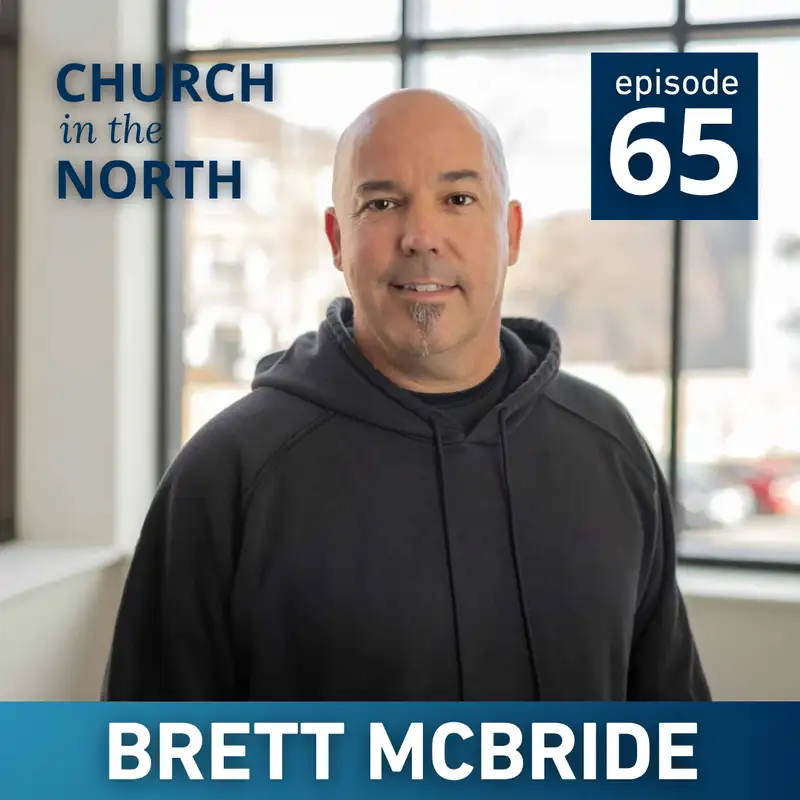
Well, we are so glad to have on Church in the North, Brett McBride. He's the lead pastor of the People's Church in Toronto. Brett, welcome to Church in the North.
Brett McBride (00:11.99)
Yeah, thank you. Good to be with you.
Rob Chartrand (00:14.653)
Now, a lot of our listeners might be familiar with the People's Church already, but I want to start there because I think it helps frame your story. Can you tell us, I already gave it away, the People's Church is in Toronto, but that might not mean a lot to a lot of people. tell us, where's your church? What's your church notoriously known for? What's been its legacy?
Brett McBride (00:34.488)
Sure. Yeah, People's Church is 100 years old in 2028. So we're 97 right now. It's kind of right in the center of traffic, rush hour traffic at the 401 in Bayview in Toronto. It's so kind of midtown. And it is a church historically that has been best known for a passion for global mission.
and engaging with what God's doing all around the world. Was founded by Oswald J. Smith back in 1928, who himself had a passionate burning call to go into missions. Tried to himself, applied to six different mission societies and was rejected by every single one of them. They cited that it was frail health that...
was why he couldn't go on the mission field. He lived till he was 96 years old. So, you know, that's just a testament that if God wants you to do something, he's got a way of keeping you alive. But instead of going, thought I'm not gonna give up on this vision that God's laid on my heart. And so put a call out to Christians throughout the city of Toronto. Really it started as...
a gathering to raise support, to send people into the mission field. But as people came together, it just kind of morphed into a church and was founded in 1928.
Rob Chartrand (02:14.174)
So have you always been at the same location or did it move around a bit in the early years?
Brett McBride (02:18.102)
No, yeah, it moved around early years. was downtown at Massey hall, then moved up to Bloor streets and in the sixties moved to where we are now. I mean, in the sixties, where we are now was farmers fields. It was like it was leaving the city. Now it's kind of in the heart of Midtown Toronto.
Rob Chartrand (02:32.776)
Right. Yeah.
Rob Chartrand (02:37.992)
Yeah, yeah. So your vision on the website says you are a movement of gospel centered and globally engaged Christians. What does that look like today?
Brett McBride (02:48.076)
Yeah, well, again, that's kind of the outcome of our mission. We articulate our mission this way, growing the body of Christ for God's global mission. And when we say growing, we mean reaching people who have never entered a church door, maybe never been exposed to the gospel, so evangelism, but also growing, rooting them in their faith, discipleship, so that they're going deep in their relationship with Christ.
but it's for or towards or unto what God is doing globally. People's historically has started in other parts of the world and then worked backwards to its local context. It's a church that oftentimes is really interested in what God is doing in other contexts and yet is.
Rob Chartrand (03:22.066)
Right, yeah.
Brett McBride (03:42.784)
seeking to do its part as well to reach the local community. But I would say it starts kind of backwards to the ends of the earth and then back to Toronto. When we say a movement of Gospel Center globally engaged Christians, to put it differently, people who are jacked up on Jesus and want to engage with what he's doing around the world. And that can look like a thousand different iterations.
For some people, it is being engaged meaningfully in other contexts globally, either by participating and moving life and incarnating in other parts of the world. For some, it's being heavily engaged in supporting those who are doing that work, coming alongside national leaders. Others, it's a call to intercessory prayer and a real burden.
for what's happening in different parts of the world and being moved that way. We're big in the refugee space. Global migration is, in my opinion, one of the moves of God in our day and age. He is moving people from closed access countries into places where people can have opportunity to hear the gospel in ways that they haven't before. So really that movement,
Rob Chartrand (04:41.95)
Mm-hmm.
Brett McBride (05:03.286)
that statement, a movement by nature is decentralized. It's not controlled by any one organization. God's global purposes are way too big for any church, any organization. We just want our members who are touched by the gospel to prayerfully discern, am I living this out? What's my part? What's God calling me into? So that's really how we think of it.
Rob Chartrand (05:28.636)
Yeah. Yeah. Well, I'm so glad we have you here on Church in the North to talk about the People's Church. I mean, it's got such a historic global vision and global story. And I love how you guys, your telos is the ends of the earth and then you kind of work backwards from that. then we'll get into that a little bit deeper in a few minutes here. But how many years have you been pastoring there now?
Brett McBride (05:52.211)
It'll be 10 years in January, so just try 10 years.
Rob Chartrand (05:53.991)
Okay, so let's back up the bus then and let's go back to your early ministry journey. Talk to us about your ministry background before people's. You came to faith in your 20s, is that right?
Brett McBride (06:06.924)
Yeah. So I had grown up in church, but kind of through my teen years was the prodigal. Like I would be forced to go to church on Sunday, but Monday through Saturday didn't really want anything to do with it. And, yeah, well, I wasn't even a Sunday Christian. was just Sunday forced attendance. and I had heard the faith. had grown up with, the gospel.
Rob Chartrand (06:22.632)
Sunday Christian.
Rob Chartrand (06:28.743)
Okay.
Brett McBride (06:36.43)
wanted the convenience of it, but not the lifestyle of it. So in my later teen years, just stopped going to church, dropped it all together, prodigal life. And then at 23, through a friend, actually my cousin, who he and I kind of lived those prodigal years together.
Independent of me, he had started attending people's, heard the gospel, gave his life to Christ. A couple years later, witnessed to me and God just saw fit through a series of circumstances at 23 to kind of thunder into my life and change everything in one of those kind of dramatic moment conversions. Yeah, that would take a long time to...
Rob Chartrand (07:28.956)
Yeah, it's a long story, but it's a great story. Yeah, yeah, yeah. So, you started a lot of your early ministry work in the missional space. Was there some education in there somewhere as well?
Brett McBride (07:29.518)
articulate how all of that came about, but it was pretty radical.
Brett McBride (07:42.774)
Yeah, well, so I had, I was attending people's in my first year of being a Christian and Tony Campolo came and spoke at our mission conference and Toronto used to also have a missions conference, back then, in the city and Tony was a speaker at both of those conferences. No, it was, I forget what it's, it's still runs in Vancouver. That's horrible. I should know that.
Rob Chartrand (08:03.656)
Was that Urbana? No.
Rob Chartrand (08:09.616)
Okay. Yeah. That's it's comes with age for getting names. Yeah.
Brett McBride (08:12.758)
Yeah, yeah. So I heard him speak and after he spoke, he did an altar call for those who would give one year of their life to missions in the inner city. And so I went and signed up and I had been a Christian for all of, I think eight months at that period. Signed up, they were looking for anyone who was willing to go and could, you know, was living with a heartbeat and breathing. So they accepted me.
And I found myself in the inner city of Philadelphia within a year of being a Christian. And it was an education by praxis. We would go out into the neighborhood, engage in community-based ministry to love God, love others in the neighborhood. And then we would work through some training and curriculum in evangelism, in relationship building issues of justice within the inner city communities.
so that year was formative. When I returned from that year, I continued in urban mission work, with an agency called Urban Promise Toronto, which was founded by Tony Campolo and Bruce Maine in Camden, New Jersey, and was opening up a chapter in Toronto. It had just started a few months before I got back to the city. And so I joined that.
work was an urban missionary for about 18 years. I went to Tyndale for two courses. I took New Testament survey and spiritual disciplines. Great courses. Well, yeah, no, it was fantastic. I was young, married, we just started to have a family and
Rob Chartrand (09:46.952)
hahahaha
Rob Chartrand (09:56.696)
That's all you need, man. That's all you need.
Brett McBride (10:05.794)
the cost for education and the education by praxis I was getting. You know, as we started to have mortgage kids, didn't keep up with the school side, but also met with my grandfather who had been a missionary for 50 years and did Bible studies with him to try and learn the basics of the faith. I've...
I look back a lot of my education was by praxis and experience.
Rob Chartrand (10:36.444)
Yeah, yeah. Well, and you were in a great Bible teaching church as well.
Brett McBride (10:42.572)
Yeah, no, I, my formative years here were under Charles Price, who was the former senior pastor before me. And, if you know him, world-class Bible teacher, just uniquely gifted by God and was such a, he had such an impact on how I studied scripture, as I moved into preaching and teaching such a formative experience and, really mentored me in the early days of that. So it was pretty rich.
Rob Chartrand (11:07.922)
Yeah.
So you went from urban promise to people's, right? The people's church.
Brett McBride (11:18.965)
Yes. Yes.
Rob Chartrand (11:19.716)
Okay, so when you were first hired, some people might have seen you as an unlikely candidate and that's an understatement because you were very different than Charles. So tell us why would they think that?
Brett McBride (11:34.604)
Yeah, well, again, I had done 18 years as an urban missionary and was spending the bulk of my time working among youth growing up in communities that were filled with kind of gang activity, gun violence, things of that nature. I was the executive director at the time and was speaking at different churches in the region and
Rob Chartrand (11:52.22)
hehe
Brett McBride (12:01.974)
I had spoken at people's a number of times, both in, you know, kind of the youth track, then young adults, and then Charles had me speak on Sunday's evenings, Sunday mornings. So Charles and I knew one another, but I had a call to go to people's, like, again, God made it very clear that I was to go there. I wrestled with that calling. I,
I had a bit of Jonah moments. I think deep down I was wrestling with things in church ministry that I saw through my urban experience because oftentimes when communities became difficult, churches exited the neighborhood. And so I just, I wrestled with that. Charles is a world-class Bible teacher. He still teaches at people's
often love it. I look back 10, you know, I'm not a world-class Bible teacher. And so when it was announced, A, people didn't really know who's Brett McBride and people's at that time was viewed as a robust church and preaching known for its preaching. And so I think the collective Christian community kind of went, wait, what, who?
Rob Chartrand (13:08.574)
you
Brett McBride (13:30.252)
And I was right beside them going, yeah, I know it's crazy, right? Like this doesn't make any sense other than God. there's a kind of a whole behind the scenes story of how God orchestrated that. but it, it was pretty surprising for everybody and myself included. Yeah.
Rob Chartrand (13:36.371)
Mm-hmm.
Rob Chartrand (13:49.085)
Yeah. Yeah. I mean, and I think you nailed it. mean, as an outsider as well, at the time when I'd heard like, yeah, really? this is interesting. Well, the board of elders would trust they know something that, that I don't know. And, obviously it's, it's worked out really, really well. because you, you both came from different backgrounds. He's probably theologically trained and, you're very much in a missional space in the world. but a common desire and a common heart for the nations.
Brett McBride (13:56.844)
Right, yeah.
Brett McBride (14:19.936)
Yeah, well, and again, had, Peoples was my church while Charles was pastoring here. So even when I was being invited more to speak regionally, I met with him to say, hey, I, you know, I'm getting more invitation, more into preaching. Could you just help? Is there any lessons you can teach me? And so we spent some time together where he was really speaking to me about the calling to do it. And,
So we had that mentorship relationship before being called here.
Rob Chartrand (14:57.234)
Yeah. Well, you've had, I mean, you, you, didn't go the formal theological training route, but you know, as I've talked to you, I mean, you have been very rigorous in your own self-discipline of learning, but through mentors and through self-study and, and et cetera, can you talk to us a little bit about that?
Brett McBride (15:18.508)
Yeah, well, again, right when I got saved, within a few months, I was, do you mind if I share this story? Okay, I was at a young adult gathering and like, again, I'm coming from a prodigal son lifestyle and I'm just overwhelmed that Jesus would welcome a sinner like me. So I'm new to the faith and I'm passionate about my faith.
Rob Chartrand (15:34.536)
Mm-hmm.
Brett McBride (15:45.484)
witnessing to anyone who will listen about this transformation that's happened. But we had a young adults gathering, there was about 30 young adults in an apartment just down the road from People's Church and we're all sitting there and we're all sitting in a big circle and people start to go around and talk about their favorite Bible verse. And I hadn't read the Bible at that point. And so as it's coming around, I'm like, I was kind of shrinking and terrified because I didn't know scripture.
Rob Chartrand (16:04.949)
Hehehehehe
Brett McBride (16:13.422)
And I remember driving home that evening and saying like, Lord, you have done so much in my life and I love you. I don't ever want to be in that position again, where I can't articulate who you are and what you mean to me and what you've done for me. And so I just started reading scripture and like picture someone who for 23 years hadn't eaten any food or hadn't drank any water. Right. Like, and all of a sudden I'm like,
Whoa, this is in here and I'm just devouring it. I'm doing three hour devotionals. I'm reading whole books of the Bible. It was just like fire hose for the first year. But that only intensified, that only grew as time went on. And for whatever reason, like God deposits gifts into us. And what I noticed early on is that I could remember scripture and then in different situations, share it with
friends or colleagues or people I was engaging in the neighborhoods. And it seemed to help them make sense of things that they were tripping up on. And so, you know, that, that passion for the word was placed in me by the spirit. the spirit started to reveal, how he wanted to work in my life. And so I just started, you know, I started to surround myself with mentors,
professors meet with anybody who would spend time just pouring into that cup, so to speak, and have a passion for learning, reading, It's lifelong, so I still...
Rob Chartrand (17:51.656)
Hmm. And, and a curiosity. It sounds like you had a tremendous curiosity.
Brett McBride (17:56.63)
Yeah, yeah, there was a delight in it. again, coming out of darkness into light, like I was just so happy to be in light and wanted to know more and just take every opportunity I could to go deeper.
Rob Chartrand (18:13.608)
Yeah, yeah, I feel you. mean, when I was 18, I met Christ and I knew nothing at all. And then I went off to this Bible college and everybody's, know, grown up in the church for the most part and they know these Bible stories and they're familiar with them and I knew nothing, absolutely nothing. I didn't know Moses from Judas. Like I had no idea. So I just got hungry. I just started devouring the word, you know, cause I felt like,
Brett McBride (18:35.03)
Right. Right.
Rob Chartrand (18:41.35)
I was 18 years behind everybody else and not that it's a competition, but I just felt so inadequate. Yeah. So you and I've talked about this, but you've said that the transition of leadership from Charles to you worked beautifully. I wonder if we could talk a little bit about that. What helped with that transition?
Brett McBride (18:44.001)
Yeah.
Brett McBride (18:48.236)
Right. Yeah, no, I hear you.
Brett McBride (18:59.383)
Yeah.
Brett McBride (19:03.178)
Yeah, well, again, it was, it was a bit, within the congregation when I was announced, there was great reception. a number of people within two years of that announcement, or even kind of within a few months of that announcement said, I was praying for the next person and I sensed it would be you. Which, you know, someone says that and there's a lineup of 10 others who said, I wish it wasn't you.
But no, it was received well and Charles and I had a four month overlap. There were some other churches in the city that were regional churches that had a similar transition at the same time. I know that because we met together to just talk about transition with one another. With the four month overlap, I think people saw and experienced
my affection and admiration for Charles. They knew that I loved him like a spiritual father and mentor. And I think that they could see that Charles viewed me kind of like Paul Timothy, where he just was handing the baton and had respect and a sense of comfort in the calling that God had confirmed through the body of elders there.
So I think our people felt safe. And my concern in the early transition was not wanting to step in and try and introduce any change early on. Like I introduced small things slowly over time.
I wore a suit jacket for the first year, which coming out of urban ministry, like I had to buy some to, to wear them. And yeah, no, I bought proper ones. but I, I wore them more for, the congregation to, to buy time to hear what I was teaching, hear my heart. And I think over that first year, as they heard that, they went, okay.
Rob Chartrand (21:00.67)
Right. Did you go to Salvation Army and grab them there?
Brett McBride (21:26.924)
Like I can, I feel safe and that there's sound doctrine coming here. And then as we started to move through changes and shifts, people didn't feel like it was shock and awe early on. We engaged a broad conversation about 150 people in a spiritual discernment of where have we been as a church? What's the unique calling?
on our church, so we dove into our origin story and kind of surveyed the past and prayed and sought God with like, what is the contemporary calling or work that you're calling us to? And that was done very broadly with different congregants, volunteers, board members, staff. And as that emerged and shaped and was formed.
Again, because people participated in the process and God made it clear to the collective, it was far easier to just be along for the ride because, you know, the spirit kind of is like a river that cuts its own course and you're just going with wherever he's leading.
Rob Chartrand (22:42.45)
Yeah. Well, that's amazing. You got that collective input into the change. Did you guys use appreciative inquiry?
Brett McBride (22:47.662)
Mm-hmm.
we had an external consultant come in. They used some of that and you know, the traditional consultant tools, you know, your, your swore analysis, strengths, weaknesses, opportunities, risks and discerning. You know, I look back on that. We had 15 priorities listed in a three to five year plan. I look at that, like I still have the document. It really was a 30 year plan. Like.
Rob Chartrand (22:52.828)
Yep. Yep.
Rob Chartrand (23:10.27)
Yeah.
Brett McBride (23:18.094)
If you tried to introduce that much change in three to five years, I wouldn't be talking to you right now. So.
Rob Chartrand (23:22.053)
yeah. Yeah, yeah. They're always overwhelmingly ambitious. What did... Go ahead.
Brett McBride (23:27.392)
Yeah, yeah, but it's very good. No, I was just going to say it helps set a course for us of where to focus.
Rob Chartrand (23:34.834)
Yeah, yeah, yeah, it was more of a compass than anything. What has Charles done? Like he's still at the church and he still preaches. So, you know, after that four month window, what has he done to help with the continued transition? Like how has he?
Brett McBride (23:52.908)
Yeah, well, so Charles, by his own choice, the first year where he stepped out, he didn't come to Peeples for a year. He was mentored early on in his formation by some beautiful people, Stuart and Jill Briscoe. And I think it was Stuart that mentioned this to him. Like when you step out of that position, keep your sticky fingers off the steering wheel.
Rob Chartrand (24:01.448)
Hmm, okay.
Rob Chartrand (24:21.106)
Hmm. Yeah.
Brett McBride (24:22.274)
And so Charles just stepped out. he knew that if he attended and sat in the congregation, people would experience him differently and it would create a noise for them. And so he just was silently, letting me find my way in the position. I had him back regularly because again,
He was my pastor. Nobody was lamenting it more when he announced his transition than me. Like I loved sitting under his teaching and loved who he was in behind that as well. And so he supported me. He would always make himself available to talk with me and fill in gaps in historical understanding or was, you know, anytime I asked for a coffee or a lunch,
He made himself available, but always showing up in a way to not tell me what to do or to share his opinions on things, but to just bless and encourage. He still speaks all over the world. He potentially speaks more than I do still, but we have him multiple times throughout the year and he attends his,
family is here as well. you know, on a Sunday, he's sitting there.
Rob Chartrand (25:58.313)
with the kids, the grandkids maybe, yeah.
Brett McBride (26:00.48)
Yeah, kids, grandkids. But he is just such a remarkable mentor and leader and just kind, like he's doing what I aspire to do in that phase of my life as well. Just encourage and bless whoever's serving in that spot. My respect and admiration for pastors has grown exponentially in the last nine years.
I look back before being a pastor and I go, man, Lord, I was like the worst congregant. Why would you put me in this position? Him kind of saying like, maybe that's why. But I, yeah.
Rob Chartrand (26:42.29)
Yeah. Well, the way you guys have mutually honored one another has been a sight to see and it's been beautiful. And it's only helped with the transition, right?
Brett McBride (26:53.152)
Yeah, yeah, no, think our people felt safe.
Rob Chartrand (26:56.658)
Yeah, yeah. So before you came and before you like while you were coming and before you had this, you know, this consultation group with the 150 people were the things in your mind that you're like, I think we're going to be making these changes in 10 years, even though you're going to moving slowly. Like you're like, kind of see some things coming down the coming down the pike.
Brett McBride (27:18.806)
Yeah, I mean, prior to my time, our church was really discerning. The missional movement was kind of sweeping through the church and about missional engagement in your own community and region. And so our church was prayerfully considering, like, what does that look like here at Peoples? We had this rich legacy of investing
significant time energy resources into different global contexts, but Canada had changed, Toronto had changed. And so there was an appetite to engage missionally with the City of Toronto. And hence, here's a young congregant member who has been, who knows the city, who has been working throughout the city, has a network within the city. So I think part of my appointment was the expectation that
we would move missionally into the city space of Toronto as well. And as I stepped into that, felt licensed to step into that, but I wasn't coming in with like, here's the master plan. secretly, I think all my friends in parachurch ministry across the city, when I was going to people's thought, we've got an insider now. Like let's, you know, bring the resources this way. Yeah.
Rob Chartrand (28:42.98)
Right. Yeah. Yeah. Bring out the Alan Hirsch books and the frost and get them reading.
Brett McBride (28:48.096)
And, well, and, and I wanted to engage Toronto, but I was also just sitting and listening and saying, Lord, like, what are you saying to the collective communion? And I remember, I didn't know any pastors really. Like I was in the kind of, the, difficult parts of Toronto and those who are serving, living out the gospel and compassion ministries like Rick Tobias at Young Street Mission, Salvation Army, and,
sanctuary, like that, Toronto City Mission. I knew that network, but I didn't know pastors. And so Alpha Canada actually helped me get connected to different pastoral gatherings. And remember vividly sitting in a pastoral gathering.
And different pastors were just talking about their passion. And some were from parish churches, like community churches that really had a strong calling for their local region. And it was beautiful to hear them describe it. Others were regional churches, so they had a passion for the whole region and were living that out in beautiful ways.
Some were demographic focused, so, you know, Gen X or millennials really feeling a calling to engage well in that space in their church. And as I listened to them describe their churches, my mind was taken back to what we were spending our time at People's talking about all the time. And in our Rolodex was all the mission agencies and...
They were the network that we had. We partner with over 55 different agencies and we spend time, you know, understanding what's happening in the Middle East and why Lebanon's one of the most strategic countries in the Middle East. We were pouring over how compassion ministries and justice ministries were engaging in the refugee context or what was happening in different parts all around the world.
Brett McBride (30:56.396)
And so as I was sitting in that gathering, I was like, like, Lord, you've raised up these churches to engage in their calling. And because they're doing that so well, you've actually released us to live into our calling. Like people's church has not sat down and developed a strategy to reach our local parish.
About 80,000 people have moved in down the road into some towers that were built. We haven't sat around to try and discern how to engage those towers. And it's not that we don't love people. It's not that we don't want people to encounter the gospel. We just recognize that God has raised up other churches in our parish who are called to do that work and they're doing it way better than we ever could.
But he has called us to engage globally. And I would say our local engagement in the city of Toronto is through that global lens. migration and the refugee reality globally is impacting all parts of the world. But in Toronto, you know, about 45 % of the shelter system is asylum seekers.
It's spilling over in the streets. have a refugee claimants, asylum seekers. The nations have arrived in Toronto and are seeking refuge. So Peoples is a part of a network caring for refugees. operate emergency shelter to help people have housing security, food security as they process their claim here and find more stable footing.
in this context and because we have partners in other parts of the world who are on the refugee highway, we can have multiple touch points with someone's journey. So I would say our local expression of outreach is still very global in nature in the newcomer space and asylum seeker space.
Rob Chartrand (33:08.67)
So some would say that Toronto is a gateway city to reach the world. The vision is if we reach them here, they can go back to their country of origin and demonstrate and declare the gospel there. And so in that sense, it can be kind of a missional outpost here for transformation and then it's going to affect the world because of the ethnic diversity and all the world's peoples groups here, all the diaspora peoples.
refugees in particular landing in Toronto. So there'll be like this spillover effect to world missions as a result of the work you're doing. But you've said to me before that you're not 100 % convinced of this. So let's go a little deeper on that. Tell me more.
Brett McBride (33:51.82)
Yeah, like for me, it's not an either or, it's a both and. The idea that if, you know, we just focus on reaching Toronto, that somehow the world would be reached. I just am not convinced of that because as you travel to different contexts globally, people's access to the gospel that is incarnated in a person's life.
There's still great disparity throughout many parts of the world, especially in closed access countries. And so this idea that if, you know,
Rob Chartrand (34:33.384)
And you just mean social economic disparity.
Brett McBride (34:37.955)
I mean, gospel disparity. Yeah. Like if I reach someone from Yemen in Toronto.
Rob Chartrand (34:39.272)
Gospel of the Spirit. Okay, yeah.
Rob Chartrand (34:44.04)
Mm-hmm.
Brett McBride (34:47.34)
The idea that if I reach 100 Yemeni people in Toronto, that all of a sudden Yemen is going to be a reached people group?
Rob Chartrand (34:57.491)
Right.
Brett McBride (34:58.478)
either by rebound missionaries, people who are Yemeni feeling a call to go back to their country of origin and live out the gospel. I just don't think it's an either or, it's a both and, I think. Yes, we've got to engage well. God is sending people from closed access countries who now can enter a church without fear, without jeopardy, and hear the message and teaching of Jesus and experience it.
Rob Chartrand (35:05.043)
Mm-hmm.
Brett McBride (35:28.184)
we like, we, 75 % of our baptisms for the last eight years, the people who are being baptized, their country of origin is not Canada. If you were born in Canada, you're a minority in Toronto, you're a minority at the people's church. So God's shepherding people into places where they can hear the gospel. And we are seeing people who have left their country of origin,
Rob Chartrand (35:39.346)
Hmm, incredible.
Brett McBride (35:57.518)
for a better life or stability or safety, experience the gospel, give their life to Christ, and then feel a calling to go back to their country of origin. They know the culture, they know the language, they know how to blend in and live out the gospel beautifully. So that does happen. But I just think if we take our eye off of the opportunity we have to come alongside national partners in different contexts globally.
Rob Chartrand (36:26.29)
Right, Yeah, we need to empower the nationals there and not just those who come here. Is that what you're saying? Yeah.
Brett McBride (36:27.223)
We're, we're missing the mark big time.
Brett McBride (36:34.184)
Yeah, yeah, yeah. Yes, yes. No, there's so many beautiful expressions globally by national leaders who are teaching us what it looks like to do missions.
Rob Chartrand (36:45.32)
What do you guys do locally in Toronto when there's a language barrier for a people group? Do you guys have like translation services that you run concurrent with your service?
Brett McBride (36:56.01)
We don't at the time. we have looked into that, just space and resources to do that. Well, because people's, you know, last time we did a survey, which was quite some time ago, there was only a over 123 different nationalities at people's and over 77 different language groups. So literally like our space would be filled with translation. so.
Oftentimes people who are, we operate ESL classes as part of our outreach to newcomers. And so we're helping people acquire English speaking language skills, but we haven't done the work of translation. Now we do have cultural groups and cultural fellowships in our church so that people
Rob Chartrand (37:50.11)
Okay, that was my next question.
Brett McBride (37:51.862)
Yeah, people can find community and speak their heart language with one another. So that does exist. But our main services and activities are English speaking.
Rob Chartrand (38:04.862)
Okay. and I mean, Google Translate has become so sophisticated. Some people can do their own translation right there as well, without the need from the church.
Brett McBride (38:09.196)
Yeah.
Brett McBride (38:12.61)
Yeah.
Yeah, no, I've experienced that in Q and A after the service. Yeah. People coming up with their phone and speaking through the phone.
Rob Chartrand (38:18.008)
Right. Amazing.
Yeah, yeah. So I want to go back just a little bit to your transition into the role. And one of the questions I wanted to ask you is, mean, you people's has been led by some pretty stellar leaders over the years, Charles Price, mean, Oswald Smith and others. Let's get into the mind and heart of Brett McBride for a moment. Do you ever feel the weight of these previous leaders?
Brett McBride (38:50.666)
my goodness, that was part of my struggle coming here. I think that was part of the Jonah sense. when I knew God was calling me here, there was a...
You know, it was like being called into something that you couldn't see what was on the other side of your obedience. And a sense of like, Lord, almost send someone else who's better equipped, better able, a better leader, all the things.
not from a self-deprecating mindset, but more from a desire for the church to be well-served. But God just kept pressing into me and saying, no, I'm calling you. And I think I spent years wrestling through the weight of that and getting to a place where you truly
know and depend on Christ and trust that you bring your five loaves and two fish and he can still feed thousands. You know, there's Sundays where my prayer is, Lord, I'm bringing water. Could you turn it into wine? You know, I remember talking with Charles. I don't think he'll mind if I share this. I asked him when we were in that four month period of overlap.
Rob Chartrand (40:04.414)
Mm-hmm.
Brett McBride (40:26.924)
He had been preaching for 50 years at that time. And I was sharing with him my angst in preaching, right? Like, I think when I came to people's, had about 60 sermons. And I thought, hopefully those last like as long as I'm here and that I don't have to produce any new ones. They were gone in like the first year and a half. And I was like, my goodness, I got to do this every week? But when I met with him, I said like the ...
I shared with him my angst in preaching and sitting under teaching the word because you feel the weight of it. And I said, like, Charles, how do you feel after you preach? And he goes, do you really want to know the answer? And I said, yeah, like I want to know the truth. And he goes, ashamed. And I just put my head down into my hands and I was like, wait, what? This feeling never goes away. Like you're, you're.
Rob Chartrand (41:10.971)
Hmm.
Brett McBride (41:20.674)
further down the road, but he was quoting John Stott. John Stott gave the same answer when he was asked. And so people like Charles, Daryl Johnson has been such a healthy friend and mentor to me as well. And he talks about that weight that you feel. And his sense to me was, if that ever disappears, stop preaching. Like it might be a sign that you're not in a good place. If you think,
I've got this, but yeah, like people's was, you know, taking a huge risk in the early days too of here's this younger guy who came out of urban ministry and I was, I was on a journey finding my way and God's been gentle and firm in that journey of, of learning.
Rob Chartrand (42:10.226)
Yeah. Well, what I pick up from that is first of all, your sense of calling, the clearness that God had called you to this and then second, your dependency on the Lord as you walk through that. Yeah.
Brett McBride (42:26.73)
Yeah, I used to joke early on that the reason God's calling me to people's is because he wants to categorically help people understand that it's him at work. It's not because of anyone, so let me call this guy so that everybody knows it's just me at work.
Rob Chartrand (42:42.632)
Yeah, I just preached in our college chapel on Monday on 2 Corinthians 12. And so Paul boasting of his weakness. It gives us a lot of room as preachers to bear the weight and to walk away in shame sometimes, you know, under the weight of this glorious word and knowing that we have never gonna hit the ball out of the park every time. But the Lord is faithful. The Lord is faithful.
Brett McBride (42:51.053)
Mm.
Brett McBride (42:55.053)
Yeah.
Brett McBride (43:10.412)
Yeah, yeah, he takes our little and feeds thousands.
Rob Chartrand (43:14.514)
Yeah. you talk to me about maybe one or two major transitions that you've had to navigate in your time in the last 10 years.
Brett McBride (43:26.144)
I mean, so there was the initial transition from Charles to someone like me and really discerning who are we as a church? What is that calling we have? then helping a large congregation understand and live into that calling. So I would say that was kind of the first wave. And then COVID. Like if you had told me, if you had told me that there was going to be a global pandemic.
Rob Chartrand (43:48.25)
Okay, yeah.
Brett McBride (43:52.416)
a few years before I stepped into pastoral. And this was my first pastoral ministry experience, right? Like I didn't, I was in the alleyways of Toronto with gang members before that. So I would have waited till after the pandemic, but just navigating that transition. And again,
Rob Chartrand (43:59.699)
man.
Brett McBride (44:15.978)
My heart broke for all my pastoral colleagues who didn't have a media team and, and, you know, people's was a rich resource, rich church to weather that. so in some ways it was easier, but we're all living through the collective trauma, this experience and, helping people find their way through a storm when, know, whatever cracks you had in your life before COVID.
Rob Chartrand (44:21.16)
Mm.
Brett McBride (44:44.908)
when COVID came, they became creators. And just how do you care for a congregation when you can't physically be with them? That was something common to all of us, but I certainly felt, and then the pandemic of racism and the George Floyd and the kind of wave that hit the church.
Rob Chartrand (44:47.41)
Yeah, yeah.
Rob Chartrand (45:09.309)
Right?
Brett McBride (45:12.39)
For our church, and again, my urban experience where I had seen systemic racism in the city of Toronto, I issued a very strong statement about what was going on in the world at that time. And it just became formative work for us because again, we're so diverse and we had to take a deep look within like, where is this in us? Like if it's out there in the world, it makes its way into the church.
And so that set us on a multi-year journey of really understanding how are different cultures experiencing the people's church. And, you know, there was a statement kind of early on in those days that people's was the most diverse white church in Toronto. And that would be true. Like it was very diverse in its makeup, but its expression was a white culture.
And so we've been kind of on a multi-year journey of who are we as a church and how are different cultures expressed and the diversity of the body represented here at the church. So that was huge for us, continues to be a place that we press into and learn.
Rob Chartrand (46:26.534)
Yeah. Well, so a lot of churches have tried to navigate that by, I mean, diverse leadership, first of all, in your elders and your staff. Some of them do like language expressions. We already talked about that within the service. Some change the format of their service and offer different, you know, worship styles and whatnot based on language groups. I mean, that's a challenge when you got a hundred and some different people groups there. But I mean, what are some of the things you guys have been doing to try and change that?
perspective and reality.
Brett McBride (46:58.506)
Yeah, well, I mean, we worked with an external consultant to come in and kind of do some focus groups, meet with our staff and different lay leaders throughout the church, and also surveyed our congregation to gather information and understand people's experience. And that information, once it was shared with us, we made public to all those who were engaged deeply with the church. And the first
piece of information that was clear to us was just awareness. What are we even talking about? When we talk about racism and diversity and what is equity and what do we mean by the words DEI or inclusion? Awareness started for us of going back to church history and I did a series.
trying to remember what year it was, January of 2024, 2023. Sorry, I can't remember. On the Book of Amos and looking at the systemic injustice amongst the people of God in the Book of Amos and the way in which God was speaking into it about how they were treating one another, how the surrounding nations started to really influence the people of God.
what brought that about in that book. But then halfway through every sermon in the series, we would step out of the book of Amos and then look at identical principles during the period of colonization and what was happening within the church. How did it show up during the reformation? How did it show up in the period of discovery of the Americas, so to speak, and make its way into systems of broken theology and racism?
Rob Chartrand (48:51.368)
Hmm.
Brett McBride (48:51.83)
So it was more like a historical look at how what was happening in Amos happened within church history. when religion was wed with political power and that was a, you know, that was a really, difficult series to navigate. But I, yeah, like, it's, know, if anybody wants to check it out, have at it, it's up online, but.
Rob Chartrand (49:12.71)
I bet.
Brett McBride (49:20.504)
That became very formative for us. And we spoke into some things that it really landed with our congregation and those who had experienced systems of racism, who had experiences of it, for them to hear us acknowledging history and acknowledging the past within the church, it was a significant moment and breakthrough, I think, for us as a church.
being so global, just to lean into this space and not shy away from it was big. We continue to look at how do we continue to raise awareness? How do we make sure that we don't just have diversity represented at different spaces, but equity where different opinions, different cultural ways of expressing the gospel, living out the gospel are actually
centered, valued, and permitted to flow within the church. But, you know, we've, we are learning a ton, continue to, and it's not easy. Especially in the world we're in right now, you see what's happening in the world and some of the,
Rob Chartrand (50:30.878)
Yeah. Yeah.
Brett McBride (50:39.67)
reaction to what's happening in the world. It continues to be a real tender area in the church, I think.
Rob Chartrand (50:45.843)
Yeah.
Rob Chartrand (50:50.28)
Yeah, and in an online world where you can say just not quite the right thing and that can just get, you know, pulled out of context or sent across the world, right? And it's not that you didn't, you were trying to say the wrong thing. You just didn't quite say it quite the right way that somebody would want you to say it. And that's tough, especially for preachers.
Brett McBride (51:00.491)
Amen.
Brett McBride (51:10.232)
Yeah.
Yeah. Yeah. Well, and hence I'm not on social media. Like, yeah, I have no social media. Our church does. So in the pandemic, know, social media used to be this interesting town hall where you used to be able to have meaningful dialogue and help people think about things.
Rob Chartrand (51:18.494)
You're not.
Okay. Yeah.
Rob Chartrand (51:36.51)
Mm-hmm.
Brett McBride (51:40.192)
It's kind of, in my opinion, turned into a swamp now. Yeah. And swamps are filled with like alligators and snakes. And so if you're in there, you can't be surprised if you get bit by an alligator, right? Like you did. So, you know, in the pandemic, when my own mental health was just, you're barely holding on. I removed myself from all those social media platforms and I found that my mental health, my, my quality of life increased.
Rob Chartrand (51:43.58)
Dumpster fire is what I... Yeah. Yeah.
Brett McBride (52:10.678)
And so I never went back. It's not that I think there's anything wrong with that. And I applaud people who are in that space contending for the gospel. But I just don't subject myself to it because I don't think that I'm called to be in that space at this time. That might change, but it's the world we're in right now.
Rob Chartrand (52:32.168)
Well, think of all the free time you must have, right? And how people's ideas aren't living rent free in your brain all day long too. So you also though had a major transition in your church recently, like this summer with your whole broadcasting and all of that. You want to explain that to us?
Brett McBride (52:35.244)
Yeah. No, it is refreshing.
Brett McBride (52:42.774)
Right, yeah.
Brett McBride (52:56.566)
Yeah, so, you know, People's Church had a rich history of leaning into different technologies when they were emerging. And so when TV became this amazing medium to reach people in their homes and kind of the thousands of people who never enter a church door, we started a broadcast, which at the time in the 60s was known as the People's Gospel Hour.
And it was known by that name for a long time, but then eventually became Living Truth. And it was a national broadcast that again would reach, you know, hundreds of thousands of people across Canada and over its history in different parts of the world as the broadcast was picked up in different contexts. But the world has changed and how people engage media has changed and broadcast, traditional broadcast.
continues to be a space where there isn't as much engagement. You know, my kids' generation, they're not waiting to watch something on TV at a specific time. They're watching things on YouTube or they're engaging in digital media spaces. So we were seeing declining engagement in those spaces, simultaneously seeing digital platforms growing exponentially. And so we spent years
trying to help the broadcast congregation find their way into these digital spaces and migrate over to those platforms. And then again, as broadcast viewership declined, did donations towards the support of being on TV. So we just discerned that we were to move out of this space and
and bring that whole group into our online platforms. And so we ended the broadcast just this past August, August of 2025. And we had been the second longest broadcast in Canadian history.
Rob Chartrand (54:59.038)
Wow.
Rob Chartrand (55:06.47)
Right, yeah, yeah. Who was number one? I think you told me this.
Brett McBride (55:09.23)
So number one was hockey night in Canada. So we were like right behind hockey night in Canada, which is hard to transition.
Rob Chartrand (55:13.095)
Amazing. yeah. So were you guys on like CBC television or CTV television at one point or was it always cable or what was it?
Brett McBride (55:25.484)
Yeah, so we were on CTV, but then we were also on multiple channels, depending on which part of the country you were in. So it was pushed out through various platforms. We were on radio for a number of years as well.
Rob Chartrand (55:27.271)
Okay.
Rob Chartrand (55:41.266)
Vision TV? Okay, yeah. Yeah, wow. So talk to us about the change management process. Did you have to do much to prepare, I guess you'd have to prepare an audience, but then even preparing your local church for the change?
Brett McBride (55:42.828)
Yep. I believe so. Yeah.
Brett McBride (55:59.382)
Yeah, I, again, I would say, we tried for years to consistently move the traditional broadcast audience onto our digital platforms, through, through our broadcast, we would continuously say, Hey, invite, join us over here. and through
print assets that were sent to them. But then, you know, as you spend years doing that, there eventually comes the time where you need to do it. yeah, and no matter what you do, no matter how many times you communicate it, people feel it's sudden, right? They're reacting to change. But I would say for the most part, because we communicated that over time and people understand
Rob Chartrand (56:37.278)
Pull the plug. Yeah.
Brett McBride (56:58.338)
how the world has changed and how engagement with media has changed. They've been blessed and are saying, hey, we're gonna join you over here. We've offered to help people who might be struggling, cause some of the traditional broadcast audience are older. So we've tried to make it really simple with a team to help them find their way to the new platforms. But it's been positive so far.
Rob Chartrand (57:15.944)
That's right.
Rob Chartrand (57:28.262)
Yeah, I mean, in our household, we haven't had cable for, I think, five years or something like that, right? Whereas my in-laws, they still have cable. It's a very important medium for them. So I can understand that. And then my kids, they're like, what's cable?
Brett McBride (57:33.142)
Right. Yeah.
Brett McBride (57:41.868)
Yeah. Yeah. Yeah.
Brett McBride (57:47.936)
Yeah, no, it's, it's funny. Like the next gen is just, what are you even talking about? Yeah.
Rob Chartrand (57:53.319)
Yeah, yeah. And then you try and explain rabbit ears on top of the television and that's a different world. man. So you're not quite at retirement age yet, but it won't be long. It won't be long where you're gonna be looking for the next Charles Price to take over for you. Have you started to think about the final years in ministry?
Brett McBride (57:58.567)
my goodness, yeah, my kids think I was like a dinosaur.
Brett McBride (58:19.584)
Yeah, no, I'm always thinking ahead and, you know, actively over the last couple of years, looking at who are the young people within our church that are gifted, growing, using their gifts? How do we create pathways of opportunity for them to express them in the various elements? Like I look at my own journey, you know, I was speaking in
kids men or youth, young adults, any different forums. And Charles kind of fanned that into flame. He would mentor or make himself available when asked. So we're looking at how do we develop kind of a leadership pipeline so that those who are demonstrating various gifts in all kinds of departments and expressions, how do we cultivate that?
So I have my eyes on some people. They don't know it always.
Rob Chartrand (59:33.726)
Well, you can just share their names now. They're probably not going listen to this.
Brett McBride (59:36.03)
Yeah, yeah, No, but you're, you're always looking and then we, you know, our leadership team, we're all senior-ish. and we're all actively looking ahead and going, you know, here's what the next three to five, depending on age, years are for me. And here's who's within our ecosystem that could step in and up.
into my position, creating space for others. So we're always looking at that for all our positions and we're talking actively about it. Yeah.
Rob Chartrand (01:00:13.096)
Yeah, the challenge with that decision is it takes an investment of money, right? And of time, your time, right? So it makes it a little bit challenging for a church to do. But yeah, I you and I were at the Leadership Pipeline Symposium together and I was glad we were able to connect there. You know, have you thought about what that could look like?
Brett McBride (01:00:17.473)
Mm-hmm.
Brett McBride (01:00:34.572)
Yeah.
Rob Chartrand (01:00:40.356)
in terms of a formal framework in your local church.
Brett McBride (01:00:44.098)
Yeah, I mean, so we've started some discussions about internships. We're also moving through a number of transitions, both with other things within our church. People's is also a church that gives about 40 % of its revenue towards global mission. And so you're operating a large church in an expensive city on 60%.
Rob Chartrand (01:00:49.15)
Mm-hmm.
Rob Chartrand (01:01:07.976)
You're right.
Brett McBride (01:01:09.024)
So we are trying to design how do we create that leadership pipeline? How do we create internship possibilities again, so that you get both in kind of all the various serving opportunities and giftings, but also in worship art space from kind of kids men through to seniors. And how do we mobilize an internship program?
We also have a lot of international partnerships where it could be an international internship, but we are building that slowly and carefully. it, so to be determined down the road, because we're looking at some of the institutions that are around us, some of the academies as well. and, just having preliminary conversations about what would it look like to partner with different academies.
Rob Chartrand (01:01:44.893)
Right.
Brett McBride (01:02:08.99)
on an internship program, what training could they provide? How does it become a pipeline for them as well? So that we're equipping people with all the right resources, but you know, that's not a, to do that on a significant scale does take a lot of resources. And so we're trying to figure out how to build that well and not rush into it.
Rob Chartrand (01:02:29.736)
Hmm, yeah. Well, maybe you and I will talk offline about Briar Crest's internship program. Because I have, we actually have Ontario students here at Briar Crest. yeah, and if they go back home, maybe they'll find a way to your church or other Ontarian churches as well. So yeah, we'll chat more about it.
Brett McBride (01:02:36.913)
okay. Yeah, love to.
Brett McBride (01:02:41.355)
Okay.
Brett McBride (01:02:49.07)
Please, yeah. No, my eye and heart is on that next gen. They're the leaders of the church and they need to have opportunity to lead. Yeah.
Rob Chartrand (01:02:54.31)
Hmm. Yeah.
Yeah. Well, hey, I wonder if we could finish up today with you just maybe giving a final word of encouragement to our ministry leaders across the country who are listening in.
Brett McBride (01:03:10.294)
Yeah, well, again, I would say over the last number of years, my eyes have really been opened to the calling of local pastors and it's taught me a lot and
getting to know some of the leaders, both across the nation, but in my context, for the pastors who are out there, faithfully just walking with Jesus and loving the church, even when it's not reciprocated, or when you're experiencing what Paul experienced in 2 Corinthians, or Moses as he led the people through the wilderness, and there's just hard days, misunderstanding.
the storms that can sweep into church community, I would simply say, don't give up, just keep loving Jesus, leaning on him, his strength to love the people in front of you. Because I think that's partly what he's brought me into church ministry for, is to really love the bride of Christ for who she is.
Even when sometimes it's hard and it hurts and to also recognize that I am part of that very bride. So there's a journey into yourself there and really understanding what it means to embrace a Galpe love. But I'm just a huge fan for pastors who are out there. Sometimes
You know, I'm blessed at people's to be serving alongside a large team, but my, my heart is for those who are pastoring churches where it's either them on their own or them with a smaller team and just know like our heavenly father sees you loves. And, that's who I look up to because they're, they're amazing to me as I've gotten to know them over the years. It's just such.
Brett McBride (01:05:29.184)
a high calling and keep at it. Don't give up.
Rob Chartrand (01:05:33.724)
Amen. Good word. Brett McBride, thank you for joining us on Church in the North.
Brett McBride (01:05:39.232)
Yeah, privilege. Thanks for having me. Okay.
Rob Chartrand (01:05:41.47)
All right, talk soon.