Rob Chartrand (00:03.162)
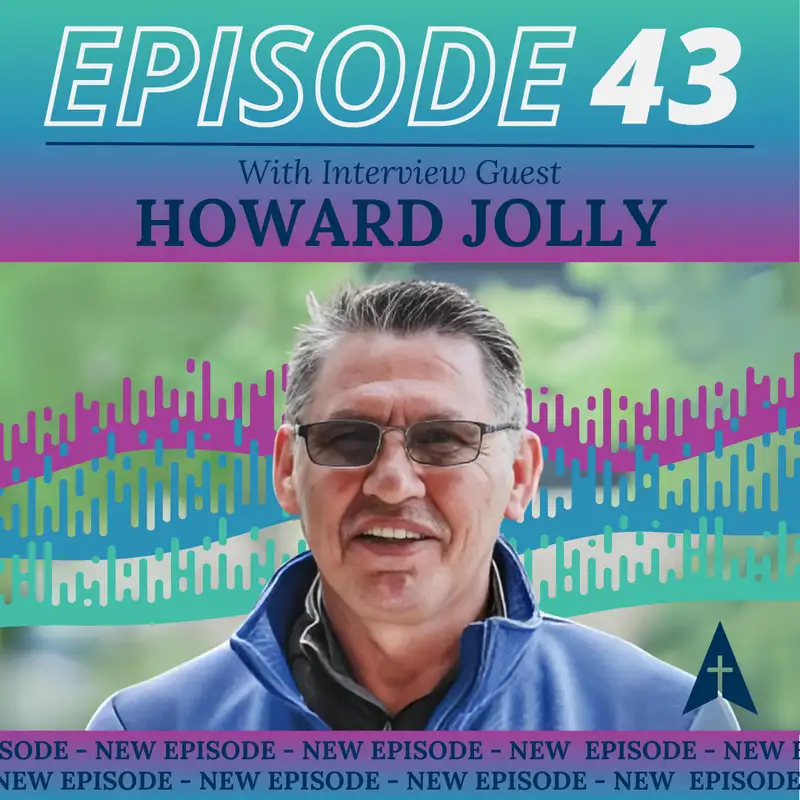
Well, hey, we are so excited to have on Church in the North, Howard Jolly. is the director of First Nations Alliance Churches of Canada. Howard, welcome to Church in the North.
Howard Jolly (00:14.316)
Here I am, eh? Good to be with you.
Rob Chartrand (00:16.102)
I want to do a deep dive into your story Howard and hear so much about that but I want to just quickly talk about your role with the Christian Missionary Alliance. What does it mean to be the director of First Nations Alliance Churches of Canada? What do you do with your day job?
Howard Jolly (00:36.376)
Well, man, like there's only four churches like that are and then there's a couple that we're working with that are interested in being associated or maybe part of it, maybe three. so it's not a lot of work, I guess, to to visit the churches and just try to encourage the pastors and the congregations. And also, too, I just work with as a liaison, I guess, between the churches and the districts. So they're mostly.
Rob Chartrand (00:47.088)
Mm
Howard Jolly (01:05.09)
their accountability is mostly toward the districts. And then so I, if there's some conflict or maybe communication things that need to happen, and I try to work with them. So ultimately they decide between themselves what the road, the path they're gonna take. But I just work with that. Then I work with the Greater Alliance, I guess.
community. I don't know if later is a good word, the bigger community like with a lot of the Caucasian churches and even Chinese churches too. Just working, I would say, cross -cultural communications or just having a good understanding of Indigenous life and Indigenous issues. a lot of stuff on reconciliation on the church.
See the church was involved in some of the things that are connected to indigenous life, guess you would say, and culture. So trying to have a good time, just building relationships and strengthening.
Rob Chartrand (02:19.087)
Yeah. So you're in Winnipeg and these four churches, where would they be across the country?
Howard Jolly (02:31.842)
Yeah, they are in... There's one in Edmonton. There's one in... Winnipeg. Prince Albert. And then also two in...
Fort McMurray.
Rob Chartrand (02:46.894)
Okay. Yeah. So I mean, you've had a long journey in ministry. I mean, you were a pastor as well. And we'll hear that story. But I want to go back to the beginning. Didn't didn't you attend Briar Crest at one point? Was that? Is that part of your story?
Howard Jolly (03:04.078)
Yeah, that's part of my story. Yeah, I attended Briar Crest. I think it might have been about 18 or 19. was about 1979, 80. I attended for a couple of years. was, yeah, I think my brother prayed me into going to Briar Crest. I had three older brothers. went to Briar Crest and I think there were about two years ahead of me. And when I first came there, they were all graduating.
And so I was there, and then I was there for a year by myself. I just took a diploma program. Yeah, so I was accepted as a mature student. So I don't know how I ended up being accepted that way. But it went okay though. I probably only finished grade 10 in high school. You know, just had a lot of struggles. I wasn't too interested in school.
So I didn't do well in school. You know the idea of school was kind of different for us I think more and I think it kind of grew on me through my brothers. I think I just didn't have any Desire or need for it, you know, and how I was thinking anyways at the time so
Rob Chartrand (04:26.47)
So where are you in the order in your family? Like how many siblings do you have and where are you? Are you the youngest or close to the youngest?
Howard Jolly (04:34.094)
Yeah, there's there's 10. There's four that are older that are from my mom's first marriage. Her first husband died of TB and then she married my dad and there's six with my dad, five boys. Yeah, five boys, no one girls. was 10, 10 altogether. And I'm the youngest boy and my and then I have younger sister. My dad was really
Rob Chartrand (04:38.96)
Mm -hmm.
Rob Chartrand (04:43.611)
Hmm.
Rob Chartrand (04:49.518)
Wow.
Howard Jolly (05:02.72)
intent on having a girl. So I was telling my older brother, if you were a girl, I don't think I would have been born. So yeah, that's our plan. Yeah, she kept trying and finally succeeded. it was, that was his last child there.
Rob Chartrand (05:04.697)
Okay.
Rob Chartrand (05:13.552)
Kept trying. Yeah.
Hmm, wow.
Rob Chartrand (05:23.851)
Yeah, that's interesting. That's the same for me. I'm the youngest of seven and I've got a long list of brothers and I'm the youngest in the family and my dad wanted to keep trying for a girl.
Howard Jolly (05:31.798)
Yeah, you're cutting out there a little bit sometimes, so...
Rob Chartrand (05:37.753)
What's that Howard?
Howard Jolly (05:42.274)
You're cutting out a little bit there.
Rob Chartrand (05:43.947)
okay. Okay. Yeah. And that's okay. it's still going to record a good feed on your side and my side, even if you and I get disturbed a little bit. But I'll just say it again. It's your story similar to mine. I'm the youngest of seven. And I have four brothers above me and two sisters above that. And my dad wanted to have a girl as well. And so he kept trying, trying, trying.
Howard Jolly (05:55.426)
Okay.
Howard Jolly (06:11.133)
okay.
Rob Chartrand (06:11.878)
And after five brothers, the doctor finally said to him, John, you're done, no more kids. Because my mom was like 39 by the time she had me and he was like, no, no more, no more kids.
Howard Jolly (06:16.014)
yeah.
Howard Jolly (06:24.216)
Yeah
Rob Chartrand (06:25.711)
Didn't get to that daughter. So, Briar Crest was great for you, I mean music has been part of your background and so you ended up joining a band or putting a band together and heading out on the road. How did Briar Crest lead to that?
Howard Jolly (06:42.936)
Yeah. Well, Barreira Crest wasn't really great for me. Like it was good to be there for a couple of years. I just didn't like the way that they handled my schooling because I was trying to do a BAED or something, a three year program. then halfway through my second year, they told me I couldn't graduate on that because of the fact that I hadn't finished high school.
Rob Chartrand (07:06.64)
Hmm.
Rob Chartrand (07:11.684)
Okay.
Howard Jolly (07:12.332)
But I just decided to just try to get a diploma, which meant I had to go to summer school for a bit. So it was tough in that way. you know, like when I was young, I just didn't really, really work, try to have people explain stuff to me. And also too, I didn't have my parents there to speak for me. And my parents probably weren't really interested about it too. So it was just kind of on my own. So I just kind of...
took what they said and just kind of went with it. But it all turned out okay, you know, was the thing. But I don't know what you were asking me there.
Rob Chartrand (07:55.558)
So how did you, you ended up on the road with a band. Tell us about that.
Howard Jolly (07:58.838)
Yeah, Actually, while we were in Briar Crest, had the YouthQuest? YouthQuake? Yeah, they used to have that. This guy came from Alberta to go to YouthQuake. And I think his intent was to try and talk to my brother and try to get a band started with my brother. His name was Kenny Jackson. so he came there and then talked to my brother and...
Rob Chartrand (08:05.808)
Youthquake, yeah.
Howard Jolly (08:26.482)
and it seemed to go okay, you know, they decided to start a band. And my brother, you know, like sang a lot more than I did. But he just kind of always was encouraging to me and always tried to have me along and things that he was doing. So he wanted me to come along. I didn't really, I wasn't really very gifted musically like my brother was at the time.
And so I just was just learning as we were going with the band. So that's how the band ended up starting. And Kenny brought his younger brother along and he was a little good guitar player. name was Randy. And, but at the beginning, Randy wasn't there. And we had some other guys playing again in Richard Muscatewinan. His name was from Bear Skin Lake in Ontario and a guy named Herman Oski from Red Earth or Loon Lake, Alberta.
So that's how it started. It's kind of interesting too, you know, like, because we're starting and we don't, we don't really, we just wanted to try and do some, some things where we're going to go sing in different places, know, churches and communities. It ended up being a real interesting cause we, we would share our testimonies. One person would share a testimony. Then one person would preach, you know, and
Rob Chartrand (09:48.774)
Mm
Howard Jolly (09:51.566)
I think we were all kind of learning how to preach as we were going along and also to share our testimonies. And so we went to a lot of places. We just started out doing it for the summer and then we started getting invitations to a lot of different places even throughout Canada. even I think through the missionaries too that we started to get these contacts.
different people, like word of mouth too, like people telling each other about us and trying to encourage them to invite us to their communities. It just built up.
Rob Chartrand (10:32.422)
Hmm. So was it mostly First Nations churches or was it First Nations churches as well as Caucasian churches? Where did you?
Howard Jolly (10:42.838)
A lot of, yeah, mostly First Nations searches, First Nations communities. We would sing in, you know, like where First Nations searches were at. And then we would have singing halls, you know, on the First Nations communities. And these would be set up like rec halls. And even I remember singing power grounds there too, at one place. And so just any place where there would be a...
Rob Chartrand (10:47.843)
Mm
Howard Jolly (11:11.854)
where they can get people to come that weren't followers of Jesus, I guess maybe you say. And then we would share testimony. And some of them came to know Christ through our meetings, through these meetings. So it was very productive, I guess you would say, in regards to the Kingdom of God.
Rob Chartrand (11:25.808)
Hmm. Yeah.
Rob Chartrand (11:31.524)
Yeah. Yeah. So you did this, you did this for a while. How long were you, were you traveling with the band?
Howard Jolly (11:39.992)
Well, I think that it's just interesting that I think with the original group, I think maybe only about four five years, maybe less than that. And then I traveled with Randy and his wife, Randy and Randy Jackson, Kenny's brother. He ended up marrying on the road, guess you would say, meeting his wife and marrying. And she was a really, really good singer. His wife was a real good singer. And so she could play the bass, too. And so.
Rob Chartrand (11:47.973)
Okay, yeah.
Howard Jolly (12:09.004)
When they got married, it almost seemed like our group was getting too big. So we decided to disband, I guess at one time. And then us just telling Rand we should just continue, was just me and him and his wife. I think, or maybe he told me that, I can't remember. But then we continued, it just the three of us, with just a bass and two guitars.
So I think we did that for about seven years, like just the three, yeah. And then we had a drummer for a little bit too with that. His name was Cliff Bird, he used to be Saskatchewan, so he was with us with Kenny and he came with Randy and I when we continued. Then Cliff had something different going on there too in his life. Cool.
Rob Chartrand (13:00.504)
traveling with a few guitars is one thing traveling with a drum kit is another thing.
Howard Jolly (13:04.658)
Yeah, for sure. Well now I travel with a group too. We don't have a drum kit. It's just too bulky and we just use a drum machine. You don't have to pay for them to sleep somewhere or you don't have to carry all their equipment too. So it's more convenient.
Rob Chartrand (13:21.892)
Yeah, yeah, yeah. And it's the longest, it's the instrument that takes the longest to set up as well. And it's just, yeah, it's a challenge.
Howard Jolly (13:30.178)
Yeah, yeah, yeah, it's a challenge,
Rob Chartrand (13:34.34)
So how was God shaping you during that time on the road with the band, Howard? Because eventually you'd end up as a pastor, but what was God shaping you at that time?
Howard Jolly (13:46.232)
Well, you know, in the time, like I felt like the Lord was really using using our story, my brother and I story to to really outreach, do outreach. And then also to, you know, it's just a lot of mistakes along the way to like in my life, like in my journey and and and, know, even in connection with my relationship with the Lord and and just.
Rob Chartrand (13:58.81)
Mm
Howard Jolly (14:14.018)
falling away from God, too, and coming back to. And so the mercy of God on my life and also to the encouragement of the band, encouragement from Randy and Vans, too, in my journey with God. So just growing in relationship with people, too, and in relationship with God. And yeah, just I really seen how the Lord's hand was in it all. Like when we first started out, you know, we didn't think like
Rob Chartrand (14:24.965)
Hmm.
Rob Chartrand (14:31.866)
Hmm.
Howard Jolly (14:43.778)
You know, I got to be able to live from day to day. We just kind of... It was just one day at a time, you on the journey. And we didn't know how the Lord was going to provide in the long run, but we just kind of went with it. It almost seems like people would help us along the way, you know, just when there was big issues, financial issues, then there would be people that would give, like even we broke.
Rob Chartrand (14:52.027)
Yeah.
Howard Jolly (15:12.392)
We the vehicle sometimes, and have to change transmissions, change axles, and that would be big bill sometimes. So we see the Lord providing. I would say being naive too, guess maybe, but some people would say, well, maybe we have faith in God. don't know. But the Lord always came through. And looking back, you kind of see His hand in things.
Rob Chartrand (15:18.309)
Yeah.
Rob Chartrand (15:23.994)
Hmm. Hmm.
Rob Chartrand (15:36.528)
Hmm.
Howard Jolly (15:41.726)
I remember one time we were traveling and we were out of gas, know, and we had to stop at this place and the gas station was closed and we didn't think we were going to make it to the next place. So we just kept going. And then we got to the place and just up on top of the hill, we ran out gas. And then we look at the bottom of the hill, there's a gas station, you know, so we just coast into the...
Yeah, the pump, know, it was pretty amazing, you you see the Lord's hand in things and yeah.
Rob Chartrand (16:18.0)
Well, it's a thing you didn't have to push it uphill and then back downhill again.
Howard Jolly (16:20.48)
Yeah, for sure. Yeah, so,
Rob Chartrand (16:25.254)
So you, I mean that really shaped your faith, right? You having to trust the Lord, like living hand to mouth and you know, not knowing exactly what was gonna happen. So you also got married along the way, like while you were doing all of this. Tell us a bit about that and then maybe tell us about your family.
Howard Jolly (16:29.016)
No. No.
Howard Jolly (16:45.996)
Yeah, you know, just, you know, I had dated my wife before and things didn't work out for us. know, my heart is always toward her. then somewhere along the way that, you know, we seem to connect again and things seem to work out. And she was just graduating from Bible school in Kuwait and in Alberta. And so...
And so we just, you know, hit it off and then we committed to getting married. So I got married and I'm still on the road with Randy and Vange doing music too. And so that's a part of the dynamics of what's happening in our lives. And Randy and Vange were at our wedding too. And so Abe and Randy were part of my wedding party too. so when we got married, I'd say...
For the first couple of years, we were traveling with a band. My wife was traveling with us, and Randy and Vange had maybe three kids. They had children. So was kind of little more difficult traveling with children, too, with that, too. And so, yeah. And so then after a couple of years, we ended up having children. We prayed to have children right away, but we couldn't.
Rob Chartrand (18:01.68)
can imagine.
Howard Jolly (18:14.367)
after two years the Lord blesses with children like we had a boy then another year after we had a girl and so it was a little more difficult for my wife to travel with children and then somewhere like I would say when the kids were my daughter must be only less than a year old my mom got real real sick and I was telling the band you know I'd like to be with my mom you know
before she passes and she some quality time with her. And so that's when we decided to disband as a band. And they were feeling, I think, the, I guess maybe the pressure of, you know, too much with the children and traveling. So it went, the disbanding of the band went really well with Randy and Vans. And so I went home to be with my mom and I didn't know what I was gonna do while I was there.
Rob Chartrand (18:59.78)
Yeah. Yeah.
Rob Chartrand (19:05.156)
Hmm.
Howard Jolly (19:13.016)
got to spend some time with her. And then she passed on not too long after I was home with her for a while. And then we were wondering what we were gonna do. And then the church at home asked me to be a youth pastor in Moose Factory. So I did that for maybe about seven years, I think, with my family there. then I, what else did I do?
Rob Chartrand (19:29.656)
yeah.
Rob Chartrand (19:36.103)
wow, okay, yeah.
Howard Jolly (19:42.412)
Yeah, I enjoyed it and doing the work with the angry bus. I still keep in contact with some of those. They're in their 40s or 50s now, those young people. So they're married and have teenagers. So it ages you quite a bit. anyways, I was was doing that and then. Then they got me to be an associate pastor for a couple of years. Then I I was doing that, too, and I was just
Rob Chartrand (19:52.218)
Yeah, yeah.
Howard Jolly (20:11.798)
I just didn't feel too comfortable being an associate pastor. Our church having two pastors and there's a lot of indigenous churches that don't have a pastor. So thought maybe I should go try to pastor somewhere else. So I resigned. then from there, I went to Kennedy, this one place. It went well, but then local guy wanted to...
Rob Chartrand (20:22.533)
Yeah.
Rob Chartrand (20:26.694)
Hmm.
Howard Jolly (20:41.282)
wanted to pastor, I didn't feel... And they probably felt compelled to hire the local guy for pastor. So that didn't work out. And so my wife encouraged me to apply to go to Bible school. And I needed funding for that, and so I didn't think it was going to come through through the Indigenous support. But it all went well. I was accepted. I applied to go to Providence here.
This is where I live now, close to the school in Neverville. And my wife is a prof there now. But so I applied and I was accepted and I applied for funding and it was accepted too. So we ended up moving here, know, within, I don't know, maybe from the time we decided to come here, probably about three months. So then we came and...
Yeah, so we went to school here for about four years at Providence and I really enjoyed going to school. I didn't think I was going to do well, you know, because of my experience. and then I ended up I ended up graduating at the top of my class. Like I was I was a valedictorian too. Yeah, so I didn't. Yeah, I didn't think I was going to happen.
Rob Chartrand (21:48.4)
Mm
your previous experience yet when you're 18 or 19.
Rob Chartrand (22:03.878)
Come on. Really? That's awesome. Yeah.
Howard Jolly (22:08.342)
You know, so getting good marks and I was kind of, was kind of, well, it went really well. I was really encouraged too, like by the props, like it really impacted my life too. I just, I just felt like it was a good thing, good foundation for, for, know, even continuing to do it. And I still enjoy, you know, studying. I enjoy, you know, like trying to figure, figure out things connected to indigenous life, you know, and, and even.
reconciliation and even on heart issues too, having a real biblical base for my, you know, how I approach these things and talk about these things.
Rob Chartrand (22:51.142)
So, Howard, what changed? mean, to go from 18, 19, I mean, you're young and you're in a different stage of life, but suddenly, I don't know, 15 years down the road or whatnot, you're going to seminary and you're really engaged as a student. What was it that you think that made that difference for you?
Howard Jolly (23:14.162)
you know, the thing about like that I liked about Providence, like, you know, I'm not trying to speak against my experience at Baruch Press. Providence is more like, I guess seminary might be that way, might be different from, you know, like college. Like in seminary, they don't really, prophets don't really press what they believe on you.
Rob Chartrand (23:25.243)
Yeah.
Rob Chartrand (23:35.62)
Yeah, yeah.
Rob Chartrand (23:43.642)
Mm
Howard Jolly (23:45.66)
They'd rather ask you, what do you believe? And then they'd you, well, tell us why or show us why you believe what you believe. And so it really drew me to asking myself, why do I believe what I believe? And so I started to study the scriptures more. And so it really helped me in that way.
Rob Chartrand (23:49.776)
Right.
Rob Chartrand (23:57.552)
Mm
Howard Jolly (24:13.39)
I realized a strong sense of having an accountability for my life, for what I believe. I saw that I was responsible for my life before God and I'm going to give an account of it before Him someday. That really encouraged me and helped me and even today it still encourages me.
Rob Chartrand (24:29.924)
Hmm.
Howard Jolly (24:41.888)
helped me to pour myself into research, researching and doing the papers. It was consuming, but also too it was good. I enjoyed it. I still enjoy it today too.
Rob Chartrand (24:46.532)
Hmm.
Rob Chartrand (25:02.884)
Yeah. So you would go on to become the lead pastor of a First Nations church in Winnipeg. Where was that along your educational journey? Was that during that time or was that afterwards?
Howard Jolly (25:15.826)
I'd say maybe two years, I was looking for a church to go to, an Indigenous church. think probably maybe about the second or third year, I can't remember which year, we ended up finding the Indigenous church in Winnipeg. think Larry was still pastor, Larry Wilson went to broadcast too, and I think he was still pastor of the church at that time. And so we enjoyed Larry's preaching too.
Rob Chartrand (25:23.45)
Mm -hmm.
Rob Chartrand (25:33.326)
Mm
Rob Chartrand (25:38.798)
Okay. Yeah.
Howard Jolly (25:44.418)
But then Larry ended up leaving the pastorate, taking on the directorship, I'm doing now. But when he moved on, I was telling my wife, we should just ask the church if we can fill in the pulpit. I'll tell them I'll do the pulpit. But I can't do a visitation or other stuff. I'll just focus on doing the preaching.
Rob Chartrand (25:51.963)
Yeah.
Howard Jolly (26:13.566)
I'll just take some material that I'm learning at school and just work with those things in doing my sermons, preparing my sermons. So she was okay with that. And so I was going to approach the church. But then they came to me first, you know, and asked me if I could fill in. So it was good because then they committed to helping us financially too. And so that really helped us with our schooling. Yeah. And then that was for about two years almost.
Rob Chartrand (26:29.167)
Okay.
Howard Jolly (26:42.882)
maybe a year and a And then when they knew I was graduating, they approached me to be the full -time pastor with the church. And so I was comfortable doing that, like at the time. And so it all worked out that way. And so that's how I ended up pastoring the church. That's how I ended up becoming an Alliance pastor. So I was okay with their doctrinal statement. It kind of was pretty close.
Rob Chartrand (27:04.422)
yeah, right, you weren't before that, yeah.
Howard Jolly (27:12.814)
most comfortable I felt within my theology too, so I was comfortable with it. It worked out really well. I pastored there for about 14 years. All this stuff about pastoring too, I was just learning as I was going. It was good. And then from there,
Rob Chartrand (27:27.078)
That's a good run. That's a really good run. Yeah.
Rob Chartrand (27:36.742)
Mm
Howard Jolly (27:43.17)
you know, learning about pastoring and then you get to the point too, I think that you kind of figure out, well, you know, what are my gifts? What are my strengths, you know, in your life? And I just felt like I was more of a pastoral person, a person that preaches, and then also to just my connections from...
having gone to a lot of different places that I could do, I guess you would say pastoral care more at a national level, even though was different kind of setting than the local church. But it seemed like I could speak into the issues that a lot of churches were facing and also that I had a passion to speak into those issues more.
Nationally, I guess you'd say so.
Rob Chartrand (28:44.772)
Yeah, well, I just think of the places you've been and the things you've seen and where you've served. I mean, you do have a national perspective because you've just traveled so much. And then you can take that pastor's heart and just care for pastors across the country as well. I think you're the perfect man for the job, Howard.
Howard Jolly (29:04.941)
Yeah.
When I was fasting, COVID hit during my pastorhood too. I know we don't have a big congregation, and we're kind of figuring out how are we going to keep going, and keep supporting the pastor too through COVID. Then I said, well, let's just do church online.
Rob Chartrand (29:26.629)
Hmm.
Howard Jolly (29:36.238)
So we did church online, you know, and we didn't know how it was going to go. The first service, I remember my wife helped me with music and another lady named Doris from the church. And so we did the music and I preached online. It was kind of hard, you know, speaking to the camera and not seeing the audience. And so we, we did it. And then after church, we, you know, we looked to see if there's a lot of people watching it. You know, I say within the week, there's about over 3000 people that watched our program or at least hit it, you know.
So yeah, so was real. I feel like the connection was with having sung with the Sunrise Band too, and people knowing me from that too. And so it went... Yeah, even into the States. so like a lot of them from down south around Phoenix area too that would have known us too, and up in Alaska too. So...
Rob Chartrand (30:17.816)
Okay. So people tuning in from across Canada.
Howard Jolly (30:35.178)
It's just amazing, you that the thing like you do stuff over the years, like at the beginning, you know, with a sunrise band, sometimes it wouldn't be a lot of people that would come and you kind of wonder, you know, if the thing you're doing is worth worth worth doing because of small audiences sometimes. But then you get a real encouragement to see bigger audiences in different places, And then and then when when when this online thing happened, I realized that, you know, we've touched many lives over the years.
with the band and sometimes not necessarily in the meetings but them listening to our music through our CDs and our cassette tapes and you know so that kind of stuff too and so you see it had impact you know over the years even through a TV program called Tribal Trails you know we'd be on there too and people would watch us on there so so you
Rob Chartrand (31:14.561)
set.
Howard Jolly (31:33.495)
You see that the Lord's been there all the time and also too that there's a thing where you're known because of having been in ministry for long time.
Rob Chartrand (31:46.682)
Yeah. Well, let's turn the page and let's talk then a little bit about more your work with the national First Nations and our indigenous churches. You know, as you know, across Canada, we're facing a shortage of pastors in lots of churches, but is this something that we're facing in our First Nations churches as well?
Howard Jolly (32:08.983)
For sure, there's just a shortage of pastors like and also to
Howard Jolly (32:18.786)
Yeah, even there's a sense that it almost seems like a shortage of, I would say, church planners too. And how do we get that, like have a young person go somewhere and be a church planner and that's the stuff I'm kind thinking of too. And it almost seems like there, I think the way that it can work is maybe have...
Rob Chartrand (32:25.99)
Hmm.
Howard Jolly (32:45.986)
What you would say like tent makers kind of ministry where you know a person is working there in the community and maybe has a desire to be in that community and do ministry in that community, but they can't have a support base and so if they could work there and then maybe try to get a church group going in that way, I think that would be a good way to go. But then also to the training.
pastors I think it's important to like I really see the benefit of having gone to Brier Crest too like at the beginning and also to having gone to Providence too so I see the significance of Bible training too you know even for pastors so but as far as the you know getting getting pastors to indigenous pastors like I feel like it's still very you know a big need still today
Rob Chartrand (33:28.144)
Right, yeah.
Howard Jolly (33:44.482)
But I think maybe to even the bigger need would be church planners to, you know, that would start something.
Rob Chartrand (33:53.488)
When you think when you speak of church planters, Howard, are you thinking planting churches on reserves planting churches in maybe heavily populated urban areas where First Nations people live, or maybe a little bit of both?
Howard Jolly (34:09.134)
A little bit of both. I think that there's in Winnipeg, maybe there might be about four or five churches. So there's churches there and I think you could still have more. I think a healthy church would probably be a church that has maybe 40 to 50 people, even a little more. Because you have that good... I know everybody's name in the church. I go to...
Rob Chartrand (34:18.949)
Hmm.
Rob Chartrand (34:22.885)
Yeah.
Rob Chartrand (34:30.554)
Mm
Howard Jolly (34:38.542)
and feels good. And then people invite people out for meals sometimes too. So I think a church can be supported by 50, 60 people pretty well. And so I guess too in the smaller communities, sometimes it takes a while for a church to develop. You'd like to see it develop faster too, but...
Rob Chartrand (34:49.062)
Hmm.
Howard Jolly (35:08.0)
And so to support someone going there full time and having not a lot of growth, you know, takes a toll, I think, on the supporters too. And you kind of wonder if it's feasible or doable or it could be done different. So that's why I say that it'd be good to have kind of like a church planning kind of mentality for people.
Rob Chartrand (35:36.676)
Are there churches being planted on reserves in Canada?
Howard Jolly (35:42.316)
Well, I don't see a lot. I don't see a lot of new ones. even with the Alliance, like we have four, you know, and so we have more. But there's like there's one in Regina that's indigenous kind of, but it's not really like...
Rob Chartrand (35:45.936)
Yeah. Yeah.
Rob Chartrand (36:00.464)
Mm
Howard Jolly (36:06.988)
the intent to have an indigenous church there. But there's a lot of indigenous people going there. And then they're working from there to try and plant a church on a reserve. it was just good. So there's that effort.
Rob Chartrand (36:09.669)
Okay.
Rob Chartrand (36:18.213)
Hmm.
Rob Chartrand (36:25.978)
Yeah.
Howard Jolly (36:29.782)
I don't think there's a lot on the reserves. There's a couple, I know my wife is from place called Good Lake, Alberta, it's a Métis settlement. And they have an indigenous church, trying to get an indigenous church going, church bank going there. And yeah, it's hard to get people out to come. And then on the reserve over, there's a thing, I see a church and they have a pastor.
Rob Chartrand (36:40.134)
Mm
Howard Jolly (36:58.99)
do so.
Rob Chartrand (37:01.808)
Hmm. So when you think about your role, Howard, mean, church planting is certainly there, but what are some of the dreams that you have for our First Nations churches?
Howard Jolly (37:14.334)
And like, think just health too, probably in the church. A lot of times...
Yeah, there's just so much focus on evangelism, I would say. But I think there needs to be a lot of focus on just growth, in our walk with God, and stability, like in our journey with God, and just understanding of, you know, biblical principles.
Or theology, I guess you would say too. Having a strong foundation for your faith. Probably discipleship would probably be that would be strong, that would be needed. In my journey, I just really sense a strong need, even in the indigenous church, for people to have a good understanding of what it means to have healing in Christ.
and healing even in connection to how your life was in your childhood or even before you come to know Christ. There's a lot of connection there where if we find healing even from a biblical base, that we will be stronger in where we're at right now. And also to be able to connect with people that are hurting in their lives too.
Rob Chartrand (38:46.395)
Hmm.
Howard Jolly (38:53.326)
and to preach the good news in a relational way, where people can see the connection between Jesus and their hurts too, in their lives. And even overcoming guilt too. So I found that very helpful in my walk with God. And sometimes...
I think sometimes Jesus is presented as a pill to get all your cures. I think that is important to see that this growth is a journey with God and that you walk with God through things connected to your life, even from your childhood.
Rob Chartrand (39:41.467)
Hmm.
Rob Chartrand (39:46.457)
Hmm.
Howard Jolly (39:48.16)
So I'd like to see more, I would say, teaching on discipleship or personal growth in our journey.
Rob Chartrand (39:57.764)
Hmm. Hmm. Hmm. What are some of the obstacles when you think about the Indigenous church in Canada that are that are just making it challenged maybe for getting there, or even for even church planting? What are some of the obstacles that you're working on and the things that you want to see happen?
Howard Jolly (40:00.867)
Yeah.
Howard Jolly (40:23.318)
I think, for me, my passion is really to strengthen or affirm the dignity of our people. I always say, think a lot of the struggles, it's overwhelming, the suicides that are there.
Rob Chartrand (40:35.206)
Hmm.
Rob Chartrand (40:44.123)
Mm
Howard Jolly (40:45.098)
especially with our youth, you know, and I really believe that one of the huge factors in that impact is an identity crisis that exists among people. just, you know, just, and I think it's really intergenerational too, that the things that bring that about.
Rob Chartrand (40:54.917)
Hmm.
Rob Chartrand (41:04.603)
Yeah.
Howard Jolly (41:04.748)
Like when I was young, just hated my identity. I didn't realize that I hated my identity, But I thought white people were better than me. And I think that's from the impact of colonization, the impact of residential schools, you know, trying to assimilate our people into Western lifestyle or culture, you would say, too.
Rob Chartrand (41:11.546)
Mm
Howard Jolly (41:32.576)
And even that being brought into the church too. So that's the thing that I'm passionate about, to really try and just try to do away with the roadblock of people thinking that in order to be a follower of Jesus, you have to be white, or you have to do away with your Indigenous identity and culture.
Rob Chartrand (41:53.478)
Hmm.
Howard Jolly (42:01.846)
So there's a of things there too. I think that some of our people, a stumbling block for them is the impact of the church even in assimilation in connection to the residential schools. So I'm trying to get them to see that these people...
were supposed to represent us of God too and they just misrepresented it, represented the true Christ I would say and represented the true Christ according to scriptures to them. It's a challenge. I just recently came from a place where this lady says, don't go to my church anymore.
Rob Chartrand (42:35.995)
Yeah.
Howard Jolly (42:53.455)
I don't want to say that in nomination she was a part of, which is I don't go to my church anymore because my church was involved in what happened to our people. The abuse issues that are connected to the schools. Yeah, even so. trying to speak into those things from a biblical perspective. And it's really interesting too, like
Rob Chartrand (43:03.781)
Hmm.
Rob Chartrand (43:16.902)
Yeah.
Howard Jolly (43:21.646)
All of that too, I noticed that it's connected to the Kingdom of God. The Kingdom of God being present in this world. It's a Kingdom of righteousness. It's a Kingdom of justice. So we speak into those things and try to bring some truth and reconciliation and try to establish that Kingdom that Jesus came to establish when He walked the face of this earth.
Rob Chartrand (43:34.073)
Mm
Howard Jolly (43:50.721)
Jesus speaks more with the Kingdom of God, I believe, than anything else when He's speaking. So what does that look like? And I think to me it's really addressing, talking about these issues in a way that's honoring the Christ of Scriptures, I'll say.
Rob Chartrand (44:08.506)
Yeah, yeah. Yeah, and helping people understand that what was done with residential schools wasn't in keeping with Jesus teaching, but it was in contradiction to Jesus teaching, like that Jesus would not have wanted that, but his representatives have failed terribly through that.
Howard Jolly (44:31.775)
Yeah, for sure. know, just the way that Jesus talks, like you say, like, you know, when John asks, are you the Christ? Jesus says, tell John, you know, the poor have the gospel preached to them. So it's very powerful words that he says. And so it almost seems like the people that are downtrodden are the ones that he's focusing on.
Rob Chartrand (44:48.293)
Yeah.
Howard Jolly (44:57.811)
Maybe that's not a good way of saying it, but I think he's focusing on everybody, but he's focusing on their issues too. so, just letting them know that, this is for you, know. So, powerful,
Rob Chartrand (45:03.663)
for sure.
Rob Chartrand (45:09.614)
Yeah, yeah. But you know, it's hard to see through that pain, you know, and that hurt and and, you know, and that's probably why your priority is like, how do we elevate the dignity of our First Nations people? And how do we help them find that healing that you speak of?
Howard Jolly (45:18.819)
Yeah.
Howard Jolly (45:33.58)
Yeah, I saw like even for me like that's happened, you know, like in
I'm sorry about that bro. Hey Erna, I'll call you back right away. bro. Like I was saying about this healing, my focus and my passion, I think it comes from the Lord bringing healing to my life too. I used to really struggle. I still struggle to end things.
Rob Chartrand (45:48.549)
love it.
Rob Chartrand (46:04.016)
Hmm.
Howard Jolly (46:10.53)
But I really find that I lean on the heart of Jesus for me. And He comes to me through His Word, but also He comes to me through other people speaking into my pain. And so when I experience that healing from Him, it helps me to be stronger in my journey, in my walk with Him. And it gives me stability.
Rob Chartrand (46:39.013)
Yeah.
Howard Jolly (46:39.526)
I would say it gives me healing, gives me joy too. And so when I see what he does for me in that regard, I really want others to have that too, to experience that too. that's what motivates me to speak into those issues.
Rob Chartrand (46:42.512)
Hmm.
Rob Chartrand (46:55.322)
Hmm.
Yeah. So Howard, when this podcast is released, it will be National Truth and Reconciliation Day in Canada. That's the day it will come out. So that's just in a week and a half here. I'd love to hear from you. Why should churches be paying attention to National Truth and Reconciliation Day?
Howard Jolly (47:10.646)
Okay.
Howard Jolly (47:19.626)
You know, that's a huge question because I really find that there's something that is very powerful. Truth is very powerful. Truth, Jesus says, you'll know the truth and the truth will set you free. That's for all of us. That's for me. And that's for the white person too, like the truth will set you free. And there's this idea of truth in connection from my perspective or from my story. There's the truth of that.
how painful colonization has been, how painful assimilation has been. And it takes a while to heal, and it has been very painful. And I think for a person to hear that, that's Caucasian, say. I think it's kind of intimidating, or they don't want to hear it, because it's their people that have done this to my people, so they don't want to hear it. But I really feel like they need to hear it.
Rob Chartrand (47:54.8)
Hmm.
Rob Chartrand (48:14.916)
Yeah.
Howard Jolly (48:18.648)
they need to hear because it's a part of the healing. And I think if we focus on our relationship with God, and the good that it'll do us in our relationship with God to walk in truth, I think we will be less intimidated, or there's another word for it too, where it's kind of condemning. I'm not out to condemn people, I'm out to...
Rob Chartrand (48:22.469)
Hmm.
Rob Chartrand (48:43.002)
Hmm.
Howard Jolly (48:47.768)
for them to experience life. know, like for me. that thing has, the attitude has come from God, me walking with God in the area of reconciliation. I think the first thing was reconciliation is to be reconciled with God. You know, like, and there's something about being reconciled with God where you're not seeing things the way that God wants you to.
Rob Chartrand (49:06.501)
Mm -hmm.
Howard Jolly (49:15.79)
to see them. so reconciliation means like, you know what? God's saying to me, we need to be in agreement on this. You have to see the things the way that I see them. And so once I start to see things the way that God intends for me to see them, I believe it brings tremendous healing in my life. So when there's truth and reconciliation, there's this thing where this peace.
Rob Chartrand (49:26.612)
Hmm.
Yeah.
Rob Chartrand (49:38.768)
Hmm.
Howard Jolly (49:45.388)
this joy comes through journeying with God through this. And it's for my benefit, know, and it's for the benefit of the white person too, in connection to God. And so there's the God factor as the foundation is so huge in talking about reconciliation. And then in that too, like when it comes to reconciliation with God.
Rob Chartrand (49:53.691)
Yeah.
Rob Chartrand (50:03.835)
Hmm.
Howard Jolly (50:12.226)
There's something about it where, you know, when this dynamic or this journey is connected to God, you know, and something is happening with you in the relationship with God, it gets you to the point where you see that, you know, if this is going to be really real in my heart, you know, this relationship with God, it has to be real in my relationship with people, with whoever.
Rob Chartrand (50:23.387)
Yeah.
Rob Chartrand (50:39.844)
Hmm
Howard Jolly (50:41.878)
I'm talking to, know, white person, black person, or whoever, you know, God desires for that oneness with Him to just translate into oneness with others. And I think that's the powerful thing about it. just like, you know, I see like in dealing or walking with God through this, I see attitudes in me that are not right in how I view or...
look at white people too. And then God says to you, hey, that's not right, know, that needs to change. And he helps you to change that, you know. And so, and I think that's the big thing when it comes to truth and reconciliation. It almost seems like the focus seems to be that the white people have to do something, you know, it comes to truth and reconciliation. But I really believe that we all have to do something, you know, and...
Rob Chartrand (51:12.251)
Yeah.
Hmm.
Rob Chartrand (51:25.712)
Hmm.
Rob Chartrand (51:33.029)
Hmm.
Howard Jolly (51:40.162)
and it starts with focusing on walking with God in a good way.
Rob Chartrand (51:46.522)
Yeah, yeah. Well, and as you say, I reconciliation is impossible without truth. I mean, we have to bring something into the light in order to be able to create that alignment with God with reconciliation. Do you think like as you know, North Americans or Canadians, I mean, we have such a foundation of Western thinking, which is very, you know, individualistic, you know, and so it's, it's very much just
Howard Jolly (51:54.092)
Yeah.
Yeah.
Rob Chartrand (52:13.71)
All that matters is me and Jesus, my relationship with Jesus. And because we're so individualistic, don't think communally. We don't think about... And so when we think reconciliation, we only think about our relationship with God. know, First Nations people and Indigenous people from around the world are very communal and have a better understanding that there's a reconciliation that takes place that's also from people to people.
and a reconciliation that takes place between us and creation even, right? And all of those things were disrupted by the fall. Like it created enmity between us and God, us and creation, us and each other. know, one generation later, Cain and Abel are killing each other, right? But the gospel, as Colossians says, through the gospel, Christ has reconciled all things, right? And so this need to...
Reconcile, I mean, is much bigger than just my relationship with Jesus. It's my relationship with other people.
Howard Jolly (53:17.304)
Yeah, I love the way he said that because, you know, like John, like a lot of times we interpret like John, for God so loved Rob, God so loved Howard, and it's very individualistic in the way we're interpreting it. But John is saying, God so loved the cosmos, you know, all of his creation that he said this. And then the idea too, like there.
Rob Chartrand (53:28.464)
Yes.
Rob Chartrand (53:38.427)
Yeah.
Howard Jolly (53:44.182)
It seems like to me in the passage, and you can take other verses that I will kind of say this to, is that when it says reconciled, it means there was something good that was there before. So there was something God, you know, when he first made it, it was good and it was beautiful. And the idea of reconciling or him so loving the world sent his son. It just seems like he wanted to bring this back. What was there before and before the fall?
Rob Chartrand (54:00.912)
Hmm.
Rob Chartrand (54:10.416)
Yeah. Yeah.
Howard Jolly (54:13.388)
And so I really believe too, when Jesus goes forth from the waters of baptism, you can really bring that back to Genesis too, where He comes forth and He brings about this new creation. And His cause is so much connected to His death, His cause in bringing about this new creation. And I really believe that also too, as His followers, we're called to Him.
Rob Chartrand (54:28.165)
Hmm.
Rob Chartrand (54:36.09)
Hmm.
Howard Jolly (54:43.31)
establish or build this Kingdom that he started and is really bringing things back to the original order or intent. But we don't speak of the Gospel that way a lot of times. We speak of it us, very individualistic, and getting someone to repent of sins and that they'll be with God forever in heaven when they die.
Rob Chartrand (54:52.666)
Yeah.
Rob Chartrand (55:09.21)
Yikes.
Howard Jolly (55:09.422)
But it is also about following Jesus and establishing this Kingdom and doing the work of bringing peace. Shalom on the earth.
Rob Chartrand (55:20.794)
Yeah, shalom. Absolutely. And that great and future hope we have, you know, of all the nations gathered before the Lord, still keeping their national identities, right? Still actually, you know, gathered at the throne. You know, so we're stuck right now in the already and that's the not yet that's to come. But it pulls us along and it should pull us towards becoming who we're eventually going to be, a reconciled people, people who are
Howard Jolly (55:32.852)
Yeah.
Howard Jolly (55:42.818)
Yeah, yeah, yeah, yeah.
Rob Chartrand (55:50.82)
you know, like you say, people of the new creation who are, are, working towards this reconciliation.
Howard Jolly (55:56.812)
Yeah, yes, for sure. you know, so, you know, so even what you're just saying to like, it's so it's so important like to to understand, you know, this idea from the scriptures, you know, and I think sometimes we misinterpret what the writers are saying about, you know, identity and about different different cultures. so the part of this all.
know, like distinct cultures being represented in eternity. I really see that in the Book of Revelation where it says, you know, the nations will bring their glory into the Kingdom, It's something of their ethnicity that they're going to bring, you know, into the Kingdom. And we're all going to celebrate it, you know. We're not going to be one mosaic, you know, or we're just going to be all one identity, but really like...
Rob Chartrand (56:39.172)
Hmm.
Rob Chartrand (56:46.603)
Yes.
Howard Jolly (56:55.41)
One identity in Christ, but there's still lot of distinct cultures that are seen and represented within that. So it's going to be beautiful.
Rob Chartrand (57:01.541)
Yeah.
Rob Chartrand (57:05.05)
Well, it'll be like the Trinity plurality and unity, right? So diversity and yet unified and that's a beautiful thing. This kaleidoscope of different ethnic groups coming together as one under Christ.
Howard Jolly (57:18.828)
Yeah, for sure. Yeah. And you see the beauty of it now, you know, like in a different, when you hear the different cultures, you know, especially in music too, I guess for me too, you know, the African way of doing music and also to, you know, the Caucasian and also the indigenous way and different cultures too, know, very, very distinct in their sounds, you know, so.
Rob Chartrand (57:30.971)
Hmm.
Rob Chartrand (57:41.296)
Yeah. Yeah. Well, Howard, as we, as we wrap up our time together and thanks so much for, for, for joining me this morning. I wondered if you could give a final word of encouragement to our ministry leaders across the country who are listening today. you know, they might need some encouragement, some, some challenge, some hope, but if you could just give a final word for them, that would be great.
Howard Jolly (58:08.362)
Okay, well, as you say that, my thoughts are, know, like, as we build the Kingdom of God, how I am understanding Jesus, like when He says, I will build my church. I always say that, like, when I'm doing ministry, like when I left pastor, and when I did directorship, you know, and there seems to be not a lot of growth.
Rob Chartrand (58:32.441)
Mm
Howard Jolly (58:38.272)
evidence of growth, I always say, well, Jesus says, I will build my church and the gates of hell will not prevail against it. And there is a sense in it, and you see it through the New Testament too, it's not the devil that's on the offense here. We are the ones that are on the offense. We're prevailing against the kingdom. And we go forth in building the kingdom. And we go forth in the power of the Holy Spirit.
Rob Chartrand (58:57.531)
Huh.
Hmm.
Howard Jolly (59:08.074)
and nothing can overpower us. Even if we should be put to death, we're still conquering in that too, in Christ. And so there's this idea of this conquering mentality that the followers have. And I believe the New Testament writers are saying that too, and telling us that we're champions here, just keep going.
Rob Chartrand (59:20.324)
Hmm.
Rob Chartrand (59:34.991)
Hmm.
Howard Jolly (59:37.08)
we're going to see Jesus soon. And when He is revealed in His glory, as we walk and follow Him, we will be revealed with Him too. And the journey will all be worth it in building the Kingdom of God. So I'm encouraged by that thought in my life, in my journey with God. I just want encourage others too to see that.
Rob Chartrand (59:39.035)
Hmm.
Howard Jolly (01:00:05.568)
And to acknowledge that and also to focus on Jesus, to focus on Him and exalting Him in their life.
Rob Chartrand (01:00:14.953)
Yeah. Amen. Good word,
Howard Jolly (01:00:17.794)
Right on, Thanks for having me and been talking to you.
Rob Chartrand (01:00:22.714)
Yeah, thanks so much, Howard. we'll keep in touch and hear how things are going with our First Nations churches across the country. Bless you, brother.
Howard Jolly (01:00:32.258)
Okay, God bless.