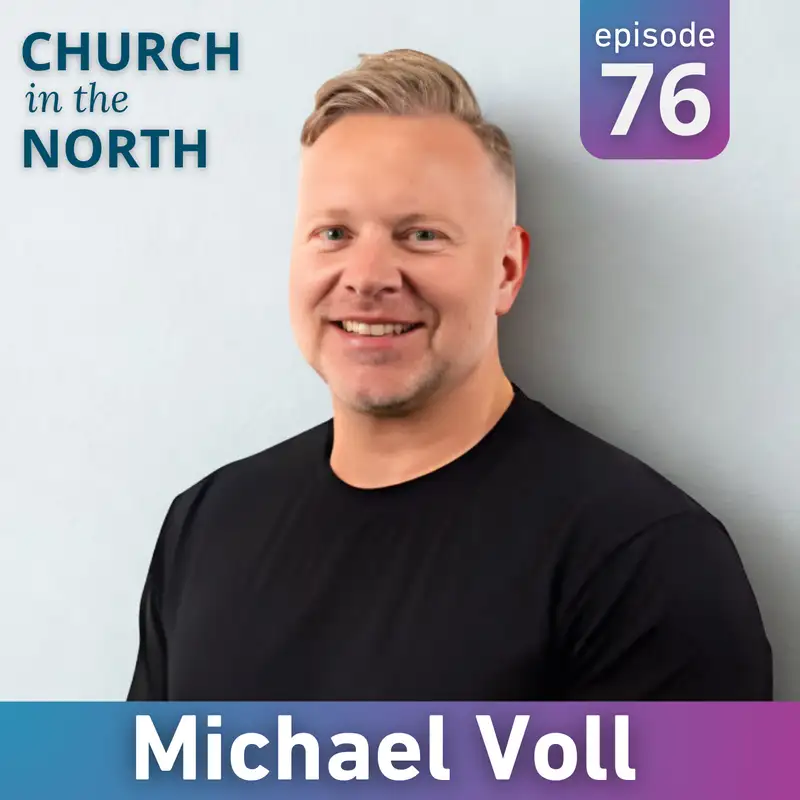
Welcome to Church in the North, a podcast by ministry leaders and for ministry leaders. I'm your host, Chartrand, and I'm joined by my cohost, Geoff Dresser. Good morning, Geoff. Hey, Rob. And our other cohost, the notorious and uproarious youth guy from the jaw, Chris Drinnan.
Rob Chartrand:Morning, Chris. Good morning. Good morning. Thanks everyone for joining us today. This is the preshow, which will be followed by an interview with our guest, after this conversation.
Rob Chartrand:But before we dive in, I wanna remind our listeners that if you'd like what you hear on our podcast, please share your comments or hit that subscribe button for more great content from North Of The 49th Parallel. Also, we welcome suggestions or questions, and you can email those to us at jeff.podcast@churchinthenorth.ca. Yes. What a velvety way to say that. Hey, guys.
Rob Chartrand:Good morning.
Chris Drinnan:Good morning.
Rob Chartrand:You know, I when I wrote these questions for you, like, yesterday, I said the weather's warming up. You know? What do you guys itching to do? And and, and then we woke up this morning. What what Chris, you drove here from Moose Jaw.
Rob Chartrand:What's the highway looking like?
Chris Drinnan:Oh, it's, sheet of ice. Yeah. You're going you're going as slow as possible, and I'm certainly glad I didn't change my winter tires off my vehicle on the weekend like I was planning.
Rob Chartrand:Yeah. I was actually encouraged to do that. I was encouraged to take and I and I drive out, like, a truck with rear wheel drive. So that would have been bad. Not that bad.
Geoff Dresser:I I was told, early well, I learned the hard way that you don't change over to your all seasons until after grad.
Rob Chartrand:Okay.
Geoff Dresser:April.
Rob Chartrand:Okay. So Yeah. That's a that's a good actually, really good advice. The highway anyone doesn't know the geography of Canada, like, one of the worst highways for sheeting ice is actually from Cairnport to Moose Jaw. It's it's pretty bad.
Rob Chartrand:Yeah.
Chris Drinnan:Yeah. But Only one Jackknife sent me though. His his date was ruined.
Rob Chartrand:Yeah. One on the way here. But I when I was where I was coming from, there was another one. On the other there was two. Yeah.
Rob Chartrand:So the police are busy this morning.
Chris Drinnan:Drive safe out there. Yeah. For sure.
Rob Chartrand:But the weather is warming. Yesterday I got on my bike and so I took my bike early. I was bringing my bike to the bike shop to get it tuned in, like, early March.
Chris Drinnan:Is it a motorcycle I'm guessing?
Rob Chartrand:No. No. No. No. It's like a trail bike.
Rob Chartrand:Yeah. Yeah. Yeah. No. No.
Rob Chartrand:Sorry.
Rob Chartrand:I'm not allowed
Rob Chartrand:to drive a motorcycle. My wife won't let me. But, anyway, I had it tuned. I took it out yesterday for a chew. Get like, just like a 15 k ride.
Rob Chartrand:Like, it's just really, really simple, but it was cold. But it started out as eleven, twelve degrees, but by the time I was done, it was down to, like, six. So it was a little chilly coming back home.
Chris Drinnan:Yeah. Yeah. Nice.
Rob Chartrand:But, yeah, I I'm getting stoked about spring. Do you guys start getting, getting excited about spring? You guys getting springtime activities? You're like, just can't wait to get outside and do, during when it warms up?
Geoff Dresser:Day one, when the golf course is open, I will be there.
Rob Chartrand:Okay. You're a golfer. Do you do you go to Mortlach Mortlach? Is it
Rob Chartrand:the Dust Bowl out there?
Geoff Dresser:Well, I I have gone to Mortlach, but this year I am upgrading and I'm gonna go to a, a real golf course. Okay. For those of you who aren't familiar with the Mortlach Golf Club, it is a typical Saskatchewan farmers sort of golf course where they just sort of cut the prairie grass a little shorter, sand greens. But a membership a membership is $50.
Rob Chartrand:Okay. Okay.
Geoff Dresser:So, and it's worth every penny. But but I've invested in my golf game. I have a golf simulator now in my garage which was a Oh. A gift from my wife for Christmas, birthday, anniversary, Father's Day, all the things.
Rob Chartrand:For the next few years.
Geoff Dresser:Yes. Hanukkah and Father Arbor Day. Arbor Day. Memorial Day. Yeah.
Geoff Dresser:Okay. So but, so I have been, playing virtual golf virtually every day. And, so I can't wait to get out and
Chris Drinnan:Are you, like, skipping class early? Like
Geoff Dresser:I am not skipping class early. However, I I may have once or twice played a virtual round of golf when perhaps I should have been grading. So Yeah. Yeah.
Rob Chartrand:Yeah. You gotta take a brain break sometimes. Right?
Geoff Dresser:Yeah. That's true. That's true. Yes. Yes.
Rob Chartrand:Are you like, is it in Lushaw you're gonna do a club? Yeah. Okay.
Chris Drinnan:Yeah. Alright. Yeah. I'd rather have a happier professor greeting my paper than a a grumpy one.
Geoff Dresser:That's that's true. That's true.
Rob Chartrand:Golf's gotta be good for like, this is a real sidebar now, but, like, good for the hips. You know? For us desk dwellers, you know, the you get the tightened hips, but golf's gotta
Chris Drinnan:Loosen you up a bit? Yeah. I can see it.
Rob Chartrand:It's a good sport. I'm not allowed to golf. You know? Can't ride motorcycles. Can't golf.
Rob Chartrand:Like, because I'm I'm too I'm too obsessive, and so Karen's afraid if I did it, I'd she'd lose me. Right? So I I'm I'm obsessive about enough things that I don't need another thing in my life.
Chris Drinnan:She tries to keep it limited.
Geoff Dresser:Yeah. That's right.
Rob Chartrand:Chris, what are you what are you looking forward to?
Chris Drinnan:I'm a big fan of bonfires in my backyard. You
Rob Chartrand:got a
Chris Drinnan:fire pit and I love it when it's a little nicer outside and you can sit out there into the wee hours of the morning with a big blazing bonfire.
Rob Chartrand:I think we talked about this a few weeks ago where you were talking about having a
Chris Drinnan:bunch of I only have a couple things I'm interested in and so they just keep coming up. I also have a kid in baseball. I played baseball a little bit growing up, and so that'll be fun. I always enjoy going out, catching the games.
Rob Chartrand:Should we be concerned that the one thing you're interested in is lighting things on fire?
Chris Drinnan:No. I might I'm I'm in youth ministry. This is exactly appropriate.
Rob Chartrand:That's what we do.
Chris Drinnan:No gasoline. Don't worry. Yes.
Rob Chartrand:Yeah. So, I mean, for me, mean, obviously, it's riding the bike, but, gardening as well. I'm stoked. So, like, Monday night, I was in my garage with my hydroponics lab set up, and, I'm starting to plant my seedlings and propagate plants and get them all ready
Chris Drinnan:for What kind of plants are growing, Rob?
Rob Chartrand:Garden vegetables. Garden vegetables.
Chris Drinnan:Just wondering.
Rob Chartrand:And and marigolds to keep off the garden pests. I'm putting in marigolds as
Chris Drinnan:soon yeah. As
Rob Chartrand:A lot of peppers and onions and tomatoes and those sorts of things that need to get done now so that when when the first frost is gone, which is May long, so that's eight weeks out, I I can pop them in the ground.
Chris Drinnan:Okay. When did you get into that?
Rob Chartrand:I've always I've probably been always had a vegetable garden for maybe the last ten years or
Chris Drinnan:so. Okay.
Rob Chartrand:But I I went over the top when we moved back to Moose Jaw because there's a big plot of land out at the farm that's just sitting there, I'm like, yeah. We're gonna go hard on this. And so
Chris Drinnan:Oh, nice.
Rob Chartrand:Yeah. Like, our own hydroponic system, our own, like yeah. Yeah. Yeah. Mulching and no till gardening and all that.
Rob Chartrand:So, anyway yeah. I'm geeking out on that. So looking forward to it. Looking forward to it. Hey.
Rob Chartrand:I I've, as you know, we got a lot of interns out in the field right now at Briarcrest with our students, and, we we do a cohort conversation every once in a while, every, like, six weeks or whatnot. Well, yeah, one of our one of our interns is two of our interns are with you, Chris Yeah. Obviously, and another one next year. And so we we have a lot of conversations with them. And one of the questions I've been asking them, you know, now that you're out in the field, you know, what is something that you've encountered in ministry that Bible college or seminary maybe didn't prepare you for?
Rob Chartrand:And, you know, they're they're kinda early in the game, so there's not, you know, not a lot of profound answers yet about this. But I'd like to hear from you guys the answer to this question. And Jeff, I know, you know, we're gonna have to, qualify this a bit for you because you didn't actually technically do the Bible college seminary route. You did other schooling, worked in the church, and then went and did your doctorate after that.
Geoff Dresser:So Yeah. Seminary master's and doctorate. But, yeah, I jumped straight in.
Rob Chartrand:Yeah. Yeah. So maybe it might even be even be in the job hire what you weren't prepared for. But, Chris, why don't we start with you, man?
Chris Drinnan:Sure. So, yeah, getting stepping into ministry and then having to do my first graveside funeral and just being like, we never covered funerals at all or graveside. And so that that one actually went pretty good. I got, like, it you know, found my way through it. There's some sources you can kinda lean into.
Chris Drinnan:And then I got picked up to do a funeral, and I don't do a ton of funerals. So so my funeral experience has been kinda interesting. I stepped in to do, like, for a family that was, like, nonreligious, like, really nonreligious.
Rob Chartrand:Mhmm.
Chris Drinnan:And so did this funeral type service that was almost a bit like a wake where all of a sudden the alcohol comes out and their shot glasses going around. And I'm like, we didn't we didn't cover this. Like, I'm not sure I'm not sure
Geoff Dresser:Let's not get to the curriculum.
Chris Drinnan:Was great. So it's like we're releasing balloons. Everyone's doing shots, and I'm like, you know, Lord bless you. Like, it was interesting.
Rob Chartrand:Man. I I I just think of all the different counseling conversations I've had over the decades that just they nothing surprises you anymore, but it still surprises you. Like, the conversations that people have about, like, one I remember one conversation where somebody was planning to kill somebody, and they wanted to confess it to me. And then it's like, are you really planning this? Right?
Rob Chartrand:And talking them down and finding out whether or not because if it is really a plan, I'm gonna report you. You're gonna have to take you to authorities. Right? Like, like, things
Chris Drinnan:like that. Like, you just like Oh, man.
Rob Chartrand:Nobody told me about that in seminary. I wasn't prepared for those type of pastoral conversation or people just the darkness of humanity, that dark undercurrent of humanity that you discover when people really trust you and they share with you. Right? That's something I just wasn't ready for. Yeah.
Rob Chartrand:Jeff, how would you respond to these questions given your you dare to think backwards?
Geoff Dresser:I mean, I thought that the church was full of people who loved me and cared about my success and were just so proud of me for making the jump from from a secular job into ministry, and that they would wake up every morning and sort of sigh and thank the Lord that Geoff Dresser was their worship pastor and just that that would mean everything was okay. So, and then I discovered, that that was not the case at all, that, there was about one week of being, of, you know, me being sort of the new thing, and it wasn't this exciting. And then
Chris Drinnan:The honeymoon phase?
Geoff Dresser:Yeah. The honeymoon phase. And people adjusted very quickly. And then I I realized that, yeah, these are broken people who are doing their very best. And, I mean, one of the things I learned when I I I guess one of the like, was obsessed with church and cared so much about church.
Geoff Dresser:And that, I mean, in God, that was part of God calling me into into ministry. But not everyone is obsessed with church. And I I realized that, like, when I left the church, I thought, oh, man, all these people, they're gonna just be so devot. They might even just cancel services forever. I mean, how could they go on?
Geoff Dresser:But then I realized that like, yeah, I lead worship like twenty minutes on a Sunday. Most people attend once or twice a month. Like, so, like, for most people, that effect is twenty minutes a month is gonna be different for them.
Chris Drinnan:If they're showing up on time.
Geoff Dresser:Yeah. Yeah. If they're showing up on time. And you know what? That's not a big deal to a lot of people.
Geoff Dresser:I guess for me coming into ministry as a people pleaser, I mean, that was the the grid that I looked at, that I looked at my ministry through, and I had to learn to sort of find my identity in who I was in in Christ and not try to get, you know, not try to get that positive feedback from my congregation. I mean, if you if you come in with that attitude of needing that affirmation from the congregation, that is not I mean, that's that's not a healthy place to be.
Rob Chartrand:Yeah. I can remember doing interviews, when we were redesigning our our Christian men program here. We we did interviews with pastors, four sets of pastors in four separate cities, like focus group studies, and asking them a similar type of question here. If you could go back to Bible college and learn something you wish to prepare you for ministry, what would it be? And one thing that came up in every group was, tell me how to do a budget.
Rob Chartrand:Oh,
Rob Chartrand:yeah. Like every every one of them. Right? And and so and I remember when I stepped into ministry, I a new Christian. I had been a Christian for two and a half years and I inherited this youth ministry.
Rob Chartrand:And they gave me a book, it was a ledger sheet, a paper book of the youth budget. And I'm looking at this thing and I have no idea what this thing is. I mean, this is before Excel. This is before Pentium four eighty sixes. Like, I mean, this is, like, old school.
Rob Chartrand:Right? So I went to the library, and I got a book on accounting, and I read the book on accounting just so I could understand how to do a ledger appropriately. Yeah. Like, nobody nobody had prepared me. But, Jeff, you you do, like budget in your class.
Rob Chartrand:Right?
Geoff Dresser:Yeah. And I I mean, I teach a class called ministry management that is, I mean, a lot of it is the stuff that that people say, oh, I wasn't prepared for this. And so we we talk about policy and procedures, and I give them sort of a a survival guide of how to deal with, of how to do budgeting. And I mean, we touch a lot of these administrative things. And I think another thing that people aren't prepared for, like, I also thought, like, I'll get in and maybe maybe on Mondays, I'll just read my Bible and pray.
Geoff Dresser:You know, that's what I'll do on Mondays. That sounds good. And then Tuesdays, maybe I'll I'll plan a service and have coffee with some of my volunteers. And Wednesdays, should probably spend that day praying as well. And and Thursdays oh, Thursdays will be my music day.
Geoff Dresser:I'll just write new songs and just sing to the Lord. And and, like, I thought that's that's what life would be, but it's so much administrative work. Yeah. And and planning and meeting and Yeah. So in that ministry management course, I I tell them how to, you know, sort of policy, procedures and and process, and, sort of how to create those things and why you need those those types of things.
Geoff Dresser:And, and we do budgets, how to run a meeting and, and some basic like sort of business communication stuff. And, but that stuff is so so important. Right. And I mean, we talk about that, like usually in that class or, you know, if I have a group of students, maybe one out of 10 will have actual administrative gifts and enjoy that type of work. And so we we thank God for those people and I tell everyone else you need someone like that on your team.
Rob Chartrand:Future Yeah. Executive pastor pastor right there. Yeah. So let me ask you a similar question. So I was I was mentoring a young leader yesterday.
Rob Chartrand:We go out for coffee. Maybe go out for coffee, like, every four to six weeks or whatnot. And I said and he's asked me to to kind of have a formal mentoring relationship with him. So I said, okay, here's what you need to do. You need to come prepared every time we go out for coffee with four or five questions that you want me to talk about.
Rob Chartrand:Oh,
Rob Chartrand:good. He he comes with a question. So the question he threw at me yesterday is, what is something you naively believed in your early days of ministry that you no longer believe today? So in other words, what what have you had to unlearn? And and I think, you know, we've we've if you've been in ministry long enough, you know that there were some things that you believe early on that you would probably change now.
Rob Chartrand:So so, for example, for me, is that just maybe the idea of if you build it, they will come. Right? So if you just build the most perfect program or that you build the most amazing ministry or you build the most beautiful building or whatnot, that automatically, like, people are just gonna walk by and just like, this is amazing, and just step inside the door or, you know, not realizing, of course, to most Canadians, the church is, you know, is basically irrelevant for them. Like, they have no care at all for for the idea of a church. But I I think that was, like, a naive thing that I had back in the early days of ministry.
Rob Chartrand:You guys have any things things that you've had to unlearn? Probably not. You guys had
Geoff Dresser:figured out I I would just say, for if we could convince, Canadians that the church was irrelevant, that might be an improvement, for for what a lot of them think of the church.
Rob Chartrand:Technistic. Yeah. Might be
Geoff Dresser:I guess I I I mean, one thing I learned, like, thought I knew the rules of the game and I'm realizing that that I I don't or I'm still learning the rules of the game. For example, I thought the game was, I need to have, like, exciting, technically, excellent and musically excellent worship services like that. That is the that's what success looks like. And in order, you know, in order to do that, I need to, like, work with people and and meet with people and and, you know, convince them and work through differences. And I'm realizing, no, it's actually like God is way more interested growing my character and transforming me more into the image of Jesus.
Geoff Dresser:And so he puts these little struggles and projects in front of us. But it's it the game is for me to grow in godliness, not to achieve some token religious success. And, so I think that's yeah. That's something that that I often if I'm frustrated with something, I try to step back and say, okay, wait a minute. Am I am I playing by the rules of a different game here?
Rob Chartrand:Right. Yeah. How about you, Chris? Yep.
Chris Drinnan:For me, I think yeah. As I reflect, I think, like, the the joy of being in school and and even at a master's where your teachers are really invested in who you are, like, grading your papers. They're interested in you. They're interested in your growth and your development, so they're challenging you. And I kinda thought that that's sort of how it would continue to be once you stepped into ministry, but it's actually just time to go to work type thing.
Chris Drinnan:So Right. I realized that, yeah, you have to be responsible for your own growth and development. Like, there isn't anybody sort of coddling you or, like, pushing you down or pulling you down that path. It's like you've that if you want that, that's something that you have to take ownership over. And so yeah.
Chris Drinnan:I think So you don't
Rob Chartrand:have congregation members or board members giving you book assignments to read and and Well welcome you to
Chris Drinnan:Maybe a little bit of that for sure.
Rob Chartrand:But Okay.
Geoff Dresser:Yeah.
Chris Drinnan:Growing in the directions that you wanna grow in, yeah, is up to you.
Rob Chartrand:Right. Yeah. Yeah. Totally. Totally.
Rob Chartrand:One of the things that I I thought about that I answered him yesterday was I I've learned to not put too much stock or less stock in demographic research for generational cohorts. So Very specific. Yeah. Well, because I've been thinking about this. Like, I can remember when Douglas Coupland came out with his book, Generation X, and and it was all the rage about, you know, Generation X or this generation is this and compared to the boomers and and really talking about those that distinction.
Rob Chartrand:And then all of a sudden, marketers thought, Oh, this information is really important, and we can sell more products if we can just get into the minds of this age cohort. And thus the game began. And then so all of a sudden, demographic research companies, which were basically just esoteric areas of study suddenly became mainstream. Suddenly everybody's like, oh, these things are bank. They're they're gonna So, you know, all of a sudden, the research just took off and for the church as well.
Rob Chartrand:Right? So for the church as well, it was, it was that, and then there's millennials. And and this is talking about somebody who wrote a dissertation on spiritual formation of millennials. Right? So that, you know, and then and then it's Gen Z, and now it's gonna be Gen Alpha coming up and the the amount of study and research that's going into all these areas.
Rob Chartrand:And it's almost gotten to the point, like, yeah, I get the whole, like, sons of Issachar who understood their times thing. I think that's important. Right? And I and I get and I understand the importance of gospel contextualization. We have to understand the people we're trying to reach and and be able to translate the gospel to them.
Rob Chartrand:But it's almost to the point, like, it's like a magical crystal ball. If we can just really understand this generation, we'll be able to reach them with this tactic, this tactic, and this technique. My concern is also it's an overgeneralization of the stats. The stats will say, Most Gen Zs, 65% of them believe this. And then we'll all say, Oh, all Gen Zs are like this.
Rob Chartrand:So we do these overgeneralizations, not realizing that there's such a diversity and distinctiveness based on regions. Part of me is a misreading of the data, it's an infatuation with the data, but here's my biggest concern. Across all the generations, it doesn't matter what the generation is, this is the thing I've had to unlearn and relearn, is ministry is basically the same. What we're doing right now, sitting down and having a conversation is probably the most effective form of ministry. These relational things, embodied relationship, meal sharing, offering people the gift of welcome, all of those those fundamentals, we we can largely ignore, but realizing that those are probably the things we need to overemphasize.
Rob Chartrand:Right? And so we're we're emphasizing things that are maybe smaller and more technique ish. And so that's my that's the thing I'm I'm unlearning now in my older age is, like, I'm I'm hanging out with college students who are 17 to 22 years old. The most important thing for them is, oh, wow. I sat down in Rob's office on his coffee for a coffee for an hour, and we just had a conversation about life.
Rob Chartrand:Right? And it's not all my fancy slides, and it's not my, you know, my my failed attempts at Gen Z slang. You know, it's not all that. It's it's the actual just building a relationships. Yeah.
Rob Chartrand:That's good. So that's that's what was my answer to them. And he's like, wow. You've really thought about this. I said, yeah.
Rob Chartrand:It's kind of been bugging me for a while. So I I kinda and maybe I'm going to too many conferences, but we should continue the research. I think we need that's still it's still important. Anything else, guys? Anything else you you thought you've had to unlearn?
Geoff Dresser:I guess I I I mean, as a worship pastor, I used to just think, like, like the perfect worship set. If I just get the curate exactly the right songs that will tell the right story with the right emotional arc that that will mean I was successful. And I have gotten much less, I don't know, interested in like, we're singing about Jesus. I mean, they're and so the particular song I mean, as long as it's as long as it's magnifying Christ, then I think that's that's going to work. And so I'm, yeah.
Geoff Dresser:I used to be, you know, waiting for the new album to drop and to pick up what's gonna be the next great song. And, I guess just having done it for so many years and seen so many songs come and go that that like you said, it's that it's that long cumulative effect of Sunday after Sunday of being invited into God's presence and and singing about him. And the particular there's lots of songs, and we don't need to sweat over over those those little details. And, just the fact that we're gathering together, setting aside this time to to enter into God's presence, that's what really matters. So yeah.
Chris Drinnan:Yeah. For me, I think, starting off in youth ministry, you envision kind of these fantastic programs and changes. And when you're in the game for a while, you're so busy pursuing fantastic that pretty soon you end up just feeling really burned out and exhausted. And, like, what you think is fantastic, other parents think, oh, it's not that fantastic, or your own students don't think it's that fantastic. And I I think it was through kind of the COVID season where I felt like, yeah, the holy spirit ministered to me that, Chris, it's more about being faithful than it is about being fantastic.
Chris Drinnan:And so it kinda, yeah, shifted gears a little bit in terms of going, like, I I really wanna be in these kids' lives for their long for the long haul. Like, I don't wanna be someone who's in for a couple of years and out. Like, I wanna be you know, I've gotten the privilege of doing premarital counseling with them and even a few weddings, and now kids that were in a youth group are starting to have children. Easy. Right?
Chris Drinnan:It's kinda cool. And so it's like, oh, man. The the the value I mean, I you still want some flare and some fantastic, but it doesn't become the it doesn't become the focus. The focus really is like this this this long game where you're, yeah, where you're you're practicing faithfulness. Well,
Rob Chartrand:I'd love to keep this conversation going, but we gotta we gotta move on. We gotta go scrape the ice off of our windows. So today on the podcast, we get to hear about my hear my conversation with Michael Voll, and he is the lead pastor for North Point Church in Edmonton, Alberta. And it's it's a great podcast. He's got an incredible story about his journey into ministry, some of his challenges in his early years in ministry.
Rob Chartrand:I hope you get to hear that. We also talk about how his church adopted a rural church, which led to the revitalization of that rural church. If you know North Point, it's a big mega church in Edmonton. So it's it's kind of a cool story, and it's a great conversation. And I hope our listeners are inspired and challenged.
Rob Chartrand:Guys, thanks for joining me in the studio this morning.
Geoff Dresser:Thanks, Rob.
Advertisement:Giving everything to your church week after week. But who is investing in you? Consider continuing education with Briarcrest Seminary. You'll deepen your theology, sharpen your leadership, and reignite your passion
Rob Chartrand:going
Advertisement:do We're
Rob Chartrand:a of We
Advertisement:keep growing, keep learning to with Briarcrest Seminary.
Rob Chartrand:Well, hey. We are so excited to have on Church in the North, Michael Voell. He's the lead pastor for NorthPoint Church in Edmonton, Alberta. Michael, welcome to Church in the North.
Michael Voll:Well, thank you very much, Rob. I'm glad to be on with you today.
Rob Chartrand:Yeah. I'm glad to finally have you on Church in the North. Most of our listeners probably know that I've pastored in Edmonton for a while, for about sixteen years, and then I moved out here to Briarcrest, four years ago. Love Edmonton. Great city, great churches, and, wanna talk to you about yours and, hear about your journey.
Rob Chartrand:So, so glad you're here. Why don't we get started, at the beginning? Let's go back to the early days. Could you tell us, like, how did you get the call into ministry? Tell us about your journey.
Rob Chartrand:When did you first sense that God was calling you?
Rob Chartrand:Yeah. The call of God in my life was really something that came on shortly after I rededicated my life to Christ. I was about 13 years old and and then was really seeking the Lord. I just I wanted the fullness of God in my life. If God had something to give me, I wanted to receive.
Rob Chartrand:And, really, what I wanted to do is I wanted to go into medicine or at least business and then use, use a little bit of my free time to sow into the kingdom of God. I I've I've always had a real heart for people, a heart for evangelism. And, when I was about 15 years old, I just someone had said to me, man, you would make an amazing pastor. And, honestly, from that moment forward, I couldn't get it out of my head, and it made me sick every time I thought about it because I didn't know any really cool pastors. I certainly didn't want to be a pastor.
Rob Chartrand:I I feared that God was going to take all the joy out of my life, and and so I I kinda ran away from it for about six months. And then I remember being at a camp meeting, and I had, I had these two really good looking girls on either side of me. And, we're in this we're in this family camp meeting, and I'm trying to be cool. And God is speaking to me, and he was saying, just surrender your will to me. And I couldn't handle it because it had been about six months where God was just speaking so hard to me.
Rob Chartrand:And finally, I just said, God, I'll I'll do whatever you want. I'll I will serve you. I will go. I will do whatever you want. And the Lord crushed me in that moment.
Rob Chartrand:Like, he broke me. He broke my will.
Rob Chartrand:Wow.
Rob Chartrand:And, I've never been the same since, you know, since that day. I just wanted to go wherever the Lord wanted me to go. There was such a change. And, you know, that eventually, you know, led me to, you know, bible college and, into the ministry. So
Rob Chartrand:Okay. Amazing. What I thought you were gonna say is one of those girls, you know, decided that she wanted to go out with you, and you realized it was cool being a pastor. Right? So
Rob Chartrand:Listen. I'm telling you, I was so broken when I said yes. In fact, I was crying so bad, and you know this is bad when you're in a Pentecostal service. And the pastor comes down and he says, son, are you okay? Like, I was ugly crying.
Rob Chartrand:I didn't have a chance with those girls after my ugly cry. So
Rob Chartrand:Oh, yeah. Well, maybe the lord preserved you. So so that kinda led into, like, bible college. Just like, did you go, the traditional bible college route?
Rob Chartrand:Yeah. I did. I, you know, I just knew that that this is what I wanted to do and what god was calling me into. And so, I was living in Wainwright, Alberta, grade seven through 12.
Rob Chartrand:Wainwright.
Rob Chartrand:And, yeah, landed the free home of the brave.
Rob Chartrand:All beginning.
Rob Chartrand:Yeah. And so, I wanted a little bit of a of fresh start, and so ended up going to, bible college at, Summit Pacific in Abbotsford. And, it was just kind of a way of, you know, getting a little bit of a fresh start, a little bit of a change of pace and scenery, and, you know, did that for for four years.
Rob Chartrand:Oceans and mountains. It's a lot looks a lot different. Yeah. For sure.
Rob Chartrand:Absolutely. Yeah.
Rob Chartrand:So your one of your first ministry roles was at Broadway Pentecostal. Did you jump out of bible college into there, or was there a bit of a gap into there?
Rob Chartrand:Yeah. Actually, I started, interning there when I was in my third year. I I had been interning at a church in Kelowna, at Evangel Church in Kelowna, and, I I thought I was gonna end up, you know, pastoring there after I was done. And then when I was in my third year, the very last place in all the world that I wanted to pastor was in Vancouver. And in fact, I I had said to my fiance, Sherry, at the time about a week before I got the invitation to to serve at Broadway that I I just said I would never ever wanna to serve in Vancouver.
Rob Chartrand:Like, it just had no appeal to me. And, a week later, I got a call, from from one of their pastors asking if I would consider being an intern in their youth and young adults, and I really didn't wanna do it. And, it was it was a mentor of mine that that said, I I think you need to at least pray this through. And I did, and and it was like, just said, just do it. And so it was I had no, it's not like I had this compulsion, this desire.
Rob Chartrand:You know, Broadway larger church, maybe for some, it would have been, you know, something that they were looking forward to or that they felt was a great opportunity. For me, I I kinda went in kicking and screaming a little bit, but I said yes. And and, so that was halfway through my third year and continued on, doing that through my fourth year as well. And God just gave me favor. So as soon as I I was finished graduating, they offered me the full time position as youth pastor, which was a little bit unprecedented at that time just that they would get someone so fresh out of bible college to take on, you know, that role for junior senior high, like overseeing all the youth ministry.
Rob Chartrand:And so, you know, I I took that very seriously and and really launched things for me. I I had a a huge learning curve during that time.
Rob Chartrand:Yeah. Yeah. Well, I mean, even size and scope. I mean, I'm sure the church background you come out of in Wainwright. And then, like, who don't know, like, Broadway is a big historic PAO PAOC church in the Lower Mainland.
Rob Chartrand:Right?
Rob Chartrand:It is. Yeah. Like, it would be, yeah, one of those kinda, like, flagship churches, if you will. Yeah. And so, you know, for me, like, even going there, remember the first time, you know, it's it's this massive church, and they've got an underground parking.
Rob Chartrand:They've got an elevator. You know, like, it just and like I said, I'm Wainwright, Alberta. And so, it was it was something different for me. But, it's amazing how, you know, when God calls you to something, he really equips you for it. And I just I felt like I had instant favor, with the people, with the students, with other leaders that were on staff there.
Rob Chartrand:And, it was an an amazing and exceptional time of growth for
Geoff Dresser:me.
Rob Chartrand:So, I mean, there were other things that you were doing in that church and through that church while you were there, like like, I think an NGO or something. So did you stay in that role, or did you just keep kinda adding on to things you were doing? Or
Rob Chartrand:Yeah. So when when I first started it was kind of like that senior high ministry, and then I oversaw all of the youth ministry, for a few years. And and it was actually around that time, so, you know, I I had gotten married while I was still in, bible college. And, and then my my wife passed away in a car accident that we were in. So I was full time youth pastor, passed away December 1, 2001.
Rob Chartrand:And of course that kind of changed like, everything for me. So everything was going amazing. You know, youth ministry is growing. We're really reaching into East Vancouver, reaching into, you know, Vancouver Technical School across the the way. Just some really great opportunities.
Rob Chartrand:It was just an exciting time. And then, of course, when Sherry passed away, my world really changed. And, for a time, I I took a little bit of time off. And then not only that, I I also, when I came back, I just knew that something had changed. It it was almost like these weren't my kids anymore.
Rob Chartrand:Mhmm. And and that was really difficult for me. And Yeah. So, you know, you're processing grief. You're you're processing all sorts of hurt.
Rob Chartrand:And, you know, and then all of a sudden, I I came to a place where I hit a wall. I I pretty much had a mental breakdown. And, you know, just never forget, one of my mentors and and close friends, Dave Demchuk, who's, the president at Summit Pacific right now. He was the associate pastor at the time, and and he took me to a doctor. I got a perfect 10 out of 10 on on a test, you know, that just showed that I had clinical depression and then walked me, you know, straight to the lineup to, you know, sign up for benefits, you know, because I could no longer work anymore.
Rob Chartrand:And and I I thought that that might be the end of my pastoring. You know, I I didn't know if I would ever be able to come back from that. Yeah. Like,
Rob Chartrand:did you do you feel like you came back maybe a little bit too soon, or was it a culmination of a number of things?
Rob Chartrand:Yeah. It was probably a culmination of a few things. I think I had to come back, just maybe for myself and maybe for the kids just to let them know, hey. It's gonna be okay. Mhmm.
Rob Chartrand:I I took about two months off after Sherry passed away. You know, we had a couple memorial services, and and then I went away on vacation. And but I just I really felt that I needed to be with them. But by the time the summer hit, I just realized that I didn't have the margin anymore, and I think the Lord was just speaking deep. He wanted us to do a deep work of of healing and restoration in my life.
Rob Chartrand:And Yeah. I just don't think that that ever would have been able to be accomplished, you know, while carrying the load of of what's going on in teenagers' lives, you know, and and running a a large, you know, staff and and even, you know, volunteers. So
Rob Chartrand:Yeah. Yeah. I mean, you're give, give, give, but you're the one actually needing the mercy and the Yeah. And the comfort yourself. I can't even imagine.
Rob Chartrand:Yeah. So it was out of that actually. So I I took, I took some some time off. So I actually did, a full year at Regent College. I had I had taken a course at Regent.
Rob Chartrand:I I knew that I wanted to get my master's anyways. And so, being that I was living downtown Vancouver anyways, I I really took a year not so much so that I could do nothing because I knew that that wasn't gonna be healthy for me Right. But so that I could be doing something different that was gonna engage, my faith. It was gonna engage, you know, my mind. It was gonna keep me busy.
Rob Chartrand:It was gonna keep a schedule for me, which I think is all very important when you're grieving. I think too often we, you know, we become so unstructured that that actually doesn't help us. It hinders us. And so that was a a formative time for me. And during that time, I know that God was doing a beautiful and a deep work.
Rob Chartrand:I I didn't have a crisis of faith in that. I I never wanted to walk away from the Lord. I I was frustrated with the Lord. I was I was hurt. Yeah.
Rob Chartrand:But I I couldn't live a moment without him. I like, I needed him so deeply and desperately. And, and so as God was healing me, what was happening at Broadway is they had moved on and and got another youth pastor, which was the right move, and I and I was glad they did that. Yeah. But we had a a warehouse that was just adjacent, to the church, and, we used to actually use it for youth at one time, and then it got shut down, you know, just because it was Full of rats.
Rob Chartrand:Code. It was. It was. It was it was not a great place. And, but we were we were endeavoring to use it, for a community center.
Rob Chartrand:And so, we set up a nonprofit, City Reach Care Society and went into a whole restoration, project renovation project of that building, and they made me the first director of the warehouse and City Reach Care Society. So Yeah. Which was really my jam. I you know, just that evangelistic heart and how can we reach, you know, the needs of the people in in East Vancouver. And, I was still, you know, on a healing journey.
Rob Chartrand:I'm not sure, you know, there there was a lot of work that, that could have been done there by me, But, but it was it was something that that helped, you know, move some things forward that we needed to during that time.
Rob Chartrand:Yeah. So what kind of a this is not in our list of questions, and I'm just curious. What kind of a leader are you? Are you someone who's like the entrepreneur, loves the startup? Are you a builder, like taking something that started, but but seeing it grow and expand and and whatnot?
Rob Chartrand:Are you like the maintainer, the bean counter, loves to just maintain a system and keep it functioning? You know, or, maybe you're the type of leader likes to bury things. Just
Rob Chartrand:Well, I would I would say I'm, I'm a builder entrepreneur.
Rob Chartrand:Okay.
Rob Chartrand:That, I don't mind being in a current structure, but I wanna find the areas where I think it can improve and and I wanna build off of it. And I think that that's been my track record in just about everything I've done is, I I never want to in any way shape or form, you know, look down on the past or the past efforts because the past got us here. Yeah. But I also want to look forward to the future, you know, what God might, want to do right now, and in in these next five years or what have you. And so that's really what I am.
Rob Chartrand:And and I think that that played into that really well at Broadway is, you know, it was always my heart's desire from the moment that I actually got hired, when I was still in my third year of college. They were using that building. And, and then when I took over as youth pastor, we're using that building, and we'd paint in there, we'd do some electrical, and all of it was not to code. It was, it was really a death trap, but it was awesome. The kids loved it.
Rob Chartrand:And I just you know, I was just praying for the day that we could see a full renovation of the place. So to be a part of that, was was really exciting. It was almost full circle.
Rob Chartrand:Yeah. Yeah. Yeah. And I'm sure it probably life giving at a moment in time where you probably needed something like
Rob Chartrand:It was. I almost needed a project, you know, where you could see, hey. This is how it was before. This is how it is. Because as we know in the pastoral life, one of the things that's different is that it can be very cyclic, you know, kind of thing just when you think, oh, man, they're they're getting better.
Rob Chartrand:They're growing in Christ, and then something crazy happens. And, you know, it it can be quite a cycle, and, it can be up and down. And and sometimes you don't feel like you're really making progress. And so I think I needed to sink my teeth into something that was more project based where where we could say, look what happened. Look what we did.
Rob Chartrand:Look how the Lord provided, and we could kinda almost shut that door on that and say, wow. We we accomplished that.
Rob Chartrand:Yeah. I I I should go back, and I and I do wanna just point out, lest any bean counters get upset with me, what I meant to say was not just the maintainer, but a refiner. Somebody who refines the systems and whatnot. And I because that's an important part of leadership. Yeah.
Rob Chartrand:That's what I meant to say, but, off the cuff. But, anyway, so, you didn't stay in Broadway forever, though. It it eventually led you out of province and, to Edmonton. Talk to us about that.
Rob Chartrand:Yeah. When, when I was, you know, part of, the warehouse project, you know, obviously coming to the, you know, tail end of of the deep grieving, and, and I knew I wanted to get married. I knew I wanted to have a family. And it was right around that time that, actually, my mom and my sister, set me up with a woman from Alberta. And, in fact, her parents, just lived down the road from mine in an acreage, in Wainwright.
Rob Chartrand:And so, I met Melissa and we we started dating, kinda did the WestJet dating thing. She was living in Edmonton, and, and I of course, I was still in Vancouver. And so I'd fly her out to Vancouver about every three weeks, and, we did that for about a year and a half. Wow. She couldn't, really switch programs.
Rob Chartrand:She had just been accepted into, a master's of science in physical therapy at the U of A, and there was nothing like that at UBC at the time. And so she just felt like she wanted to do that. And I felt like I needed a fresh start. I I didn't feel like it was a a good fit for Melissa to come into Broadway, though they would have wanted me to stay on staff there at the time. They were very kind.
Rob Chartrand:They were very good to me at Broadway, like, almost too good to me. And, but I just felt for us to start a relationship when, you know, there was already history between, you know, Sherry and I and and all of those different feelings. Yeah. Yeah. I I just I just didn't think that it was wise, or prudent.
Rob Chartrand:And so, I knew that I knew that it was time for a fresh start. And so what I did is I resigned at Broadway, and I didn't have a a job, lined up whatsoever in Edmonton. So I actually moved to Edmonton without a job whatsoever. And the method in my madness at that point was Melissa had one more year of schooling, a full calendar year, and I just felt like in that year, you know, I can work construction or, you know, sell mobile phones or something like that during that time. And then when she's done, we can really seek the Lord together, so that we will, you know, start a ministry position, you know, together.
Rob Chartrand:We'll we'll move to a place. Yeah. We'll start our lives, you know, together. And and so moved to Edmonton and, through a series of events, was called by Bob Jones, who is the pastor at Central Pentecostal Tabernacle Yeah. At the time downtown, Edmonton.
Rob Chartrand:And he said, listen. I I heard, you know, through, one of our mutual friends, Dave Wells, who's the superintendent of the Pentecostal Assemblies of Canada. He said, I heard you're coming. You know, you're in Edmonton. Would love to sit down and meet with you.
Rob Chartrand:And I wasn't sure if I was really ready even, you know, to take on a position or to be helping out. And and quite frankly, I just came from Broadway, which was one of these flagship churches. You know, they do the singing Christmas tree, you know, very much like that. And that's what Central was at that time. They in fact, they still did a singing Christmas tree.
Rob Chartrand:They were kind of, you know, this this core church in Edmonton. And I was I was looking for a a whole different vibe. I I was just ready for a different vibe altogether. So I I almost didn't take the lunch, just because I I didn't I didn't feel like it was the direction I wanted to go, but the Lord spoke to me and said, just take the lunch and and hang out with him. And and Bob and I had a very good, lunch together.
Rob Chartrand:And and it was out of that that I came to church, by myself, I think the next Sunday. Melissa was working on a group project, with her master's degree. And so I went there by myself, and when I was when I was in service, I just sensed the Lord speak to me just saying like, this is your home. This is where I want you to be. And and I really did not wanna make any choice that was unilateral.
Rob Chartrand:I didn't want to drag Melissa with me. I wanted it to be our decision. And so I I kept it to myself. You know? She asked, hey.
Rob Chartrand:How was church? I was like, oh, it's good. I said, you know, maybe next week we should go there together. She said, okay. For sure.
Rob Chartrand:And so next week, we went together. And, when we got into the car after the service, she said, you know, it just feels like home. And so from that point forward, we just stayed at Central. And I said to Bob, you know, at that time, the church was hoping to relocate to the Northeast Of Edmonton. They were going through a lot of financial troubles.
Rob Chartrand:There there were a lot of people, you know, who had, you know, left the church at that time. It was a real, you know, difficult time leadership wise. And, and so I said, I I don't need, you know, pay. I don't need anything like that. I I just, started volunteering my time.
Rob Chartrand:And, you know, after about three months of volunteering pretty much full time, I set up an office there and helped in whatever they needed, youth, young adults, children's. I think I preached once or twice. After a while, they said, well, he's a warm body. I guess we should hire him.
Rob Chartrand:So then Okay. I got I got to back up the bus here. I got some questions. Like, so first of did you say that she's from Wainwright, Melissa?
Rob Chartrand:She's she's actually from a a small town called Zar, which is just south of Wainwright, about 200 people. So she is from a small town.
Rob Chartrand:Okay. So she's from your hood in geographically as far as, you know, population densities go. But you never met her before that?
Rob Chartrand:I hadn't. No. We, there's a four and a half year gap. Yeah. And, I grew up in a very, you know, tight Christian circles.
Rob Chartrand:You know, when I got saved, I, you know, I was a youth group kid. I was running bible studies, and, she was running in a bit of a bit of a different crowd. Okay. She, Melissa got saved when she was in her first year of university.
Rob Chartrand:Okay.
Rob Chartrand:Just radically saved. And, and so, yeah. Okay. So we we did know each other.
Rob Chartrand:So was she was she already deeply invested in another church in Edmonton, like, to make that transition into the other one? Or or
Rob Chartrand:You know what? She was actually in in between at that point. She was very involved in campus ministries and stuff like that. Mhmm. But, kinda in between.
Rob Chartrand:So it worked out really well in terms of just, not not, not having to worry about that.
Rob Chartrand:Okay. So the other hole in your story, it's not a hole, but it's a curiosity. You were volunteering. Like, how did you make rent, like, during that time? Did were just
Rob Chartrand:You know, I had Did you sponsor? No. I I I sold, I sold a a place that I had in Vancouver, so I I wasn't willing in the cash. Not in any way, shape, or form. But I had a couple months where I was like, I could probably do it.
Rob Chartrand:And, probably wasn't the smartest thing, but I just sensed that that it was what god wanted me to do. And so that's that's how I was I was living.
Rob Chartrand:Yeah. Yeah. Well, to quote Goodwill Hunting, I gotta see about a girl. You know? So
Rob Chartrand:That's that's really what it was, man. Yeah. It really was.
Rob Chartrand:Yeah. Sweet. Okay. So eventually, brought on to the staff team. Like, what, like, what were your what was your role?
Rob Chartrand:Like, what what how did they I
Rob Chartrand:I came on as, associate pastor, you know, right off the bat. I I can't remember how many staff members were on at the time. We had a music pastor. I think the the youth pastor had just left. I think we were in transition on a kids pastor at the time.
Rob Chartrand:But I just said to, I said to Bob at the time that I had a real calling to to pastoral ministry. Like, I I knew that I was going to lead a church. I I I I just knew that God had put that in my heart from day one. I didn't know if that was going to be in a rural setting. I didn't know if that was gonna be in a city setting.
Rob Chartrand:I I didn't really care. I just knew that that's what God had said in my heart even though it, you know, it scared me. I didn't feel like I was so equipped to be able to do this, but I just sensed from the time I was 15 years old that that was probably where it was gonna go. And so, he said, by all means, and and it was really out of that that we just had a good understanding that, you know, I was gonna gonna walk side by side with him in this, and and we were gonna make the very best of of things.
Rob Chartrand:Yeah. Yeah. What what about love about your story up to this point is is it's just an exemplary example of the fact that there's no true pathway to leadership in the church. Like, it's convoluted, and it's turns here left, right, and center, but it but, know, God's directing it all. But, you know, if you're to say to somebody, well, this take this step, this step, this step, this step, and one day, you'll be the lead pastor of such and such a church in Edmonton.
Rob Chartrand:It's it it never works out that way. Like, everybody's journey is so fascinatingly different. Yeah. And you're I mean, yours is a great example of that.
Rob Chartrand:Yeah. It's really true. You know, it it has been convoluted, and there's been, you know, detours along the way. And, you know, it's one of the things that I say to young leaders, you know, just this idea, just have your heart right before the Lord. Be listening to him.
Rob Chartrand:You know, he will guide your steps. And, and I believe that there are times where, you know, the Lord's gonna lead you into things and and you wonder why in the world am I here? What is this all about? But the Lord is teaching you, you know, things. And and there there are things that I'm doing right now as in in my capacity as lead pastor of NorthPoint, that only were learned in the trenches, you know, way back in the day at at Broadway, you know, or in the early days of of Central when I was here and where God was teaching me, he was refining me.
Rob Chartrand:And and and maybe even at the time, you know, you just felt like like why, you know, or or how is this is this all working out, but that God was God was taking care of things.
Rob Chartrand:Yeah. David killing bears with rocks, and where did it lead him eventually. Right? Like, just incredible. Well, so so the cat's out of the bag.
Rob Chartrand:You eventually, of course, became the lead pastor of NorthPoint. When did you become the lead pastor?
Rob Chartrand:In 2019, March 2019. Yeah.
Rob Chartrand:Okay. Wow. So you became the
Rob Chartrand:associate for fourteen years. Amazing. And then and then, I I took over. So pastor Bob Jones was, the lead pastor or on staff for twenty nine years, at Central, slash NorthPoint. And then, and I had been right up to fourteen years, when I took over in in 2019.
Rob Chartrand:So
Rob Chartrand:Wow. So that's I mean, you were there then through the building transition too, so that would have been a huge undertaking to to make that switch. Because even geographic difference, like, from your previous site to where your guys are now is is quite a distance.
Rob Chartrand:Yes. Yeah. It was it was quite a quite a big move, you know, to make, from Downtown Edmonton, you know, to the Northwest Of Edmonton. And at that point, you know, there was a real flight from, you know, the urban center, especially for families. You know, they were commuting in, from, you know, the suburbs, and it was it was dwindling each and every year.
Rob Chartrand:And so it was a big and a bold move, that, you know, pastor Bob and the board made at that time. And, I know that they took a lot of heat for it. I know that it was a difficult time.
Geoff Dresser:Mhmm.
Rob Chartrand:But, ultimately, we know that the Lord was in it, they that were hearing the voice of the Lord. I'm so grateful for that. You know, I stand on their shoulders. And, and and here we are today, you know, just just really seeing things thrive out of it.
Rob Chartrand:Yeah. I I can remember when you guys when your building went up. I mean, you you were surrounded by fields. There was nothing there. Yeah.
Rob Chartrand:And now it's houses everywhere. It's just amazing how fast the city has caught up to you guys there
Rob Chartrand:Yeah. At your site. Yeah. It it is crazy. You know?
Rob Chartrand:Yeah. Houses, businesses. I mean, I think the first two summers we were here, our roads, our only access was closed down because of construction. People kinda forgot that we were here. It was it was something else.
Rob Chartrand:Okay. Well, there's so much we could talk about NorthPoint, in in your story, but one of the things when you and I were talking, previously that caught my attention is this idea that you guys adopted another church in 2020, which is during COVID. And by the way, you became the lead pastor the year before COVID. So here you go, pastor through COVID. But you guys did something incredible in 2020.
Rob Chartrand:You adopted another church. So can we talk a little bit about that? Can you can you tell us that story of how you ended up, taking on this other church and where it is?
Rob Chartrand:Yeah. For sure. So when I when I took over as lead pastor, I knew that the Lord had really put it on my heart, that we would be the kind of church that was going to spur on or help other churches. I I I just felt like God had given us so many young leaders, so many good people, so much vision, and I wanted to make sure that that that, you know, continued. Being that I am a small town kid, so, you know, Wainwright, Alberta, before that Melville, Saskatchewan, never had been in a church of more than a 120 people.
Rob Chartrand:But because of that, you know, you have to really grow in those small churches. Like, you step up into leadership. So, like, I'm at age 15. I'm leading youth group. Like, I'm leading youth bible studies.
Rob Chartrand:I like, if you don't do it, no one's gonna do it. So you grow very quickly. And and there's something beautiful about that, and I've always loved that about about, rural churches. And so when I took over at NorthPoint, I just knew that I wanted, to be able to pour into rural churches. And I shared this with our board, and I thought that they were just gonna all roll their eyes and just go, you know, nice try.
Rob Chartrand:And as soon as I shared this, they just said, man, it resonates with us. And and we think that this is something that that maybe God is calling us to do. And so I let our district know, that that I was open to this. And and it was through, you know, some discussions, with our district leadership that, you know, they were identifying some of the churches that might really need a little bit of help or they're having a hard time, you know, finding a pastor or perhaps they're even on their last legs. And one of those churches was in Vegerville.
Rob Chartrand:And so Vegerville is one hour east of Edmonton, on the Yellowhead. And so really easy access. And and it was was a church that, you know, at one point had been, a fantastic rural church, you know, had had grown to, you know, well over 200 at one point in their history and, had seen some really excellent things happen. They had a a good facility, you know, 10,000 square feet on on one floor, 5,000 on a second floor. Most of that undeveloped, but it was there.
Rob Chartrand:And and yet here they were in 2020, early twenty twenty, even just pre COVID, we're talking January, February. They were getting, you know, between 12 and maybe 17 people showing up on a Sunday. They didn't have a worship team, so they were listening, to worship on a screen. You know, they were playing videos of worship. Someone in their congregation would preach, and and they were really on their last legs.
Rob Chartrand:In fact, they had even, you know, contemplated selling their building. I know the the town of Vegerville had even gone through a few times, very interested in buying their building. And so they knew that they're at the very end because they didn't have the finances, to, you know, get a pastor. They were just really stuck. And so I I went there one day, and we were going to help with the service that coming Sunday.
Rob Chartrand:And I sat down with three of their leaders. They had just kind of three key leaders from their congregation. And I just sensed the Lord wanted me to to to talk straight with them. And I sat them down, and and I just said, friends, this church is going nowhere. Like, you are going to be closed down in in a matter of months if you even last that long.
Rob Chartrand:And they started crying. And they said, we know. We know. And and I said, I just want you to know it breaks my heart in half because I I've been in this church. You know, when I was in grade 12, I I had been there, and it was thriving at that time.
Rob Chartrand:And I said, I know when you built this church that you built it for the glory of God, you wanted to make a dent in this community, in this area, in this region, you know, for Jesus Christ. And and now you're, you know, on on this, you know, kinda these last legs, these these final breaths. And I said, I just wanna see Christ, you know, breathe life into this. I wanna see the spirit of God breathe life into this. But I said, I I really believe the only way that that's gonna happen if you just really surrender because I I don't think you can do this on your own.
Rob Chartrand:And and I don't think anyone's gonna wanna partner with you right now because you're not coming at this from from strength. So I said, would you be willing for me to propose something to you? And they said, please, like, please talk to us. And I said, I I just I just like to ask you if you would like to become a North Point Church where I'd be your pastor, where we would find a a campus pastor for you, where we would really bring, you know, Maple Street Worship Center, which is what it was called at the time, you know, under the North Point umbrella with really our DNA, with our mission, vision, and values and our our leadership so that, you know, we would you know, your your boards would no longer exist. We we we would really enfold you.
Rob Chartrand:You know, in in a crass way, I said, really, this is a a takeover. This isn't a merge. Right. This is a it's a takeover. It it's it's not hostile in that we won't we don't wanna be hostile about this.
Rob Chartrand:We we just wanna do this, in a way that that says we know what we can bring to the table. And and, they had to think about it for a few months because, of course, I I was proposing big change. But during that time, they started to listen to our sermons. A few of their people, you know, came to North Point just to check out our services and what we were about, and and we would have small meetings, you know, back and forth. We would bring their leadership team in and and just share with them just what we were all about.
Rob Chartrand:And then we did a few town hall meetings where they were able to ask some very pointed questions like, you know, is everything gonna change, or what are you gonna change? And and I said, we're gonna change everything. Like and they said everything, and I said everything. Like, we're gonna come in. We're going to paint walls.
Rob Chartrand:We're gonna renovate. We're gonna do some of the things you've always wanted to do. But I just said, I I want I wanna tell you right now, we're gonna see baby dedications, and we're gonna see salvations, and we're gonna see baptisms. And, we're we're gonna go all in here. Mhmm.
Rob Chartrand:And, we're gonna find you a pastor. We're gonna find you someone who loves you, who's gonna live in the community, someone who's gonna be younger. And, you know, of course, it was an, you know, back and forth because they said, well, why can't we just do that? And I said, well, you can, but you probably don't have the resources right now. And quite frankly, it's very hard to get young leaders to commit to going to a rural place if they know that they're not gonna have a covering.
Rob Chartrand:So one of the things that allows us, as a church to attract, you know, a young couple, young leaders that would go to Vangerville is they knew that they weren't gonna be on their own, that they were going to be answering to me and to North Point's leadership, that they they could already buy into that vision rather than as soon as they make the first change, well, we're gonna move to piano, you know, that that they're found out, you know, well, no. You can't do that, or you can't change this, and you can't change that. And by their own admission, you know, the the campus pastors, you know, that we brought in, you know, Calvin and Hannah Summerville, they just said to me, listen. We would have been done eight months in Right. If we weren't able to say talk to Mike.
Rob Chartrand:You know? Yeah. So, anyways, we we did yeah. Go ahead.
Rob Chartrand:So I was gonna say, so let let's stop there for a moment. Like, because a lot of churches would say, well, why wouldn't you merge? Like, why wouldn't you you know, why take over? Why wouldn't you, you know, take the best of this church that was there and the best of North Point and just kinda combine them together in, a a new mutant hybrid of, of what was there? And I'm saying this, like, I I think I would have done exactly what you did because we did it with our with our church plant.
Rob Chartrand:But, I mean, maybe talk about that. Like, because what's what's the what's the leadership wisdom behind that?
Rob Chartrand:Well, I think in a perfect world, that probably could work, but we live in a very imperfect and a very sinful world and you know we have competing alliances and allegiances and everyone has something that they want to do and as someone who grew up in rural churches, I know that all it requires is one or two people with a very loud voice that can shift the whole environment and culture of a church. And I just believe that that's why many times, rural churches who were at one point very successful, all of a sudden decided we we don't wanna change. We we don't really wanna modernize. We don't wanna, you know, go down some of these roads. We don't wanna be, you know, really into the community like we once were.
Rob Chartrand:And and and so, basically, out of that, it becomes very difficult when our model is one that says we are going to be evangelistic. We are going to be about everyone reaching one. We're gonna bring real hope, new life, and lasting purpose through a relationship with Jesus Christ. We're gonna go all in for the gospel, and and for some that makes them uncomfortable. And and to give a really crass analogy, because I I know that this is a very it's a very hard thing to talk about.
Rob Chartrand:But, you know, if you go up to a drowning person, you know, and you think, oh, man, we're just gonna work this out together, they're they're gonna pull you down, because they're there for a reason. Like, were leadership decisions that were made over the years or things decisions that weren't made that brought them to that place. And so I I I think that in in our case, we felt we were coming with health. We were going to be able to give an injection of not only, money, but we were able to give, vision and passion, and we were able to attract leadership. And so that that's why for us, it was a nonnegotiable.
Rob Chartrand:And it was a nonnegotiable. We we didn't wanna deal with another, you know, board or anything like that. We wanted to make sure that it came under our umbrella.
Rob Chartrand:And so And and your posture wasn't, here. We're here to take over and add you to the empire, but we just wanna help. But the only way we can help is if you you let us help on our terms, right, at the end of the day.
Rob Chartrand:Like, one of the things that that I talk about all the time is I I really am not into building, you know, the North Point Kingdom in any way shape or form. It actually doesn't light me up at all. I just want to build the kingdom of God. Yeah. And, you know, I think that there are ways that we can do that that are healthier than others.
Rob Chartrand:I believe in this model, it it definitely can work. Where there are rural churches where they can attract, you know, a young couple or young pastors and they can, you know, foster healthy growth and healthy community, I say go for it. So this model isn't for everyone. But quite frankly, there would not have been, you know, a Pentecostal church more more than likely in Vegerville any longer had we not come alongside them. And so and and now, you know, we are vibrant and strong, and it it is it has been something that, you know, we are just very excited about.
Rob Chartrand:Our our whole church community has gotten behind this. So, you know, people who have never been to Vagerville are are always asking, like, how's Vagerville doing? We're we're praying for them. You know, we talk about them all the time. They're they're part of us.
Rob Chartrand:So tell us how how is Vegerville doing since the original seventeen or twenty year?
Rob Chartrand:Doing really well. So so in, so we took over, in in June 2020. That's when they voted to become NorthPoint Community Church, and, it was a 100%. And so, you know, praise God for that. Yeah.
Rob Chartrand:And then in, that next month, I was able to hire Calvin and and Hannah Summerville. They really sensed that God was calling them to it. I had asked them about it before. They said no to me, and, and then they they just couldn't get it out of their minds. And so, by Thanksgiving, we had done a whole bunch of renovations.
Rob Chartrand:We just went in. There there were a lot of areas that needed, to come up. We we made much larger washrooms. We did, you know, stuff with sound and and carpeting and all the rest. And, and then we officially launched, Thanksgiving of twenty twenty.
Rob Chartrand:So
Rob Chartrand:a tough start because, obviously, COVID is going on and all the rest.
Rob Chartrand:Yeah.
Rob Chartrand:But, you know, we've we've been able to, you know, just stay strong, during that time and and now, you know, we have a really healthy community of about 150 people there and, and it's growing. It's it's been exciting, you know, midweek programs for youth, for children, really, strong community connections, and, just really proud of, you know, the efforts of of Calvin and Hannah there.
Rob Chartrand:Wow. Would you say it it it's, like, self sustaining yet in terms of, you know, it's monetarily, financially, or are are you It
Rob Chartrand:would be close.
Rob Chartrand:In a lot of it.
Rob Chartrand:It'd be close. Yeah. We're we're not quite there, but we just still believe that it was it's it's very viable. It's what God has called us to, and that we're we're gonna keep on pouring in. And and some of that is, you know, we have added some staff members.
Rob Chartrand:We we wanna, you know, really staff for for health and growth. And so that's given us the option, and that's been part of the cool thing about our model is that is that it allows us to do some things that perhaps you wouldn't be able to do if you just came in, you know, pastoring that church on your own. Yeah. That there is this covering. There there is, you know, a little bit of a push.
Rob Chartrand:And, you know, what I said to Calvin is I said, if if someone, you know, comes to you and, yeah, we don't like this. Like, genuinely, we moved the piano out. And and there were a few people that were so angry, and he just said, just talk to Mike. You know? And I said, just use my name in vain.
Rob Chartrand:I don't care. And, of course, they wouldn't, But it what it allowed him to do is to lead forward and do the things that we felt we were supposed to do Yeah. And and just minimize the noise, you know, during that. So was
Rob Chartrand:it like a baby grand on taking up most of the stage kind of thing?
Rob Chartrand:And It it really was.
Rob Chartrand:Yeah. Putting the boom stand mic in to mic it and that sort of stuff. Yeah. Yeah. Yeah.
Rob Chartrand:This we've seen this all before. This is yeah. Yeah. In its day, great idea, but now it's not functional for a full band on stage and etcetera.
Rob Chartrand:Yeah. Absolutely. Yeah. And now there is a band up there, you know, a full band, and and there is joy and excitement. And, you know, when we came in, there was no kids ministry, and now tons of kids in there.
Rob Chartrand:Like, it it's it's exciting. Like Yeah. Yeah. Very thing that that I said we're gonna see happen, you know, are happening. We're seeing baby dedications and baptisms and salvations and and just a real energy in the place.
Rob Chartrand:I I'm just thrilled. And and we are, you know, as a as a church, our our whole staff, all of our staff, really feel like this is this is part of our our mission. This is what God has has laid on our hearts. And and I hope that it's the first of many, you know, that as God gives opportunity. And and quite frankly, you know, our our help of other churches isn't limited just to, you know, taking on other churches that are that are hurting.
Rob Chartrand:You know, often, we will send teams, to churches to lead in worship or to, you know, do a summer camp for kids.
Rob Chartrand:We just
Rob Chartrand:did that last year, you know, and we're doing that this year, you know, with the church. Just just to say, maybe you're having a hard time. We'll we can we can come alongside, and it doesn't mean you have to become a North Pointe church. We just we just wanna wanna give you a hand, during this. And and like I said, a lot of it just comes from the fact that that I was so impacted in a rural church.
Rob Chartrand:And so I I don't wanna leave them, you know, in the dust. Yeah. I believe that it is still viable. And and and even part of it is, like, in sending teams, you know, to some of these churches, including our own church in Beggerville, What we're doing is we're we're giving a heart for some of these young leaders that are starting to feel a calling where they can even see that rural ministry is viable. And I and I pray that they will.
Geoff Dresser:You
Rob Chartrand:know, that that we can raise up more and more leaders that way.
Rob Chartrand:Well, Amy and even under here at Briarcrest, we have a lot of young people who would be more than happy to move to a smaller center like that, if they could find employment, right, and and not have to be in the city. You know? And they could go to the city when they need to and and they or they could work remotely. But there is a certain actually appeal to a certain demographic that would love to be in a smaller community like that. You know, I I love this model and the framework.
Rob Chartrand:Like, we on the podcast, we talk a lot about, you know, what do we how can we help the rural church in Canada? And and I think we need kind of a multiplicity of models to to consider to help rural churches rather than just, oh, let's fund a full time senior pastor to go and work in this church. Like, that that does work in some context and with some you know? But that I think multisite is is a great option, or multichurch. You know?
Rob Chartrand:You know? There's there's there's gotta be better ways as well. Not better ways, but more creative ways and imaginative ways that we can think of how we can continue to plant the gospel in rural Canada and support churches.
Rob Chartrand:For sure. And and I applaud any of those efforts. Like like, our model just happens to be the model that that we feel works for us and and that that we are most comfortable with and and we feel that we could actually, you know, continue to pour into. So for example, even in our model, it's different than some. Our campus pastors, they speak live one, of the Sundays a month Yeah.
Rob Chartrand:And then it is, you know, video teaching, you know, streamed in for the other three. And, you know, so that that happens to be our model. I think for us, it it attracts perhaps a higher caliber leader that wants to be able to speak, wants to be able to have that. Now they have to have that communication gifting. They have to have a speaking gifting.
Rob Chartrand:But if they've got that, I think that we can keep them longer if they're able to do that on a more consistent basis. But at the same point, they're getting high caliber, you know, teaching and preaching, you know, each week that, you know, if you have, you know, a pastor that that is having to preach, my goodness, 48, 50 times a year, you know, that, that now now our congregation is being exposed to, you know, all sorts of different communicators. I I think Right. And yet with a consistent message, you know, that that there is no denying that this is a North Pointe church and the values of North Pointe are very alive in that church. And and, again, we're a very evangelistic church.
Rob Chartrand:But but we just we just feel like it's it's the model that that the Lord has laid on our heart right now. It may change, but right now, it seems to be working, and it also seems to be able to be something that that is sustainable and that other churches have talked to us about in terms of saying, maybe we might be interested in becoming a North Point church. You know? We're seeing this.
Rob Chartrand:Yeah. I mean I mean, that's the advantage of the multisite model, I I think, is that they're not a generalist all the time. It allows to do more specialization on in certain things. So they're a preacher specialist once a month rather than for trying to be a generalist. You know?
Rob Chartrand:And then they can divert that energy towards building disciples or developing team or Yes. You know, caring for the community because the rural context is very different. Right? So you you actually liberate them to to use their other leadership gifts in a specialized way.
Rob Chartrand:Exactly. And and that that's what, you know, I have said, you know, to our campus pastors is that I don't want you hiding in an office, you know, every single week for however many hours it's gonna take you to build that sermon when you could be out in the community or you could be running, you know, midweek programs that are actually going to make a real, you know, difference as well. And so I just feel like it allows them to to, you know, scratch different itches. It allows them to be involved in all sorts of different ways, and preaching as well. And so the the caliber of preaching is gonna be high.
Rob Chartrand:We're we're going to be able to have, you know, really healthy programs. We're gonna be able to reach into the community because that's a very strong value of ours, because we want to be seen. We in that community. We want to be out there in that community. We wanna make a difference.
Rob Chartrand:And and I just feel like that that's a really good way to do that, and and a sustainable way to do that.
Rob Chartrand:So Yeah. Well, I'm excited to hear about, your next venture in in rural Alberta, or maybe it won't be Alberta. Maybe it'll be Newfoundland. Who knows?
Rob Chartrand:Like
Rob Chartrand:Yeah. Get a lot of Newfoundlanders out in North Edmonton.
Rob Chartrand:For sure. Well, we're open to to anything. I mean, I've got my eye on one right now, you know, that we're praying towards. And, and then we, you know, we planted in the city last Easter as well. And so we're just open to what the Lord is.
Rob Chartrand:Yeah. Yeah. I mean, I I think it's important that people to know that. I mean, you also have a multisite campus in the Northgate Lions seniors recreation center. Yes.
Rob Chartrand:Yes. And this is where our lives kinda converge because people don't know. Like, when I planted Crosspoint in 2010, that's where we started. We started in that Northgate facility, and then in 2018, we eventually moved into a building. But, fond memories of that spot.
Rob Chartrand:And now you guys are planning the gospel in that part of the city, as well using that facility. So that's fantastic.
Rob Chartrand:Yeah. It's a it's a really cool connection, Rob. You know? And, you know, thanks for being the one that that was a trailblazer in in that area. And I know that they have been very open with us, you know, at the Northgate Lions Senior Center, and it's been a great facility for us and a great launch.
Rob Chartrand:Like I said, it happened last Easter, so we're coming up to our one year anniversary. And and once again, just just seeing some real beauty of community. People that are walking to church like they're coming from that area. And and so we just know, you know, the Northeast probably in Edmonton is the most underchurched area of Edmonton, probably by quite a bit. And so I I just I sense that that we need to be there and as have many other leaders in our city, and I'm so grateful for that.
Rob Chartrand:There there are many good works that are happening there. And, you know, now even for us, we're we're praying towards, Lord, would would you have a building for us? You know, because we we truly believe that that there's more work to be done there. And, you know, we're we're definitely optimistic and and praying towards what God's gonna have for us next.
Rob Chartrand:Yeah. Amazing. So, I mean, you you talk a lot about evangelism. I mean, you've said a few times already, each one reach one. Talk to us about that.
Rob Chartrand:That's a high value for NorthPoint. How does that play out in your approach to ministry, even your Sunday mornings or throughout the week or with your congregation?
Rob Chartrand:Yeah. So from the time I was a teenager, I just very evangelistic. You know, everything about me was evangelistic. I was in a rap group as a as a teen from Wainwright, Alberta, baby. And, but but the whole reason I was in this is to share the gospel.
Rob Chartrand:And so, you know, I'd preach my guts out after we do a concert and do an altar call. And so that was just I I don't know. It's kind of in my DNA. So at NorthPoint, every single Sunday, it doesn't matter what we're preaching on, we're going to give a salvation call. And people are responding every single week, and and we see that.
Rob Chartrand:We see that in our follow-up. We see in what's going on. Every every Sunday is a friend Sunday, so we don't have this kind of thing where it's like, hey. Bring your friend in two weeks. It won't be weird.
Rob Chartrand:Like, we just we wanna make sure that people know you can bring your friend anytime, and and we will make sure to share with them, you know, the good news of Jesus Christ, in a way that hopefully they can relate to. And so, and and I wouldn't say that we're seeker sensitive so much as we just are sensitive to the fact that there are people that don't know Jesus there. And so we will talk about anything. You know, Sunday, was talking about Passover. I was talking about the blood of Christ and how we cannot move away or sanitize any talk of the blood of Jesus.
Rob Chartrand:You know, there is power in the blood of Jesus, and I just just said it. You know? Yeah. Yeah. Our all of our services.
Rob Chartrand:And so we're not out to sanitize the gospel in any way, shape, or form. But we are trying our very best just to say, hey. Listen. The good news of Jesus is good news, and it is good news for everyone. And so we're we're trying to actually make it as such.
Rob Chartrand:So whether you're, you know, in youth or young adults or children or whether you're in a, you know, our our Sunday service, our men's ministry, our women's ministry, we are always cognizant of the fact that there are people that don't know Jesus, and we are going to give opportunity for you to embrace, you know, the gospel. All of our big events are, you know, bring your friends events. Like, please bring your friends. And so we have a real invitational culture here. Like people invite their friends.
Rob Chartrand:There are our influx of new people is is incredible, and I I'm so grateful for that. And and I think it, you know, it starts at the, you know, at the top down, you know, just that that I'm inviting people, you know, that I'm endeavoring to actually live these these values out, and share, you know, the love of Jesus with others. And then it extends even into, you know, our missions emphasis. You know, it really is Jerusalem, Judea, Samaria, and to the ends of the earth. And so Yeah.
Rob Chartrand:You know, I think we've we're supporting 37, you know, different, global workers and local workers, you know, across the city, across the province, across the nation, and then around the world. And so, you know, it's not rocket science. Many churches are doing this. It's just what God is doing through us. And, you know, we're we're endeavoring to to make sure that that many I guess for me, it's like, I don't believe you know, some churches will say, well, we're a discipleship church, you know, kind of thing or and then, you know, but they're more evangelistic.
Rob Chartrand:I don't think you can be a discipleship church if you're not an evangelistic church. Right. Believe that the reason we are yeah. I exactly. I believe that the reason why we have such discipleship going on, you know, whether that is, through our alpha that is just bursting at the seams Okay.
Rob Chartrand:And then practicing the way and then our our small groups that are that are going on and and other groups that are that are happening, our men's and women's groups that are exploding, they're full of people who are brand new Christians that we're discipling.
Advertisement:Yeah. But all
Rob Chartrand:of that is because we have this invitational culture where we are preaching the good news of Jesus Christ and giving an opportunity every Sunday. So that is it's just core to us.
Rob Chartrand:Yeah. Yeah. Yeah. It's just who
Rob Chartrand:we are.
Rob Chartrand:I appreciate the distinction from the seeker sensitive service. I mean, I I think I I think so so so the question with the seeker sensitive service is, who is Sunday for? And the seeker sensitive, know, group would say, what's for seekers? Right? Whereas you wouldn't say that Sunday morning's for seekers, but you still do evangelism through your Sunday like, it's for believers.
Rob Chartrand:It's a believer service. Yeah. But you but, you know, to quote Tim Keller, you know, you wanna make the gospel intelligible and accessible in your preaching and in all that you do on a Sunday morning. Right? And then Yeah.
Rob Chartrand:Make the call, and people actually respond. Because on any given Sunday, you got seekers in your midst. Right? But it's Totally. Yeah.
Rob Chartrand:It's a disciple.
Chris Drinnan:And then
Rob Chartrand:what it does is exactly. And it sharpens it sharpens those who have been Christians for a long time because they're hearing even how to share the good news of Jesus, you know, on a regular basis. And they'll tell me that. And and now they're saying, thank you for sharing the gospel, you know, and and even, you know, salvation each and every Sunday. But I can be talking about all sorts of things and then share the gospel in a nutshell at the very end because it always ties in.
Rob Chartrand:It always points to Jesus anyways.
Rob Chartrand:Yeah. Yeah. Yeah.
Rob Chartrand:And if we're not doing that in our preaching, we're probably, you know, on the wrong track anyway.
Rob Chartrand:Yeah. If your preaching is not Christ centered, it's probably moralistic.
Rob Chartrand:That's right. That's right. And so it is yeah. I don't think you would find, people coming to our church, you know, who have been long term Christians, if you will, and, who would say, oh, man. It is watered down, in any way, shape, or form.
Rob Chartrand:I I just they they wouldn't describe North Point as seeker sensitive.
Rob Chartrand:Yeah. So do you I do I don't. Yeah. Do you do more topical or expositional in your preaching?
Rob Chartrand:Both. Both. But when even when we do topical, it it is almost always an exposition of a scripture.
Rob Chartrand:A key passage, yeah, that fits the topic. Key Yeah. Yeah. Do you guys do, evangelism training, for people in your congregation?
Rob Chartrand:We do. Much of it has been in our, you know, different groups, whether they're men's, women's, or Okay. Youth and young adults. I think we have to just be more and more intentional with that. You know, it's very interesting you would say that, Rob, because someone just came up to me and said, man, you know, I just like to really learn this.
Rob Chartrand:So we we've had series where we talk about this. Just did one about a year and a half ago. But I I think that we probably need to even be that much more intentional saying, hey. How do you how do you share your faith, you know, with with those at work or whatever the case might be? Yeah.
Rob Chartrand:But but we do have it. Yeah.
Rob Chartrand:Yeah. Yeah. Yeah. Well, it sounds like it's just embedded in your culture everywhere. So Mhmm.
Rob Chartrand:Yeah. So there's this conversation happening in Canada. I'll turn the page here, about the ministry short shortage, the clergy shortage, and, how do we raise up future ministry leaders. And, I mean, that's the talk of the town right now. And I hope the talk never goes away.
Rob Chartrand:I hope it's just not like one of these trendy things that passes through the Christian leadership, you know, pipeline, and then, you know, we'll get back to it again in ten years. But we keep talking about it. But, let's talk about your context. What what are you guys doing to help develop future ministry leaders?
Rob Chartrand:Right. Well, where it starts is that every every pastor realizes that that their role is not to be in charge of things and just do everything. Their role is to equip the saints. And so that's really where it starts, and it and it starts, you know, for me. Do I feel like I'm a, you know, chicken with my head cut off where I have to be at everything and do everything, or am I willing to release ministry to others?
Rob Chartrand:And so, like, even for me in terms of my preaching schedule is that, you know, I I preach, you know, 28 to 30 times a year, as a lead pastor, and then, you know, I've got two or three others, that are on that that preaching team. You know? So just, like, first of all, making sure that they're being very well equipped Mhmm. Because, you know, likely, they're going to end up leading churches, so they're gonna, you know, be doing other things. And so that's very important.
Rob Chartrand:But then we've got an apprenticeship program right now where we are raising up, you know, people that are starting to sense a call. So one of the things that we noticed is that, I'm a Gen Xer. You and I are probably around the same age. And Mhmm. You know, I I think when when I was going to bible college and early in ministry, you know, there was there was a real push away from talking about the the calling into vocational ministry, and there was this real push to say, well, everyone's a minister, so why would you celebrate someone who has a call, you know, to go into vocational ministry?
Rob Chartrand:Let's just celebrate everyone. And then in the end, we didn't sell celebrate anyone. And and I think what we did was we lost a little bit of that edge because we never would even preach about the fact that maybe some of you have a calling into ministry. And so the pendulum, I I think, really swung in not a healthy way. And what we're trying to do is bring back that pendulum, and and we're talking more about calling, amongst our youth and our young adults, and then and then even amongst our adults of saying, you know Love it.
Rob Chartrand:Some of you may actually have a calling in your life, and we wanna help equip that. And so we've got an apprenticeship program, where our whole goal is to, you know, spend a year with with students. We we do a Monday night training with them each week. We, have them do five or six hours in the church in different areas just to expose them to different areas. We do different retreats where they are exposed to, different speakers, different people in in how they've ministered.
Rob Chartrand:And and ultimately, if they have, you know, a call to vocational ministry, our goal is that we would be able to get them either to do, you know, schooling at a bible college, you know, such as Vanguard College, which is just in our backyard here Yeah. Or, you know, online somewhere like at a Briarcrest or something like that, that they would take that next step, take this very seriously, right, to say, what is God calling you to? You know? And and if he's calling you into this vocational ministry, we want you to be able to do that. And so, we've been doing this for a couple years.
Rob Chartrand:I I believe this year, we have 12 students. That's great. And and the year before, had 13 or so. And so it is growing, and and we're even right now trying to retool that. We we believe we can make it even more robust.
Rob Chartrand:We've got some wonderful leaders. I know that, Hope, Thomas has been huge in that. She's our youth and young adults pastor and just in in spearheading that. And so, you know, we we thank God for that, but we just we know that we've gotta raise more leaders even for what is happening in our own context here. And so we've got a lot of people that are leaning in.
Rob Chartrand:I would say that for the size of our church, we actually have a fairly, small staff, all things considered.
Geoff Dresser:Okay.
Rob Chartrand:And, and that's because we've been able to, truly use volunteer leaders that are thrilled, to be involved in in these areas and really stepping up.
Rob Chartrand:Well, I mean, it sounds like you have a a strong equipping and powering value from top down. So the Ephesians four eleven to 12 ministry. Right? To equip the saints for works of ministry. And, I mean, you're modeling that with your teaching team, and then all the way down, you're just trying to say, okay.
Rob Chartrand:Let's let's not do the ministry. Ministry. I mean, we gotta do some, but, I mean, let's empower others to do the ministry and equip them and train them
Rob Chartrand:For sure.
Rob Chartrand:And release them to do it.
Chris Drinnan:Mhmm.
Rob Chartrand:So how about you? How are you being developed? What are what are some of the key influencers in your life? You know, maybe it's people you're reading or people you're sharing time with. How are you growing yourself?
Rob Chartrand:Yeah. So, like, some some of it would be I I I do love reading, and so, you know, things like even Sam Chand and the AVAIL Network, you know, so Mhmm. Get a book a month and, you know, you're you're reading, different authors. You know, that's more kind of on the church leadership or or leadership track there. Okay.
Rob Chartrand:Can you can you
Rob Chartrand:talk more about that? Because not everybody knows exactly what that is.
Rob Chartrand:So Sam Chand, just a a wonderful equipper of of people. He used to be a bible college president down in The States. Now he's got his own equipping and and leadership training Yeah. Institute. And, and then he's a part of something called Avail, and, you can get a a subscription to Avail where they'll send you a book every month, Mhmm.
Rob Chartrand:And it also comes with a workbook. So, you know, it's something that you could use with your staff team or with, you know, your bible study or or whatever. Yeah. And so that to me is really helpful, you know, just that I know that I've got a new book, you know, that I haven't had to curate that comes to me. And, because sometimes I think we get stuck where it's like, well, what should I be reading or or what's out there?
Rob Chartrand:And sometimes it's nice just for someone to go, here, read this. And some are better than others, You know? And it's like, you know, some are hit and miss and and just depending on even what you're going through at the time. But that's been helpful for me. Another thing that's been really helpful for me is, I've done coaching with Larry Osborne.
Rob Chartrand:So out of, California at North Coast Church, Larry has done coaching with me, for the last two or three years and, and that's been very helpful. That's something where I went out of my way, you know, to approach Larry, and, I'm in a cohort with a bunch of pastors out of The States, where we meet together once a year. And and that has been very, very helpful for me just to think about church in a different way. I I find sometimes in the Canadian con context, that that we're like crabs in a bucket. And as soon as someone is doing well, we we pull them down, and don't cheer them on, you know, the way we could.
Rob Chartrand:And, and or we we sometimes think small. So I think being, with Larry has really challenged me because some of these guys, they think big. You know, they think big. And, when you don't even know the name of some of these churches and they've got, you know, 22 campuses, 24 campuses, you know, it it's it it really is mind bending, and and there's a lot of things that I've learned through that. And and, of course, with Larry, you know, he's done extensive, you know, writing and, wonderful books, like even books like sticky teams that we've used for our board for board training, you know, used amongst our staff that has that has been very helpful.
Rob Chartrand:Rich Birch has been wonderful for me. Rich and I have, you know, done some coaching together, and, he's someone that I've kinda got on speed dial when I've got a question, especially he's got a real pulse on things that are happening in around North America, but he's a Canadian. That's helpful, you know, for me. He he understands the Canadian context, and he's trying to lean in to Canadian pastors more than ever. Again, his his coaching and leadership would would be primarily in The States, but not because he wants it that way, just because more people have reached out to him that way.
Rob Chartrand:Yeah. But I I think the Canadian context is really growing. My buddy, Phil Knisel, at Hope City
Rob Chartrand:Church Yeah.
Rob Chartrand:We're best friends. You know? Shout out to Phil. Shout out to Phil. Honestly, Phil has, has been a a very close friend of mine for twenty years, and, I can't imagine doing ministry without him.
Rob Chartrand:We we've shared a lot of tears. We've shared a lot of joy. He's someone that is always cheering me on and vice versa. You know, every Sunday morning, we're texting back and forth. We're praying for each other.
Rob Chartrand:And Amazing. It is it is truly been life and breath. I I am so grateful, you know, for that, you know, just a strong spiritual friendship, and and someone that I can laugh with and be honest with and be accountable with. It is it is wonderful. And then, of course, he really pushes me.
Rob Chartrand:You know, Hope City has seen, you know, tremendous growth. And, so so I feel like he's a few chapters ahead of me, and and he can guide me through some things, and and that's been wonderful.
Rob Chartrand:Yeah. Yeah. Well, I love that you're doing the coaching with with Larry Osborne. And, I mean, then you got peers like Phil. I I mean, I can remember when I was at Beulah as the exec pastor, and we were you know, Beulah is a big megachurch in in in the Edmonton area as well.
Rob Chartrand:And there's just some resources that aren't as helpful to you as others. Right? Because it's, like, size and scope and where you're at in your leadership and and the the nature of your organization. There's there's there's some peers that are gonna be really, really helpful for you because they get it, or they can push you to the next level. Not meaning the better level, but the next level of growth that's necessary for the kingdom to grow.
Rob Chartrand:And and so you you need those people in your life. But then there's some resources. It's like, well, that's that's not as helpful to me or some training that's not gonna be as helpful for you. Right? And so you you really do need a different set of skills to lead a church of 2,500 versus a church of 500 versus a church of two.
Rob Chartrand:You know what I mean? And so Right. Where do you get that in a Canadian context? It's not always available. Because I think in The States, we have 1,800 megachurches in The States and 35 in Canada.
Rob Chartrand:Yeah. Right? So, I mean, just even the availability north of the border is not not always there. So
Rob Chartrand:For sure. And and that's where even I know Rich has, convened, you know, some churches together. I went to, you know, a mastermind that he put together last June. I think he's doing another one this June. But just it's helpful to be around Canadian guys, you know, that are that are kind of going through some of the same challenges.
Rob Chartrand:Yeah. You know? And and because of the the Canadian context, like, we we understand the the culture and and some of the impediments that we have. It is just really helpful. Like, it really is because it it's sometimes hard for me.
Rob Chartrand:You know, if I'm talking to someone in Texas, they're like, oh, yeah. You know, we just started our church, and now it's $8, you know, overnight. You know? And our our our budget's 30,000,000, and we're not even sure how to spend all the money. I'm like, I I can't relate to that.
Rob Chartrand:You know? But but that's that's been good. And then, you know what? Another person that has really helped me from afar, I know him. He wouldn't know me, but Daryl Johnson, you know, used to be at Region College.
Rob Chartrand:I know he does stuff with the pastorate. But, you know, theologically has been just wonderful for me. I met him first when I was at Broadway Church. He did some coaching with our our staff at that time, and then I had him, you know, as a professor for one or two classes. And I just he is he has meant so much to me.
Rob Chartrand:So lots of different, you know Yeah. People out there. Yeah.
Rob Chartrand:Yeah. Yeah. Amazing. So, I mean, we're talking about your intellectual side, and your leadership growth side. You know, I think the most important question is, so do you lift, bro?
Rob Chartrand:A little bit.
Rob Chartrand:For our listeners, we we we had, rearranged this question a little bit because it was a it was a bit of a joke from another podcast you're on. So but you your fitness is important to you.
Rob Chartrand:Yeah. Yeah. Yeah. You know, fitness is important to me. Like, I, I'm not I wouldn't call myself someone who's very, athletic, like, naturally athletic.
Rob Chartrand:So I've got a I've got a son who is naturally athletic, you know, takes after his mom. He is just really good at what he what he does. I I'm not like that, but I've always been able to lift heavy things, and my body always grew. And so, if I'm eating lots, my body grows. If I'm lifting lots, my body grows, you know, in a different way.
Rob Chartrand:And so, so that has just been one of the ways where I I don't really enjoy running, but I enjoy this. And so it's one of the ways that that I stay in shape. And, you know, what's been really interesting is that in our church right now, there are so many young men that will come up to me. And, you know, I usually am wearing, like, whatever kinda like a coat like I'm wearing now. It's it's not like I'm, you know, wearing a sleeveless shirt or anything like that.
Rob Chartrand:But they'll come up and they're just like, pastor, like, it kinda looks like you might work out or whatever. And, you know, and and and so many people have just been like, you know, we really appreciate that that you that you're taking care of all of you. You know what mean? And so I only say that to say it's something that I love doing. If I was into running, I'd probably run.
Rob Chartrand:You know what I mean? If I was really good at playing tennis, I'd probably play tennis. Yeah. I think we just need to do something to engage our body because we are whole. We are not just spirit.
Rob Chartrand:We are whole. And and I wanna do this for a long time. Like, I don't plan on retiring in that I don't believe I'm gonna be pastoring North Point Community Church forever, but I want to be used of God for as long as I can. And so I'm just trying to make sure that I can do that for a long time.
Rob Chartrand:Yeah. Longevity of life and quality of life.
Rob Chartrand:Right? Totally. Totally.
Rob Chartrand:Yeah. Keep that body, especially for us who are desk sitters so much. It's just Oh, yeah. Yeah. Yeah.
Rob Chartrand:It's just hard
Advertisement:on the body.
Rob Chartrand:Yeah. So do you go to a do you go to a public gym, or do you work out from home?
Rob Chartrand:You know, there's a there's a guy in our church who about a year ago, he reached out to me and said, you know, it looks like you lift. I I'm a personal trainer. You know, would you like to do a session with me? And I almost said no. And then I thought, no.
Rob Chartrand:I'm gonna try it out. And so I did. So he's got a he's got a personal gym at his house, just an amazing gym. His name is Mark Campbell. And from that first time, last February until today, I go five days a week with him.
Rob Chartrand:And Wow.
Rob Chartrand:It's great to have a gym buddy too.
Rob Chartrand:Yeah. It's been a real mentorship thing, and he has mentored me in terms of physiology and and building, and, I've I've been mentoring him, in in the ways of Jesus. He's he's a newer believer, and it's been a it's been an amazing time. Really amazing time.
Rob Chartrand:Okay. Yeah. Because my next question was, are you a talker or a headphones guy? Like, you know, when you go to the gym, there's some guys that just come and talk and talk and talk, and they might lift every, what, five minutes between reps or something. And then there's some that just put on the headphones and just like, don't talk to me kind
Rob Chartrand:of thing. For sure. I'm a I'm a headphones guy with with a big smile on my face. So I I try not to be in intimidating, but I like to give her. So even, you know, in our sessions, I'll do, a heavy set and then I go on the treadmill for one minute on, you know, a steep incline, to keep my my heart rate moving.
Rob Chartrand:Okay. And then, thirty second break and then and then back on. I I just like to hit it hard.
Rob Chartrand:Yeah. Wow. Okay. That's great. Yeah.
Rob Chartrand:We when we moved back to Moose Jaw, Moose Jaw is notorious for having gyms shut down, and I've learned my lesson. Like, I grew up in Moose Jaw, and then I moved away for thirty years, and now I'm back. And so I'm like, I'm not gonna get a gym membership here anywhere. I'm just gonna buy all the equipment. And it was after COVID.
Rob Chartrand:Right? So, like Yeah. Every everybody was getting rid of their stuff. So I just built a great home gym, squat rack in the basement. So I come home from work at well, I'm actually late for my workout today, but and just just hit her hard after after work, as much as I can.
Rob Chartrand:I mean, life can get busy sometimes. Right?
Geoff Dresser:Yeah.
Rob Chartrand:But, yeah, it's important to keep doing it for the rest of your life. But when I'm working out at home, my wife works out too. So we usually, you know, we usually have something we're watching a show together or something while we work out. So it's a little bit different than what I'm used to, but which great. Something we can do together.
Rob Chartrand:Right? Workout buddies.
Rob Chartrand:Great. Absolutely.
Rob Chartrand:Absolutely. So, you know, encouragement to leaders out there, stay healthy, keep keep working out in whatever way you can. Even if it's walking, just get out and walk.
Rob Chartrand:Yeah. 100%. 100%. It doesn't matter what it is. Just do it.
Rob Chartrand:You know? Like I said, this is just happens to be what I I enjoy doing, but just just be moving a little bit.
Rob Chartrand:Yeah. Blood circulation. Come on. Good for the brain. Okay.
Rob Chartrand:Well, hey. This has been Rich. As we close, I wonder, could you could you share a word of encouragement for our ministry leaders who are out there across the country?
Rob Chartrand:For sure. Man, pastors, ministry leaders, I just gotta say, I I have such a heart for you because I'm one of you, and I know that, it can be really difficult, and I've had some brutal days in ministry. I've had some days where I wondered whether I was ever gonna be in ministry again. I've had attacks of the enemy where the enemy told me I wasn't fit for ministry. And I just wanna tell you that that you can do this with the strength of the Lord.
Rob Chartrand:I I wanna tell you just to keep on going. And, if you felt that calling of God in your life, I just want you to I just want you to keep on going. You know, hear this as encouragement from the Lord. We need pastors with longevity. We need pastors who are willing to put their hand to the plow and not look back.
Rob Chartrand:And I I believe that God wants to do amazing things through you. And and it's not all gonna look the same. Every single one of us, we have a different context. Some of you are in large churches. Some of you are in very small churches.
Rob Chartrand:Some of you are in, you know, a a ministry out of a university or, you know, with with youth. And I just want you to know that wherever God has planted you, I want you to flourish because you're important to the kingdom of God. And so so thanks so much. Keep going.
Rob Chartrand:Mhmm. Mhmm. Good word. Michael Voell, thank you for joining us on Church in the North.
Rob Chartrand:Yeah. It's been my pleasure. Yeah. Thank you for inviting
Rob Chartrand:Yeah. Blessings to you.
Rob Chartrand:Yeah. And you as well.
Rob Chartrand:You've been listening to the Church in the North podcast, a production of Briarcrest College. To learn more about Briarcrest, visit briarcrest.ca. We all know that when something is good, it's worth sharing. So why not pass on today's episode to a ministry leader or someone who will find it helpful? Also, don't forget to leave us a review, share your comments, or hit that subscribe button.
Rob Chartrand:We love questions and suggestions, so email us at podcast@Briarcrest.ca. And for more information about the podcast and our hosts, visit churchinthenorth.ca. Thanks for listening. Until next time.